
Book Review: "1000 Coils of Fear" by Olivia Wenzel
5/5 - a brand new twist on the micro-anxieties of life from past to present...

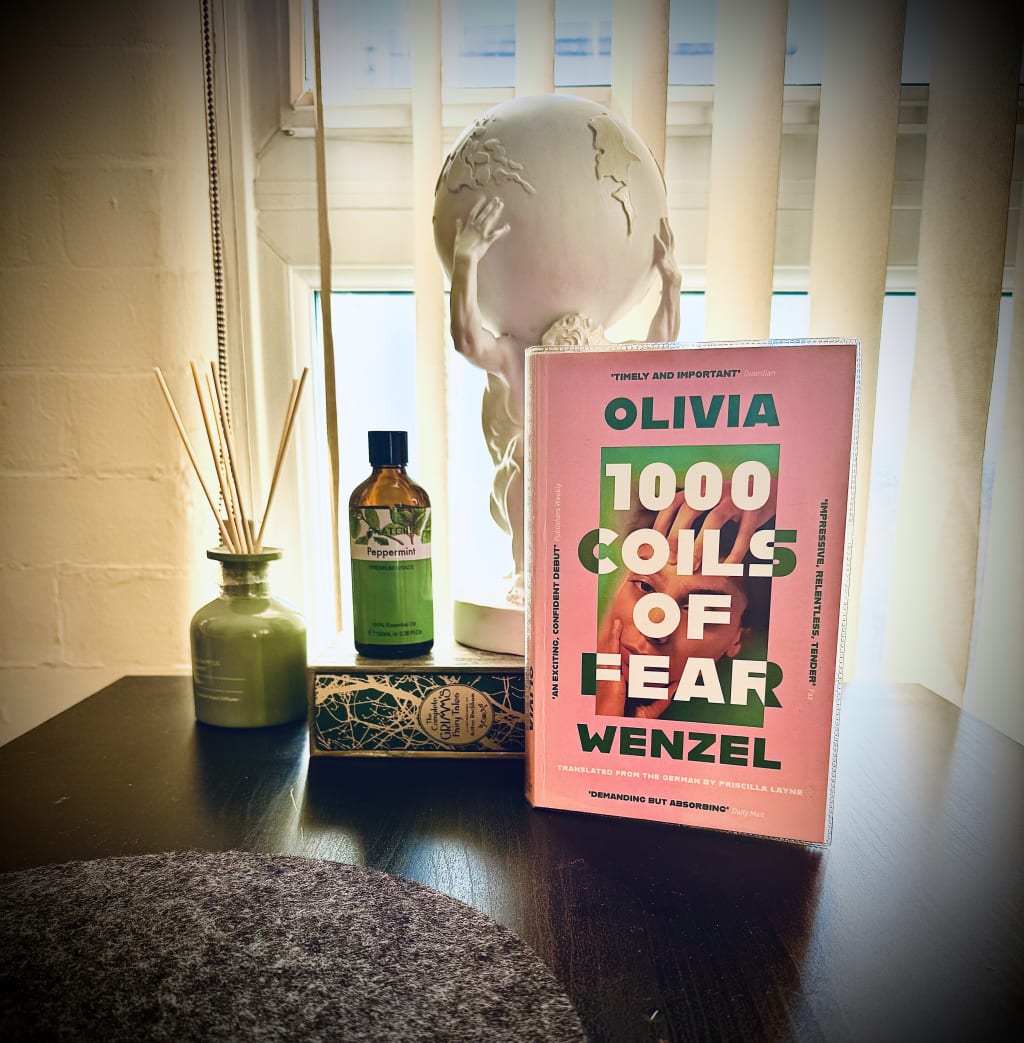
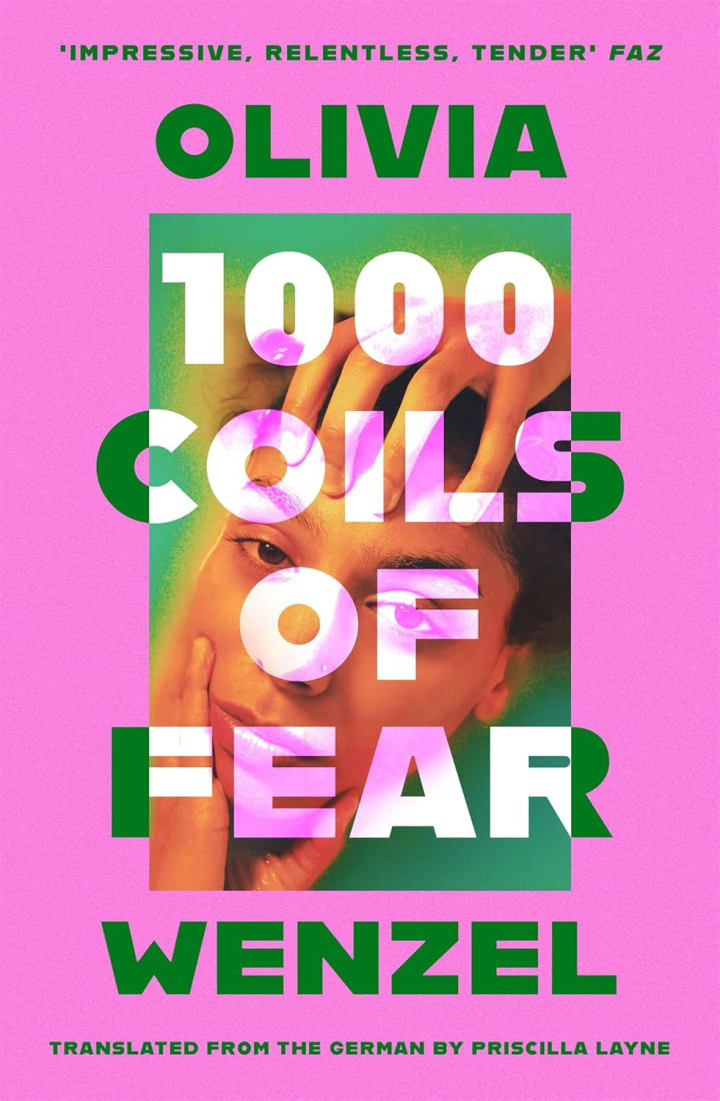
I've been back to the library, keen on exploring different literature within the sub-genres associated with horror and trauma fiction. Of course, I haven't been myself lately as some of you might know and I need some books that I can really lose myself in. On a display entitled 'I can't remember what the book was called but the cover was pink...' I found a novel entitled 1000 Coils of Fear and even though it isn't traditional horror, I gave it a go. A social commentary and interrogative trauma-inspired novel, this book really surprised me. I think I might try this sub-genre out some more if only I knew what I'd call it...
The novel opens with the protagonist engaged in a dialogue with an unseen interrogator, a voice that challenges and questions her thoughts, memories, and identity - it is another version of herself. This format recurs throughout, creating a fragmented yet deeply introspective tone. The questions probe her fears, experiences as a Black woman in Germany, and her past traumas. The conversation is both internal and external, reflecting her struggle with self-perception and societal judgment.
This interrogation-like structure blurs the line between reality and introspection, forcing her to confront uncomfortable truths about race, belonging, and the emotional weight of her past. I really enjoyed how the narrator was having a conversation with themselves and they didn't answer the question, the question would just be asked again. In your mind though, you read it with more force. It was very clever.
A central trauma in her life is the suicide of her twin brother, an event that haunts her throughout the novel. She recalls moments from their childhood, how he struggled with mental health, and how the world treated him differently as a Black man. She questions whether she could have done something to save him, feeling both survivor’s guilt and a deep sense of loss. His absence is a constant weight, affecting her relationships and sense of self. She wonders if his pain was exacerbated by their shared experience of racial alienation, but also his specific burdens as a man.
This is a brilliant analysis of life. We always say that we don't really pay attention to anyone when we are out and about and yet, when someone is paying any amount of attention to us, we feel threatened. Whoever we are, there is something really unnerving about not just being seen outside, but having our existence acknowledged. This novel really does deal with how trauma interferes with our own perception of reality.
Hoping for a sense of belonging, she travels to New York, where she feels more at ease among a diverse Black community. In contrast to Germany, where she constantly feels hyper-visible as a racial minority, in the U.S. she experiences a temporary sense of normalcy. However, she also wrestles with new insecurities such as:she does not feel fully American, nor does she share the historical experiences of African Americans. The trip is both liberating and disorienting, reinforcing her status as an outsider everywhere. She realises that a place alone cannot provide the sense of identity she seeks.
It's a brilliant introspection that I myself have been having since I moved city. The idea that belonging doesn't exactly come from where you are but who you are is something that is a weird truth that everyone who moves cities/states/countries etc. has to come to terms with. I think this book really does brilliantly at looking at all the little micro-anxieties that come along with the learning process.
She recalls visiting her grandmother, who grew up in East Germany before reunification. Through these memories, she examines the intersection of race, history, and nostalgia. Her grandmother often speaks fondly of the past, but the protagonist sees contradictions: East Germany’s claim of anti-racism did not match the lived experiences of Black people. Her mixed-race identity complicates her connection to her grandmother’s world. While she seeks warmth in these memories, they also highlight how her family history is entwined with Germany’s political past, forcing her to navigate multiple narratives of belonging and exclusion.
I love how the author interweaves the contextual background of her life with the present day aggressions she experiences every single day. Even though these seem at first, like dreamy memories, digging below the surface shows us that they are not. It is fantastically written.
All in all, I would highly recommend this book. I'm so happy I found it because it's written in a whole different style, it deals with a number of different trauma aspects and finally, it is something wildly different to what I have read recently.
About the Creator
Annie Kapur
I am:
🙋🏽♀️ Annie
📚 Avid Reader
📝 Reviewer and Commentator
🎓 Post-Grad Millennial (M.A)
***
I have:
📖 280K+ reads on Vocal
🫶🏼 Love for reading & research
🦋/X @AnnieWithBooks
***
🏡 UK
Keep reading
More stories from Annie Kapur and writers in Geeks and other communities.
Book Review: "The Ten Teacups" by Carter Dickson
Yes, I'm back to reading The British Library Crime Classics collection and this time, they've got some really good stuff on Kindle Unlimited. If you don't know what Kindle Unlimited is, it is a fee of around £8 a month in exchange for however many books you would like to lend from the library and read as long as the book is marked 'Kindle Unlimited' above. The available books include The British Library Crime Classics and The British Library Tales of the Weird and a number of independent authors you probably would have never discovered without it. Plus, you can also show off that you got a book on this offer when it was available for a short time. For example: there are many books I have snatched up on Kindle Unlimited that were only there for a few days before going back to their normal price. I would highly recommend it. It has saved me a fortune on British Library books. Now, on with the review...
By Annie Kapur9 months ago in Geeks
Silver Screen Magic with Mae West
American actress and singer Mae West became a popular film actress during the Great Depression. She started entertaining in vaudeville, then performed on Broadway, and finally went to Hollywood. She signed up with Paramount Pictures and made her debut in the 1932 film “Night After Night.” She also starred in musicals, comedies, and crime dramas. The American Film Institute named her one of the best classic Hollywood actresses.
By Rasma Raisters5 days ago in Geeks



Comments
There are no comments for this story
Be the first to respond and start the conversation.