
Amid Tu Meri Main Tera Box Office Dip, Karan Johar Urges People to Stop Celebrating “Failures”
"Karan Johar addresses box office reactions, calling for a culture that values effort over public criticism"

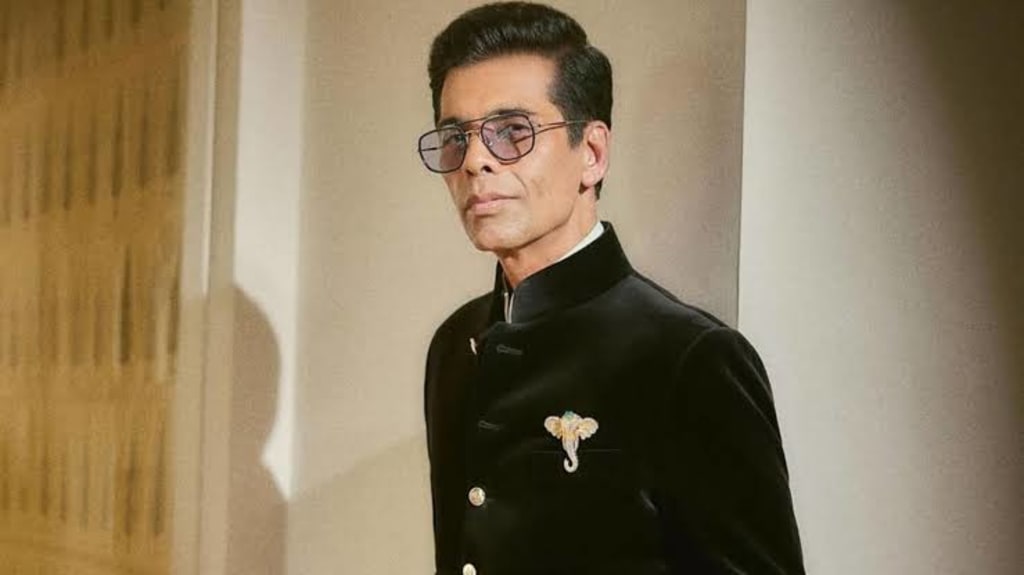
Bollywood filmmaker and producer Karan Johar has once again found himself at the center of an industry-wide conversation—this time not for a glamorous launch or a blockbuster announcement, but for a strong emotional appeal following the box office underperformance of Tu Meri Main Tera. As social media buzzed with memes, sarcastic posts, and celebratory takes on the film’s dip, Johar urged audiences and commentators to rethink the culture of celebrating cinematic failures.
His statement has reignited an important debate: When did film criticism turn into public gloating?
The Film and the Fallout
Tu Meri Main Tera arrived in theaters with reasonable expectations. Backed by a prominent banner and marketed as a modern romantic entertainer, the film carried the usual hopes attached to a Karan Johar–associated project. However, despite initial curiosity, its box office numbers failed to match projections.
In today’s digital age, such dips rarely stay confined to trade columns. Almost instantly, social media platforms were flooded with reactions—many of them less analytical and more celebratory in tone. Instead of discussing storytelling flaws or audience disconnect, a section of users focused on mocking the film’s failure, often framing it as a “lesson” for big producers.
Karan Johar’s Appeal: Criticism vs Cruelty
Breaking his silence, Johar addressed the discourse by drawing a clear line between constructive criticism and what he described as “joy in someone else’s failure.” He emphasized that films are not just products but the result of years of creative labor, involving hundreds of technicians, artists, and crew members whose livelihoods are affected by box office outcomes.
His appeal wasn’t defensive—it was reflective. Johar acknowledged that not every film succeeds and that criticism is essential for growth. What concerned him was the lack of empathy and the eagerness to turn commercial setbacks into viral celebrations.
Why Do Audiences Celebrate Failure?
The phenomenon isn’t limited to Bollywood. Globally, entertainment culture has shifted toward instant reactions, where numbers—opening weekend collections, first-day footfalls, social media trends—often overshadow artistic discussion.
In India, this tendency is amplified by:
Industry fatigue, where audiences feel overwhelmed by star-driven films
Anti-nepotism sentiments, which resurface whenever a big-banner film underperforms
Social media virality, where negativity spreads faster than nuance
For many, celebrating failure becomes a form of perceived accountability. But critics argue that this approach oversimplifies a complex ecosystem and reduces cinema to a scoreboard.
The Human Cost of a “Flop”
Johar’s statement highlighted an often-ignored reality: when a film fails, the impact extends far beyond producers and stars. Background dancers, spot boys, assistant directors, junior artists, and post-production teams all depend on a film’s success to sustain future work.
Unlike social media narratives that frame losses as moral victories, the reality is deeply human. A box office dip can stall careers, shrink opportunities, and create long-term financial stress for people who rarely appear in headlines.
A Call for Mature Film Culture
Johar’s appeal is part of a broader call for a more mature viewing culture—one that critiques content without dehumanizing creators. Cinema thrives on risk. If every failure becomes a public spectacle, creators may retreat into safer, formulaic projects, ultimately hurting innovation.
True film literacy lies in asking:
Why didn’t the film connect?
What worked despite the failure?
How can storytelling evolve?
Celebrating failure answers none of these questions.
Industry Reactions and Divided Opinions
Reactions to Johar’s comments have been mixed. Some filmmakers and actors echoed his sentiment, calling for empathy and responsible criticism. Others argued that public figures must accept scrutiny as part of commercial cinema.
Yet even among dissenting voices, there is agreement on one point: mockery is not critique. Laughing at losses does little to improve the quality of films or audience engagement.
Looking Ahead
Tu Meri Main Tera may not have delivered at the box office, but the conversation it sparked could be more impactful than its numbers. Karan Johar’s message serves as a reminder that cinema is both art and industry—and that empathy should not disappear when tickets don’t sell.
In an era where success and failure are measured in real time, perhaps the real challenge is learning how to respond to disappointment with thoughtfulness instead of triumph.
About the Creator
Fiaz Ahmed Brohi
I am a passionate writer with a love for exploring and creating content on trending topics. Always curious, always sharing stories that engage and inspire.
Keep reading
More stories from Fiaz Ahmed Brohi and writers in Geeks and other communities.
Forget Birkin: Aishwarya Rai Bachchan’s Handbag Style Is Pure Old-School Elegance
In an era where luxury fashion is often measured by logo visibility and waitlisted handbags, Aishwarya Rai Bachchan stands apart with a style philosophy that feels refreshingly timeless. While many celebrities flaunt rare Birkin or Kelly bags as symbols of status, Aishwarya’s handbag choices quietly tell a different story—one rooted in classic sophistication, restraint, and old-school elegance. Her approach proves that true style does not shout; it whispers. Elegance Over Excess Aishwarya Rai Bachchan has long been known for her regal presence, whether on the red carpet, at international film festivals, or during everyday public appearances. Her wardrobe choices often reflect a balance between tradition and modernity, and the same principle applies to her accessories. Instead of chasing trends or indulging in fashion’s obsession with exclusivity, she gravitates toward handbags that complement her look rather than dominate it. Structured totes, vintage-inspired shoulder bags, understated clutches, and refined top-handle designs frequently accompany her outfits. These pieces may not always be instantly recognizable as ultra-luxury status symbols, but they exude quiet confidence and taste—qualities that align perfectly with her public persona. The Power of Classic Silhouettes What sets Aishwarya’s handbag style apart is her preference for classic silhouettes. Clean lines, neutral colors, and elegant proportions are recurring themes. Black, ivory, tan, and deep burgundy often feature in her accessory palette, making her bags versatile and timeless. These silhouettes echo a bygone era of cinema glamour—when actresses relied on elegance rather than excess to make a statement. By choosing bags that prioritize form and function, Aishwarya reinforces the idea that fashion longevity matters more than fleeting trends. A Nod to Old-World Charm Aishwarya’s handbag choices frequently evoke old-world charm. Whether paired with a silk saree, an anarkali suit, or a tailored coat, her bags feel thoughtfully curated rather than impulsively chosen. This aesthetic recalls the golden age of fashion, when accessories were carefully selected to enhance the outfit rather than serve as standalone trophies. In a world where “It bags” rise and fall with seasons, her style feels almost rebellious. It reminds fashion enthusiasts that elegance does not require constant reinvention—sometimes, refinement lies in consistency. Luxury Without Loud Branding One of the most striking aspects of Aishwarya Rai Bachchan’s handbag style is her subtle approach to luxury. Logos are minimal or absent, and craftsmanship takes center stage. This aligns with a growing global shift toward “quiet luxury,” where quality and design outweigh brand visibility. Her fashion choices resonate with audiences who value sophistication over spectacle. By opting for understated luxury, Aishwarya sends a powerful message: true class does not need validation through labels. Cultural Harmony in Styling Another defining feature of her handbag style is how seamlessly it blends with Indian and Western attire. A structured handbag paired with a traditional saree or ethnic ensemble reflects a deep understanding of balance. Rather than overpowering her cultural outfits, her accessories add a contemporary touch while respecting tradition. This harmony is especially evident during international appearances, where she represents Indian elegance on a global stage. Her handbag choices become part of a larger narrative—one that celebrates heritage while embracing global aesthetics. Why Her Style Still Matters In today’s fast-paced fashion cycle, where trends change overnight and social media dictates desirability, Aishwarya Rai Bachchan’s handbag style feels grounding. It offers an alternative vision of luxury—one that values personal taste over peer pressure. For fashion lovers, her approach serves as inspiration to invest in pieces that last, both stylistically and emotionally. A well-crafted bag, chosen thoughtfully, can transcend seasons and trends, becoming a signature rather than a statement. Redefining Modern Glamour By choosing elegance over extravagance, Aishwarya Rai Bachchan redefines what modern glamour looks like. She proves that you don’t need the most expensive or hardest-to-find handbag to make an impact. Instead, confidence, poise, and authenticity remain the ultimate accessories. In forgetting the Birkin, Aishwarya reminds us of something fashion often forgets—style is not about what you carry, but how you carry it. Her handbag choices are not just accessories; they are extensions of her timeless grace, making her a true icon of old-school elegance in a trend-driven world.
By Fiaz Ahmed Brohi21 days ago in Geeks
Silver Screen Magic with Mae West
American actress and singer Mae West became a popular film actress during the Great Depression. She started entertaining in vaudeville, then performed on Broadway, and finally went to Hollywood. She signed up with Paramount Pictures and made her debut in the 1932 film “Night After Night.” She also starred in musicals, comedies, and crime dramas. The American Film Institute named her one of the best classic Hollywood actresses.
By Rasma Raisters5 days ago in Geeks
Villainess Review: Amanda (Disturbing the Peace)
It's been a minute, or two, or three, since I've written a Villainess Review, though the year-end Top 10 lists centered on Lifetime film villainesses feel like a big two-part review. One of my big promises for 2026: the Villainess Reviews will be plentiful again. I don't have a set schedule for them; I never do. But there will be quite a bit on Vocal, as this April will mark my fifth anniversary of me actually doing this. Fittingly, my very first of almost 2000 stories on this site was a Villainess Review.
By Clyde E. Dawkins3 days ago in Geeks



Comments
There are no comments for this story
Be the first to respond and start the conversation.