
American Primeval Review: How Netflix’s Bold Western Outshines Kevin Costner’s HORIZON
Forget the Romantic Myths of the Wild West—Netflix’s Brutal New Series Exposes the Dark Truths Costner's Epic Missed

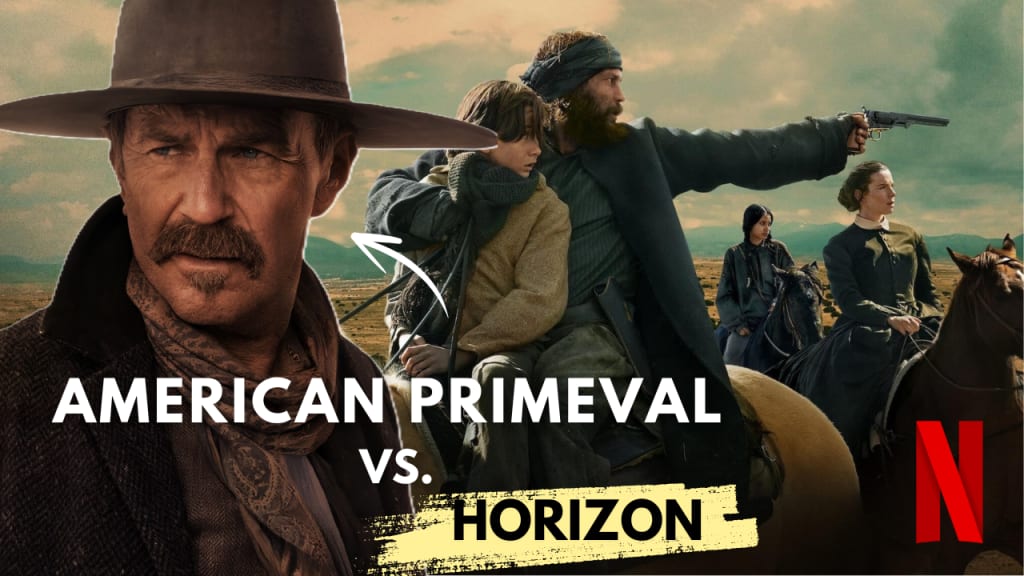
American Primeval on Netflix takes a no-nonsense, brutal approach to the Western genre, offering viewers a raw, violent, and chaotic depiction of the American frontier. Directed by Peter Berg and created by Mark L. Smith, the mini-series steps away from the nostalgic sheen of most Westerns and instead dives into the darker realities of 1857 America. With themes of survival, violence, and the human cost of expansion, this show might just have what it takes to stand out in the crowded Western genre post-Yellowstone.
But how does it stack up against another recent epic attempt at telling America’s frontier story—Kevin Costner's Horizon: An American Saga - Chapter 1? Surprisingly, American Primeval might just come out on top, not because it’s bigger or flashier, but because it’s unrelenting in its portrayal of a time period that's far from romantic.
What’s American Primeval About?
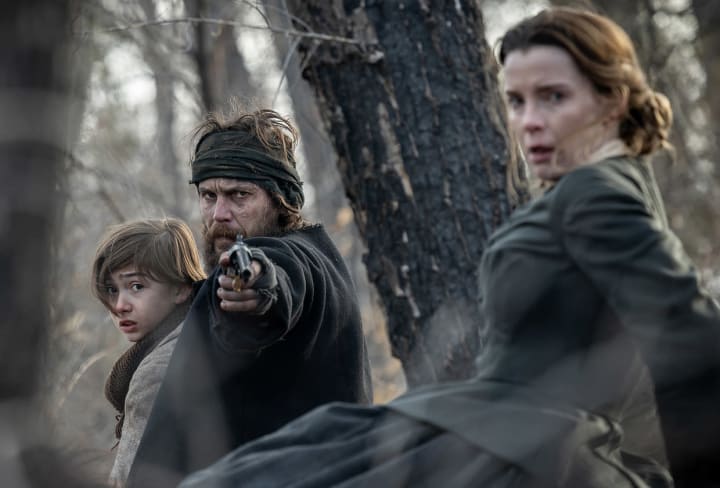
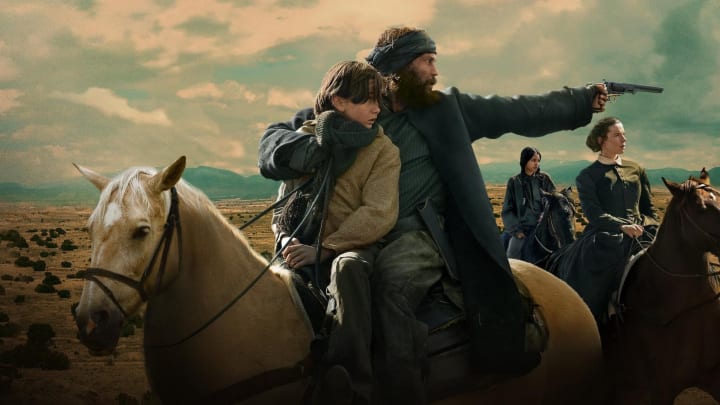
Set in 1857, American Primeval is a six-episode mini-series that weaves together the stories of multiple characters, each fighting their own battles. Sara Rowell (Betty Gilpin) is a mother fleeing Philadelphia with her young son, Devin, after being accused of murder. She finds herself at Fort Bridger, a fur trading outpost on the Oregon Trail. Meanwhile, Isaac (Taylor Kitsch), a hardened frontiersman, is haunted by his past, and a ruthless bounty hunter, Virgil Cutter (Jai Courtney), is on Sara’s trail.
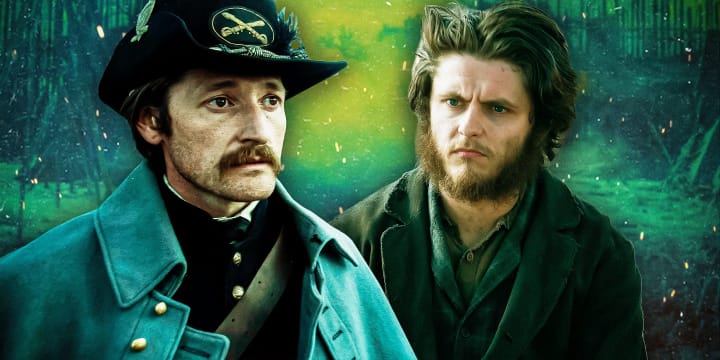
The story also introduces us to the volatile dynamics between various factions: the U.S. Army, led by Captain Edmund Dellinger (Lucas Neff), is trying to keep peace amidst rising tensions; the Shoshone Tribe is retaliating against those who have displaced them; and a dangerous Mormon militia, under the fanatical Brigham Young (Kim Coates), lurks in the background.
The series thrives on this messy web of conflicts, offering a brutal, chaotic take on a time period often painted as heroic. There’s little to no glory here—just survival and the constant clash of ideologies and ambitions.
Why Horizon Misses the Mark
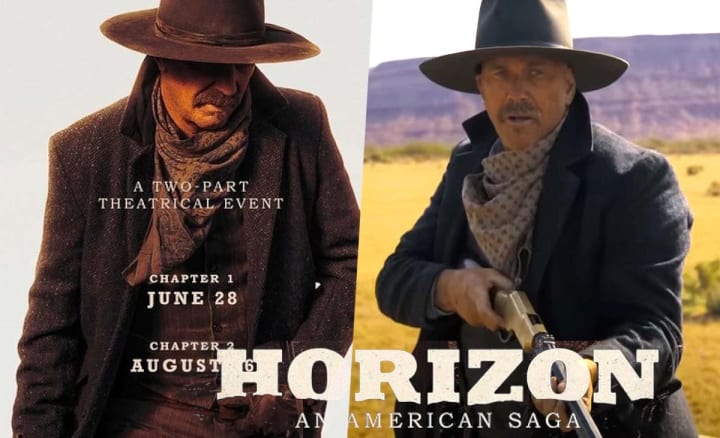
Kevin Costner’s Horizon: An American Saga sets out to be a grand, sweeping tale of the American West. While its cinematography is undeniably beautiful, the story feels overly polished and lacks the grit needed to truly explore the complexities of the era. It’s a movie that wants to be about the struggles of the frontier but ends up feeling too clean, too neat, and far too in love with the myths of the Wild West.
Costner’s film tries to balance grandeur with storytelling but often stumbles, focusing more on the aesthetics of sweeping landscapes than the people living in them. It’s a romanticized vision that doesn’t delve deep enough into the moral contradictions of westward expansion. Yes, it touches on themes of displacement and survival, but it does so without the raw honesty needed to make those themes hit home.
What American Primeval Does Better
This is where American Primeval shines. It rejects the polish and grandeur of something like Horizon and instead plunges headfirst into the ugliness of the era. From the very first episode, it’s clear that this isn’t a story about heroes. It’s about survival in a world where every decision is a fight for your life.
The show doesn’t shy away from addressing uncomfortable truths. It doesn’t romanticize the American dream or try to paint over the violence and moral compromises that built it. Instead, it embraces the chaos and lets the story unfold in all its messy, bloody glory.
What really sets American Primeval apart is its ability to tackle tough themes head-on. It’s not just about survival; it’s about the ideologies that drove westward expansion—white supremacy, religious extremism, and the violence that seemed to follow wherever people went. These aren’t subtle undertones; they’re front and center, forcing viewers to confront the darker side of the American frontier.
The characters in American Primeval feel more grounded, too. Taylor Kitsch’s Isaac isn’t some larger-than-life figure; he’s a broken man trying to find his way in a brutal world. Betty Gilpin’s Sara isn’t just a damsel in distress; she’s a mother willing to do whatever it takes to protect her son. Even the villains, like Jai Courtney’s Virgil Cutter, have layers that make them more than just caricatures.
In Horizon, the characters often feel secondary to the grand narrative. In American Primeval, the characters drive the story, and their struggles feel real.
A Gritty, Uneven Journey
That’s not to say American Primeval is perfect. The series can feel chaotic at times, with so many subplots and characters that it’s hard to keep track of who’s who. The pacing is relentless, leaving little room for quieter moments that could have added depth to the story.
The violence, while impactful, can also feel overwhelming. It’s unflinching and raw, but it sometimes overshadows the emotional beats of the story. The show’s relentless pace means there’s little time for the characters to evolve, which might leave some viewers wanting more.
Despite these flaws, American Primeval is never boring. It’s intense, unapologetically grim, and packed with stellar performances. From Betty Gilpin’s nuanced portrayal of Sara to Taylor Kitsch’s haunting take on Isaac, the cast delivers in every scene.
The cinematography, inspired by films like The Revenant, adds to the series’ immersive feel. Snow-covered landscapes, claustrophobic close-ups, and chaotic action sequences pull viewers into the harsh realities of 1857.
Final Thoughts
While Horizon might appeal to viewers looking for a more traditional, romanticized Western, American Primeval is for those who want something darker and more grounded. It’s not afraid to get messy, both in its storytelling and its portrayal of the American frontier.
In the battle between these two Western epics, American Primeval stands out by refusing to sugarcoat history. It’s raw, brutal, and unflinching—a much-needed reminder that the Wild West wasn’t all heroism and adventure. It was chaos, survival, and the clash of ideologies, and American Primeval captures that like no other show in recent memory.
About the Creator
Rahul Rawat
Delving into the philosophy and deeper meanings of films, I explore how storytelling, characters, and cinema reflect our society. Join me in analyzing the art of movies and their cultural impact through a thoughtful, philosophical lens.
Keep reading
More stories from Rahul Rawat and writers in Geeks and other communities.
Alec Baldwin Files Lawsuit After Judge Drops ‘Rust’ Shooting Charges
Alec Baldwin has filed a major lawsuit following the tragic events on the set of the movie Rust. This legal move comes months after the charges against him were dismissed, but it’s clear Baldwin isn’t ready to let the matter rest.
By Rahul Rawatabout a year ago in Geeks
Silver Screen Magic with Mae West
American actress and singer Mae West became a popular film actress during the Great Depression. She started entertaining in vaudeville, then performed on Broadway, and finally went to Hollywood. She signed up with Paramount Pictures and made her debut in the 1932 film “Night After Night.” She also starred in musicals, comedies, and crime dramas. The American Film Institute named her one of the best classic Hollywood actresses.
By Rasma Raisters7 days ago in Geeks




Comments
There are no comments for this story
Be the first to respond and start the conversation.