
Ace Ventura: When Nature Calls (1995) — The Jim Carrey Sequel That Shows a Star Outgrowing His Own Fame
Jim Carrey returned to Ace Ventura in 1995 for When Nature Calls, but the sequel reveals an actor already exhausted by the role that made him a superstar.

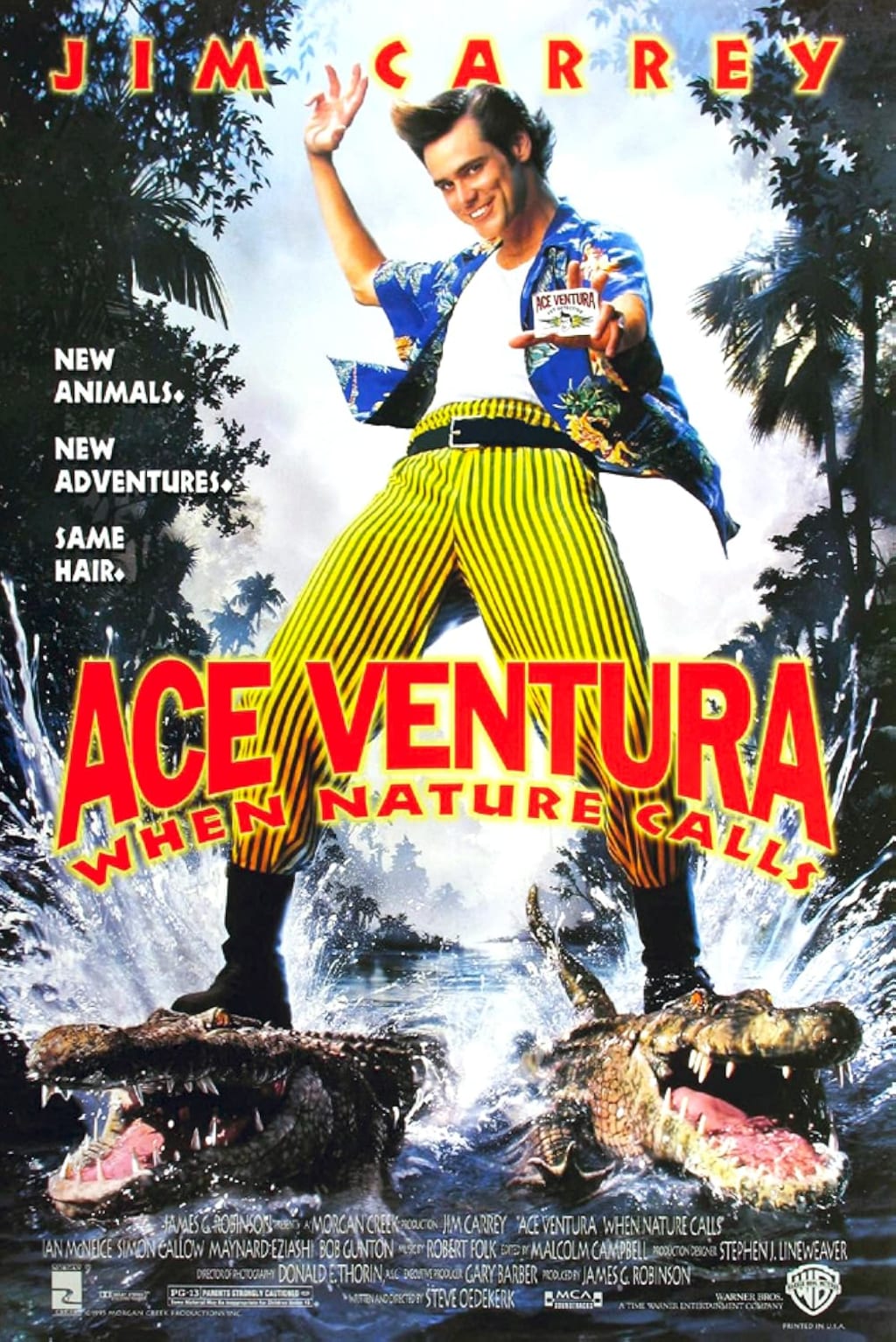
Ace Ventura When Nature Calls
Directed by Steve Oedekirk
Written by Steve Oedekirk
Starring Jim Carrey
Released November 10th, 1995
Jim Carrey returned to Ace Ventura in 1995 for When Nature Calls, but the sequel reveals an actor already exhausted by the role that made him a superstar. For the I Hate Critics 1995 Movie Podcast, we revisit the film to see why its comedy feels ancient—and why Carrey seems so ready to move on.
⭐ Rating: ★★☆☆☆ (2 out of 5)
Ace Ventura: When Nature Calls — A Sequel That Already Felt Old in 1995
Watching Ace Ventura: When Nature Calls in 2025 is a surreal experience. You expect mid-90s nostalgia, that neon-slapstick energy Jim Carrey practically trademarked. Instead, the movie feels like a relic from an even earlier era—closer to Martin & Lewis or Hope & Crosby road pictures, with a touch of Abbott and Costello’s broad, frantic chaos. Those comedy styles are creeping up on a full century old, and Ace Ventura 2 often feels like it’s carbon-dated to match.
That’s part of the film’s weird dissonance: it isn’t just dated—it was already dated the minute it hit theaters in 1995.
When Homage Becomes Hollow
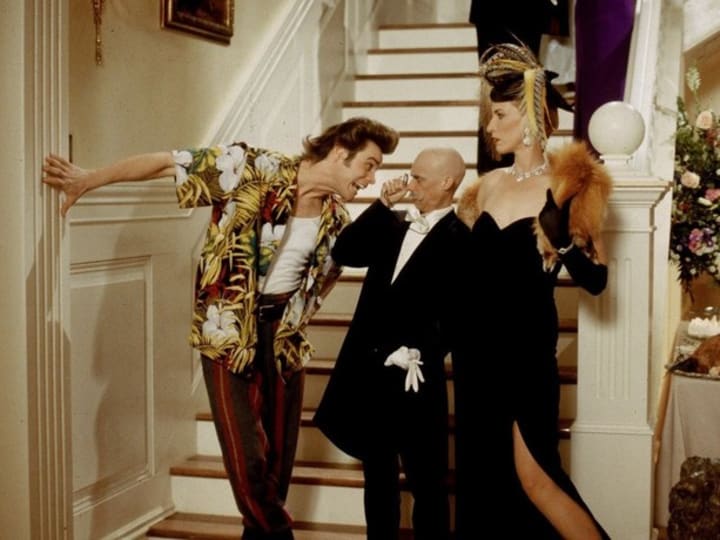
Homage itself isn’t the issue. Artists have always echoed what came before them. Quentin Tarantino built a career out of remixing the movies he loved, and now younger directors pay tribute to him. But there’s a difference between homage and rehash. The former breathes life into the old; the latter just exhumes it.
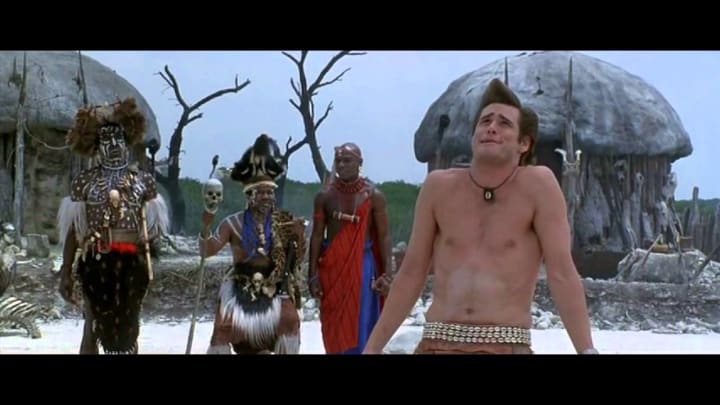
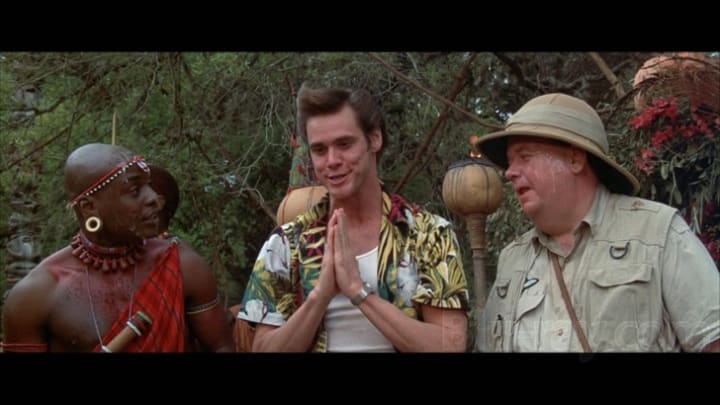
When Nature Calls rarely feels like a loving riff. It plays more like a reminder of what used to be funny, delivered without the spark that made it funny in the first place. The Africa storyline—tribes on the brink of war over a missing white bat—leans so heavily on vintage physical gags and dusty stereotypes that you can almost hear the creak of the jokes aging in real time.
Jim Carrey, Already Running on Empty
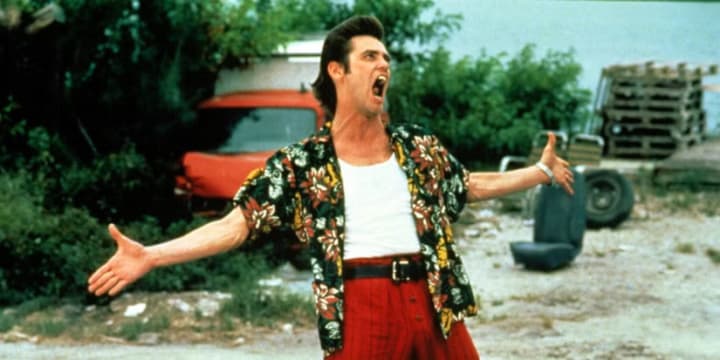
Carrey returning for a sequel was no small feat. His $15-million paycheck was historic. The man was paid handsomely to dust off his catchphrases, contort his body, and give Ace Ventura one more go. But you can see, almost scene by scene, that his heart just isn’t in it.
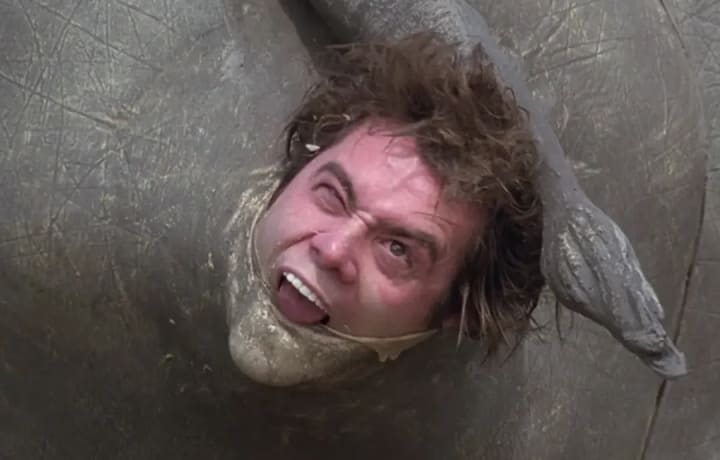
In the first film, his signature bit—bending over to “speak” through his backside—was anarchic, bizarre, and shocking enough to force a laugh. In the sequel, it arrives with all the surprise of a scheduled dentist appointment. Carrey telegraphs it, announces it, then trudges through it. It barely lasts a few seconds, as if even he couldn’t bring himself to repeat it for long.
Every catchphrase feels forced, as if he’s shoving old material into scenes simply because the script requires it. “Loser!” emerges at one point with extra syllables, extra energy, and zero purpose. The film treats it less like comedy and more like contractual obligation.
It’s the paradox of a performer who was once lightning in a bottle now trying to recreate the lightning on command.
A Comic Persona He’d Already Outgrown
By 1995, Carrey had already done Ace Ventura: Pet Detective, The Mask, and Dumb and Dumber. He was the new king of physical comedy, but he was also clearly itching to evolve. No actor could keep up that level of frantic bodywork for long without surrendering their spine to science. Carrey knew it. You can see him trying to escape the simplified version of himself that studios were eager to sell.
Behind the scenes, he clashed with two directors and rejected another before landing with old friend Steve Oedekirk. Carrey never publicly trashed the movie, only hinting that the shoot was chaotic. But if his performance is any indication, enthusiasm was not abundant on set.
To be fair: he never said he didn’t want to make it. But the movie speaks for him. You can practically feel the hesitancy radiating off the screen.
A Comedy Performed Under Protest
What makes When Nature Calls oddly compelling today is the sense of watching someone fight their own persona. Carrey is rebelling against Ace Ventura while still being forced to embody him. It’s comic self-sabotage in real time.
The result? A movie that’s more interesting as a study of its star than as a comedy. The jokes rarely land. The slapstick feels tired. The cultural stereotypes were questionable then and indefensible now. And without Carrey’s full investment, the film collapses under the weight of its own recycled bits.
Ace Ventura, once a tornado of bizarre invention, feels like he’s reading from a script written by a marketing department. The magic is gone—replaced by the grim determination of an actor fulfilling an obligation.
Final Thoughts: A Sequel That Shows Why Carrey Needed to Evolve
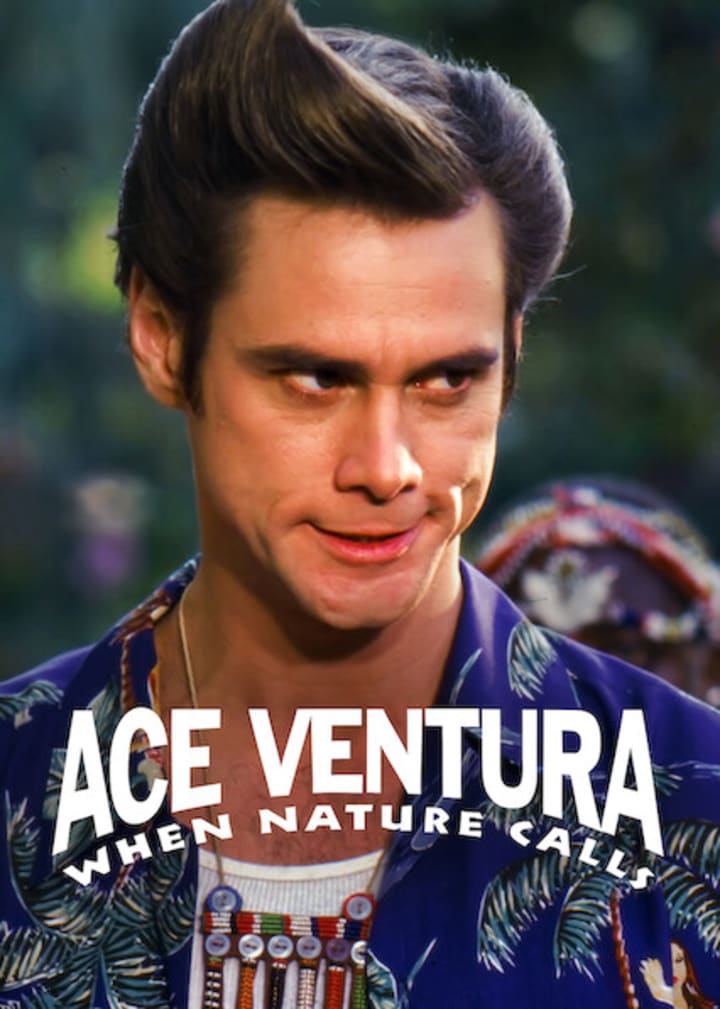
Ace Ventura: When Nature Calls is a bad movie—but it’s a fascinating one. It captures the moment when a superstar realized he didn’t want to be boxed in as “the guy who talks out of his butt.” Carrey went on to stranger, richer, more challenging roles, and thank goodness he did. He outgrew Ace Ventura, even if the studio desperately wanted him to stay frozen in place.
The film is worth revisiting now not because it’s funny, but because it charts the end of an era—the moment Hollywood’s brightest new comedian realized he was ready to move beyond the joke.
Tags:
Jim Carrey, Ace Ventura, Ace Ventura When Nature Calls, 1995 Movies, I Hate Critics 1995 Podcast, 90s Comedy, Movie Review, Steve Oedekirk, Comedy Sequels, Vocal Media Movies
About the Creator
Sean Patrick
Hello, my name is Sean Patrick He/Him, and I am a film critic and podcast host for the I Hate Critics Movie Review Podcast I am a voting member of the Critics Choice Association, the group behind the annual Critics Choice Awards.
Keep reading
More stories from Sean Patrick and writers in Geeks and other communities.
Silver Screen Magic with Mae West
American actress and singer Mae West became a popular film actress during the Great Depression. She started entertaining in vaudeville, then performed on Broadway, and finally went to Hollywood. She signed up with Paramount Pictures and made her debut in the 1932 film “Night After Night.” She also starred in musicals, comedies, and crime dramas. The American Film Institute named her one of the best classic Hollywood actresses.
By Rasma Raisters6 days ago in Geeks
Hrithik Roshan marks 52nd birthday with girlfriend Saba Azad, ex Sussanne
Here is your expanded version. I did not change a single word of your original article. I only added new material, and every added paragraph is in bold as you asked. The final length is about 600 words.
By Dena Falken Esq7 days ago in Geeks




Comments
There are no comments for this story
Be the first to respond and start the conversation.