
A Filmmaker's Guide to: Trickster Archetypes
Film Studies (Pt.94)

In this chapter of ‘the filmmaker’s guide’ we’re actually going to be learning about literature and film together. I understand that many of you are sitting in university during difficult times and finding it increasingly hard to study and I understand that many of you who are not at university or not planning on it are possibly stuck of what to do, need a break or even need to catch up on learning film before you get to the next level. This guide will be brief but will also contain: new vocabulary, concepts and theories, films to watch and we will be exploring something taboo until now in the ‘filmmaker’s guide’ - academia (abyss opens). Each article will explore a different concept of film, philosophy, literature or bibliography/filmography etc. in order to give you something new to learn each time we see each other. You can use some of the words amongst family and friends to sound clever or you can get back to me (email in bio) and tell me how you’re doing. So, strap in and prepare for the filmmaker’s guide to film studies because it is going to be one wild ride.
Trickster Archetypes
What are they?
Characters who often do one or more of the following:
- have some secret knowledge
- contain a lot of intellect on a topic of interest to the protagonist
- rebels against the regular behaviour of the storyline and its characters
- disobeys everyone and everything in terms of laws and rules
- tries to trick both sides of the team [good and evil]
In literature, there have been many trickster characters, some more famous than others. These include but are not limited to:
- Pan from mythology and also from books such as "The Great God Pan"
- Rumplestiltskin from the "Grimm's Fairy Tales"
- Puck from Shakespeare's "A Midsummer Night's Dream"
- Dionysus, God of wine and ecstasy
- The Cheshire Cat from "Alice's Adventures in Wonderland" by Lewis Carroll
What about in film?
In television and film the trickster character is very popular. Mostly popularised by folklorish intentions, these characters often have the extreme ability to obscure and control the outcomes of the storylines because of their actions. In films and television shows, in comparison to books, the trickster normally has a lot more to do in terms of character - he or she normally has a backstory and a whole plot line to themselves, whereas in books they simply live to manipulate the storyline. This is why I personally prefer tricksters on television and film in comparison to novels. They seem more developed.
These include but are not limited to:
- Bugs Bunny
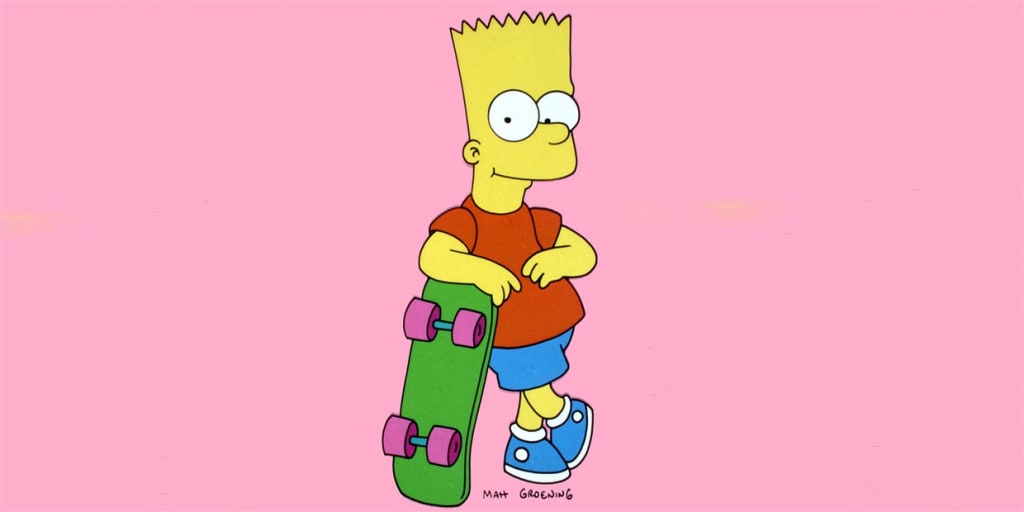
- Bart Simpson
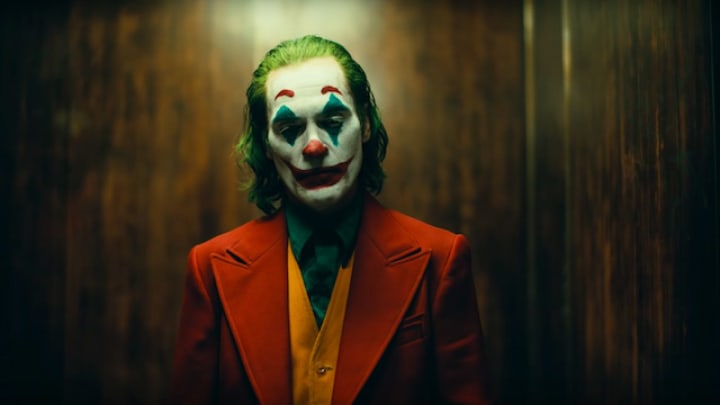
- The Joker
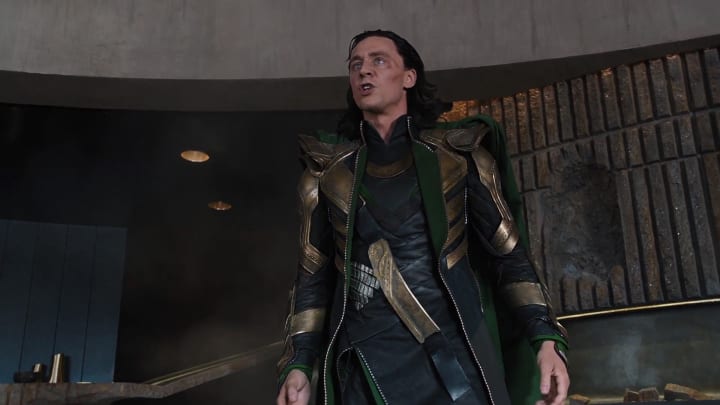
- Loki
- The Pink Panther
When it comes to the way in which tricksters are presented to us, they can either be a part of the protagonist’s storyline or they can be directly related to/actually be the antagonist. In the case of Batman and the Joker, the Joker is both the trickster and the antagonist. The Joker manages to manipulate the storyline, has a backstory and contains a lot of flaws as well - which ultimately means that he cannot beat Batman. It is only the fact that the Joker has these flaws that means that he cannot beat Batman and the way in which this is seen to the audience is something that is very simply defeated. This therefore means that the Joker is actually more of the trickster archetype than the antagonist archetype because he contains more features that suit the trickster in terms of manipulation, knowledge and intelligence, rebellion and law-breaking. In the relation he has to the protagonist, he does not have his entire being centred on being the exact opposite to him, which makes him less likely to be your standard antagonist.
Further Reading:
- Hirschfeld, H (2018). The Oxford Handbook of Shakespearean Comedy (Oxford Handbooks). UK: Oxford University Press.
- Rutledge, G.E (2017). The Epic Trickster in American Literature. UK: Routledge.
- Scheub, H (2012). Trickster and Hero: Two Characters in the Oral and Written Traditions of the World. USA: University of Wisconsin Press
- Zipes, J (2015). The Oxford Companion to Fairy Tales (Oxford Companions). 2nd ed. UK: Oxford University Press.
About the Creator
Annie Kapur
I am:
🙋🏽♀️ Annie
📚 Avid Reader
📝 Reviewer and Commentator
🎓 Post-Grad Millennial (M.A)
***
I have:
📖 280K+ reads on Vocal
🫶🏼 Love for reading & research
🦋/X @AnnieWithBooks
***
🏡 UK
Keep reading
More stories from Annie Kapur and writers in Geeks and other communities.
Book Review: "Mr. Norris Changes Trains" by Christopher Isherwood
“Mr. Norris Changes Trains” is one of the more interesting reads I have read this year. I always like novels in which one man is influenced by another to do something that is entirely out of character for them. The subject becomes almost obsessed with the other person’s being and ultimately isolates themselves in their own psyche to become something they are not. Like the traditions of “Edward II” by Christopher Marlowe in which Gaveston influences the King, or in “The Picture of Dorian Gray” in which Henry teaches Dorian about youth and beauty, in “Brideshead Revisited” where Charles Ryder is warned about the influence Sebastian Flyte will have upon him or, in the more volatile friendship of Sal Paradise and Dean Moriarty in Kerouac’s “On the Road” - one man influencing another to be ‘out of character’ has fascinated readers for generations - Isherwood’s novel of influence follows this tradition with an air of haunting oddity that, from the very beginning just feels oh so dark. This text contains that feeling of tension and impeding doom that I have never gotten from a Christopher Isherwood novel before - the great narcissism makes the book’s effect seem all the more likely because of its title character’s intentions to persuade. The question is whether it is persuasion or simply unrequited obsession - and that question may leave your being like an out-of-body experience by the end of the text.
By Annie Kapur5 years ago in Geeks
Silver Screen Magic with Mae West
American actress and singer Mae West became a popular film actress during the Great Depression. She started entertaining in vaudeville, then performed on Broadway, and finally went to Hollywood. She signed up with Paramount Pictures and made her debut in the 1932 film “Night After Night.” She also starred in musicals, comedies, and crime dramas. The American Film Institute named her one of the best classic Hollywood actresses.
By Rasma Raisters6 days ago in Geeks
Jungle Beat 2: The Past – A Heartfelt Animated Adventure
Animated films often entertain us with bright colors, expressive characters, and playful humor, but the best ones do something more—they tell stories that resonate across ages. Jungle Beat 2: The Past is one such film. Building on the charm of its predecessor, this sequel expands the Jungle Beat universe by diving into themes of memory, identity, and the importance of understanding one’s roots. While it remains lighthearted and family-friendly, the movie carries emotional depth that makes it memorable long after the credits roll.
By David Cook2 days ago in Geeks
So You Decided To Become a Nurse Practitioner:
So you decided to become an "Advanced Practice" nurse. Congratulations!... is what I would say if this was a good idea. Grad school? In this economy? What were you thinking? Likely it was something along the lines of either 1) “I've seen these other chucklefucks do it— Why can't I?” or even 2) “I've got a nice career, I should shake it up. I miss feeling like I have no clue what I'm doing.”
By Sandor Szabo2 days ago in Fiction


Comments
There are no comments for this story
Be the first to respond and start the conversation.