

In this chapter of ‘the filmmaker’s guide’ we’re actually going to be learning about literature and film together. I understand that many of you are sitting in university during difficult times and finding it increasingly hard to study and I understand that many of you who are not at university or not planning on it are possibly stuck of what to do, need a break or even need to catch up on learning film before you get to the next level. This guide will be brief but will also contain: new vocabulary, concepts and theories, films to watch and we will be exploring something taboo until now in the ‘filmmaker’s guide’ - academia (abyss opens). Each article will explore a different concept of film, philosophy, literature or bibliography/filmography etc. in order to give you something new to learn each time we see each other. You can use some of the words amongst family and friends to sound clever or you can get back to me (email in bio) and tell me how you’re doing. So, strap in and prepare for the filmmaker’s guide to film studies because it is going to be one wild ride.
Motifs
What are they?
Motifs are repeated symbols or ideas that fall into some kind of pattern as they are relative to either a particular character or a particular aspect of the plot.
Let's have a look at an example in literature:
In the book "The Picture of Dorian Gray" by Oscar Wilde, each and every time that the youthfulness of Dorian Gray becomes the central point of conversation, flowers are normally seen or, in some cases, Dorian himself is compared to a flower. With the approaching conversation that is had between Dorian and Henry in Chapter Two, the book warns us of Henry's influence by having the smell of roses, the lilacs and other plants and flowers in Basil's garden having some sort of place. When Henry and Dorian sit down to discuss his youth, there are several mentions of flowers and plants. As we move through the book, we see more mentions of flowers and plants as Dorian becomes more focused on his own youth. So we can honestly say that flowers and plants are motifs for concentration on Dorian Gray's youth.
Other books which contain some great uses of motifs that you can check out are:
- Brideshead Revisited by Evelyn Waugh
- Ready Player One by Ernest Cline
- Cloud Atlas by David Mitchell
- A Thousand Splendid Suns by Khaled Hosseini
- Maus by Art Spiegelman
What about in film?

In film, motifs are used in pretty much the same way they are used in literature. They are used to denote and pattern themes, ideas and perpetuate this symbol that is linked to a particular character or aspect of the plot/conflict which the narrative centres around. Let us take a look at some films that include motifs of character:
- Inception - the dreidel
- Requiem for a Dream - the red dress
- There Will Be Blood - the child
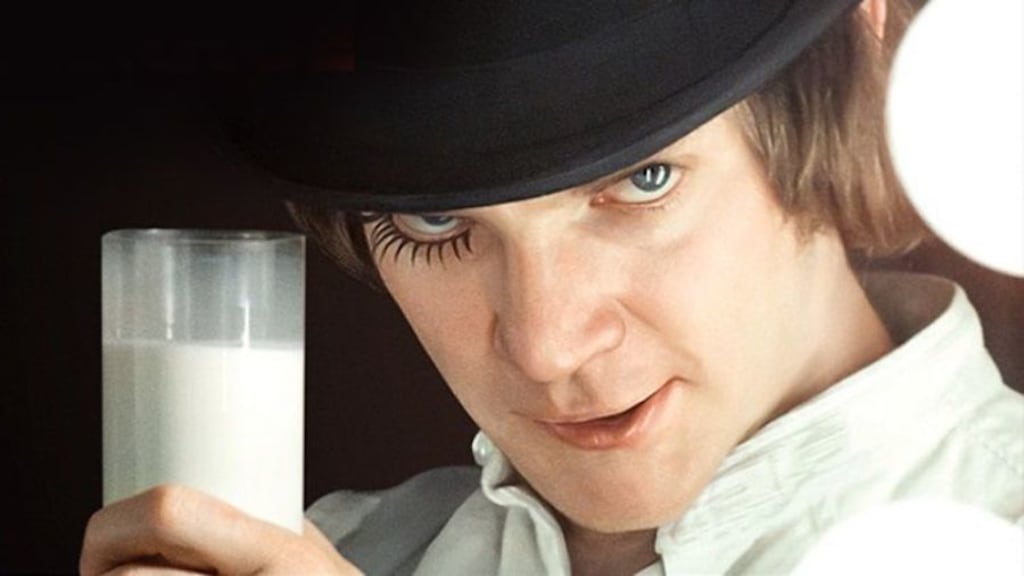
- A Clockwork Orange - the milk
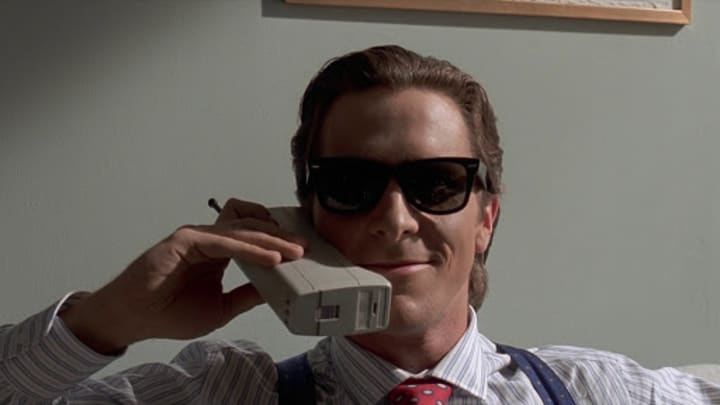
- American Psycho - cellphones and business cards
- Fight Club - soap
- Citizen Kane - newspapers and photographs
- Interview with the Vampire - candles
- The Prestige - top hats
- The Sixth Sense - the cold
When a motif is used in a film, normally it is used with some major purpose that comes back in order to give us some sort of message. The motifs always have a purpose and if they don't then they should not serve the purpose of motifs or they just are not motifs at all. Such as: the dreidel in "Inception" is possibly the easiest motif to recognise because even the characters in the film know it is a motif for reality.
Let us now have a look at some further reading in order to understand this a little bit further than just our example here.
Further Reading:
- Cartmell, D (2007). The Cambridge Companion to Literature on Screen. UK: Cambridge University Press.
- Clare, R (2018). The Cambridge Companion to David Foster Wallace. UK: Cambridge University Press.
- Connor, S (2004). The Cambridge Companion to Postmodernism. UK: Cambridge University Press.
- Herman, D (2007). The Cambridge Companion to Narrative. UK: Cambridge University Press
- Walker, M (2014). Hitchcock's Motifs. Netherlands: Amsterdam University Press.
About the Creator
Annie Kapur
I am:
🙋🏽♀️ Annie
📚 Avid Reader
📝 Reviewer and Commentator
🎓 Post-Grad Millennial (M.A)
***
I have:
📖 280K+ reads on Vocal
🫶🏼 Love for reading & research
🦋/X @AnnieWithBooks
***
🏡 UK
Keep reading
More stories from Annie Kapur and writers in Geeks and other communities.
Book Review: "Prater Violet" by Christopher Isherwood
“Prater Violet” is one of those books by Christopher Isherwood that if you like his book “Goodbye to Berlin” and its writing style then you will probably love this one. I have never been a huge fan of Christopher Isherwood and I have admittedly not read too much by him other than the most popular novels. However, after reading “Goodbye to Berlin” last year, I have been searching for the author’s books just like this one and I can honestly say that the closest in its almost romantic writing style is “Prater Violet”. Even though the latter is more of an autobiographical work and is based on things that actually happened whilst Isherwood was working in the film industry. I think that it still has some resonating factors with the book “Goodbye to Berlin” in the fact that it is written with absolute passion - and it is rare for me to see that in a book by Christopher Isherwood as it is often cut up and overshadowed by a ton of back and forth dialogue-heavy passages that fail to interact with the reader.
By Annie Kapur5 years ago in Geeks
Silver Screen Magic with Mae West
American actress and singer Mae West became a popular film actress during the Great Depression. She started entertaining in vaudeville, then performed on Broadway, and finally went to Hollywood. She signed up with Paramount Pictures and made her debut in the 1932 film “Night After Night.” She also starred in musicals, comedies, and crime dramas. The American Film Institute named her one of the best classic Hollywood actresses.
By Rasma Raisters7 days ago in Geeks
Silver Screen Magic with Lillian Gish
Director D.W. Griffith directed the 1915 film “Birth of a Nation.” The film starred Lilian Gish, Mae Marsh, and Henry B. Walthall. This is an American silent epic drama. The screenplay was adapted from the 1905 novel and play “The Clansman: A Historical Romance of the Ku Klux Klan” by Thomas Dixon Jr.
By Rasma Raisters3 days ago in Geeks
So You Decided To Become a Nurse Practitioner:
So you decided to become an "Advanced Practice" nurse. Congratulations!... is what I would say if this was a good idea. Grad school? In this economy? What were you thinking? Likely it was something along the lines of either 1) “I've seen these other chucklefucks do it— Why can't I?” or even 2) “I've got a nice career, I should shake it up. I miss feeling like I have no clue what I'm doing.”
By Sandor Szabo4 days ago in Fiction


Comments
There are no comments for this story
Be the first to respond and start the conversation.