
A Filmmaker's Guide to: Independent Cinema
Film Studies (Pt.60)

In this chapter of ‘the filmmaker’s guide’ we’re actually going to be learning about literature and film together. I understand that many of you are sitting in university during difficult times and finding it increasingly hard to study and I understand that many of you who are not at university or not planning on it are possibly stuck of what to do, need a break or even need to catch up on learning film before you get to the next level. This guide will be brief but will also contain: new vocabulary, concepts and theories, films to watch and we will be exploring something taboo until now in the ‘filmmaker’s guide’ - academia (abyss opens). Each article will explore a different concept of film, philosophy, literature or bibliography/filmography etc. in order to give you something new to learn each time we see each other. You can use some of the words amongst family and friends to sound clever or you can get back to me (email in bio) and tell me how you’re doing. So, strap in and prepare for the filmmaker’s guide to film studies because it is going to be one wild ride.
Independent Cinema

What is it?
A film made by a small-time or independent organisation which is outside of the mainstream blockbuster studios. These can either be student-made, low-budget or even arthouse. There are many to choose from.
When it comes to independent cinema, the screenwriter and director are normally the same person. This is because it is not only cheaper to write the movie yourself, but as a director starting out in the independent industry, it would make more sense and you would be able to envision better how it would work on the screen if you were the one who wrote it and you were the one who was directing it.
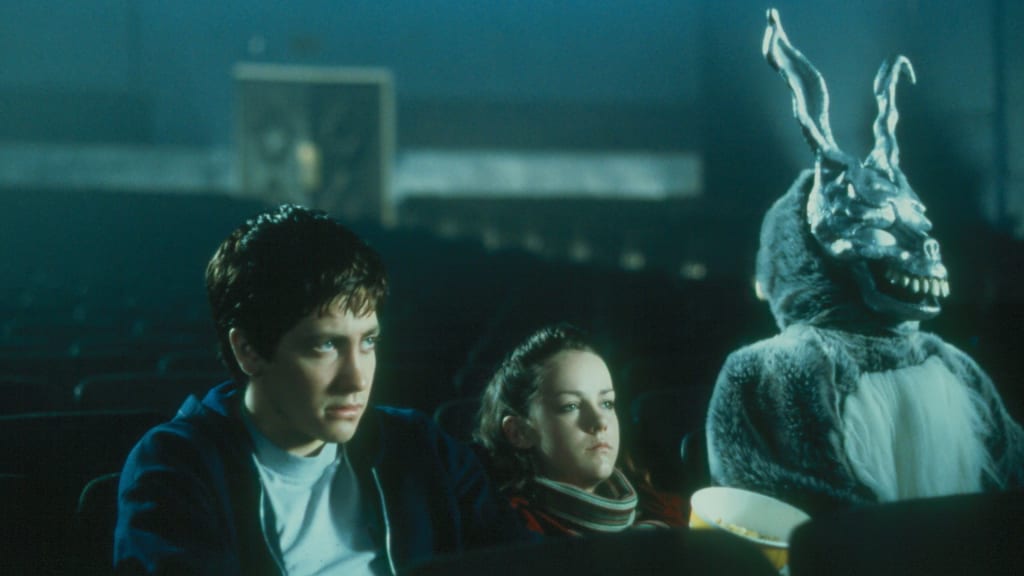
For example: if we were to look at "Donnie Darko" we would find that the film is both written and directed by Robert Kelly. At the time, the main actors were fairly unknown and the budget was under five million dollars. Produced by the independent film company, Flower Films, it was released at the Sundance Film Festival and this is a plus.
The one way to get an independent film watched by a bigger, more film-savvy audience would be to put it out at a film festival and Sundance is normally the one that subversive independent filmmakers choose because it is more open to different types of submissions.
Another film we can look at for tips on how to stay low-budget would be the horror classic of the seventies, "Halloween". The budget for the film was around three hundred and fifty thousand dollars whilst at the box office it made nearly seventy million dollars. Why? Well, this film was not released at a festival, it just happened to be in the right place at the right time and so, there we have a film that made it on its own. Compass International Pictures did have a part in it, but with the low budget it had in comparison to other films of the seventies, I have to say it not only did pretty well - but there is a chance it was probably one of the biggest selling independent films of all time.
When it comes to independent cinema, we need to look at not only the budget but the genre as well. I have personally noted that independent cinema has more horror films because of the fact that more risky or gory films will end up being produced by lesser known studios as the big studios will not really take the risk. Let us have a look now at some further reading that you could do on the subject of independent cinema and what you could look at in order to learn more about it.
Further Reading:
About the Creator
Annie Kapur
I am:
🙋🏽♀️ Annie
📚 Avid Reader
📝 Reviewer and Commentator
🎓 Post-Grad Millennial (M.A)
***
I have:
📖 280K+ reads on Vocal
🫶🏼 Love for reading & research
🦋/X @AnnieWithBooks
***
🏡 UK
Keep reading
More stories from Annie Kapur and writers in Geeks and other communities.
Book Review: "The Ruined Map" by Kōbō Abe
In comparison to the other Kōbō Abe books I have read, “The Ruined Map” may be a great concept, but I feel like it is not as well written as the others. With putting “The Box Man” at the most probable top and next coming “Secret Rendezvous”, this book is going to come at a safe third because of the fact that I did not feel the same sense of existential unpredictability and socially motivated self closure that I got from the other novels. This novel was more or less an original storyline of noir/criminal nature closer to the novels written by Haruki Murakami than the books he had written previously. However, the book still identifies with his two previous books in the sense that it is written is a style that can confound the reader quite a bit when reading it for the first time.
By Annie Kapur5 years ago in Geeks
Silver Screen Magic with Mae West
American actress and singer Mae West became a popular film actress during the Great Depression. She started entertaining in vaudeville, then performed on Broadway, and finally went to Hollywood. She signed up with Paramount Pictures and made her debut in the 1932 film “Night After Night.” She also starred in musicals, comedies, and crime dramas. The American Film Institute named her one of the best classic Hollywood actresses.
By Rasma Raisters5 days ago in Geeks
Twitter Outage
For millions of users around the world, Twitter—now known as X—is more than just a social media platform. It’s a real-time news source, a communication tool, and a digital town square. So when a Twitter outage occurs, confusion spreads quickly. Users rush to search questions like “is Twitter down?”, “is X down right now?”, or “why is X not working?” hoping for clarity. In recent years, X outages have become highly visible events, often trending across other platforms within minutes. Whether the issue lasts a few minutes or several hours, a Twitter down situation highlights how deeply embedded the platform is in daily online life. When Twitter Goes Down: What Users Experience During a typical Twitter down incident, users may encounter several problems at once. Timelines stop refreshing, posts fail to load, and notifications disappear. Some users can open the app but see blank feeds, while others are completely locked out. These moments spark a flood of searches like “is Twitter down right now?” and “Twitter not working.” As branding has shifted, the same frustration now appears under newer searches such as “is X down?”, “X down?”, or “X is down.” The name may have changed, but user expectations remain the same: instant access and real-time updates. The Role of X Down Detectors and Status Tools When users suspect an outage, many turn to tools like X down detector or Twitter down detector websites. These platforms collect real-time reports from users and visualize spikes in complaints. A sudden surge often confirms that the issue isn’t isolated. People also search for Twitter status updates, hoping for official confirmation. While X occasionally posts updates during major outages, users often rely on external sources first—especially when the platform itself isn’t accessible. Is X.com Down or Something Else? One of the most common questions during an outage is “is x.com down?” While it may appear that the entire platform is unavailable, the underlying cause can vary. Sometimes the issue affects only certain regions, mobile apps, or specific features like posting or direct messages. In other cases, users notice that third-party integrations fail. This leads to additional searches such as “X not working” or “is X down?” as people try to determine whether the problem lies with their device, internet connection, or the platform itself. Cloudflare and Large-Scale Outages Occasionally, outages are linked to infrastructure providers rather than X directly. Cloudflare, a major content delivery and security service used by many large websites, has been associated with widespread disruptions across the internet. During a Cloudflare outage, multiple platforms can experience downtime simultaneously. When this happens, searches for “Cloudflare outage” often rise alongside “Twitter is down.” These events show how interconnected modern platforms are and how a single failure point can affect millions of users at once. Grok Down: A New Kind of Concern With the introduction of AI-powered features, outages now extend beyond basic posting and browsing. Some users have reported instances of Grok down during broader X outages. When Grok, the platform’s AI assistant, stops responding, it adds another layer of frustration—especially for users who rely on it for research, summaries, or creative tasks. As X continues to expand its feature set, future outages may impact different services independently, making it harder to quickly understand what exactly is broken. Why Twitter Outages Feel So Disruptive Unlike many platforms, X thrives on immediacy. It’s often the first place people go during breaking news, global events, or emergencies. When Twitter is down, users lose access to real-time conversations and firsthand updates. This is why even short outages trigger widespread concern. Questions like “is Twitter down?” or “is X down right now?” aren’t just about inconvenience—they reflect a sudden loss of connection to the global conversation. How Users Cope When X Is Down When an X outage occurs, users often migrate temporarily to other platforms to confirm the issue or share updates. Ironically, people frequently use those platforms to say that Twitter is unavailable. In the meantime, down-detector sites, tech forums, and news outlets become the primary sources of information. For creators, journalists, and businesses, downtime can disrupt workflows and audience engagement. Scheduling posts, responding to trending topics, or managing customer communication becomes impossible until service is restored. What Outages Reveal About Digital Dependence Every major Twitter outage serves as a reminder of how dependent modern communication has become on a few centralized platforms. Whether the search term is “Twitter down?” or “X down?”, the concern is universal. While most outages are resolved relatively quickly, their impact lingers. They raise questions about platform stability, transparency, and the importance of having alternative channels for communication. Final Thoughts A Twitter outage—or X outage—is rarely just a technical hiccup. It’s a moment that exposes how essential the platform has become for news, discussion, and connection. From searches like “is Twitter down right now?” to monitoring X down detector reports, users instinctively seek reassurance and answers.
By Saboor Brohi 2 days ago in Geeks



Comments
There are no comments for this story
Be the first to respond and start the conversation.