
A Filmmaker's Guide to: Deus Ex Machina
Film Studies (Pt.25)

In this chapter of ‘the filmmaker’s guide’ we’re actually going to be learning about literature and film together. I understand that many of you are sitting in university during difficult times and finding it increasingly hard to study and I understand that many of you who are not at university or not planning on it are possibly stuck of what to do, need a break or even need to catch up on learning film before you get to the next level. This guide will be brief but will also contain: new vocabulary, concepts and theories, films to watch and we will be exploring something taboo until now in the ‘filmmaker’s guide’ - academia (abyss opens). Each article will explore a different concept of film, philosophy, literature or bibliography/filmography etc. in order to give you something new to learn each time we see each other. You can use some of the words amongst family and friends to sound clever or you can get back to me (email in bio) and tell me how you’re doing. So, strap in and prepare for the filmmaker’s guide to film studies because it is going to be one wild ride.
Deus Ex Machina
What is it?
Literally meaning 'god from a machine' (and in some cases it can be translated to mean 'ghost from the machine' but that is, in my opinion, an incorrect translation) it is some act of the plot, character or part of the story which seems to magically tie up the lose ends and solve the problem. This can be done either at the end of the main problem of the entire story, or in a small unsolvable problem in the midst of the narrative. Often seen in Shakespearean plays and children's films, a deus ex machina is when the plot ends almost abruptly and doesn't give much reason for why things have happened the way they have.
Often, in Shakespearean plays we get a nice descent into the ending where, in a tragedy, every main character dies in some awfully violent fashion. But, in some cases, especially the comedies, we don't really know what's just happened or if everything is really solved. It kind of just ends. The most famous example in Shakespeare of this is probably "Measure for Measure" in which the Duke returns, Angelo isn't going to rape anyone (which is a very good thing) and the father of the unborn child is released from prison because he actually did nothing wrong.
What about in film?
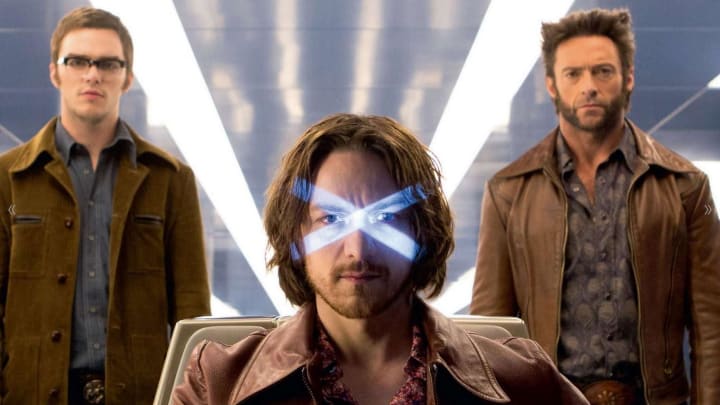
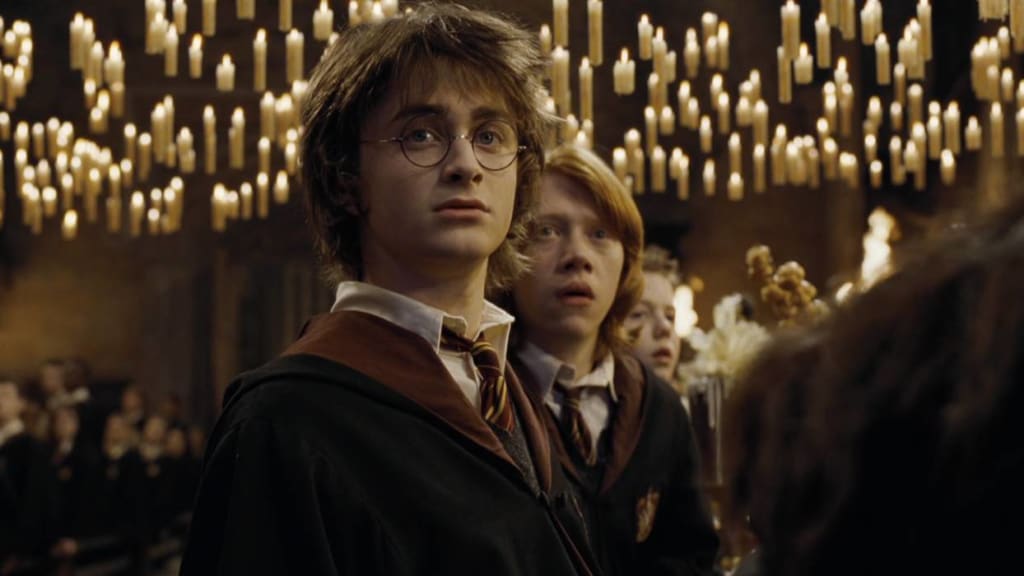
Normally, it is films suited more to the younger generation that is more likely to have examples of deus ex machina. This can include the following films but definitely aren't limited to them.
The watchlist:
- Harry Potter Series
- The X-Men Series
- Angels and Demons (2009)
- The Hitchhiker's Guide to the Galaxy (2005)
- The Lord of the Rings Series
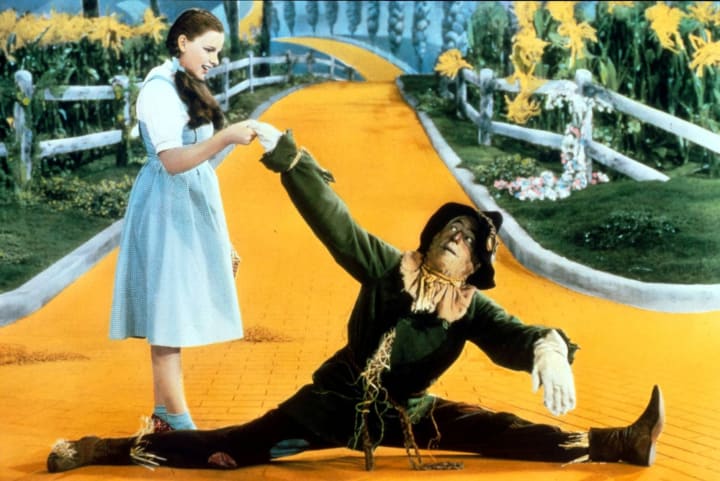
- The Wizard of Oz (1939)
- The Jurassic Park Series
- Ocean's Twelve (2004)
Throughout movies, Deus Ex Machina has been used to end a movie or solve a problem throughout the movie that previous was thought to be unsolvable. Sometimes, it can be seen as lazy and in my opinion, it normally is. But in some cases such as in the "Lord of the Rings" series, it can become part of the storylines and an integral part of all of the storylines of each film. This makes sense if the film is part of a series.
Honestly, when it comes to including a deus ex machina into your own film, you would want to make sure that whatever you're planning to use for the deus ex machina established early on in the film so that when you use it at the end of the film. This will avoid any accusations of shoe-horning in a solution to a problem which seems at first, unsolvable. The solution needs to be subtly there from the very beginning of the film in order not to just avoid accusations of this, but also in order to establish that there is a solution there just in case. This will make the deus ex machina seem less overtly pushed into the storyline.
Further Reading:
- Baum, L.F (2019). The Wizard of Oz. UK: Macmillan Collector's Library.
- Brown, D (2009). Angels and Demons: (Robert Langdon Book 1). USA: Corgi Books.
- Crichton, M (2015). Jurassic Park. UK: Arrow.
- Rowling, J.K (2014). Harry Potter and the Goblet of Fire. UK: Bloomsbury Children's Books.
- Tolkien, J.R.R (2011). The Fellowship of the Ring (The Lord of the Rings, Book 1). UK: Harper Collins.
About the Creator
Annie Kapur
I am:
🙋🏽♀️ Annie
📚 Avid Reader
📝 Reviewer and Commentator
🎓 Post-Grad Millennial (M.A)
***
I have:
📖 280K+ reads on Vocal
🫶🏼 Love for reading & research
🦋/X @AnnieWithBooks
***
🏡 UK
Keep reading
More stories from Annie Kapur and writers in Geeks and other communities.
The Jazz Singer (1927)
In this article, we will be looking at 2019’s book “1001 Movies to See Before You Die” and going through each film in a random order that I have chosen. We will be looking at what constitutes this film to be on the list and whether I think this film deserves to be here at all. I want to make perfectly clear that I won’t be revealing details from this book such as analyses by film reporters who have written about the film in question, so if you want the book itself you’ll have to buy it. But I will be covering the book’s suggestions on which films should be your top priority. I wouldn’t doubt for a second that everyone reading this article has probably watched many of these movies anyway. But we are just here to have a bit of fun. We’re going to not just look at whether it should be on this list but we’re also going to look at why the film has such a legacy at all. Remember, this is the 2019 version of the book and so, films like “Joker” will not be featured in this book and any film that came out in 2020 (and if we get there, in 2021). So strap in and if you have your own suggestions then don’t hesitate to email me using the address in my bio. Let’s get on with it then.
By Annie Kapur5 years ago in Geeks
Silver Screen Magic with Mae West
American actress and singer Mae West became a popular film actress during the Great Depression. She started entertaining in vaudeville, then performed on Broadway, and finally went to Hollywood. She signed up with Paramount Pictures and made her debut in the 1932 film “Night After Night.” She also starred in musicals, comedies, and crime dramas. The American Film Institute named her one of the best classic Hollywood actresses.
By Rasma Raisters3 days ago in Geeks
Sadie Sink Found Out About Her ‘Spider-Man’ Casting Via Online Speculation: “There’s Sometimes Some Truth To It”
Although sworn to secrecy by the MCU, Sadie Sink admits there’s sometimes some truth to the online fan theories. The actress, who will star in Spider Man Brand New Day in an undisclosed role, admitted “it’s torture” not being able to tell people which character she’s playing in the fourth installment of the Marvel Studios franchise.
By Dena Falken Esq6 days ago in Geeks




Comments
There are no comments for this story
Be the first to respond and start the conversation.