
5 Wild Historical Theories That Might Explain What’s Really Buried on Oak Island
For over two centuries, treasure hunters have been digging through mud, rock, and legend on Nova Scotia’s Oak Island, chasing what might be the most ambitious buried secret in the Western world.

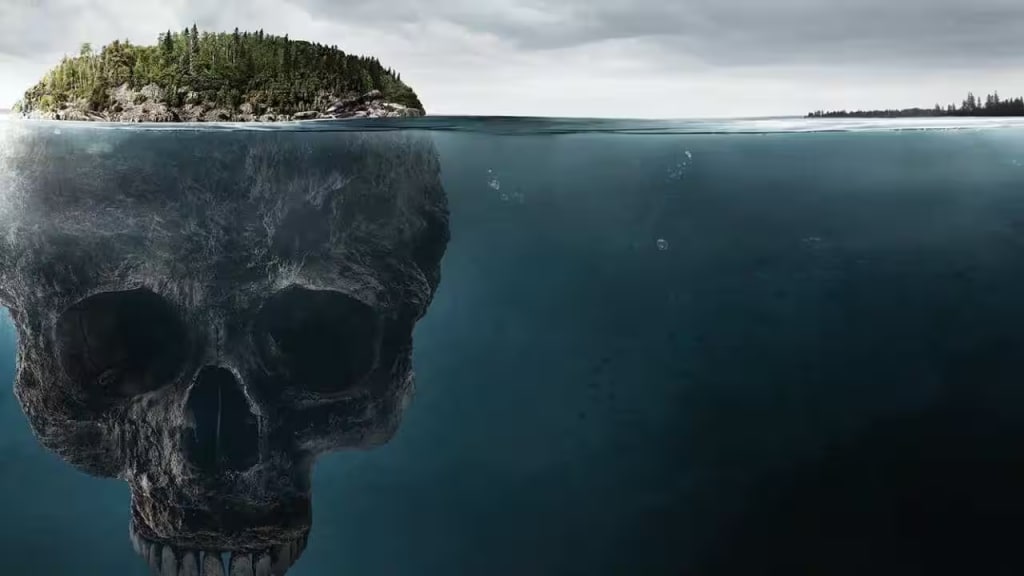
🏴☠️ A Mystery So Big, It Could Hold All of History
For over two centuries, treasure hunters have been digging through mud, rock, and legend on Nova Scotia’s Oak Island, chasing what might be the most ambitious buried secret in the Western world.
It all began in 1795, when a teenager named Daniel McGinnis spotted a strange depression beneath an old oak tree — and what followed was the creation of the infamous Money Pit.
What’s buried down there?
That’s the billion-dollar question. And over the last 200+ years, dozens of bold — and often bonkers — theories have emerged.
Here are the five most compelling and widely discussed historical treasure theories that still haunt the island today — and keep driving search teams to risk everything for the ultimate prize.
🦜 1. Captain Kidd’s Pirate Gold
This is the OG theory — the one that sparked the earliest searches.
🧭 Who Was Captain Kidd?
Captain William Kidd was a Scottish privateer-turned-pirate, active in the late 1600s. Initially hired by the British Crown to hunt pirates, he famously became one himself, looting ships across the Indian Ocean and amassing a fortune.
He was captured and executed in 1701 — but his treasure?
Never found.
💰 The Oak Island Connection
Kidd allegedly told prison guards and visitors that he buried treasure “where none but Satan and myself can find it.”
Some believe that Oak Island — with its deceptive booby traps, false floors, and engineered flood tunnels — fits that description a little too well.
Early diggers found oak log platforms every 10 feet
Some believed they were built to thwart grave robbers
The mysterious 90-foot stone allegedly contained a message:
“Forty feet below, two million pounds are buried.”
To Kidd truthers, that was all the confirmation they needed.
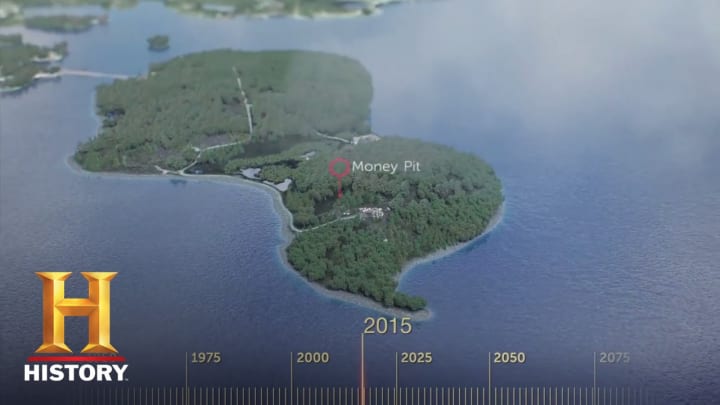
✝️ 2. The Knights Templar’s Sacred Relics
If Kidd’s gold is a Hollywood fantasy, the Templar theory is pure Da Vinci Code.
🕍 Who Were the Templars?
The Knights Templar were a powerful religious-military order formed during the Crusades. They became exceptionally wealthy and secretive before being brutally dismantled by the Church and the French monarchy in 1307.
Many believe they went underground — taking their wealth and relics with them.
🧱 The Theory
The Templars, it’s claimed, sailed to North America centuries before Columbus, establishing secret outposts to hide the Holy Grail, Ark of the Covenant, sacred scrolls, or other priceless religious artifacts.
Oak Island — remote, protected by tides, and filled with hidden chambers — would’ve been a perfect vault.
Supporters point to:
- A stone cross formation on the island’s north end
- The discovery of European-style lead crosses
- French connections to Nova Scotia dating back to the 1300s
- The island’s complex flood tunnel system, suggesting medieval engineering
It’s not just treasure… it’s the secrets of Western civilization buried in the mud.
🎭 3. Shakespeare’s Missing Manuscripts
This one comes out of left field — but stick with us.
📝 The Premise
Some theorists believe that Sir Francis Bacon, an English philosopher, writer, and politician, was the true author of Shakespeare’s plays.
But in a time when challenging the monarchy could mean execution, he allegedly encoded his works — and then hid the originals somewhere no one would ever find them.
📚 Why Oak Island?
Proponents of this theory believe:
Bacon (or the Templars he worked with) sent the manuscripts to Nova Scotia
They were stored in a vault beneath Oak Island, along with coded messages and Rosicrucian symbols
The “90-foot stone” may have contained cipher keys linked to the works of Shakespeare
Some of the early treasure diggers in the 1800s even claimed they were searching for proof of authorship, not gold.
It sounds wild — but remember: the real Shakespeare didn’t leave any manuscripts behind. Not one.
So… maybe they’re in Canada?
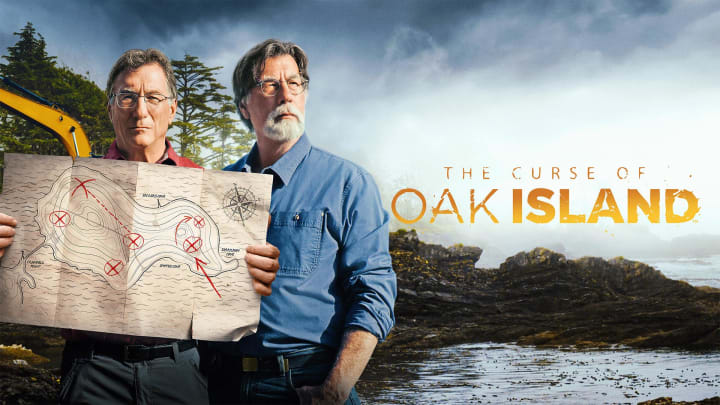
👑 4. Marie Antoinette’s Lost Jewels
Yes, that Marie Antoinette.
👸 A Queen, A Revolution, and a Disappearing Treasure
During the French Revolution, Queen Marie Antoinette was imprisoned and ultimately executed in 1793.
But before her fall, some believe she entrusted loyal servants with smuggling her most prized jewels out of France to keep them from revolutionary hands.
🧭 Enter Nova Scotia
Nova Scotia — a French territory for many years — was a logical destination for escaping aristocrats.
The theory holds that:
French loyalists buried the royal treasure on Oak Island
Clues to its location were passed down through secret societies or hidden in European archives
The complexity of the Money Pit was meant to preserve not wealth, but royal dignity
One tiny gemstone found on the island even sparked a fresh wave of believers.
Gold is one thing.
But crown jewels? That’s history-changing.
5. Treasure from Spanish Galleons
No treasure legend would be complete without Spain’s armadas of gold-laden galleons — many of which disappeared at sea.
🏴☠️ What Makes This Plausible?
From the 1500s to the 1700s, the Spanish shipped vast amounts of gold, silver, and precious stones from South America to Europe via heavily guarded fleets.
But pirates, storms, and mutinies often sunk those treasures forever.
Oak Island is conveniently located near historic shipping routes, and Nova Scotia’s rugged coast was infamous for shipwrecks.
The idea: a Spanish galleon, lost or pursued, offloaded its treasure onto Oak Island, digging a quick hiding spot — perhaps never returning.
Supporters point to:
- Coins and relics found on the island of Spanish origin
- Artifacts linked to 16th–17th century Iberian craftsmanship
- Oak Island’s position as a potential emergency port or smuggler’s stash site
It’s less mystical, more historical — and still wildly compelling.
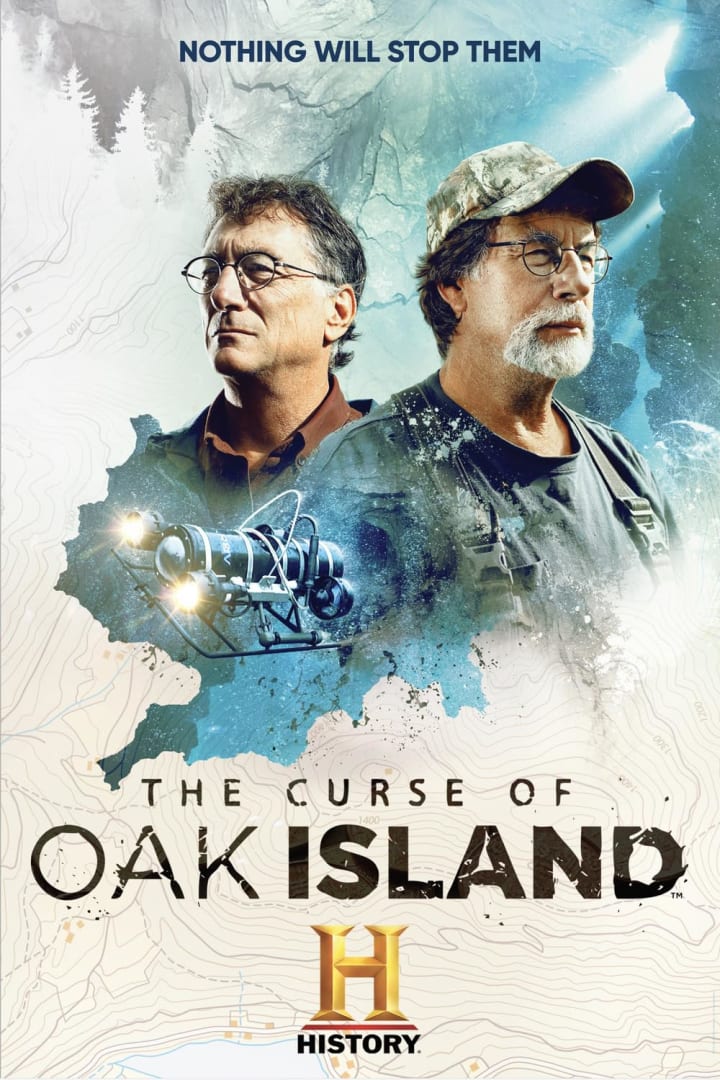
🧠 Could They All Be True?
Here’s the wildest theory of all: what if it’s not just one treasure?
Theories have emerged suggesting Oak Island is a deposit site, used multiple times by different groups, each hiding their own secrets in deeper and more elaborate ways.
Pirates. Priests. Royalists. Conspirators.
A layered mystery, buried through generations.
In this version, every artifact found — from coins to crosses to wood planks — is part of a larger, composite puzzle.
The real treasure? Understanding who buried what… and why.
🎯 Final Thoughts: The Island That Refuses to Give Up Its Secrets
From 1700s pirates to 1300s crusaders, 16th-century playwrights to guillotined queens, Oak Island is a gravitational field for legend.
Each theory is impossibly romantic.
Each one feels just plausible enough.
And none have been disproven.
That’s what makes the island so addictive.
It’s not just a treasure hunt.
It’s a mirror reflecting our deepest questions:
What have we lost?
What are we willing to believe?
And what would we sacrifice to find the truth?
The answers — if they exist — are still buried in Nova Scotia mud.
📣 Call to Action
Have a favorite Oak Island theory? Think it’s pirates, priests, or propaganda?
Share this with a fellow treasure hunter, and follow me on Vocal.Media for more deep dives into the legends, lies, and lost gold that make history feel alive again.
Because some maps don’t lead to gold.
They lead to obsession.
About the Creator
Rukka Nova
A full-time blogger on a writing spree!
Keep reading
More stories from Rukka Nova and writers in Geeks and other communities.
Silver Screen Magic with Mae West
American actress and singer Mae West became a popular film actress during the Great Depression. She started entertaining in vaudeville, then performed on Broadway, and finally went to Hollywood. She signed up with Paramount Pictures and made her debut in the 1932 film “Night After Night.” She also starred in musicals, comedies, and crime dramas. The American Film Institute named her one of the best classic Hollywood actresses.
By Rasma Raisters5 days ago in Geeks
People We Meet on Vacation
Our first Netflix movie of the year is The People We Meet on Vacation. Obviously this is based on a book, one of those “summer reads” kind of books. So the expectations for this movie are very low. It’s gonna be some fluff and that’s okay as long as it doesn’t try to be more than what it is. I have no problem with mindless films as long as the movie itself knows it's mindless.
By Alexandrea Callaghan2 days ago in Geeks
Rachel Reviews: The Spiral Archive by Pieter Hendrik
It's difficult for me to know where to start with a review of this book as it was, for me, an entirely unique experience and one that I'll probably never have again. I don't want that to be interpreted as unenjoyable but it has left me scratching my head a little and ruminating on its content, its themes and its characters.
By Rachel Deemingabout 12 hours ago in BookClub


Comments
There are no comments for this story
Be the first to respond and start the conversation.