


Previously, in 5 beautiful passages from books, we have covered: 'Brideshead Revisited' by Evelyn Waugh, 'Cloud Atlas' by David Mitchell, '100 Years of Solitude' by Gabriel Garcia Marquez, 'Anna Karenina' by Leo Tolstoy and 'Aristotle and Dante Discover the Secrets of the Universe' by Benjamin Alire Saenz. That was in part 1, which you can find here.
In part 2, we had a look at: 'War and Peace' by Leo Tolstoy, 'The Brothers Karamazov' by Fyodor Dostoevsky, 'Moby-Dick; or the Whale' by Herman Melville, 'Jane Eyre' by Charlotte Bronte and finally, Mary Shelley's 'Frankenstein'. So I am happy to announce that we have now moved on to part 3, where we will be looking at another five great books with beautiful passages in them.
These lists are in no particular order.
5 Beautiful Passages from Books (Pt.3)
Down and Out in Paris and London by George Orwell
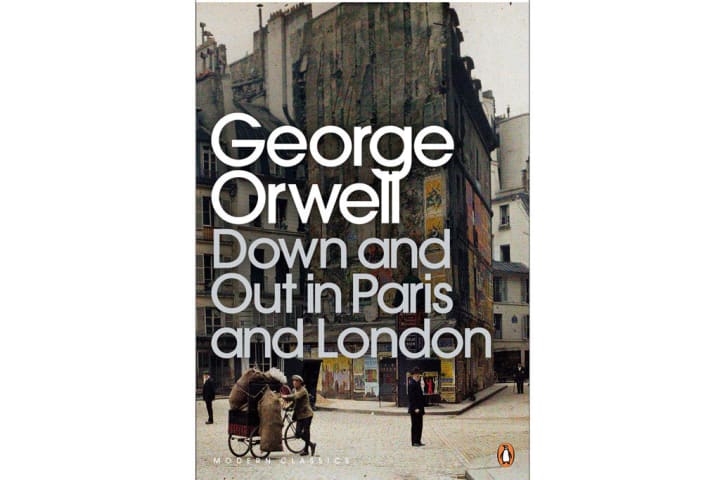
Then the question arises, Why are beggars despised?--for they are despised, universally. I believe it is for the simple reason that they fail to earn a decent living. In practice nobody cares whether work is useful or useless, productive or parasitic; the sole thing demanded is that it shall be profitable. In all the modem talk about energy, efficiency, social service and the rest of it, what meaning is there except 'Get money, get it legally, and get a lot of it'? Money has become the grand test of virtue. By this test beggars fail, and for this they are despised. If one could earn even ten pounds a week at begging, it would become a respectable profession immediately. A beggar, looked at realistically, is simply a businessman, getting his living, like other businessmen, in the way that comes to hand. He has not, more than most modem people, sold his honour; he has merely made the mistake of choosing a trade at which it is impossible to grow rich.
This is quite possibly my favourite passage from this whole book and over the years I have read it and re-read it over and over. This paragraph really teaches you about the way in which the world understands 'work' and what 'work' is and whether particular kinds of work are good or not - what they means and what value they have and why. Orwell was a genius of showing the world its own repulsiveness and this is where he critiques everything again. A brilliant novel and definitely my favourite Orwell book.
All the Pretty Horses by Cormac McCarthy
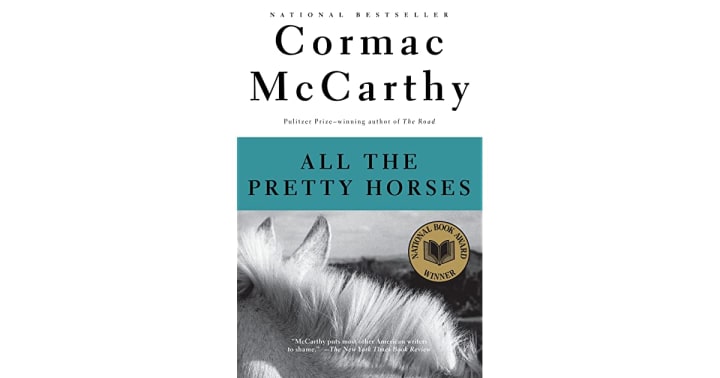
“That night he dreamt of horses in a field on a high plain where the spring rains had brought up the grass and the wildflowers out of the ground and the flowers ran all blue and yellow far as the eye could see and in the dream he was among the horses running and in the dream he himself could run with the horses and they coursed the young mares and fillies over the plain where their rich bay and their rich chestnut colors shone in the sun and the young colts ran with their dams and trampled down the flowers in a haze of pollen that hung in the sun like powdered gold and they ran he and the horses out along the high mesas where the ground resounded under their running hooves and they flowed and changed and ran and their manes and tails blew off of them like spume and there was nothing else at all in that high world and they moved all of them in a resonance that was like a music among them and they were none of them afraid neither horse nor colt nor mare and they ran in that resonance which is the world itself and which cannot be spoken but only praised.”
This is one of my favourite passages from any book ever. It is such a beautiful and metaphorical passage with such gravity and yet, such grace. It is like watching someone ride across the desert on horseback followed by a man running whilst carrying the Mona Lisa. I make that allusion often because that is what it sounds like in my head. It sounds like a brilliant, but simple picture and dreamscape of somewhere that you know but you also feel unfamiliar with because you've only ever been there asleep.
Lotte in Weimar by Thomas Mann

Men act in response to an outward situation, and on being presented with an opportunity to conform to a pattern. If the pattern gives licence to cruelty, so much the better. They take advantage of the licence so thoughtlessly, so thoroughly, that it becomes perfectly clear: the generality of mankind are only waiting for the chance, only waiting for outward circumstance to sanction brutality and allow them to be cruel and brutal to their heart's content.
I hated Thomas Mann before reading this book. I thought he wrote the worst Faustus, "Death in Venice" was average and "Magic Mountain" was awful. But, after reading "Lotte in Weimar" my mind was changing. "Lotte in Weimar" became one of my 25 favourite books of all time and I ended up writing a 'first impressions' article on the novel. It's a beautifully constructed, character-driven masterpiece that requires the reader to make decisions on what they think of both parties at every single stage of the book. It really is a masterpiece.
Huckleberry Finn by Mark Twain
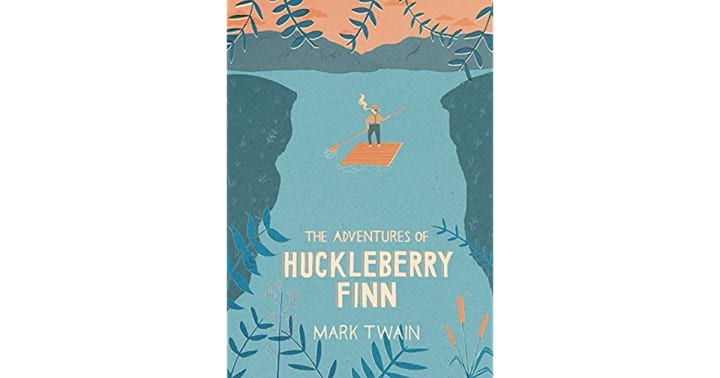
“It's lovely to live on a raft. We had the sky, up there, all speckled with stars, and we used to lay on our backs and look up at them, and discuss about whether they was made, or only just happened- Jim he allowed they was made, but I allowed they happened; I judged it would have took too long to make so many.”
One of my favourite childhood books next to J.M Barrie's 'Peter Pan' was Mark Twain's 'Huckleberry Finn'. I was a tiny child when I read that (I was a weird kid, okay?) and I instantly enjoyed it. It was a lovely edition with pictures and it was clothbound and all green with a picture of Huck Finn on the front cover. It looked beautiful. What is even more beautiful is that as I grew up, I began to appreciate it more and more, by the time I was studying at university, I chose to do a comparison paper on the American Literature of the changing landscape between the industrial revolution and the end of the draft of world war 2 - I used 'Huckleberry Finn' for that (in tandem with 'Kafka was the Rage' by Anatole Broyard, another one of my favourite books).
Just Above My Head by James Baldwin
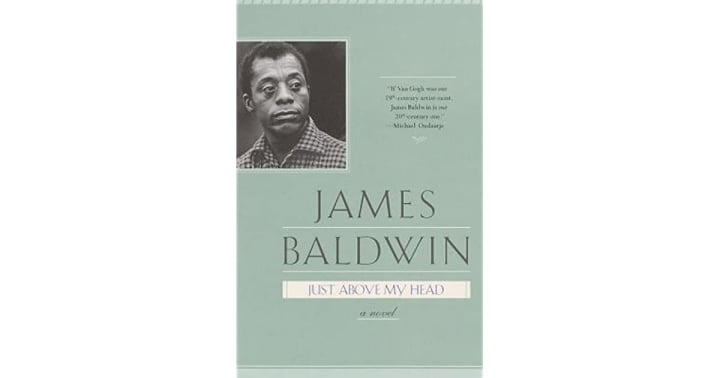
“The summer ended. Day by day, and taking its time, the summer ended. The noises in the street began to change, diminish, voices became fewer, the music sparse. Daily, blocks and blocks of children were spirited away. Grownups retreated from the streets, into the houses. Adolescents moved from the sidewalk to the stoop to the hallway to the stairs, and rooftops were abandoned. Such trees as there were allowed their leaves to fall - they fell unnoticed - seeming to promise, not without bitterness, to endure another year. At night, from a distance, the parks and playgrounds seemed inhabited by fireflies, and the night came sooner, inched in closer, fell with a greater weight. The sound of the alarm clock conquered the sound of the tambourine, the houses put on their winter faces. The houses stared down a bitter landscape, seeming, not without bitterness, to have resolved to endure another year.”
My favourite James Baldwin novel, this is a book that really never gets old or dries out. You can read it over and over again and still cry in the face of it. It's one of those books that never goes out of style and is written by one of the most articulate men in history - James Baldwin. A brilliant mind, Baldwin, in my opinion, is one of the greatest writers in human history. 'Just Above My Head' is only one reason why. I have always revisited this book and every single time, I am astounded by the language use.
Conclusion
Beautiful books are beautifully written, that is all. A book that is beautifully written has all the complexities of the human soul - it can radiate brilliance through many ages and it will never die.
About the Creator
Annie Kapur
I am:
🙋🏽♀️ Annie
📚 Avid Reader
📝 Reviewer and Commentator
🎓 Post-Grad Millennial (M.A)
***
I have:
📖 280K+ reads on Vocal
🫶🏼 Love for reading & research
🦋/X @AnnieWithBooks
***
🏡 UK
Keep reading
More stories from Annie Kapur and writers in Geeks and other communities.
50th Anniversary: "Fear and Loathing in Las Vegas" by Hunter S. Thompson
The History Behind the Book Based on a trip to Las Vegas that he took with his friend and attorney, Oscar Zeta Acosta, the book was initially published in the music and culture magazine, Rolling Stone. Many people are already aware that the book was actually written first and foremost as a magazine article that was meant to be only 250 words, but blew into a full blown novel that then, the Sports Illustrated Magazine rejected for publication and so, Rolling Stone took up the offer. The Mint 400 Motorcycle race was the subject and before arriving at that particular point, the literary genius of Hunter S. Thompson is more than present through days of ramblings, philosophies and illegal highs.
By Annie Kapur4 years ago in Geeks
Silver Screen Magic with Mae West
American actress and singer Mae West became a popular film actress during the Great Depression. She started entertaining in vaudeville, then performed on Broadway, and finally went to Hollywood. She signed up with Paramount Pictures and made her debut in the 1932 film “Night After Night.” She also starred in musicals, comedies, and crime dramas. The American Film Institute named her one of the best classic Hollywood actresses.
By Rasma Raisters6 days ago in Geeks
Premier League in Ireland: How to Watch
The 2025–26 Premier League season is underway, marking the 34th edition of the competition and the 127th year of top-flight English football. Liverpool start their title defense with confidence after lifting their second Premier League trophy last season, but the return of Leeds United, Burnley, and Sunderland ensures fresh rivalries – including the long-awaited Tyne–Wear derby, back for the first time since 2015–16.
By David Cook8 days ago in Geeks



Comments
There are no comments for this story
Be the first to respond and start the conversation.