
“Lotte in Weimar” by Thomas Mann
First Impressions (Pt.6)

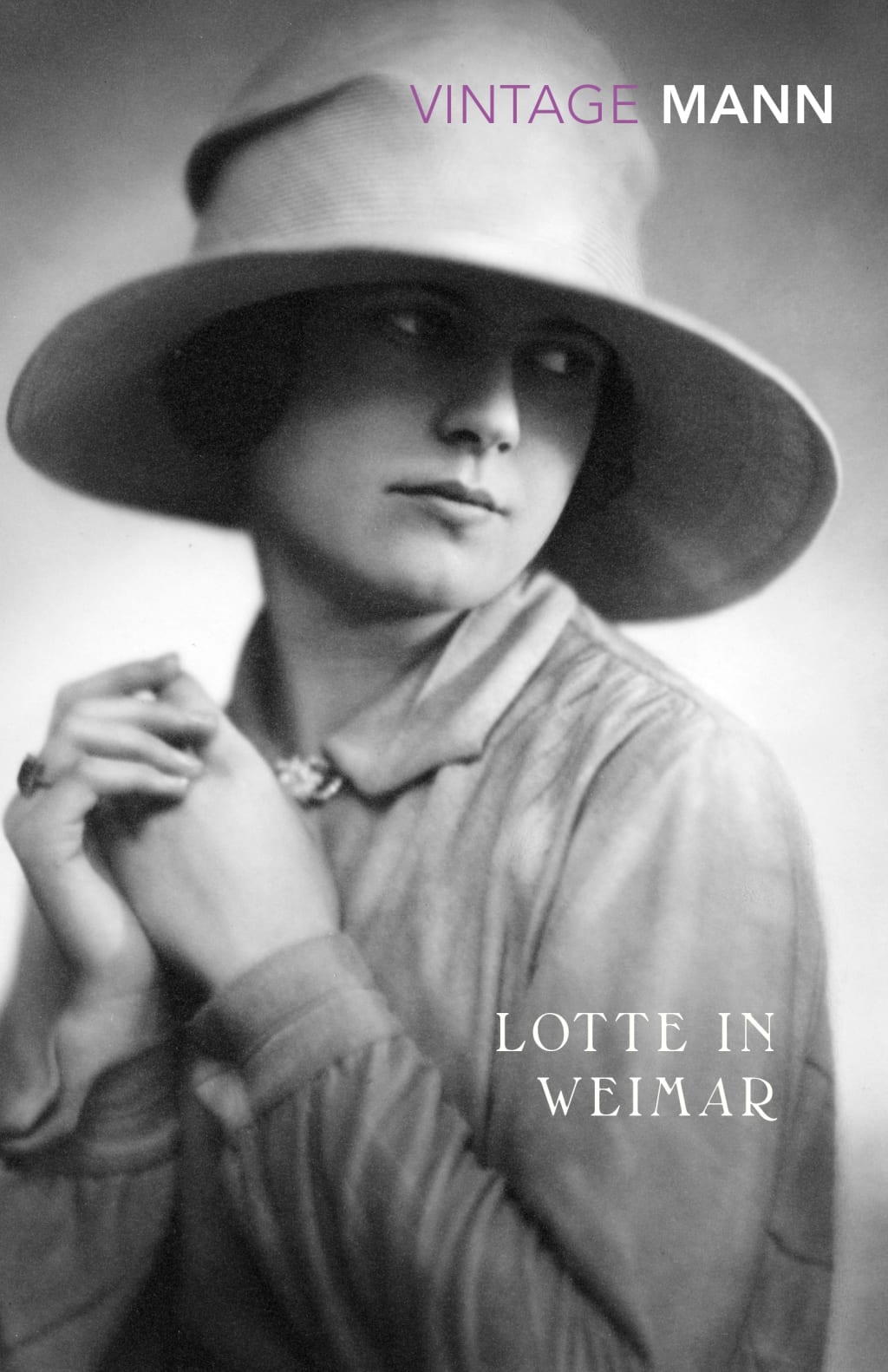
Thomas Mann’s “Lotte in Weimar” is often considered to be one of his many masterpieces and in my opinion it is Mann’s greatest novel. There are many key factors that one has to concern themselves with when looking at this statement of ‘masterpiece’ though and what makes Thomas Mann’s work a ‘masterpiece’. It is both artistic and well-constructed. It is character-driven and context dependent. But, context dependent as it may be, it is transcendent of its times, moving into our own and into the future with ease of access and applicable to the situations that will always concern humans - love, death, time and influence. When we have a look at this character-driven narrative, at first we believe that it is Lotte herself that is driving this narrative forwards with her focus on her want for her old life, whereas it is actually Goethe who drives the narrative with his aspect of celebrity though he does not appear physically for quite some time in the novel. Lotte is a woman of her time but she is also a woman who requires control of her own future, it is a question of whether she actually gets this because she is famed as the woman who is constantly associated with Goethe. The image of women and womanhood in the novel is a strange one because we have so many varying personalities. First of all, we have the personality of the self-driven woman who is Adele, the new and true-blooded Weimar woman. Then we have the opposing side which is basically Lotte - the woman who wishes herself to be self-driven but constantly finds herself hanging on to her past. There is little for Lotte in her future except returning to this past in order to confront it and the reader will always know that this is something that drives her. Her self-drive does not come from feigning a modernisation of herself as a woman, but rather treating herself as having an individual story in which certain plot points require editing, revisiting, revising and confronting in her autobiography and saga of romance.
Lotte often describes herself throughout the novel, feeling sorry for herself before acting upon her wish to revisit and confront her past after forty years. She is known as a woman with an overwhelming amount of emotion coursing through her veins and her language use is often hyperbolic, breathtaking and constantly focused on her needs being ever so slightly out of her reach at that particular moment. She feels pity upon herself for her position in life. She is known primarily as a celebrity/muse figure of Goethe and that was in the past. Scared that she has metaphorically ‘washed up’, the reader has to decide whether Lotte’s self-pity is actually a response to wanting to confront her past or wanting to see herself once again in modernising Weimar, a right-hand to the situation of a celebrity:
“I have made my little arrangements in all calmness - not without a sense of their strangeness, but without bitterness. You see, I am like the prophet who went to the mountain when the mountain would not come to him. If the prophet were sensitive, he would not come. And let us not forget that he comes only incidentally. The point is that the prophet is not minded to avoid the mountain - it would only go to prove that he felt sensitive…” (p.81)
The reader clearly sees here that Lotte alludes to herself as a ‘prophet’. Now, this can be thought of as simply an allusion, almost Biblical. Or, it can be thought of as an instance of pride. There are two arguments within this speech as one being an allusion perfect for her situation and one being the argument for pride through self-pity. An allusion to being a prophet may not be the only method of this but also the aspect of the ‘mountain’. The mountain most definitely refers to the past situation and the confrontation she needs to do, but is at the moment avoiding. It is something that will come back later in the book as a repetition. Whether it is actually not to appear sensitive is unclear as when August visits her, she is incredibly sensitive towards him, based mostly on the fact that he looks so much like his supposed father.

Another aspect of Charlotte that the reader notices almost immediately is her snobbery, however slight. Her slight snobbery makes her seem almost arrogant and therefore, when the reader prepares for her move through to the modernising Weimar, the reader can understand it more than if she were to do it in the character she is at the beginning of the novel. Lotte’s initial attitude towards Adele’s literary habits are one of the most direct acts of snobbery and arrogance we see from Lotte in the novel:
“I assumed that it would interest you, Charlotte replied, despite your penchant for the lesser literary nouveautes…” (p.117)
Therefore, the reader are able to clearly see the way in which Charlotte speaks of her relationship with Goethe. Like the previous quotation, we get a split personality from the way in which Lotte speaks of her past. The way in which she treats Adele in this conversation does have a certain amount of symbolism through the way the women interact otherwise. But the most obvious giveaway to this was definitely the chapter in which all Adele and Lotte are doing are discussing the belief in the modernising Weimar and where it will go.
Charlotte’s presentation of herself as almost above other women is quite prominent in the first half of the book. Yes, she pities her own position as a muse and a former love, but she also pities other women for not aspiring to much or not having enough inner-strength to endure - like herself. This turns certain people against her, but not many. There is a rough tension suggested with Adele and even though that is, most of the time the two of them appear amicable. Charlotte states:
“‘I pity the poor girl’ Charlotte said; ‘she had no strength of purpose to rouse herself to a happy and honourable life, to wed some honest and capable man there in the country and love him as the father of her children. To live on memories alone is the privilege of age, after life’s tasks are done. In youth, it means death.” (p.206)
It is fairly obvious that Charlotte takes her ageing life as a point of privilege, whether she actually does or whether she is trying to counter the changing life of the Weimar woman as it modernises is a completely different thing. It shows us her ability to feel sorry for herself in the respects of appearing that she has done everything worth doing as a woman, but then she feels sorry for other women as they age and have not got these memories because of the modernisation of the Weimar woman.
When Charlotte first sets eyes on August, she is stunned to see how much he looks like his father and yet, how much he doesn’t. This is the first thing she notices even though she is not concerned with appearances. Instead, she is repeating this same memory as before. If memory is the privilege of her age then she notices August’s similarities and differences to Goethe through first impressions of him upon her. This, before he has spoken, is most definitely his appearance:
“It was the dark-brown hue of these eyes, so like the elder Goethe’s, set close together with a something just not quite right about them, that suddenly made her receptive for August’s likeness to his father. It happened during the few seconds it took the young man to enter, make his bow and move towards her. The likeness was universally recognised, and as striking as it was hard to analyse in detail. The forehead was lower, the nose less aquiline, the mouth smaller and more feminine. Yet nonetheless a likeness asserted itself - slightly worn, tinged with melancholy as though by the consciousness of being little debased; worn, indeed, with an air of apology…Charlotte was deeply moved.” (p.187)
This passage should teach the reader that in fact it is not the appearance of August that matters but rather the similarities and differences first noted about his father’s appearance in comparison. This is Charlotte again revising those memories from forty years before and realising that there would be a similarity if the comparison was watched over the space of time. It is almost certain that Goethe forty years before would look surprisingly younger and therefore, more like August than he probably looks now. It is a question therefore of whether Charlotte notices this as a memory of whether she had, from bringing up Goethe’s memory from before, was actually looking for a similarity or pattern from August’s face in order to validate this memory.
Charlotte has a deep concern with the nobility of the female soul as well as her own memory. This would possibly want to make her validate this memory even more that she has of Goethe because it would have been her famed relationship with Goethe that caused this almost pretentious nobility of her soul (as she sees it). She is almost a romantic icon in this respect and thus, it causes her more of a nostalgic reminiscence to the time in which she was with Goethe, bringing the entire thing back on itself. She is stuck in a cycle of remembering these things, feeling noble about herself and passionate for older days from before and then, remembering it once again for it is only this that validates her emotion from previously. It keeps on this way until she returns to Goethe later on in the novel to be greeted as a celebrity; a physical validation of her emotions:
“She felt, as she spoke, disturbed by the though that she was in the dark as to the nature of these merits. True, she had learned that he was a pedagogue, and that he was also a writer; and she was glad to hear it. At the same time the information surprised and almost annoyed her. The man’s description of himself did violence to his sole notable quality in her eyes, that of services performed by him in a certain quarter.” (p.37).
It is clear that Charlotte is allowed to think of herself this way, but in fact nobody else is in her aspect. Though she would not judge herself for thinking this way about her own predicament, she would change her very opinion of someone else if they displayed themselves as holding themselves in the same regard. It is not only ironic but also presents a strong flaw in Charlotte’s character. She is a strong personality and yet cannot match up to other strong personalities in the novel.
In conclusion, Charlotte’s character is a strange mixture between old and new Weimar. Her wish to remember her life that had gone forty years before and her want to return to that life just the way it was shows that she is clearly in mind of the older, more passionate days. But her want for the new Weimar comes in her tensions with Adele. These tensions display almost a hint of new-Weimar jealousy and make Charlotte’s character appear almost defensively proud of her own previous life gone. This is either a passionate loving for the olden times of her life, or a defence mechanism against younger women who appear more educated, more outgoing and better read than herself and she is threatened by this.
Citation:
Mann, T (2019). Lotte in Weimar. UK: Penguin Random House.
About the Creator
Annie Kapur
I am:
🙋🏽♀️ Annie
📚 Avid Reader
📝 Reviewer and Commentator
🎓 Post-Grad Millennial (M.A)
***
I have:
📖 280K+ reads on Vocal
🫶🏼 Love for reading & research
🦋/X @AnnieWithBooks
***
🏡 UK
Keep reading
More stories from Annie Kapur and writers in Geeks and other communities.
45 Things You Should Know About Batman Begins (2005)
This movie was released on the 15th June, 2005 and it was the beginning of a new era in comic book movies. It was the start of Nolan's Dark Knight Trilogy where we would see the likes of villains portrayed by the incredible Liam Neeson, the terrifying Cillian Murphy, the Oscar Winning Late Heath Ledger, the chilling Marion Cotillard, the violent Bane of Tom Hardy and the ambiguous villainy of Selina Kyle played by Anne Hathaway. There's so much we have to thank Christopher Nolan for.
By Annie Kapur6 years ago in Geeks
Silver Screen Magic with Mae West
American actress and singer Mae West became a popular film actress during the Great Depression. She started entertaining in vaudeville, then performed on Broadway, and finally went to Hollywood. She signed up with Paramount Pictures and made her debut in the 1932 film “Night After Night.” She also starred in musicals, comedies, and crime dramas. The American Film Institute named her one of the best classic Hollywood actresses.
By Rasma Raisters6 days ago in Geeks
Kartik Aaryan suffers first major setback after minor dating controversy
Kartik Aaryan recently suffered first major setback after getting caught in a controversy of dating a minor. It all started when the 35-year-old actor’s newly released film, Tu Meri Main Tera Main Tera Tu Meri, became a box office bomb.
By Dena Falken Esq2 days ago in Geeks




Comments
There are no comments for this story
Be the first to respond and start the conversation.