
3 Hidden Messages You Missed in Harry Potter
Our favorite franchise is not at all as apolitical it seems

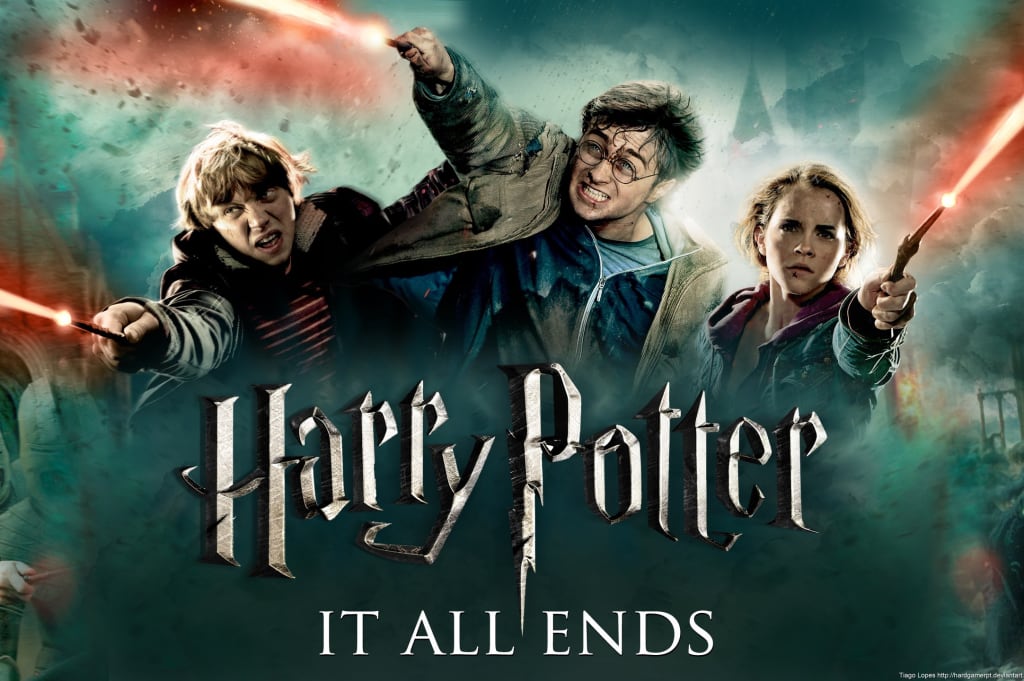
No one can deny that Harry Potter commands an unprecedented fanfare with its followers. Walk into any bookstore and you will find a voracious reader hungrily prodding through the stacked copies of Rowling’s finest. The Wizarding World’s charm only gets grander with a cinematic adaptation that further entranced millions. Such a massive fan-following begs the obvious question: what makes Harry Potter so special? When Potterheads were asked the reasons for their undying love for the franchise, a majority of them pointed towards the work’s stellar world-building. And that they feel drawn into an enchanting universe that just seems too real to be not true. As if a sprinkle of Floo-Powder is all that separates them from a whole world of magic.
The cornerstone of such powerful world-building has been the balanced recreation of muggle-world challenges on the magical canvas. We have been grappling with bullies, bureaucracy, mass murder, cults, supremacists, and inequality for centuries. But, by cloaking them in her new world order, Rowling lets us examine these issues with fresh insight. What is even more spellbinding is how through even the most challenging situation, the work compels us to see love as the most powerful magic. And hence a viable tool to untangle our problems in the real world. Let’s catch up on three such political messages, that reinforce Harry Potter’s call for equality.
Werewolf discrimination as AIDS stigma
“Lupin’s condition of lycanthropy was a metaphor for those illnesses that carry a stigma, like AIDS”- JK Rowling
One of the most lovable characters to occupy the jinxed position at the helm of Defence Against Dark Arts was Remus Lupin. Over the course of Prisoner of Azkaban, we see him charting Harry across serious emotional turbulence. This is perhaps why it extremely distasteful to see Remus get a pink slip due to his medical condition as a werewolf. While looking back at his character, we can uncover a potent allegory in the muggle world where patients of HIV/AIDS still face such discrimination. The allegory might be lost on some modern readers due to the increased awareness and activism around AIDS today. However, when the third installment came out, AIDS had only been around for about 15–20 years and overwhelming numbers saw it as a sign of moral corruption or promiscuity. Against such a backdrop, Lupin emerges as a strong political critique of laws that offered little protection of employees with HIV from dismissal.
Now, some of us might think that being equated to a ‘monster’ only worsens the position of sufferers of blood-borne diseases. But, they would be missing a crucial detail. While werewolves might appear as monsters to muggles they are just slightly altered human species in the Wizarding World. In fact, the entire point of presenting heart-warming characters like Hagrid and Remus is to make us drop the value judgment based solely on physical characteristics. Throughout the series, we come across Lupin as a victim of horrible circumstances rather than a malevolent threat to the students. Such an empathetic depiction of him and his condition puts across strong support for the rights of AIDS patients throughout the world.
Wand Regulation as Gun Control
“The massacre of schoolchildren in Dunblane led to UK gun law reform, which is why many stunned that there was no US change after Sandy Hook”- JK Rowling
In recent years Harry Potter has become quite a feature at protests calling for more gun regulation in the States. One only needs to see the scores of young people carrying banners chanting Expelliarmus at the NRA. Interestingly, the call for gun regulation stems from within the series rather than outside it. Early on into Sorcerer’s Stone, we encounter numerous regulations placed on wizard’s wand use. So much so that even logical violations such as Harry’s to defend Dudley in Order of the Phoenix require rigorous litigation. Moreover, certain offenses by the wizarding community can lead to permanent confiscation of their wands as happened with Hagrid. The franchise presents a world where the right to bear a potentially dangerous object is safeguarded as much as the people who can be affected by its improper use. This presentation alludes to the real world where such a fine balance can be recreated around the usage of firearms.
Some might jump the gun and use the intricate metaphor around wands to call for arming the school teachers. Because why not, wasn’t Hogwarts a lovely place despite having everyone armed to their teeth? However, such a view fails to understand that the wand metaphor only stands in muggle-world interactions. A wand gives the sorcerer an unusual advantage against the unsuspecting muggles, just like guns do in the real world. At Hogwarts, wands would equate to what guns are at a rifle academy with students gathered there precisely to learn to use their wands/guns. And it goes without saying that the use of guns at rifle academy is definitely not a good model for the entire society. The presentation of wand regulation in the series imagines how our society can be much safer with little restraint exercised on the wizarding community. Wands both as a metaphor and a magical object beautifully further Harry Potter’s message for love.
Azkaban as Prison Reform
“Azkaban derives from a mixture of Alcatraz and other island-prisons”- JK Rowling
Azkaban, a secluded prison guarded by phantasmal creatures is quite an unusual location to feature in a work aimed at children. The facility serves as the exact antithesis of the warmth and nurturing of Hogwarts, a place where humanity is literally sucked out of its inmates. On careful inspection, Azkaban reveals some of the significant issues with the justice system in the real world. First, is the apparent possibility of miscarriage as shown through the unlawful arrests of Hagrid and Sirius. To make the system more untrustworthy we are aware that criminals like Barty Crouch Jr. and Pettigrew gamed the system to their advantage. By exposing the fallibility of the correction system, the series urges us to examine how even in the real world imprisonment is not free from injustice.
Second, Azkaban is marked by its blatant violation of basic human rights. The prisoners are held in absolutely squalid conditions and were subjected to inhuman emotional vampirism at the hands of dementors. Even the few people who came out of that place were left with a little sanity to hold on to. We can trace parallels for such horrific environments in prison systems all around the world. Notably, the Guantanamo Bay whose inmates have actually compared their term to life in Azkaban. All this points to the urgent need to reform the prison system to ensure that no prisoners are deprived of human rights. Harry Potter does not advocate for the abolishment of jails but it shows time and time again that prison should be the last resort. Furthermore, redemptions arcs of characters like Snape and Draco who committed Azkaban-worthy acts prove that love and forgiveness trump over the use of violence as tools for reform.
As for the elephant in the room, I do not intend to present JK Rowling as a bastion of equality. In recent years, the author has dished out some problematic views over transgender people which is definitely something Dumbledore wouldn’t have approved of. However, we must acknowledge that her opinion on a single issue is not enough to taint the Wizarding World’s message for equality. The series has made an entire generation of young adults witness the power of empathy and loyalty. And only through this empathy can we come anywhere close to safeguarding our world from the Death-Eaters of hatred and poverty that plague the muggle-realm.
About the Creator
Keep reading
More stories from Shourya Agarwal and writers in Geeks and other communities.
Snow White is the Worst Story For Your Children
Imagine walking into your home after a tiring day at work. After hours of fending off the most obnoxious people, nothing is more revitalizing than catching up with the wonderful things your kids have been up to. I am sure that your horror will know no bounds if, during the day someone has force-fed your children the most ridiculous of ideas. Ideas such as beauty equals whiteness or girls need men to save them or that boys are welcome to kiss unconscious women. And this is just the tip of the iceberg. In the 21st century, Snow White and Seven Dwarves offers many problematic messages which are not the best psychological assortment for the children. Which is probably why it is time to rethink this legendary fairytale.
By Shourya Agarwal5 years ago in Families
Silver Screen Magic with Mae West
American actress and singer Mae West became a popular film actress during the Great Depression. She started entertaining in vaudeville, then performed on Broadway, and finally went to Hollywood. She signed up with Paramount Pictures and made her debut in the 1932 film “Night After Night.” She also starred in musicals, comedies, and crime dramas. The American Film Institute named her one of the best classic Hollywood actresses.
By Rasma Raisters10 days ago in Geeks
Intrusive Thoughts Movie Review
Intrusive Thoughts is the kind of psychological film that doesn’t announce its intentions loudly. Instead, it creeps in quietly, mirroring the very phenomenon it explores. Rather than relying on spectacle or overt horror tropes, the movie builds its impact through mood, interior conflict, and an unsettling sense of familiarity. For viewers who have ever experienced unwanted, repetitive thoughts that seem to appear out of nowhere, this film feels uncomfortably close to home.
By David Cook2 days ago in Geeks
Rachel Reviews: The Spiral Archive by Pieter Hendrik
It's difficult for me to know where to start with a review of this book as it was, for me, an entirely unique experience and one that I'll probably never have again. I don't want that to be interpreted as unenjoyable but it has left me scratching my head a little and ruminating on its content, its themes and its characters.
By Rachel Deeming6 days ago in BookClub



Comments
There are no comments for this story
Be the first to respond and start the conversation.