
The Electric Eel: Nature’s Living Power Plant
How a Mysterious River Creature Generates 600 Volts to Hunt, Defend, and Inspire Modern Science
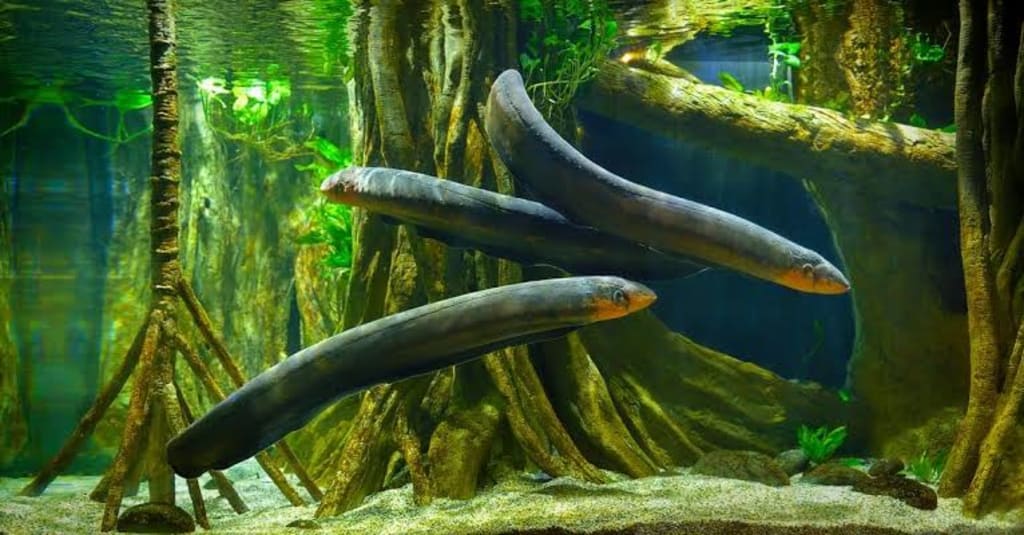
The Astonishing Creature That Generates Electricity: The Electric Eel
Among the countless wonders of nature, the Electric Eel (scientific name: Electrophorus electricus) stands out as a truly fascinating and extraordinary creature. This amazing animal possesses the rare and powerful ability to generate electricity within its body—up to a staggering 600 volts! Such immense power allows it not only to stun or paralyze its prey but also to defend itself against predators. The electric eel is a living example of nature’s ingenious design, combining biology and bioelectricity in a way that scientists are still striving to fully understand.
---
A Living Battery: The Internal Powerhouse
One of the most incredible features of the electric eel is the presence of specialized electric organs in its body. These organs are made up of thousands of unique electrocyte cells, which work together much like the cells of a battery. When triggered, these electrocytes generate an electrical discharge by building up a voltage difference across the body.
The electric eel has three primary electric organs: the Main organ, Hunter’s organ, and Sachs’ organ. Each of these plays a role in emitting either high-voltage or low-voltage electric charges. The low-voltage discharges are often used for navigation and communication, while the high-voltage bursts are used for hunting and defense.
Imagine walking around with a built-in battery that can light up a bulb or charge your phone—except the electric eel uses this electricity for far more primal tasks: survival and domination in its environment.
---
Master of the Hunt: Paralyzing Prey with Power
The electric eel’s hunting technique is as fascinating as it is deadly. In the murky waters of South America—where visibility is poor—the eel uses its low-voltage pulses to detect nearby movement and locate prey such as fish, amphibians, and small invertebrates.
Once it zeroes in on its target, the eel delivers a rapid, high-voltage shock, temporarily paralyzing the prey. The jolt not only incapacitates the target but also gives the eel a tactical advantage: a completely defenseless meal. It then swiftly captures and consumes its stunned victim.
In fact, scientists have observed that electric eels often emit multiple pulses in rapid succession to ensure the prey is fully immobilized. It’s like nature’s version of a stun gun—powerful, efficient, and built-in!
---
Nature’s Electrical Shield: A Defense Mechanism
In the dangerous wetlands and river basins of the Amazon and Orinoco regions where the electric eel resides, predators such as caimans, birds, and even humans can pose a threat. But the electric eel isn’t easy prey.
When threatened, it can instantly unleash a powerful shock of up to 600 volts—enough to cause serious pain or even temporary muscle paralysis in larger predators. This electrical defense is often enough to startle or repel any would-be attacker, making the electric eel a creature most predators learn to avoid.
Interestingly, researchers have also found that electric eels may leap out of the water while shocking threats, maximizing the electrical contact with the intruder—another remarkable demonstration of how effectively they use their built-in weapon.
---
Ecological Importance: Balancing the Aquatic World
Beyond its shocking abilities, the electric eel plays a vital role in maintaining the balance of its ecosystem. Found mostly in slow-moving, freshwater environments such as marshes, rivers, floodplains, and lakes, it helps regulate fish populations and contributes to the food chain as both predator and prey.
By controlling the number of smaller aquatic species, it helps prevent overpopulation and maintains the ecological equilibrium of its habitat. In this way, the electric eel is not just a curiosity—it’s a key player in the health and function of South American freshwater ecosystems.
---
A Marvel for Science and Technology
The electric eel is not just a biological marvel but also a source of inspiration for modern science. Researchers in the fields of bioengineering, robotics, and renewable energy have studied the eel’s electric organs to develop technologies such as self-charging batteries, sensors, and artificial electric systems.
One area of active research is the development of soft power cells that mimic the eel’s electrocyte networks—potentially leading to safer, biocompatible energy sources for medical implants or wearable tech. Nature, it seems, still holds many blueprints for the technologies of tomorrow.
---
Fascination Beyond Biology
For centuries, the electric eel has fascinated not only scientists but also explorers, writers, and artists. In the 18th century, the famous explorer Alexander von Humboldt documented his experience watching horses wade into shallow water to attract eels, which then shocked the animals in self-defense—a dramatic display of nature’s raw power.
Culturally, electric eels have also found their place in myth, storytelling, and even superhero lore—often symbolizing raw energy, hidden power, or mysterious forces of nature.
---
Conclusion: A Living Testament to Nature’s Genius
In every sense, the electric eel is a remarkable creature—a combination of beauty, danger, and brilliance. It reminds us of the intricate designs and hidden wonders within the natural world. Not only does it reveal nature’s ability to innovate, but it also inspires humans to look deeper into how biology can inform technology.
From its ability to navigate in darkness, to its electric weaponry and ecological impact, the electric eel is more than just an animal—it’s a living testament to the power, mystery, and wisdom of the natural world.
So the next time you hear about a creature that can generate electricity, remember: it’s not science fiction—it’s the electric eel, nature’s own thunderbolt!
About the Creator
Keep reading
More stories from Ikram Ullah and writers in FYI and other communities.


Comments (1)
The electric eel is seriously cool. I had no idea it could generate so much voltage. It's amazing how its organs work like a battery. Do you think we could ever harness this kind of bioelectricity for human use? And how does it not shock itself every time it discharges?