
The Science and Strategy of Modern Missiles
A Comprehensive Guide to Missile Types, Technology, and Their Role in Contemporary Warfare
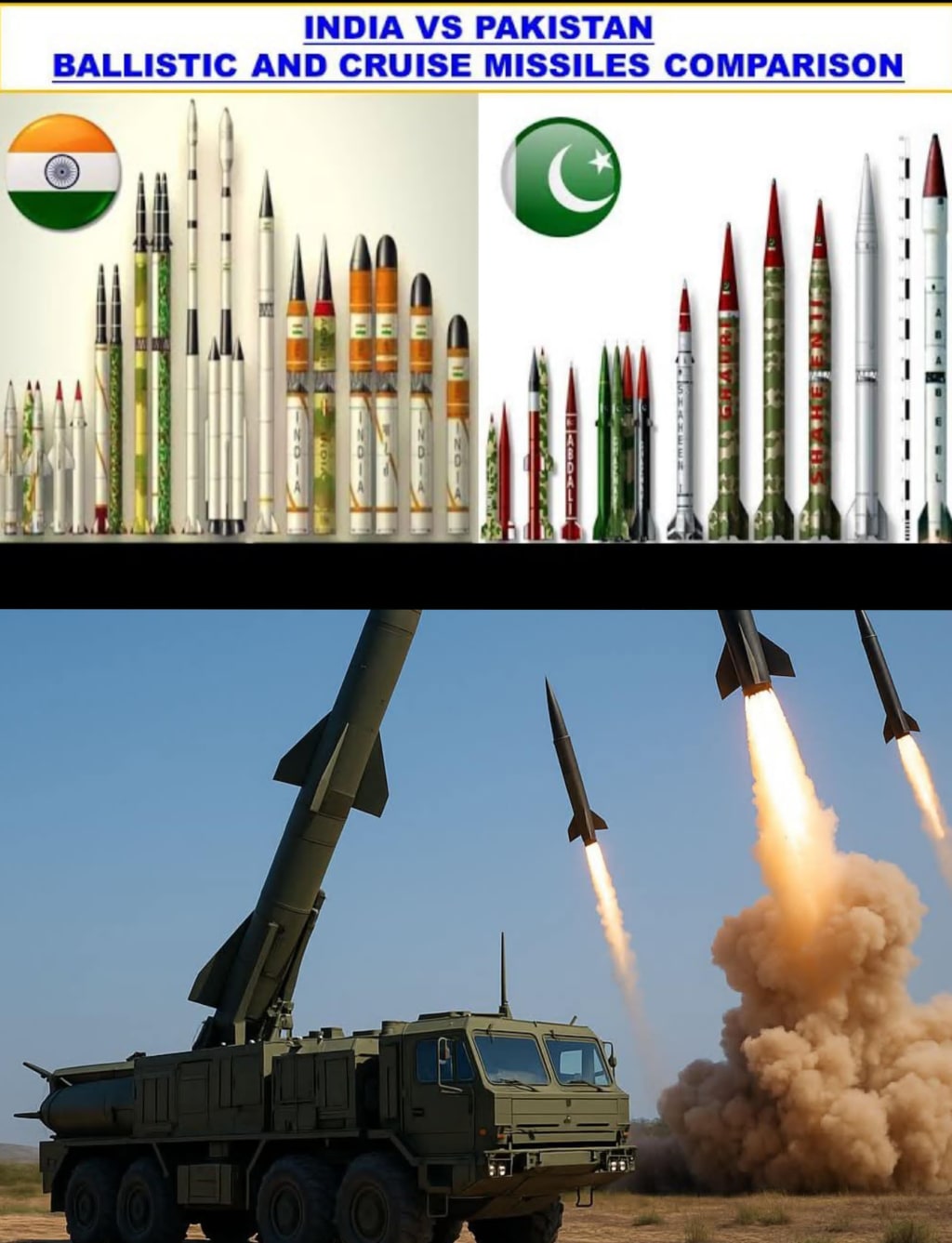
The Science of Missiles
A missile is essentially an automatically guided projectile that consists of a rocket engine, a guidance system, a control system, and a warhead.
The rocket engine propels the missile at speeds reaching thousands of kilometers per hour, enabling it to cover long distances rapidly. The guidance system—such as GPS (Global Positioning System), inertial navigation, or radar—directs the missile along an accurate trajectory towards its target. The control system constantly adjusts the missile’s altitude, angle, and speed during flight to maintain precision. Upon reaching the target, the warhead detonates, causing destruction. Warheads can vary from conventional explosives to highly destructive nuclear payloads, depending on the missile's design and purpose.
---
Types of Missiles
Missiles come in different types based on their range, speed, and intended use. Each type is designed with specific capabilities to suit various military requirements.
---
1. Ballistic Missiles
Ballistic missiles follow a curved, parabolic trajectory through the atmosphere and space before descending onto their target. These missiles are capable of carrying nuclear warheads, making them some of the most strategic and devastating weapons in modern arsenals. Examples include Pakistan’s Shaheen missile series and India’s Agni missiles.
Ballistic missiles are launched with tremendous force from the ground or submarines. After the initial powered flight phase, they coast along a ballistic trajectory, relying on gravity to guide them to their target. Because of their high speeds and long ranges—often spanning hundreds to thousands of kilometers—they can strike distant targets with high precision. Ballistic missiles are central to deterrence strategies due to their ability to deliver nuclear warheads quickly and unpredictably.
---
2. Cruise Missiles
Cruise missiles are designed to fly at low altitudes over long distances to target specific ground locations. They use advanced navigation systems to avoid detection by enemy radar and defenses by flying under radar coverage, often just above the terrain (terrain-following flight). Pakistan’s Babur missile and India’s BrahMos missile are examples of cruise missiles.
Unlike ballistic missiles, cruise missiles maintain powered flight throughout their journey, often using jet engines. This allows them to maneuver around obstacles and avoid defenses. For example, India employed SCALP cruise missiles during the May 7, 2025 attacks, launching them from Rafale fighter jets. These missiles are specifically designed to target underground or fortified enemy installations with high accuracy.
---
3. Tactical Missiles
Tactical missiles are intended for short-range engagements, typically used in battlefield scenarios to attack enemy troops, armored vehicles, or command centers. They are designed for quick deployment and rapid strikes on localized targets. Pakistan’s Nasr missile is a notable example.
Tactical missiles can be equipped with nuclear or conventional warheads. Nasr, for instance, is tailored to counter enemy tank brigades and troop concentrations with precise strikes. It’s a strategic tool for delivering a swift, limited nuclear response or conventional strike on the battlefield, providing a deterrent against conventional military threats.
---
4. Air-to-Surface Missiles (ASM)
These missiles are launched from fighter jets or other military aircraft to strike targets on the ground or at sea from a safe distance. They provide air forces the capability to destroy enemy infrastructure, vehicles, or fortifications while minimizing risk to the aircraft and pilot.
Examples include Pakistan’s Ra’ad-II missile and India’s Nirbhay missile. Air-to-surface missiles can be equipped with advanced guidance systems like infrared or laser targeting to enhance accuracy. Their ability to be launched from high-speed aircraft increases the range and flexibility of air strikes during combat operations.
---
5. Surface-to-Air Missiles (SAMs)
Surface-to-air missiles are defensive weapons used to intercept and destroy enemy aircraft, drones, or incoming missiles like cruise missiles. These systems are a critical component of a nation’s air defense network.
SAMs launch vertically or at an angle and rapidly accelerate to high altitudes to intercept hostile targets mid-flight. Pakistan’s LY-80 and India’s Astra missile are examples of such air defense systems. These missiles often use radar guidance or infrared homing to track and neutralize threats, thereby protecting key installations, cities, and military forces from aerial attacks.
---
6. Anti-Ship Missiles
Anti-ship missiles are specialized weapons designed to target and destroy enemy naval vessels at sea. They typically fly at low altitudes over the water surface, making detection by radar more difficult.
Pakistan’s Zarb missile and India’s Dhanush missile are examples of anti-ship missiles. These missiles combine the speed and maneuverability of cruise missiles with warheads capable of crippling or sinking large warships. Their use in naval warfare is crucial for controlling sea lanes and denying enemy fleets freedom of movement.
---
7. Drone-Like Missiles (Loitering Munitions)
A recent innovation in missile technology is the development of drone-like missiles, also called loitering munitions or “suicide drones.” These are hybrid weapons combining aspects of traditional missiles and unmanned aerial vehicles (UAVs).
Loitering munitions can fly within a designated area for an extended period, searching for targets with onboard sensors. Once a target is identified, the missile crashes into it, detonating its warhead. This approach allows for dynamic target selection and engagement in real time.
India, for example, has used the SkyStriker loitering munition developed with Israeli cooperation in recent military operations. These weapons represent a growing trend in precision warfare, enabling highly flexible and adaptive strike capabilities.
---
Summary
Missiles have transformed modern warfare with their speed, precision, and destructive power. Whether delivering nuclear deterrence through ballistic missiles or conducting surgical strikes with cruise or tactical missiles, these weapons are critical assets for national defense and strategic operations. Advances such as drone-like loitering munitions are expanding the battlefield capabilities further, introducing new dimensions to missile science and military technology.
Understanding missile types, their mechanisms, and their strategic roles provides insight into the complexity and evolving nature of modern defense systems.
About the Creator
Keep reading
More stories from Ikram Ullah and writers in FYI and other communities.
The Invisible Force of Water: Understanding Surface Tension
Have you ever wondered how a drop of water can hold a fly on its surface? Or why a tiny sewing needle, despite being made of iron, floats on water? At first glance, these phenomena may seem magical or strange. But behind these everyday wonders lies a fascinating scientific principle: surface tension.
By Ikram Ullah8 months ago in FYI



Comments (2)
This article on missiles is really informative. I remember learning about the different components like the rocket engine and guidance system in school. It's fascinating how they work together. The part about ballistic and cruise missiles is interesting too. I wonder how they ensure the accuracy of these missiles, especially when there are so many factors involved during flight. And what's the future of missile technology? Gonna be even more advanced, I bet.
This article on missiles is really informative. I remember learning about the different types in school, but it's great to have a refresher. The part about ballistic missiles relying on gravity after the powered phase is fascinating. How do you think advancements in guidance systems will change the capabilities of these missiles in the future? And what's the biggest challenge in developing even more precise cruise missiles?