
The Secret Mountain: How Google Earth Found a Lost World
Inside the hidden rainforest of Mount Lico, where humans have never set foot.

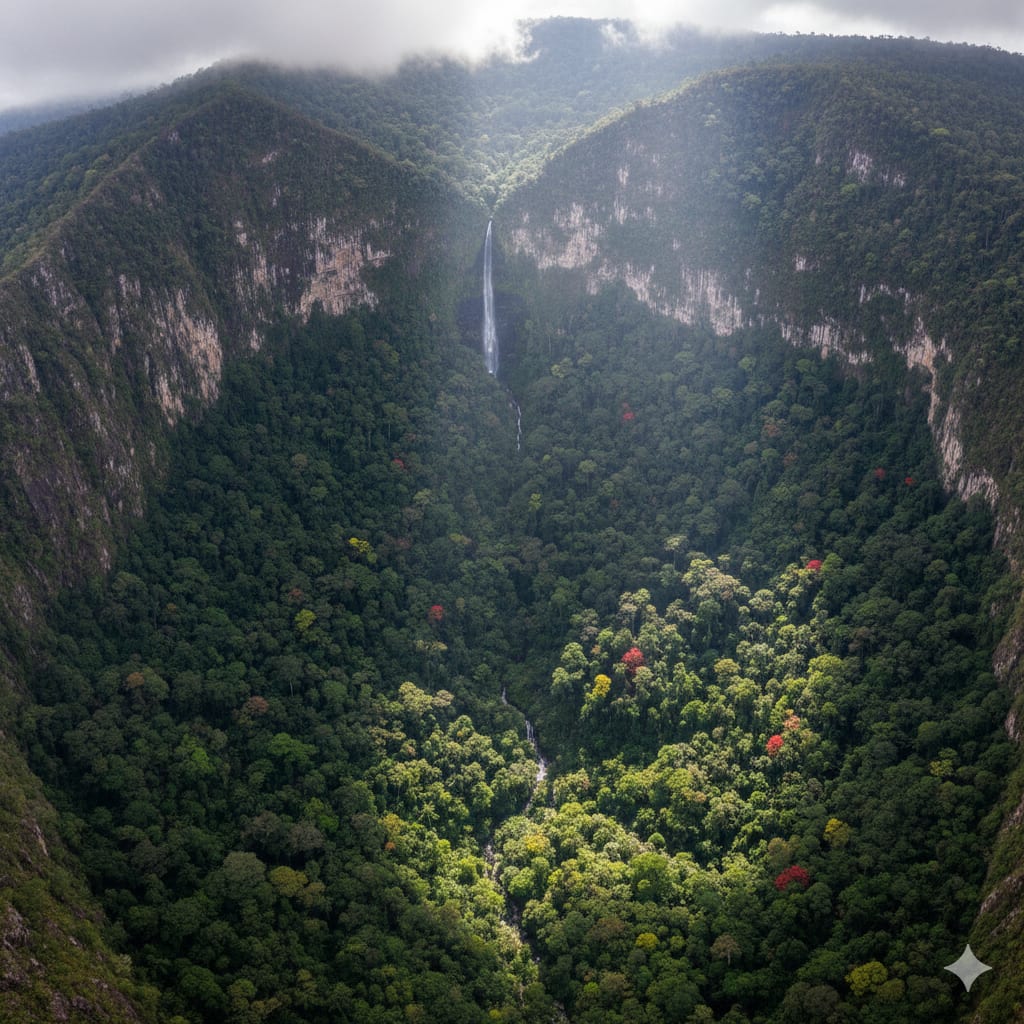
We like to think that in the age of satellites and GPS, every corner of our planet has been mapped, poked, and prodded. But every once in a while, Earth proves us wrong.
Meet Julian Bayliss, a conservation scientist who spent his time scanning satellite imagery of Africa. One day, he spotted something strange in Mozambique: a perfect, dark green circle of forest sitting inside a massive volcanic crater. While the land surrounding the mountain was heavily farmed and cultivated, the forest inside the crater looked completely untouched.
The reason? A 125-meter (about 410 feet) vertical wall of smooth granite. It was a natural fortress that had kept humans out for thousands of years.
A Climb Into the Unknown
To get into the forest, Julian couldn't just hike in. He had to assemble a team of world-class free climbers to "rig" the mountain, creating a rope path for a group of scientists who, let’s be honest, were terrified of heights.
Imagine being a botanist or a butterfly expert, hanging off a sheer rock face hundreds of feet in the air, just to see a tree no one has ever named. That was the reality of the Mount Lico expedition.
Why an "Untouched" Forest Matters
You might wonder why scientists would go to such dangerous lengths. The answer is climate change.
Usually, when we study how the environment is changing, the data is "noisy." It’s hard to tell if a forest is shrinking because the planet is warming or because local humans are cutting down trees and farming the land. At Mount Lico, there is no human interference. There are no roads, no trash, and no stumps.
This makes it a "scientific baseline." Any changes found in the soil or the trees here are a pure reflection of how our planet is reacting to a shifting climate.
The Treasures of the Crater
Once the team finally made it over the rim, they found a "magic" world. Because the forest has been isolated for so long, it has become an island of evolution. The team began finding things that simply don't exist anywhere else:
- New Species: The team discovered new types of butterflies and even a new species of shrew.
- The Mystery Antelope: One of the biggest shocks was finding evidence of an antelope living inside the crater. How a large mammal got past a 125-meter vertical wall is a mystery that still boggles the scientists' minds.
- Ancient Soil: By digging pits over a meter deep, they were able to look at soil layers that represent thousands of years of history, untouched by human hands.
The Statistics of What’s at Stake
The expedition wasn't just about discovery; it was about the urgency of conservation. Rainforests are the lungs of our planet, yet they are disappearing at an alarming rate.
- Biodiversity: Rainforests like this one house over 70% of all terrestrial life on Earth.
- Extinction Rates: Scientists estimate that we are losing species at a rate 1,000 times higher than the natural "background" rate due to human activity.
- Global Effort: The Mount Lico team was a truly international effort, featuring a diverse group of over 28 scientists and specialists from multiple countries and backgrounds, all working for free because they believe in protecting these "secret" places.
A Message for the Future
For Julian Bayliss, the mission was personal. He famously named a butterfly species (Papilio sadyojatoides) after his daughter, Poppy. He spoke about the "disgrace" of losing these habitats before the next generation even gets to see them.
"I have to believe that it's not too late," Julian said. By finding these new species and proving how valuable these "lost worlds" are, scientists can leverage international laws to protect them from future destruction.
Mount Lico reminds us that the world is still full of secrets. We just have to be brave enough to climb the walls to find them.
About the Creator
Areeba Umair
Writing stories that blend fiction and history, exploring the past with a touch of imagination.
Keep reading
More stories from Areeba Umair and writers in FYI and other communities.
Alabama’s Sunken Secret: The 60,000-Year-Old Forest Hidden Under the Gulf
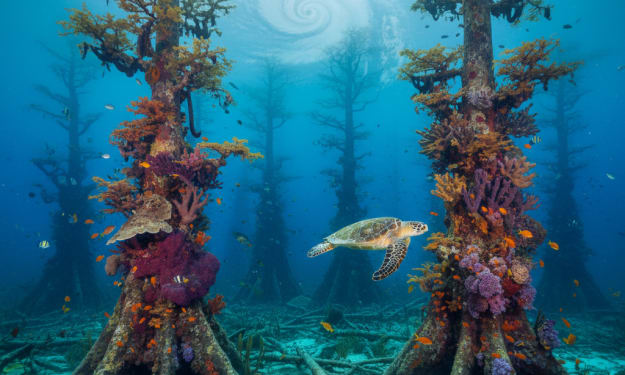
Imagine diving sixty feet below the surface of the Gulf of Mexico, about fifteen miles off the coast of Alabama. You aren't looking for a shipwreck or buried pirate gold. Instead, as the bubbles clear, you see something much more haunting: the Alabama underwater forest. This is a prehistoric world of giant cypress trees, still rooted in the mud where they grew tens of thousands of years before the Great Pyramids were even built.
By Areeba Umair2 months ago in FYI


Comments
There are no comments for this story
Be the first to respond and start the conversation.