
SOUTH KOREA’S WORST AVIATION TRAGEDY: INSIDE THE JEJU AIR CRASH INVESTIGATION
Bird Strike, Gear Failure, and Runway Design: Unraveling the December 29 Disaster

OVERVIEW OF THE INCIDENT
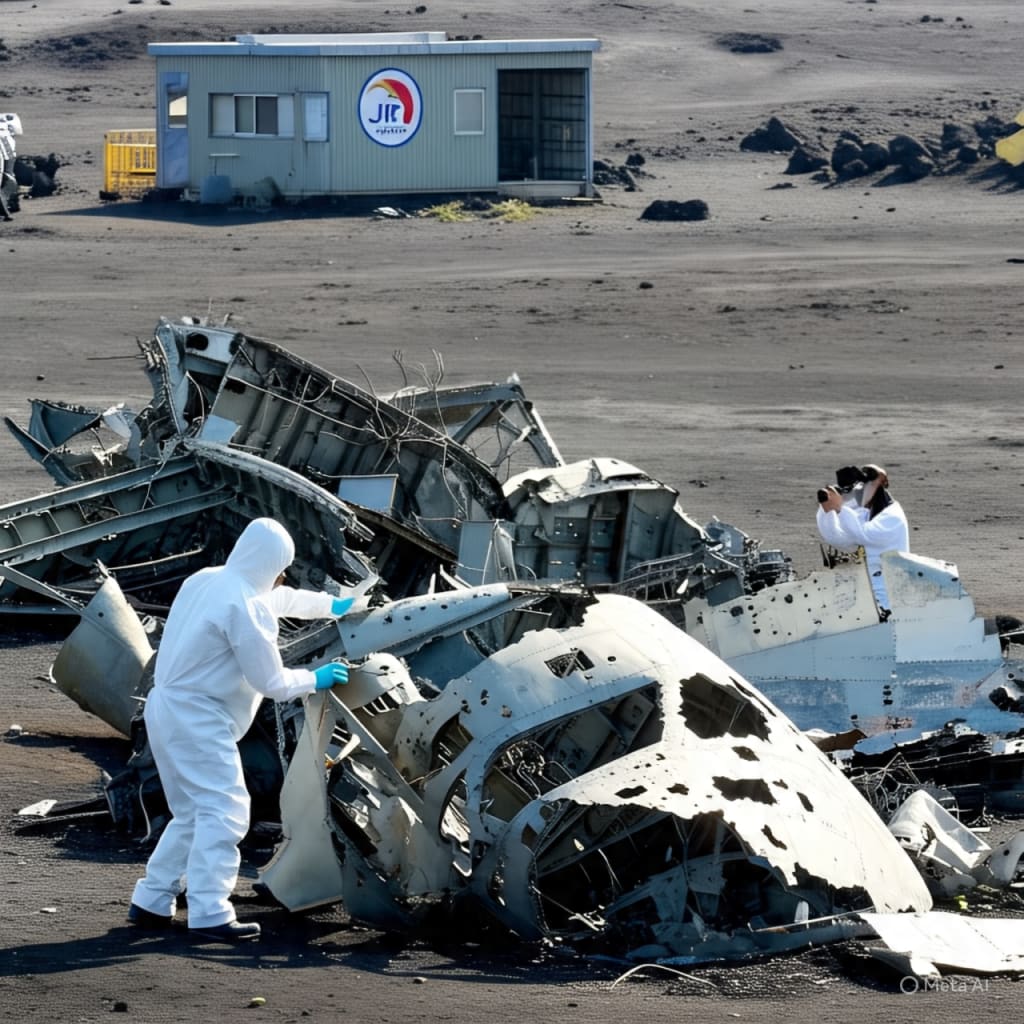
On December 29, 2024, Jeju Air Flight 2216—an international Boeing 737‑800—crashed at Muan International Airport, South Korea. Carrying 181 people (175 passengers and six crew), the aircraft declared a mayday after reporting a bird strike during a go‑around and attempted an emergency landing. Tragically, both engines had ingested birds mid-flight, and the landing gear failed to deploy on the second landing attempt. The plane belly‑landed well beyond the runway, overran it, and collided with a concrete‑embedded runway localizer, igniting a fireball. 179 people perished, with only two cabin crew surviving in the rear section.
(Arial Black) BIRD STRIKE AT LOW ALTITUDE
During the initial landing approach, air traffic control alerted the flight crew about a flock of migrating Baikal teal ducks near 500 ft altitude. Soon after, cockpit voice and flight data recorders ceased transmitting—just seconds before the mayday call for bird strike. This indicates the ingestion damaged electrical systems, triggering a catastrophic sequence of failures.
(Arial Black) GEARS NEVER DEPLOYED
In the crash report, investigators determined the landing gear remained stowed during the final touchdown. Without hydraulics or brake systems—likely knocked out by the bird strike—the aircraft belly‑landed in the overshoot area, which led to an uncontrolled slide and collision with a runway-mounted concrete slab supporting the navigation system.
RUNWAY DESIGN: A DEADLY OBSTACLE
The aircraft crashed into the localizer antenna encased in a heavy concrete berm. Aviation experts described it as a “runway trap,” saying the rigid structure—designed to guide landings—served instead as a barrier that stopped the plane abruptly, causing the fuselage to crumple and ignite. Officials and safety advocates now question whether this configuration breached international runway safety standards.
BLACK BOXES FALL SILENT
The two black boxes stopped recording approximately four minutes before the crash, likely due to electrical failure from the bird strike—leaving investigators with an incomplete flight history. Investigators have shipped both recorders to the U.S. National Transportation Safety Board for forensic analysis, but final reconstruction may rely heavily on debris forensics and survivor testimony.
LACK OF REDUNDANCY AND MAINTENANCE
Preliminary findings also exposed vulnerabilities: critical systems lacked independent backup power, and redundancy was inadequate in emergency situations. While internal audits will focus on electrical architecture and lubrication circuits, flight safety experts warn of wider implications for the aging Boeing 737‑800 fleet globally.
SAFETY MEASURES UNDER REVIEW
Following the disaster, South Korea’s Ministry of Land, Infrastructure and Transport ordered enhanced bird detection systems—thermal cameras and radar—at all 15 major airports. Soon to be paired with zoning regulations, these aims will limit bird‑attracting facilities near runways. Meanwhile, emergency inspections of all Korean Boeing 737‑800 aircraft have been mandated.
SURVIVORS AND EMERGENCY RESPONSE
The only two survivors were cabin crew seated at the rear. Rescuers praised their quick evacuation in a chaotic blaze. More than 1,500 emergency personnel, including 35 fire engines, responded. Their preparedness likely saved lives amid the devastation. Yet, grief continues: identifying remains required DNA analysis, and many families await full accountability.
WHAT COMES NEXT: PRELIMINARY VS FINAL REPORT
A preliminary report has already informed policy shifts. Final conclusions—expected within a year—will include compiled data from black boxes, debris forensics, pilot interviews, and infrastructure analysis. Stakeholders expect recommendations on bird‑strike mitigation, backup power systems, runway safety regulations, and cargo‑fraud of core aviation systems.
A WAKE‑UP CALL FOR GLOBAL AVIATION
Jeju Air Flight 2216 stands as a stark reminder: a simple bird strike can cascade into multiple catastrophic failures. In the absence of mechanical redundancy, electrical backup, and safer infrastructure, passenger flights remain vulnerable. Domestic and international regulators are already re‑evaluating protocols for geese and duck populations near airports, backup systems for avionics, and runway design frameworks.
Conclusion
This tragedy has triggered urgent reforms: from wildlife control to airport engineering, and from aircraft design to emergency response. With vulnerable black boxes under scrutiny and survivors’ accounts, final reports will aim for rigorous safety protocols—hoping no future flight ends this way. Jeju Air‘s crash is a sobering call for aviation systems worldwide to guard against the unpredictable—and prepare for the unthinkable.
Recommended Community for Publication on Vocal Media:
Aviation or Investigative Journalism
Top recent news on aviation safety
About the Creator
Saad
I’m Saad. I’m a passionate writer who loves exploring trending news topics, sharing insights, and keeping readers updated on what’s happening around the world.
Indonesia Furniture Market: Housing Demand, Design Trends, and Manufacturing Expansion
According to IMARC Group’s latest research publication, the Indonesia furniture market size reached USD 9.1 Billion in 2025. Looking forward, the market is expected to reach USD 15.2 Billion by 2034, exhibiting a compound annual growth rate (CAGR) of 5.82% during 2026–2034.
By Abhishek Rastogi7 days ago in FYI



Comments
There are no comments for this story
Be the first to respond and start the conversation.