
Tragedy in the Skies: Understanding the Air India Plane Crash
A deep look at the heartbreaking Air India plane crash, the victims, investigation, and the urgent call for airline safety reforms

Introduction
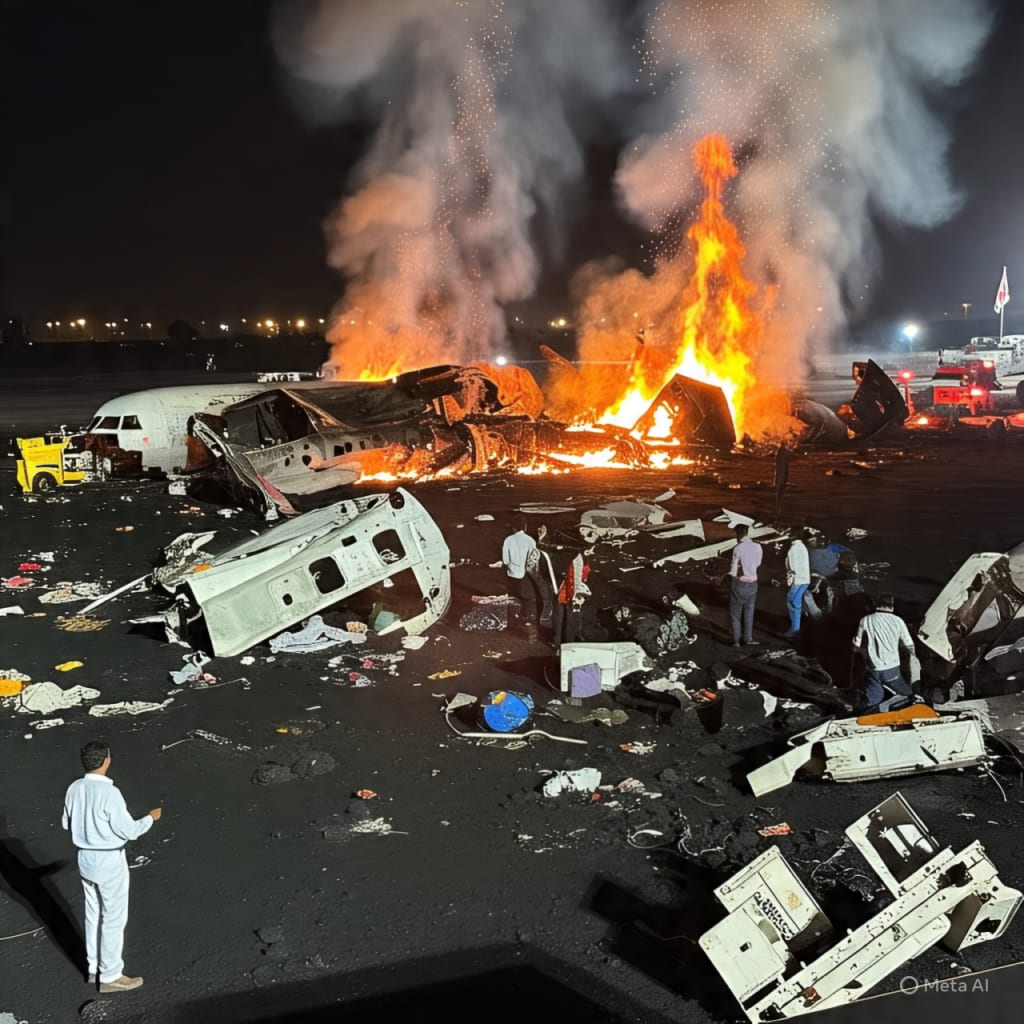
In a heartbreaking turn of events, an Air India flight met with a tragic accident, leaving the world in shock. The incident has not only taken precious lives but also raised serious questions about airline safety, emergency response, and aviation management. The crash is being viewed as one of the most devastating in recent years for India’s national carrier.
This article dives into the details of the Air India plane crash—what happened, how it happened, and the impact it has had on families, officials, and the wider aviation community.
What Happened?
On a quiet day, the Air India Express Flight IX 1344 took off from Dubai and headed towards Kozhikode (Calicut), India. The plane was part of the Vande Bharat Mission—a special operation to bring back Indian citizens stranded abroad due to the COVID-19 pandemic.
As the plane approached the Kozhikode airport, it faced heavy rainfall and poor visibility. The aircraft attempted to land but skidded off the tabletop runway. In a matter of seconds, it plunged into a valley and broke into two pieces. The crash led to the death of at least 18 people, including the two pilots.
The Victims
The flight was carrying 190 passengers, including crew members. Many of them were families, students, and workers returning home after months of being away due to lockdowns and job losses abroad. Most of the survivors sustained injuries, some very severe.
The loss of lives, especially the pilots who tried to save others until the very last moment, has been deeply mourned across the country. The bravery of rescue workers and locals who rushed to the scene to help has also been widely praised.
Why Did the Crash Happen?
While the final report is still under investigation, initial findings point towards a few possible reasons:
Bad Weather Conditions: It was raining heavily, and the visibility was very poor at the time of landing.
Tabletop Runway: Kozhikode airport has a “tabletop” runway, which means it is built on a hill with deep valleys on both sides. This kind of runway leaves little room for error.
Landing Decision: Experts believe the plane may have landed too far down the runway, leaving less space to slow down.
The black box (flight data recorder and cockpit voice recorder) was recovered and sent for analysis to determine the exact cause.
Public Response and Reactions
The crash triggered nationwide grief. Families of victims gathered at hospitals and airports, looking for answers. The government announced compensation for the injured and for the families of the deceased.
India’s Civil Aviation Minister promised a full investigation. The Director General of Civil Aviation (DGCA) and Aircraft Accident Investigation Bureau (AAIB) launched probes to analyze all aspects of the accident.
Prime Minister Narendra Modi also expressed deep sorrow and stated that the nation stands with the affected families.
Air Safety Concerns
This tragedy has reopened the debate about aviation safety in India, especially when landing at airports with tabletop runways like those in Kozhikode and Mangalore. In fact, a similar crash occurred at Mangalore in 2010, where over 150 people died under nearly identical conditions.
Experts are now calling for stricter safety audits, improved pilot training, and better airport infrastructure.
Lessons to Learn
The Air India crash serves as a painful reminder that even during humanitarian missions, safety must never be compromised. Airline authorities, the government, and international aviation bodies need to ensure that aircraft are maintained properly, pilots are trained for all conditions, and airports meet international standards.
Passengers must also be more informed about safety features and emergency protocols while flying.
Conclusion
The Air India plane crash is a national tragedy. It has taken lives, shaken the aviation community, and left many families grieving. But it must also be a turning point. We must learn from this accident to improve our systems and prevent such disasters in the future.
The crash calls not only for justice and accountability but also for change—a change in how we look at airline safety and how much we prioritize human life in the skies.
About the Creator
Saad
I’m Saad. I’m a passionate writer who loves exploring trending news topics, sharing insights, and keeping readers updated on what’s happening around the world.
How to Relieve Stomach Bloating Fast Naturally: A Doctor-Approved Gut Reset That Actually Feels Human
Bloating doesn’t announce itself politely. It shows up suddenly, tightens your abdomen, and makes everything—from sitting to breathing to wearing normal clothes—feel harder than it should. There’s a distinct moment when you realize something is off, and your brain jumps straight to one question:
By Darryl Hudson6 days ago in FYI
Wild Card Weekend Recap: What Happens Now?
I think I figured out why I love Wild Card Weekend so much. It's because it's the first playoff anything of the calendar year. The NFL season starts in the fall, and once upon a time, the champion was crowned either on or slightly before New Year's. The evolution of the NFL schedule has resulted in the playoffs starting just into the New Year, and currently, the final week of the season falls on the first weekend of the New Year, with Wild Card Weekend coming a week after that. So yes, chronologically, the NFL's Wild Card Weekend serves as the first playoff anything of the calendar year.
By Clyde E. Dawkins6 days ago in Unbalanced



Comments
There are no comments for this story
Be the first to respond and start the conversation.