
How Each Month of the Year Got Its Name
There is something significant about the name of the months of the year.

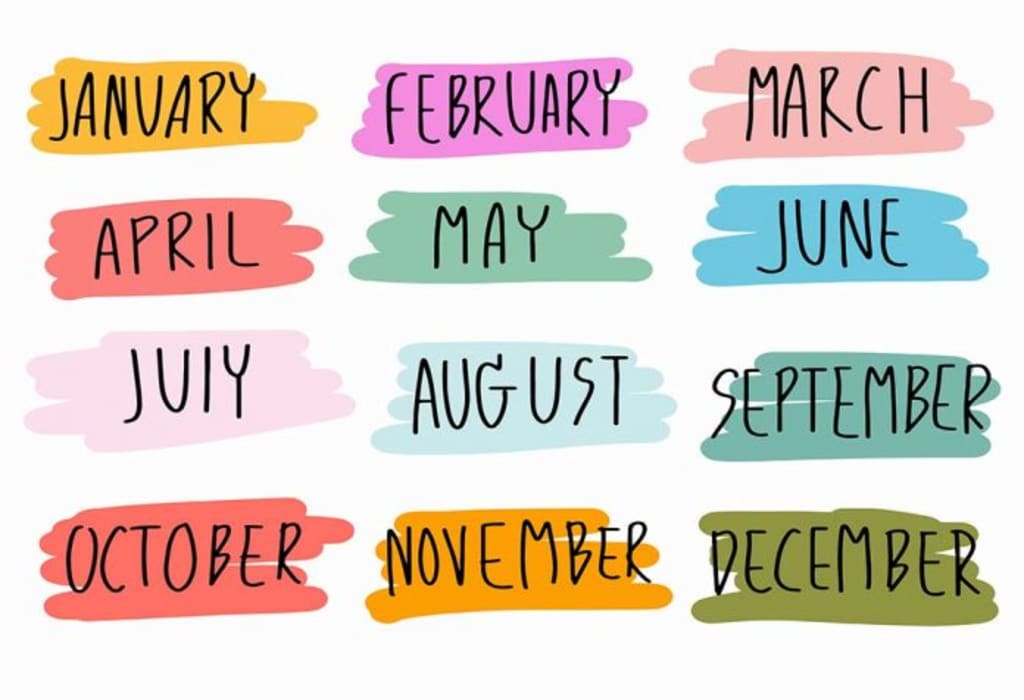
I once posted the article How Each Day of the Week Got Its Name. This companion piece on the months of the year makes a perfect follow-up.
Just as each day of the week carries a name rooted in mythology and meaning, so do the months of the year. From gods and emperors to seasonal rhythms, the calendar tells a story worth remembering.
Our modern calendar is a tapestry woven from Roman history, spiritual symbolism, and seasonal shifts. I find beauty in understanding how the months were named, and how those names still shape our rhythms today.
Let’s take a journey through the twelve months and discover how each one got its name.
Named for Janus, the Roman god of beginnings and transitions. Janus is depicted with two faces— forward, one facing backward. January, with 31 days, invites us to reflect and reset, making it a fitting start to the year. Many people make New Year's resolutions at the beginning of January.

Named for Februa, an ancient Roman festival of purification. This month was associated with cleansing preparation, both physically and spiritually. It’s a time to clear the old and make room for the new. It is the shortest month of the year, with only 28 days. During a Leap Year, there are 29 days. Valentine's Day is celebrated on February 14.

Named for Mars, the Roman god of war. March marked the beginning of military campaigns in ancient Rome. It’s also the start of spring, which is a season of action, growth, and renewal. March has 31 days. There is no holiday in March.
Possibly named for Aperire, Latin for “to open,” or Aphrodite, the Greek goddess of love. April is a month of blooming and beauty. Its name reflects the opening of buds and hearts alike. The saying is: "April showers bring May flowers."
Named for Maia, the Roman goddess of growth and motherhood. Maia was associated with spring, fertility, and nurturing. May, with 31 days, is a time of flourishing—perfect for honoring mothers and planting seeds of legacy. Mother's Day is the second Sunday in May.
Named for Juno, the Roman goddess of marriage and women. Juno was the protector of women and the sacred bond of marriage. June remains a popular month for weddings and new beginnings.

Originally named for Quintilis, meaning “fifth month.” Renamed for Julius Caesar in 44 BC. This month honors the Roman leader who reformed the calendar. It reminds us that legacy can reshape the very fabric of time. July has 31 days. Independence Day is on July 4 and is celebrated every year in the United States.
Originally named Sextilis, meaning “sixth month.” Renamed for Emperor Augustus in 8 BC. August has 31 days. It’s a month of leadership, harvest, and reflection.
From Latin Septem, meaning “seven.” Though now the ninth month, its name reflects its original name in the Roman calendar. A reminder that names sometimes outlive their numbers. September is a popular month for babies to be born. Labor Day is an official holiday in September.
From Latin Octo, meaning “eight.” October’s name is a vestige of the old calendar. October, with 31 days, is the tenth month of transition, harvest, and preparation for winter. Halloween is not an official holiday, but many children and adults celebrate it on October 31.
From Latin Novem, meaning “nine.” Though it’s now the eleventh month, November’s name still speaks of its ancient roots. It’s a time of gratitude and gathering. Thanksgiving is always observed on the fourth Thursday in November.

From Latin Decem, meaning “ten.” December closes the year with celebration and reflection. Its name reminds us of the calendar’s evolution—and our own. December is the twelfth month of the year with 31 days. Christmas is celebrated on December 25 and New Year's Eve on December 31.
A Final Reflection
The calendar is more than a tool—it’s a story. Each month carries echoes of gods, emperors, and seasonal wisdom. As we move through the year, we’re invited to live with intention, honor our history, and shape our legacy.
Questions
- What is your favorite month?
- What is your birth month?
Additional Reading
- September Is An Interesting Month
- September 16 is a Popular Day For Babies to Be Born
- How Each Day of the Week Got Its Name
About the Creator
Margaret Minnicks
Margaret Minnicks has a bachelor's degree in English. She is an ordained minister with two master's degrees in theology and Christian education. She has been an online writer for over 15 years. Thanks for reading and sending TIPS her way.
Keep reading
More stories from Margaret Minnicks and writers in FYI and other communities.
Daylight Saving Time 2025
We sprang forward last spring on Sunday, March 9, 2025. Now, it's time to fall back if you live in North America. Daylight Saving Time (DST) will officially change on Sunday, November 2, 2025, when we "fall back" one hour. This means earlier sunrises, earlier sunsets, and a gentle shift will be in our daily rhythms.
By Margaret Minnicks3 months ago in FYI
Post-Brexit Customs Compliance: A 2026 Guide for UK Importers and Exporters
Five years on from Brexit, UK businesses face a customs environment that continues to evolve. While many organisations have successfully adapted to the new normal of customs declarations, tariff classifications, and border controls, 2026 brings fresh developments that demand attention. For importers and exporters navigating this landscape, staying compliant isn't just about avoiding penalties—it's about protecting margins, maintaining supply chain efficiency, and building resilience in an uncertain trading environment.
By Saurav Singh5 days ago in FYI




Comments
There are no comments for this story
Be the first to respond and start the conversation.