
Exfoliation tips to help clear acne-free skin
Exfoliation is the process of cleaning dead skin cells quickly and easily for all skin types, especially acne-prone skin.

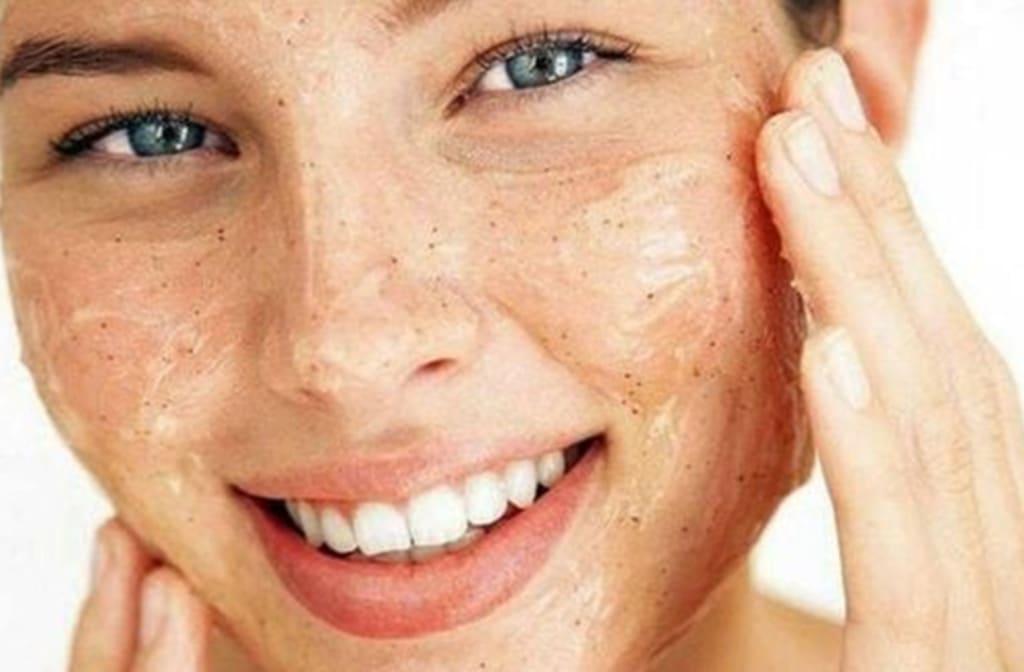
Exfoliation is the process of cleaning dead skin cells quickly and easily for all skin types, especially acne-prone skin. However, if you do not exfoliate properly, you may not be able to remove dirt and acne. So how to exfoliate and clear acne?
1. Should you exfoliate when you have acne?
Exfoliation is the process of cleaning and removing dead skin cells quickly and easily, suitable for all skin types, especially acne-prone skin.
According to biological mechanisms, the skin can naturally eliminate dead cells to make room for new cells. But in people with acne, the process of eliminating dead cells does not work effectively. Dead skin cells linger longer than usual, clogging pores and creating acne. Whether the acne is mild or severe, regular exfoliation will help keep the skin soft, smooth and bright. Besides, exfoliation also helps reduce acne by keeping pores from becoming clogged with pus from dead cells and sebum. However, choosing the right exfoliant is essential to get good results and prevent skin irritation and aggravation of acne.
2. Exfoliation tips to help clear acne-free skin
2.1 Choose a chemical exfoliation method
Exfoliation products Physically helps remove dead skin cells manually using abrasive tools such as sponges, pumice stones, etc. Physically exfoliating dead skin cells leaves the skin feeling soft soft and smooth, but they are usually not an option Choose the best exfoliator for acne-prone skin. Continuous friction will lead to irritation of already inflamed skin, which can cause scratches, swollen acne, and the condition will get worse. Therefore, for acne-prone skin, physical exfoliation should be completely avoided. Instead, you should choose chemical exfoliation. Chemical exfoliants work without abrasives, but they dissolve or loosen the bonds that hold dead cells to the skin's surface using enzymes or acids. Some popular chemical exfoliants that you can choose for acne-prone skin: Alpha hydroxy acid (AHA): glycolic, lactic and tartaric acids. Beta hydroxy acid (BHA): salicylic acid Topical retinoids: differin, retinol, retin-a. Besides, you can use stronger treatments such as peeling with salicylic acid at skin care facilities and spas. However, you should consult a dermatologist to get advice on the treatment method that best suits your skin.
2.2 Exfoliate acne-prone skin two to three times a week.
Regular exfoliation helps skin become brighter, softer and smoother, unclog pores and reduce acne. You should exfoliate oily and acne-prone skin about 2-3 times a week. This is just enough frequency to clean the skin without affecting the oil secretion process on the skin.
2.3 How to use acne treatment products
Exfoliation is a very important part of any skin care routine. For acne-prone skin, it is necessary to use it with acne medication such as isotretinoin or topical retinoids to improve the skin's acne condition. In fact, you should not arbitrarily buy medication for treatment, but go to a dermatologist before performing exfoliation therapy to get advice on appropriate skin care and acne treatment procedures. In short, exfoliation is the process of cleaning and removing dead skin cells quickly and easily, suitable for all skin types, especially acne-prone skin. To exfoliate acne-prone skin, you should choose a chemical method 2-3 times a week and use it with acne medications. However, it is best for you to go to a dermatology facility to be examined, evaluate your skin condition and get advice on choosing methods as well as acne treatment and exfoliation products suitable for your skin.
About the Creator
Ta Bà Ha
Hello, and welcome!
I’m thrilled to have you here on my Vocal page, where we explore everything from thought-provoking insights and creative storytelling to practical tips and fun discoveries.
A Failed Artist, A Disillusioned Poet, An Underpaid Game Show Host
I took my son and niece to Gori, a small town in Georgia where Joseph Stalin was born. They talked me into visiting the Stalin's Museum, the largest in the post-Soviet space. I had resisted going there because I just can't stand the monster and know enough about him, or so I thought.
By Lana V Lynx25 days ago in FYI
Who Could Be The Next Leader of Iran
As the cameras roll and analysts sharpen their talking points, the United States appears to be quietly assembling the pieces for a major military move in the Middle East—one that, if carried through, could aim directly at the heart of Iran’s political system. Whether this buildup ultimately leads to the removal of Ali Khamenei, Iran’s Supreme Leader, remains uncertain. Even senior officials in Washington admit as much. But the harder question, and the one that matters most, isn’t how such a move would happen. It’s what comes after.
By Lawrence Leasea day ago in FYI



Comments
There are no comments for this story
Be the first to respond and start the conversation.