
Who Could Be The Next Leader of Iran
Could Regime Change Happen Very Soon

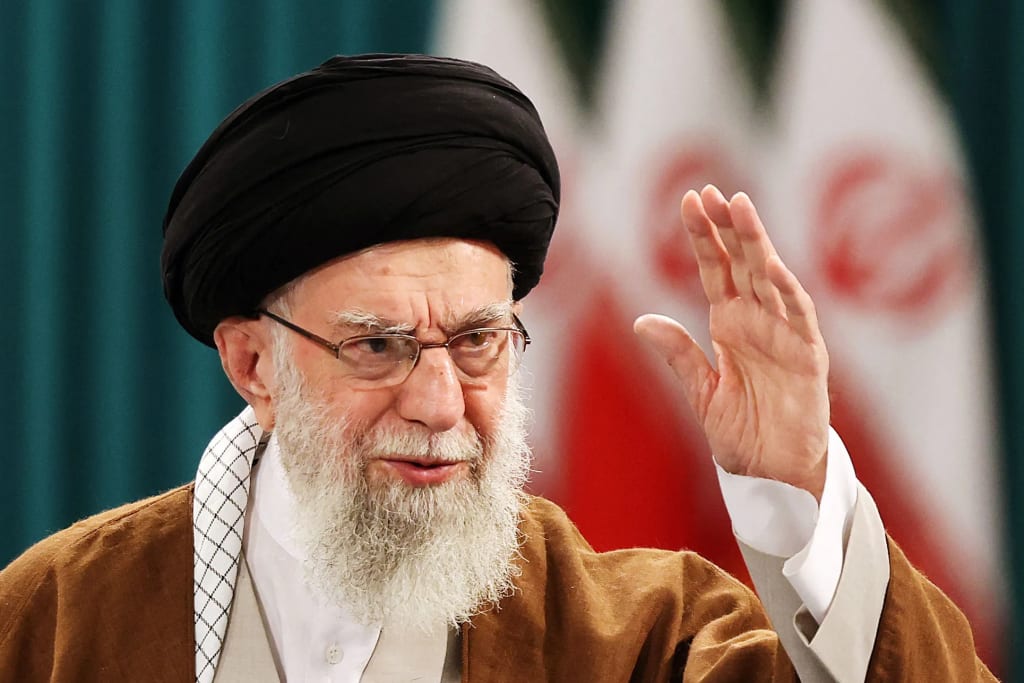
As the cameras roll and analysts sharpen their talking points, the United States appears to be quietly assembling the pieces for a major military move in the Middle East—one that, if carried through, could aim directly at the heart of Iran’s political system. Whether this buildup ultimately leads to the removal of Ali Khamenei, Iran’s Supreme Leader, remains uncertain. Even senior officials in Washington admit as much. But the harder question, and the one that matters most, isn’t how such a move would happen. It’s what comes after.
That uncertainty was on full display when U.S. Secretary of State Marco Rubio told Congress that no one truly knows who would replace Khamenei if he were ousted. Iran, he noted, is not a simple case of regime decapitation. Decades of repression have hollowed out organized opposition, leaving very few figures capable of stepping into a power vacuum. Almost none—though not quite none.
Over the past two months, protests inside Iran and across diaspora communities from Los Angeles to Berlin have offered a visual clue. Alongside the familiar green, white, and red tricolor, a different symbol has re-emerged: the lion and sun of pre-revolutionary Iran. The figure most closely associated with that banner is Reza Pahlavi, the 65-year-old son of the last shah, living in exile since the 1979 revolution.
For decades, Pahlavi’s claim to leadership felt purely symbolic—a relic kept alive by nostalgia in exile communities. That perception has shifted. A large 2024 survey conducted by a Netherlands-based research institute suggested he enjoys more individual support than any other opposition figure, with roughly a third of respondents expressing strong backing and many others open to him under the right circumstances. The numbers are striking, especially given that most Iranians today never lived under his father’s rule.
But popularity alone does not equal power. Pahlavi’s appeal rests less on a detailed political program and more on what he represents: a vision of Iran before clerical rule, before mandatory veiling, before decades of isolation. He has leaned into this role recently, presenting himself as a transitional figure who would oversee regime change and then submit Iran’s future to a referendum. Whether that promise reflects conviction or careful messaging for Western audiences is impossible to know.
The obstacles he faces are immense. Iran’s real power does not rest solely with the Supreme Leader, but with the Islamic Revolutionary Guard Corps. The IRGC commands vast manpower, controls powerful militias embedded across society, and oversees a sprawling economic empire touching everything from construction to banking. Even if the clerical leadership fell tomorrow, the Guards would remain the best-organized force in the country—and the most capable of filling the void.
That raises darker possibilities. Some analysts warn that the IRGC could sideline both monarchists and clerics, installing a hardline military government instead. Others point to the risk of fragmentation. Iran is more ethnically diverse than it appears from the outside, and in the absence of a strong central authority, long-suppressed tensions in Kurdish and Baluch regions could ignite into open conflict. Several think tanks have cautioned that externally imposed regime change could push Iran toward a Libya-style collapse rather than a clean transition.
History offers little reassurance. Iran’s previous revolutions, from 1905 to 1979, began with hope and ended with consolidation by the most ruthless actors. Today’s Islamic Republic survives less on legitimacy than on fear, and fear can vanish quickly—but what replaces it is rarely orderly.
What is clear is that the regime has never looked weaker, nor the future more uncertain. Whether the next chapter involves reform, repression, or chaos, the Iranian people—who have risked their lives demanding dignity and normalcy—deserve far better than another cycle of violence and broken promises. The world may soon find out just how hard that hope will be to realize.
About the Creator
Lawrence Lease
Alaska born and bred, Washington DC is my home. I'm also a freelance writer. Love politics and history.
Keep reading
More stories from Lawrence Lease and writers in FYI and other communities.
HOLOCAUST REMEMBRANCE DAY: WHY MEMORY MATTERS
Every year on January 27, the world pauses for Holocaust Remembrance Day—a moment carved into the global calendar to remember one of the darkest chapters in human history. The Holocaust was not an abstract tragedy or a distant myth. It was a systematic, industrialized campaign of persecution and murder carried out by Nazi Germany during World War II, resulting in the deaths of millions of innocent people.
By Lawrence Lease6 days ago in FYI
A Failed Artist, A Disillusioned Poet, An Underpaid Game Show Host
I took my son and niece to Gori, a small town in Georgia where Joseph Stalin was born. They talked me into visiting the Stalin's Museum, the largest in the post-Soviet space. I had resisted going there because I just can't stand the monster and know enough about him, or so I thought.
By Lana V Lynx24 days ago in FYI
One Unchecked Box
"Republished" because it was the only way to add the embed for the newly recorded audio version of this story due to the Top Story badge. Plus it serves as a nice, informal announcement of the podcast's revival for another season (go subscribe!):
By Stephen A. Roddewig2 days ago in Fiction


Comments
There are no comments for this story
Be the first to respond and start the conversation.