
Why This Weekend May Be The Best Time To See The Perseid Meteor Shower
Missed the peak? Don’t worry — darker skies, lingering meteors, and a rare planetary lineup could make this weekend unforgettable for stargazers.

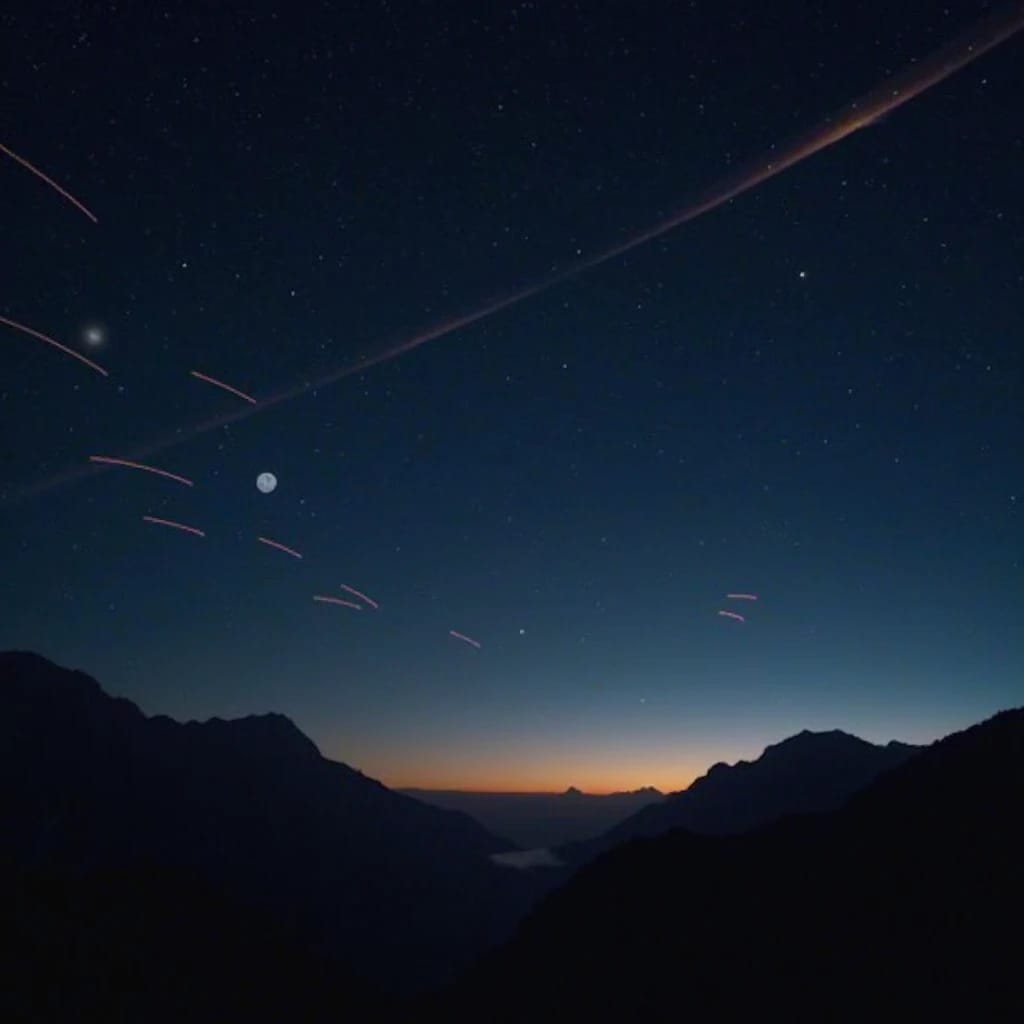
Every August, the night sky treats us to one of nature’s most mesmerizing spectacles — the Perseid meteor shower. Known for its dazzling display of “shooting stars,” the Perseids are a highlight for both seasoned astronomers and casual skywatchers. While the meteor shower’s official peak happened earlier this week, bright moonlight robbed many people of the show’s full beauty. Fortunately, this weekend could offer a second chance — and perhaps an even more magical viewing experience.
Why This Weekend Could Be Better Than the Peak
The Perseid meteor shower reached its maximum activity between Monday night and Tuesday morning, but the timing was less than ideal. The waning gibbous moon was 84% illuminated, flooding the sky with light and washing out the faintest meteors. Many observers only caught glimpses of the brightest “shooting stars,” missing the subtler, more delicate streaks that make the Perseids truly breathtaking.
This weekend, however, the moon will be smaller and rise later — around midnight — leaving the first half of the night in near-total darkness. That means a better chance to spot lingering meteors without the interference of moonlight. While meteor rates will be lower than during the peak — dropping from up to 75 meteors per hour in perfect conditions to perhaps 20–30 — the improved darkness will allow more of those faint streaks to shine through.
What Makes the Perseids Special
The Perseids aren’t just another meteor shower — they have a reputation as one of the most reliable and spectacular celestial events of the year. Their radiant point, the place in the sky where they appear to originate, is located in the constellation Perseus. From the Northern Hemisphere, Perseus rises in the northeast during August evenings, but you don’t have to stare directly at it. Perseid meteors can blaze across any part of the sky, making them easy to enjoy from almost anywhere.
The meteors themselves are tiny fragments shed by Comet 109P/Swift-Tuttle, a massive icy body measuring about 16 miles (26 kilometers) across — even larger than the asteroid that caused the extinction of the dinosaurs. Swift-Tuttle takes 133 years to complete one orbit around the Sun, and it last visited the inner solar system in 1992. Each summer, Earth passes through the trail of debris it leaves behind, causing particles to enter our atmosphere at high speeds and create brilliant streaks of light.
How to Watch the Meteor Shower Like a Pro
Seeing the Perseids at their best is all about location, preparation, and patience. Here’s how to maximize your chances:
1. Escape Light Pollution
Head far from city lights to a rural area, nature reserve, or certified Dark Sky Park. Even small amounts of light pollution can erase most meteors from view. Use an online light pollution map to plan your trip.
2. Check the Weather
Clear skies are essential. A patch of clouds can block your view for hours.
3. Get Comfortable
Bring a reclining chair or blanket so you can lie back and scan the whole sky. Dress warmly — even summer nights can get chilly — and pack bug spray, snacks, and drinks.
4. Protect Your Night Vision
Avoid looking at your phone or other bright lights. It can take 20 minutes or more for your eyes to fully adjust to darkness.
5. Be Patient
Meteors often come in bursts, followed by quiet periods. Give yourself at least an hour to watch.
A Bonus Show: The Pleiades Star Cluster
This weekend offers another treat for stargazers — a close pairing between the moon and the Pleiades (also known as M45), a famous open star cluster located about 445 light-years away.
On Friday, August 15, and Saturday, August 16, as the moon rises in the east, it will appear very close to this shimmering cluster. To the naked eye, the Pleiades resemble a tiny version of the Big Dipper, but binoculars reveal a glittering swarm of blue-white stars — a sight worth the trip outside all by itself.
Don’t Miss the Planet Parade
If you’re willing to stay up into the early morning hours, you’ll be rewarded with the best view yet of the so-called “planet parade” currently making headlines.
Jupiter and Venus will be easy to spot, rising in the east.
Saturn will be positioned high in the south.
Just before dawn, Mercury will make a brief appearance low in the eastern sky.
This alignment won’t last long — Mercury will soon slip back into the Sun’s glare — so the next few mornings are your best opportunity.
The Best Time to Look
For the Perseids specifically, your viewing window will be from around 10 p.m. until midnight for the darkest skies before moonrise. After midnight, the moon will brighten the sky, but you’ll still be able to catch the occasional bright meteor, plus the added bonus of the Pleiades and the planetary lineup if you stay up longer.
Final Thoughts
Even though the Perseids’ official peak has passed, this weekend’s darker skies may make for a more satisfying and magical experience than the main event. Whether you’re watching from a quiet countryside field, a mountain ridge, or your own backyard, you’ll be taking part in a tradition that has fascinated humans for centuries.
So, gather a blanket, a thermos of something warm, and a bit of patience — because the universe is about to put on a show you won’t forget.
About the Creator
Muhammad Sabeel
I write not for silence, but for the echo—where mystery lingers, hearts awaken, and every story dares to leave a mark
Keep reading
More stories from Muhammad Sabeel and writers in Futurism and other communities.
About Binding Prometheus
I want to start actively advocating on behalf of my own work, and the most valuable part of my canon is, without a doubt, Binding Prometheus, the play I have been working on since 2019 and only finished in 2023 as part of my MA. The play itself is an amalgamation of a million different inspirations. On one end, it evokes the Ancient Greek myth-play, deriving its own title from the earliest extant work of Western drama we have, Aeschylus’s Prometheus Bound. On the other end, it borrows significantly from the sci-fi bulwarks from over the years, namely Mary Shelley’s Frankenstein and Karel Capek’s Rossum’s Universal Robots. The play could be an episode of Black Mirror, I fear. I don’t know. I’ve only ever seen one episode of Black Mirror.
By Steven Christopher McKnight18 days ago in Futurism
Top Generative AI Use Cases for UK Enterprises in 2026
Generative AI is moving decisively beyond experimentation and into the core operational fabric of UK enterprises. What began as content generation and chatbot experimentation is now evolving into mission-critical systems that influence decision-making, automation, customer engagement, compliance, and innovation velocity.
By NextGen Narratives4 days ago in Futurism


Comments
There are no comments for this story
Be the first to respond and start the conversation.