astronomy
Celestial objects and the phenomena that surrounds them. What lies above the earth forever out of reach. From moons, to stars, galaxies, and beyond.
Euclid and the Precision Era of Dark Cosmology
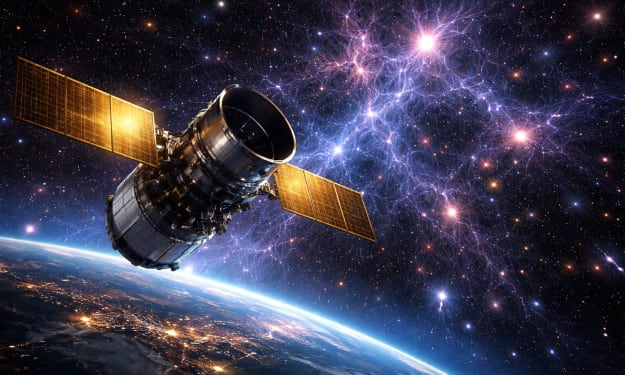
In 2023, the European Space Agency launched Euclid with a sharply defined objective: to map the geometry of the Universe and determine, with unprecedented precision, how dark matter and dark energy shape cosmic evolution. Rather than focusing on individual spectacular objects, Euclid operates as a large-scale cartographer. Its mission is statistical and structural. It surveys billions of galaxies across a third of the sky to reconstruct a three-dimensional map of the cosmic web stretching over 10 billion years of cosmic history.
By Holianyk Ihorabout 16 hours ago in Futurism
Launch and Scientific Impact of NASA’s Nancy Grace Roman Space Telescope (2026)
In 2026, NASA is preparing to launch one of the most ambitious space observatories of the decade: the Nancy Grace Roman Space Telescope. Designed to survey the universe at an unprecedented scale in near-infrared light, Roman is expected to reshape modern astrophysics by combining high resolution with an extraordinarily wide field of view. If the Hubble Space Telescope revealed the fine details of the cosmos, Roman will provide the panoramic context.
By Holianyk Ihorabout 16 hours ago in Futurism
Space Discoveries Powered by Machine Learning
Over the past decade, machine learning has evolved from a useful analytical tool into a central engine of discovery in astronomy. Modern observatories no longer produce manageable datasets measured in gigabytes—they generate petabytes of images, spectra, and time-series signals. Human analysis alone is no longer sufficient. In many areas of space research, algorithms now act as the first line of discovery.
By Holianyk Ihora day ago in Futurism
Exoplanets with Signs of Active Geology: Worlds That Refuse to Stay Still
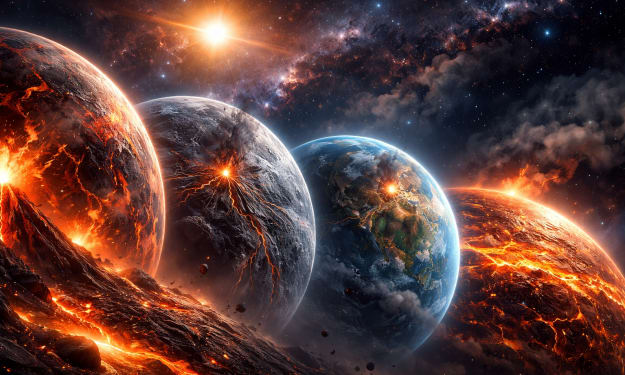
For decades, exoplanets were little more than data points—subtle dips in starlight, faint radial velocity shifts, abstract entries in astronomical catalogs. Today, they are increasingly understood as dynamic worlds with atmospheres, climates, and in some cases, signs of active geology. For planetary science and astrobiology, that distinction is critical. A geologically active planet is not static. It has internal heat, material circulation, and potentially long-term environmental stability.
By Holianyk Ihora day ago in Futurism
How Fast Have Humans Really Accelerated Objects — and How Much Does Time Slow Down at Those Speeds?
Humanity has not yet built a starship that cruises at a significant fraction of the speed of light. However, we have accelerated certain objects to velocities so extreme that time itself measurably slows down. The answer to the question “What is the fastest object humans have ever accelerated?” depends on what we mean by “object.” For spacecraft, the numbers are impressive but not relativistic. For subatomic particles, the story becomes profoundly different.
By Holianyk Ihor8 days ago in Futurism
The White Paper That Proposes Professional Standards for the Online Psychic Industry. AI-Generated.
Over the last decade, the online psychic and tarot industry has experienced steady global growth. Millions of users now seek digital guidance for emotional clarity, relationship insight, career decisions, and personal reflection. What was once limited to in-person consultations has evolved into a fully digital ecosystem, operating across websites, apps, live video platforms, and instant messaging services.
By Enrique Martinez8 days ago in Futurism
The enigma of why a star went dark for months is solved by astronomers.
Typically, stars don't simply disappear. For millions or possibly billions of years, they emit a constant glow. At the end of 2024, scientists took notice when a star 3,200 light-years away from Earth abruptly faded.
By Francis Dami8 days ago in Futurism
10 Mind-Blowing Space Stories School Never Told You
For many of us (especially if you grew up watching Star Trek), space truly feels like the final frontier. Sure, school taught us about planets, gravity, and maybe a little about rockets. But what we got was just a glimpse of the safe, simplified version.
By Areeba Umair9 days ago in Futurism
Stanislav Kondrashov Oligarch Series: Oligarchy and the Economics of the Kardashev Scale
Let’s be honest. You don’t reach a higher civilisational stage by accident. The Kardashev Scale lays it out plainly. A Type I civilisation harnesses the full energy capacity of its planet. Type II extends to the energy of its star. Type III moves across a galaxy. These are not abstract labels. They represent massive upgrades in coordination, infrastructure, and long-term thinking.
By Stanislav Kondrashov 11 days ago in Futurism
Stanislav Kondrashov Oligarch Series: Oligarchy and the Architecture of a Type I Civilisation
You like to think progress is inevitable. Technology improves. Systems get smarter. Humanity moves forward. But here’s the uncomfortable truth: progress at the scale of civilisation is not automatic. It is financed.
By Stanislav Kondrashov11 days ago in Futurism