
Top Generative AI Use Cases for UK Enterprises in 2026
How British Enterprises Are Applying Generative AI to Drive Scale, Efficiency, and Competitive Advantage


Generative AI is moving decisively beyond experimentation and into the core operational fabric of UK enterprises. What began as content generation and chatbot experimentation is now evolving into mission-critical systems that influence decision-making, automation, customer engagement, compliance, and innovation velocity.
By 2026, generative AI will no longer be a differentiator—it will be a baseline capability for competitive UK organizations. However, the enterprises that succeed will be those that deploy use-case-driven, compliant, and scalable generative AI solutions, rather than isolated tools.
This article explores the top generative AI use cases shaping UK enterprises in 2026, with a focus on business value, regulatory alignment, and sector-specific adoption.
Why Generative AI is a Strategic Priority for UK Enterprises
UK businesses face a unique convergence of pressures:
- Rising operational costs
- Skills shortages
- Heightened regulatory scrutiny
- Increased customer expectations
- Accelerated digital competition
Generative AI addresses these challenges by enabling:
- Faster decision-making
- Intelligent automation
- Knowledge augmentation
- Personalized experiences at scale
Crucially, the UK’s principles-based regulatory environment allows innovation, provided enterprises design AI systems with governance, explain ability, and security built in from the outset.
1. Enterprise Knowledge Management and Internal AI Assistants
Use Case Overview
By 2026, generative AI-powered internal assistants will replace static knowledge bases and intranet search tools.
These systems can:
- Answer employee queries in natural language
- Summaries internal documents and policies
- Retrieve context-aware information across systems
- Support onboarding and training
Business Impact
- Reduced dependency on support teams
- Faster employee productivity
- Better knowledge retention
- Lower training costs
UK-Specific Considerations
- Secure access controls
- Data residency compliance
- Explainable responses for audit readiness
2. Intelligent Customer Experience and Conversational AI
Use Case Overview
Generative AI is transforming customer engagement beyond scripted chatbots into context-aware, multi-turn conversations across voice, chat, and messaging platforms.
Key applications include:
- Customer support automation
- Sales qualification and assistance
- Personalized recommendations
- Complaint handling and escalation
Business Impact
- 24/7 customer availability
- Reduced contact centre costs
- Improved satisfaction scores
- Faster resolution times
UK Market Relevance
UK enterprises are increasingly using conversational AI to meet Consumer Duty obligations, ensuring fair, transparent, and consistent customer interactions.
3. Generative AI for Software Development and IT Operations
Use Case Overview
Generative AI is becoming a force multiplier for engineering and IT teams.
Applications include:
- Code generation and refactoring
- Automated documentation
- Test case creation
- Incident response summaries
- Infrastructure-as-code optimization
Business Impact
- Faster development cycles
- Reduced technical debt
- Improved software quality
- Lower operational overhead
By 2026, enterprises partnering with an experienced AI development company in the UK will increasingly integrate generative AI directly into DevOps pipelines to support continuous delivery and system resilience.
4. AI-Powered Business Intelligence and Decision Support
Use Case Overview
Generative AI is reshaping how executives and analysts interact with data.
Instead of dashboards alone, leaders can:
- Ask natural language questions
- Generate scenario simulations
- Receive narrative insights and recommendations
- Automate reporting summaries
Business Impact
- Faster strategic decisions
- Reduced reliance on manual analysis
- Better cross-functional alignment
- Increased data accessibility for non-technical users
Compliance Angle
These systems must ensure:
- Data lineage transparency
- Controlled access to sensitive information
- Accurate and explainable outputs
5. Marketing, Content, and Brand Personalization at Scale
Use Case Overview
Generative AI is enabling hyper-personalized marketing while maintaining brand consistency.
Common applications:
- Campaign content generation
- SEO and content optimization
- Email personalization
- Social media scheduling and adaptation
- Brand tone enforcement
Business Impact
- Increased engagement rates
- Faster campaign launches
- Reduced agency and production costs
- Improved ROI on marketing spend
UK enterprises are increasingly deploying human-in-the-loop models to ensure compliance with advertising standards and brand governance.
6. Document Processing and Enterprise Automation
Use Case Overview
Generative AI excels at understanding, summarizing, and generating documents.
Key applications include:
- Contract review and summarization
- Policy interpretation
- Invoice and claims processing
- Regulatory reporting drafts
- Procurement documentation
Business Impact
- Reduced manual workload
- Faster turnaround times
- Lower error rates
- Improved compliance accuracy
This is particularly impactful in legal, finance, insurance, and public sector organizations across the UK.
7. Generative AI in Financial Services and Risk Management
Use Case Overview
Financial institutions are using generative AI to enhance risk analysis and compliance operations.
Applications include:
- Fraud pattern explanation
- Risk report generation
- Customer communication drafting
- Regulatory response preparation
- Scenario modelling
Business Impact
- Faster regulatory reporting
- Improved audit readiness
- Better customer transparency
- Reduced compliance costs
UK financial institutions must align these systems with FCA expectations, including robust governance, validation, and monitoring frameworks.
8. Healthcare and Life Sciences Innovation
Use Case Overview
In healthcare, generative AI supports both clinical and administrative functions.
Key use cases:
- Clinical documentation assistance
- Patient communication
- Research summarization
- Treatment planning support
- Workforce scheduling optimization
Business Impact
- Reduced clinician burnout
- Faster patient interactions
- Improved research efficiency
- Better resource allocation
In the UK, these systems must comply with data protection, NHS standards, and ethical AI principles.
9. HR, Talent Management, and Workforce Intelligence
Use Case Overview
Generative AI is transforming how organizations manage people.
Applications include:
- Job description creation
- CV screening support
- Performance review summaries
- Learning content generation
- Workforce planning insights
Business Impact
- Faster hiring cycles
- More consistent evaluations
- Improved employee engagement
- Data-driven talent strategies
Bias mitigation and fairness monitoring are critical to ensure compliance with UK employment and data protection regulations.
10. Generative AI for Strategic Planning and Innovation
Use Case Overview
By 2026, generative AI will act as a strategic co-pilot for leadership teams.
Capabilities include:
- Market trend analysis
- Competitive intelligence summaries
- Product ideation support
- Business case drafting
- Risk and opportunity mapping
Business Impact
- Accelerated innovation
- Better-informed strategy
- Reduced planning cycles
- Enhanced executive productivity
These systems require robust validation to prevent over-reliance on AI-generated insights.
Key Challenges UK Enterprises Must Address
Despite its potential, generative AI adoption presents challenges:
- Data security and leakage risks
- Model hallucinations and inaccuracies
- Bias and fairness concerns
- Regulatory compliance complexity
- Integration with legacy systems
Enterprises that succeed in 2026 will address these risks through governance-first AI architectures, continuous monitoring, and clear accountability structures.
Best Practices for Enterprise-Grade Generative AI Adoption
To maximize value, UK enterprises should:
- Align AI use cases with business outcomes
- Conduct AI-specific risk and impact assessments
- Implement human oversight for critical decisions
- Ensure explain ability and auditability
- Secure training and inference environments
- Monitor model performance continuously
The Future Outlook for Generative AI in the UK
By 2026, generative AI will be embedded across enterprise workflows rather than operating as standalone tools. UK organizations that invest today in scalable, compliant, and well-governed AI systems will gain long-term competitive advantages.
Generative AI is not replacing human expertise, it is augmenting it. The enterprises that understand this balance will define the next phase of digital leadership in the UK.
About the Creator
NextGen Narratives
Explore the latest trends in software and mobile app development across Europe. Passionate about driving insights into how European tech is transforming businesses and user experiences.
Keep reading
More stories from NextGen Narratives and writers in Futurism and other communities.
The 2026 Report: 15 Software Development Trends Reshaping the UK Tech Scene
The UK technology ecosystem is entering a defining phase. As we move into 2026, software development is no longer driven solely by speed-to-market or feature delivery. Instead, it is being reshaped by regulatory maturity, AI acceleration, sustainability mandates, security-first engineering, and rising expectations from enterprise buyers.
By NextGen Narratives2 months ago in Futurism
Australia Pro AV Market: Hybrid Work Demand, Digital Signage & Smart AV Technologies
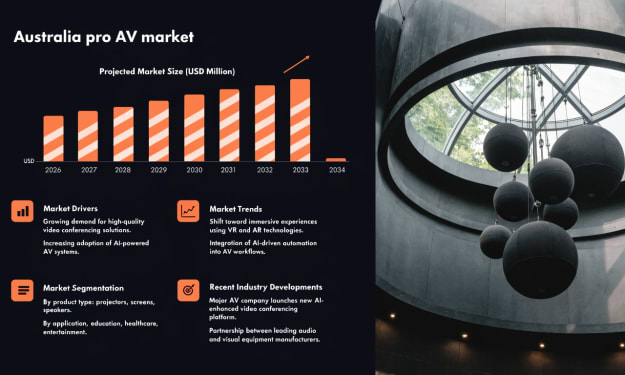
According to IMARC Group, the Australia pro AV market reached a value of USD 93.9 Million in 2025 and is projected to reach USD 133.6 Million by 2034, growing at a compound annual growth rate (CAGR) of 3.88% during 2026–2034. The market is expanding as organizations increasingly adopt advanced audiovisual solutions to support communication, collaboration and digital engagement. Hybrid work environments are encouraging businesses to invest in video conferencing systems, smart displays and integrated collaboration platforms that connect remote and in-office teams. At the same time, industries such as retail, hospitality and tourism are investing in digital signage to improve customer engagement and brand communication. As companies focus on creating interactive and technology-driven environments, professional AV solutions are becoming essential tools for modern workplaces, entertainment venues and commercial spaces across Australia.
By Kevin Cooper4 days ago in Futurism
WhatsApp Business API: A Complete Guide to Business Messaging in 2026
Over the past decade, the way businesses communicate with customers has changed dramatically. Traditional channels such as email and phone support are still widely used, but instant messaging has become one of the most preferred ways for people to interact with brands. Customers increasingly expect quick responses, convenient updates, and support that feels personal rather than formal.
By Olivia Carterabout 11 hours ago in Futurism



Comments
There are no comments for this story
Be the first to respond and start the conversation.