
When Space Medicine Reaches Its Limit: Inside NASA’s First Medical Evacuation From Orbit
A rare decision, an unspoken illness, and the moment space medicine met its limits

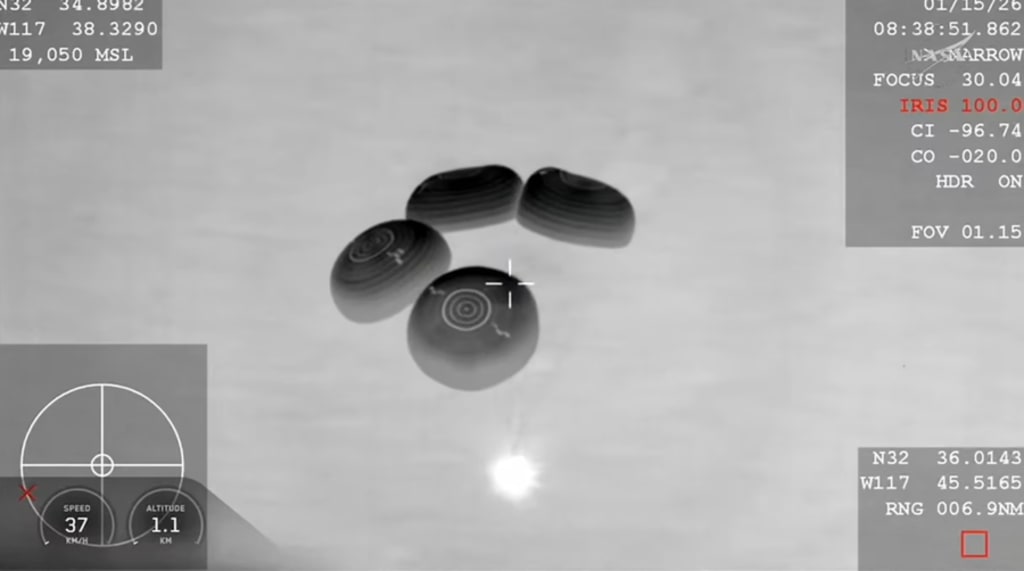
For years, the International Space Station has been sold to the public as a place of quiet precision. Astronauts float, experiments run, Earth spins below, and everything appears controlled. Almost serene.
But space has never been gentle on the human body. It only looks that way from 250 miles down.
In early 2026, NASA made a decision it had rehearsed endlessly but never formally executed before: bringing astronauts home early for medical reasons. Not because the station was failing. Not because a disaster was unfolding. But because the human body aboard it was sending signals that could no longer be safely interpreted from space.
That distinction matters.
A Quiet Decision With Serious Weight
There were no dramatic alerts, no breathless countdowns broadcast live. Instead, flight surgeons, mission managers, and engineers followed a process designed to be boring on purpose
One astronaut developed a medical condition that raised enough uncertainty that continuing the mission no longer felt responsible. NASA chose not to disclose the specific illness, and that restraint is intentional. Astronauts do not surrender their right to medical privacy when they leave Earth.
What we do know is this: the condition could not be fully diagnosed or treated aboard the ISS. The station has medical tools, yes, but it is not a hospital. When the margin for safe care narrowed, NASA acted.
The crew boarded their docked SpaceX Dragon capsule and returned home early. Everyone landed safely. The astronaut received full medical evaluation on Earth.
No heroics. Just judgment.
Why the Human Body Behaves Differently in Space
The body you live in is calibrated for gravity. Remove gravity, and the rules start to bend.
In microgravity, bodily fluids shift upward. Blood and cerebrospinal fluid move toward the head, increasing pressure inside the skull. Faces puff. Sinuses clog. Vision can blur. For some astronauts, these changes persist long after returning home.
The immune system also rewires itself in orbit. Studies have shown that immune responses weaken, while dormant viruses already present in the body can reactivate. An infection or inflammatory response that might be routine on Earth can become unpredictable in space.
Radiation adds another layer. The ISS sits above much of Earth’s natural protection, exposing crews to higher levels of cosmic radiation. While not immediately dangerous, this exposure taxes cellular repair systems and complicates recovery from illness.
Then there is the diagnostic gap. The ISS can monitor vital signs and perform ultrasounds, but it lacks advanced imaging, surgical capability, and comprehensive lab testing. Some medical questions simply cannot be answered without bringing the patient home.
How These Conditions Can Appear
Astronauts are among the most thoroughly screened humans on the planet, yet space has a way of uncovering what even medicine cannot predict.
Sometimes it is a dormant condition pushed forward by stress, radiation, or fluid shifts. Sometimes it is an adaptation-related syndrome, where multiple small physiological changes overlap and amplify one another. And sometimes it is an acute illness that would be straightforward on Earth but becomes complex when gravity disappears.
NASA emphasized that the astronaut was stable. That detail is crucial. This was not an emergency evacuation driven by panic. It was a preventative decision driven by caution.
Why Medical Evacuations Almost Never Happen
Every ISS crew arrives with a return vehicle permanently docked. It is not a convenience. It is a promise.
Still, ending a mission early is never taken lightly. Returning to Earth carries its own risks: reentry forces, landing stress, post-flight cardiovascular strain. Mission managers must decide whether staying in orbit or coming home carries the lower risk.
In this case, the balance tipped toward Earth.
What makes this moment historic is not that an astronaut became ill. That has happened before. What makes it historic is that NASA chose certainty over endurance.
A Signal for the Future of Space Exploration
This incident arrives at a pivotal moment. Human spaceflight is moving toward longer missions, deeper destinations, and reduced evacuation options. Mars does not offer a return capsule. Lunar missions will operate with narrow rescue windows.
The lesson here is not fear. It is realism.
Future crews will need greater medical autonomy, better onboard diagnostics, and expanded training. Artificial intelligence will likely assist in medical decision-making when Earth is too far away for real-time guidance.
But even then, space will remain an environment that tests biology in ways we are still learning to understand.
What This Moment Really Represents
This was not a failure of spaceflight. It was a demonstration of maturity.
NASA listened to the data. It respected the limits of in-orbit medicine. It chose the option that protected human life without spectacle.
Space exploration has always thrived on ambition. But it survives on restraint.
In this case, restraint brought everyone home safely. And that may be the most important mission success of all.
******
About the Creator
Aarish
This account has been compromised for now.
For new pieces, Join me here. VOCAL MEDIA
Support my work .
Join my publication on Medium for self-help advice. (fragments of growth)
About Binding Prometheus
I want to start actively advocating on behalf of my own work, and the most valuable part of my canon is, without a doubt, Binding Prometheus, the play I have been working on since 2019 and only finished in 2023 as part of my MA. The play itself is an amalgamation of a million different inspirations. On one end, it evokes the Ancient Greek myth-play, deriving its own title from the earliest extant work of Western drama we have, Aeschylus’s Prometheus Bound. On the other end, it borrows significantly from the sci-fi bulwarks from over the years, namely Mary Shelley’s Frankenstein and Karel Capek’s Rossum’s Universal Robots. The play could be an episode of Black Mirror, I fear. I don’t know. I’ve only ever seen one episode of Black Mirror.
By Steven Christopher McKnight18 days ago in Futurism
GCC Quick Commerce Market: Convenience Economy, Fast Fulfillment & Retail Evolution
According to IMARC Group's latest research publication, The GCC quick commerce market size reached USD 2.1 Billion in 2024. Looking forward, IMARC Group expects the market to reach USD 22.6 Billion by 2033, exhibiting a growth rate (CAGR) of 30.2% during 2025-2033.
By Abhay Rajput7 days ago in Futurism


Comments
There are no comments for this story
Be the first to respond and start the conversation.