
GCC Quick Commerce Market: Convenience Economy, Fast Fulfillment & Retail Evolution
How Investments in Warehousing and Dark Stores Are Fueling the GCC Quick Commerce Market

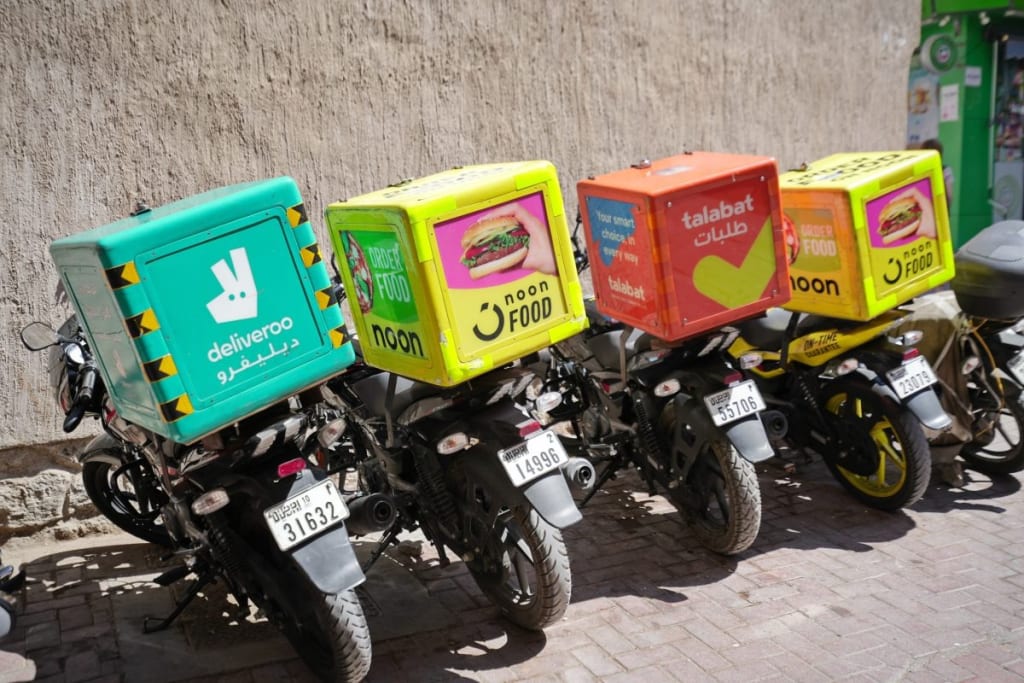
According to IMARC Group's latest research publication, The GCC quick commerce market size reached USD 2.1 Billion in 2024. Looking forward, IMARC Group expects the market to reach USD 22.6 Billion by 2033, exhibiting a growth rate (CAGR) of 30.2% during 2025-2033.
How AI is Reshaping the Future of GCC Quick Commerce Market
- Real-time AI forecasting for purchasing trends has reduced stockouts by 25% for delivery platforms Talabat and NowNow, providing a more efficient dark store model, reducing waste, and improving speed and service in delivering groceries and daily staples throughout Saudi Arabia and the UAE.
- Based on traffic, weather, and density of orders, machine learning reroutes riders. Delivery times average under 12 minutes in Riyadh and Dubai. Jahez and Careem as service providers report fuel costs that are 18-22% lower and customers that are happier.
- Generative AI analyzes past purchases plus browsing patterns to make personalized recommendations. Average order values increased 20-25% upon Noon Minutes and Talabat Mart, cultivating loyalty among young, impulsive GCC customers.
- AI reduces payment fraud by 30%, by monitoring every transaction for anomalies. In the GCC, 95% of transactions are now cashless. This builds infallible consumer trust for a 10-15 minute adventure from checkout to doorstep.
How Vision 2030 is Revolutionizing GCC Quick Commerce Industry
Saudi Arabia’s Vision 2030 and parallel national agendas across the GCC are supercharging quick commerce by treating ultra-fast delivery as critical infrastructure for a modern digital economy. Over $20 billion in logistics and 5G investments, plus streamlined licensing for dark stores, have triggered explosive growth: the sector jumped from $2.1 billion in 2024 to a projected $22.6 billion by 2033 at 30%+ CAGR. Mega-cities like NEOM, Riyadh Season zones, and Dubai South are designed with quick commerce in mind—dense populations, smart traffic systems, and electric-last-mile mandates. Governments are also pushing cashless targets (70% by 2030) and green fleets, while sovereign funds and accelerators back local champions such as Jahez, Talabat, and Snoonu. The result is a unified GCC market where a grocery order placed in Manama can be fulfilled from a Bahrain dark store in under 15 minutes, creating hundreds of thousands of youth jobs and positioning the region as the world’s fastest-adopting quick commerce ecosystem.
GCC Quick Commerce Market Trends & Drivers:
In grocery (53% GCC quick commerce revenue), pharmacy and staples, the industry delivers in 10-30 minutes using a density of dark stores and 5G-enabled apps. Personalization using AI, electric delivery fleets, and robotic-micro warehouses have become industry standards that yield retention rates higher than 60% and continual increases in average order value. Cross-border mergers and acquisitions along with social commerce features are seeing rapid growth in Saudi Arabia and the UAE.
Vision 2030-style diversification can initiate, high smartphone penetration is at greater than 90%, and a population can remain as large, young, and wealthy strengths. Investing massively in logistics parks, unifying payment systems and mandating green initiatives continue to drive down costs while attracting international and regional investment into the GCC, far outpacing other emerging markets in speed, scale and sustainability.
Analyze Updated 2026 Market Size & Trends
GCC Quick Commerce Industry Segmentation:
The report has segmented the market into the following categories:
Breakup by Product Type:
- Grocery
- Pharmacy
- Others
Breakup by Platform:
- App Based
- Web Based
Breakup by Country:
- Saudi Arabia
- UAE
- Qatar
- Bahrain
- Kuwait
- Oman
Competitive Landscape:
The competitive landscape of the industry has also been examined along with the profiles of the key players.
Recent News and Developments in GCC Quick Commerce Market
- January 2025: Talabat publicly confirmed continued investment in ultra-fast grocery delivery infrastructure across key GCC cities, including dark store optimization and rider fleet upgrades.
- March 2025: Careem announced expansion of Careem Quik services in selected UAE and Saudi cities, following officially disclosed service rollout updates.
- June 2025: Saudi Ministry of Commerce reiterated consumer protection and pricing transparency requirements applicable to on-demand grocery and quick-commerce platforms operating in the Kingdom.
Note: If you require specific details, data, or insights that are not currently included in the scope of this report, we are happy to accommodate your request. As part of our customization service, we will gather and provide the additional information you need, tailored to your specific requirements. Please let us know your exact needs, and we will ensure the report is updated accordingly to meet your expectations.
About the Creator
Abhay Rajput
I am working in market research company that provides market and business research intelligence across the globe.
Keep reading
More stories from Abhay Rajput and writers in Futurism and other communities.
GCC Organic Food Market: Health Awareness, Clean Label Demand & Growth Outlook
According to IMARC Group's latest research publication, GCC organic food market size reached USD 4.4 Billion in 2024. The market is projected to reach USD 11.7 Billion by 2033, exhibiting a growth rate of 11.3% during 2025-2033.
By Abhay Rajput2 months ago in Futurism
Silicon Supremacy: Why the iPhone 18 Pro is the Architectural Shift We’ve Been Waiting For
1. Introduction: The Evolution of Pro Every year, the tech zeitgeist asks the same recurring question: "Is this the year to upgrade, or should I hold out for the next leap?" While the silhouettes of the iPhone 18 Pro and Pro Max—slated for their traditional September debut—may feel familiar, our intelligence regarding Apple’s silicon and hardware roadmap suggests we are standing on the precipice of a massive architectural shift. This isn't just another "S" year; it is a calculated pivot where internal engineering triumphs over external gimmicks, signaling a new era of professional-grade mobile computing.
By Tech Horizons5 days ago in Futurism
More than 110 people killed in Iran’s Kurdistan: Official
More than 110 people have been killed in Iran’s western Kurdish region after a series of powerful air strikes hit several locations in the province, according to local officials. The deadly attacks are among the most severe incidents reported in the region since the escalation of hostilities between the United States, Israel, and Iran earlier this year. Authorities in Kurdistan Province said at least 112 people were killed and nearly 1,000 others injured when multiple strikes targeted facilities and infrastructure across the province. Emergency crews were still searching through damaged buildings as hospitals struggled to cope with the influx of wounded residents. Local officials reported that several of the strikes hit areas near the provincial capital Sanandaj, where large plumes of smoke were seen rising above residential districts and government buildings. Videos circulating on social media appeared to show damaged structures, shattered streets, and rescue teams attempting to reach people trapped under rubble. The attacks occurred as the broader war involving United States, Israel, and Iran continues to expand across the Middle East. The conflict began with coordinated strikes on Iranian military and strategic sites earlier in the year and has since spread into multiple regions, including the Persian Gulf and parts of Iraq and Syria. Officials in Iran said many of those killed were civilians, though security forces were also believed to be among the casualties. Several military installations and logistical facilities in Kurdish-majority provinces have reportedly been targeted during the campaign. The mountainous region has strategic importance due to its proximity to the Iraqi border and its role in hosting various military and intelligence facilities. Emergency services described chaotic scenes in several towns across the province. Ambulances transported victims to hospitals in Sanandaj and neighboring cities, while local authorities urged residents to donate blood and assist relief operations. Medical officials said the number of injured—reported at more than 900—could rise as additional casualties are brought in from remote areas. Analysts say the Kurdish provinces of western Iran have become an important battleground during the ongoing conflict. According to monitoring groups, numerous military bases and security installations in Kurdish-majority areas have been targeted in recent weeks as part of the escalating air campaign. The latest attacks are part of a broader military confrontation that has already caused significant casualties across Iran. Reports indicate that thousands of people have been killed or injured nationwide since the beginning of the strikes earlier in the year. The conflict has also triggered retaliatory actions by Iranian forces. Tehran has launched missile and drone attacks against regional targets, including military installations linked to US forces and strategic facilities in several Gulf states. These exchanges have heightened fears that the conflict could spiral into a wider regional war. International organizations and humanitarian groups have expressed concern over the rising civilian toll. Several governments have called for restraint and renewed diplomatic efforts to prevent further escalation. However, fighting has continued across multiple fronts, including air strikes, missile launches, and naval confrontations in the Gulf. Residents in Iran’s Kurdish region say the attacks have created a climate of fear and uncertainty. Many families have fled their homes in affected districts, while others remain trapped due to damaged roads and limited transportation. For many observers, the strikes highlight the widening geographical scope of the conflict. What began as targeted military operations has now spread to civilian-populated areas and strategic infrastructure across the country. As rescue operations continue in Kurdistan province, authorities warn that the death toll may rise further in the coming days. The tragedy underscores the human cost of the escalating confrontation and the growing danger that the conflict could engulf even larger parts of the region.
By Fiaz Ahmed about 21 hours ago in Futurism
Top tipple tricks
Been thinking a lot about drinking, lately. Not least because of a recent episode of over-indulgence and the inevitable after effects. Some readers may recall the earlier articles I wrote about beating the booze. Here I set out an experiment in techniques for cutting down on my alcohol intake. The experiment was successful, the techniques worked, and I have armed myself with an arsenal of weapons in the war against the demon drink. I have yet to fire the first round however. It's all a question of timing (perhaps procrastination).
By Raymond G. Taylor6 days ago in Psyche




Comments
There are no comments for this story
Be the first to respond and start the conversation.