
What Happens If Two Planets Collide: A Cosmic Catastrophe
Space

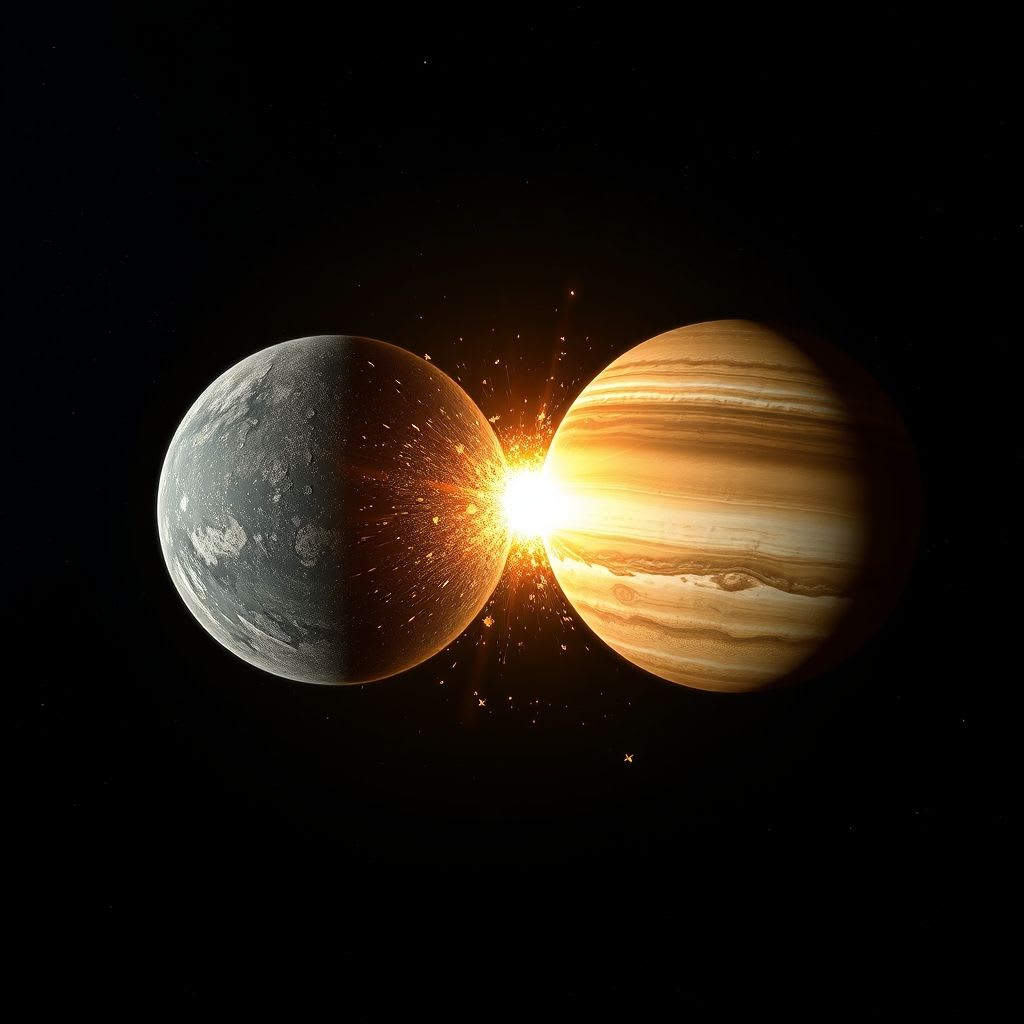
A collision between two planets might sound like the plot of a science fiction blockbuster, but it’s far from pure fantasy. Events like this may have shaped the very structure of our own Solar System and could still be occurring in distant corners of the universe today. So what would really happen if two planets crashed into each other Let’s explore this grand and violent scenario.
The Cosmic Dance: How Planetary Collisions Begin
Under normal conditions, planets orbit their stars along stable paths. However, the universe is anything but static. The gravitational pull of a nearby star, a rogue asteroid, or even instability within a planetary system can nudge a planet off its course, potentially putting it on a collision path with another.
Scientists believe that something similar happened billions of years ago in our own Solar System. According to the "giant impact hypothesis," a Mars sized planet named Theia may have collided with the young Earth. The result A massive explosion that led to the formation of our Moon. It wasn’t just a crash it was the fiery merging of two worlds.
Phase One: The Approach of Doom
As two planets drift closer, they begin to feel each other's gravitational pull. This interaction can cause powerful tidal forces, triggering massive earthquakes and volcanic eruptions long before any physical contact. If both worlds have atmospheres, they may start to mingle, creating violent storms and atmospheric compression.
If life exists on either of the planets, this phase would likely signal the beginning of the end. The sky would darken under thick clouds of dust and ash. Magnetic storms would rage, and surface temperatures could soar to deadly extremes.
Phase Two: The Moment of Impact
When the planets finally collide, the speed of the impact could exceed tens of kilometers per second. The energy released would be equivalent to billions of nuclear explosions. Rock, metal, and gas would be vaporized in milliseconds. If the planets are rocky like Earth and Mars, their crusts and mantles would melt, and huge amounts of debris would be hurled into space.
If one of the planets is a gas giant, the result could be even more dramatic. The sudden compression of gas could create a shockwave so intense it might mimic a temporary star, glowing brightly before fading into chaos.
After such an impact, several outcomes are possible. A new, larger planet could form from the remnants, surrounded by a glowing ring of debris much like Saturn's rings. Alternatively, the collision could scatter fragments into space, forming an asteroid belt or a group of smaller bodies that might evolve into dwarf planets.
Phase Three: The Aftermath
The immediate destruction would be unimaginable, but even after the dust settles, the effects would linger for millions of years. A new orbital pattern might emerge. The gravitational balance of the system could shift entirely. If any form of life once existed, it would almost certainly be obliterated.
Yet from the wreckage, creation may rise. The fragments left behind could eventually coalesce into a new planet or moon. Some scientists believe that such violent collisions are not just destructive they’re a natural part of planetary evolution. They may play a vital role in shaping solar systems and even seeding the conditions for life.
Could It Happen Again
Right now, our Solar System is relatively calm. But it's not immune to future chaos. In several billion years, as our Sun expands into a red giant, planetary orbits could become unstable. Venus or Mars might be pulled closer to Earth, or Jupiter’s immense gravity could throw smaller planets into new trajectories, potentially triggering catastrophic encounters.
In young star systems, where planets are still forming, such collisions are likely far more common. Astronomers have even detected sudden bursts of heat and debris clouds around distant stars possible signs of planetary impacts happening in real time.
Destruction and Creation: The Two Faces of the Universe
A planetary collision is one of the most catastrophic events imaginable. But in space, destruction often walks hand in hand with creation. What looks like the end might simply be the start of something new a new planet, a new satellite, or even the birth of life itself.
The universe has an extraordinary ability to transform chaos into harmony. Through fire and force, through dust and time, new worlds are born from the ashes of the old. And in that cosmic cycle of destruction and rebirth, the story of every planet perhaps even our own continues.
About the Creator
Keep reading
More stories from Holianyk Ihor and writers in Futurism and other communities.
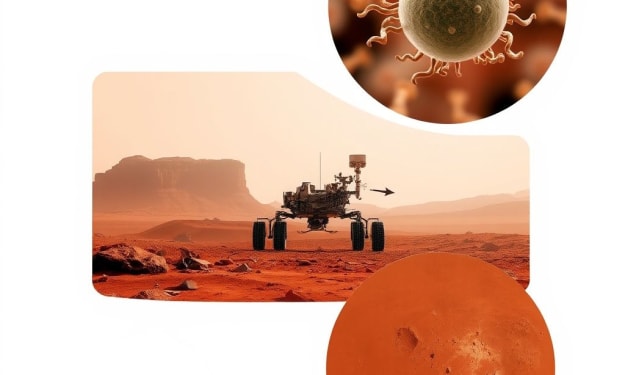
What Happens If a Terrestrial Bacterium Lands on Mars? The Red Planet’s Biohazard Risk
When we imagine the greatest dangers facing space missions to Mars, we often think of malfunctioning landers, communication blackouts, or catastrophic crashes. But there’s another, more subtle threat that scientists worry about: what happens if a tiny, seemingly harmless Earth bacterium makes its way to the Red Planet?
By Holianyk Ihor7 months ago in Futurism
About Binding Prometheus
I want to start actively advocating on behalf of my own work, and the most valuable part of my canon is, without a doubt, Binding Prometheus, the play I have been working on since 2019 and only finished in 2023 as part of my MA. The play itself is an amalgamation of a million different inspirations. On one end, it evokes the Ancient Greek myth-play, deriving its own title from the earliest extant work of Western drama we have, Aeschylus’s Prometheus Bound. On the other end, it borrows significantly from the sci-fi bulwarks from over the years, namely Mary Shelley’s Frankenstein and Karel Capek’s Rossum’s Universal Robots. The play could be an episode of Black Mirror, I fear. I don’t know. I’ve only ever seen one episode of Black Mirror.
By Steven Christopher McKnight14 days ago in Futurism
United States Asparagus Market Size & Forecast 2026–2034
The United States asparagus market is poised for stable and sustained growth over the coming decade as consumers increasingly embrace nutritious, fresh, and minimally processed foods. According to Renub Research, the U.S. asparagus market is expected to grow from US$ 9.04 billion in 2025 to US$ 13.22 billion by 2034, registering a compound annual growth rate (CAGR) of 4.32% from 2026–2034. This expansion reflects the growing importance of vegetables in everyday diets, rising demand for organic and clean-label foods, and the continued popularity of asparagus in both home kitchens and foodservice establishments.
By jaiklin Fanandish6 days ago in Futurism


Comments
There are no comments for this story
Be the first to respond and start the conversation.