
United States Asparagus Market Size & Forecast 2026–2034
Healthy Eating Trends Drive Steady Expansion in America’s Asparagus Industry


The United States asparagus market is poised for stable and sustained growth over the coming decade as consumers increasingly embrace nutritious, fresh, and minimally processed foods. According to Renub Research, the U.S. asparagus market is expected to grow from US$ 9.04 billion in 2025 to US$ 13.22 billion by 2034, registering a compound annual growth rate (CAGR) of 4.32% from 2026–2034. This expansion reflects the growing importance of vegetables in everyday diets, rising demand for organic and clean-label foods, and the continued popularity of asparagus in both home kitchens and foodservice establishments.
As one of the most nutritionally dense vegetables, asparagus has secured a place in the American wellness movement. Its widespread use across fresh, frozen, and processed formats ensures year-round consumption, while improvements in farming practices, cold-chain logistics, and distribution networks are making the product more accessible across the country. Despite challenges such as labor costs and import competition, asparagus remains a resilient segment within the broader U.S. fresh produce market.
United States Asparagus Market Outlook
Asparagus is a perennial vegetable from the lily family, known for its tender spears, distinctive flavor, and impressive nutritional profile. Rich in vitamins A, C, E, and K, folate, fiber, antioxidants, and essential minerals, asparagus is widely recognized as a low-calorie, high-nutrient food. It is consumed in multiple forms—fresh, steamed, grilled, roasted, sautéed, frozen, and canned—making it adaptable to a wide range of cuisines and meal formats.
In the United States, asparagus consumption has gained strong momentum due to heightened awareness of healthy eating habits, plant-based diets, and clean food labels. Health-conscious consumers appreciate asparagus for its digestive, heart-health, and anti-inflammatory benefits. Beyond individual households, restaurants, gourmet kitchens, and foodservice providers have expanded asparagus usage in salads, pasta dishes, soups, stir-fries, and seasonal menus.
As availability has improved through supermarkets, farmers’ markets, online grocery platforms, and organic food stores, asparagus has evolved from a seasonal delicacy into a staple vegetable across American households. The combination of nutritional value, culinary versatility, and premium appeal continues to strengthen its position in the U.S. food system.
Growth Drivers of the United States Asparagus Market
Rising Health and Wellness Awareness
The strongest growth driver for the U.S. asparagus market is the increasing emphasis on health and wellness among American consumers. Asparagus is widely promoted as a nutrient-dense vegetable, making it a natural fit for weight management, digestive health, heart health, and anti-inflammatory diets. The popularity of plant-based eating, low-carbohydrate diets, and clean-label food consumption has significantly boosted demand for fresh vegetables.
Retailers and food brands increasingly position asparagus as a “functional food,” highlighting its antioxidant content and micronutrient benefits. This nutrition-focused marketing has helped expand household penetration and encourage repeat purchases. Restaurants, meal-kit services, and workplace dining programs are also adding more health-oriented menu options that feature asparagus, further driving consumption across diverse demographic groups.
Growth of Foodservice and Meal-Kit Industries
The expansion of the U.S. foodservice sector plays a critical role in supporting asparagus demand. From casual dining chains to fine-dining restaurants, asparagus is favored for its premium appearance, mild flavor, and compatibility with meat, seafood, and plant-based dishes. Chefs value its visual appeal and versatility, which enhances plate presentation and menu innovation.
Meal-kit companies and ready-to-cook food platforms increasingly include asparagus due to its quick preparation, portion-friendly format, and strong consumer acceptance. In addition to fresh use, asparagus is widely incorporated into frozen meals, prepared sides, and gourmet packaged products. This institutional and subscription-based demand stabilizes year-round consumption and provides consistent volumes for growers, processors, and distributors.
Notably, the majority of asparagus consumed in the United States is imported. In 2024 alone, the country imported more than 515 million pounds of asparagus, with Mexico supplying roughly two-thirds of imports. Peru also plays a strategic role due to its unique climate, which enables off-season production. This strong international supply chain ensures availability even when domestic output fluctuates.
Advances in Farming, Storage, and Distribution
Technological improvements across agriculture and logistics are further accelerating market growth. Precision farming techniques, improved seed varieties, advanced irrigation systems, and integrated pest management practices have raised yields while maintaining quality standards. Controlled-atmosphere storage and faster cold-chain logistics help preserve freshness during transportation, extending shelf life and reducing post-harvest losses.
Digital supply-chain platforms allow growers to better coordinate with distributors and retailers, minimizing demand-supply mismatches and improving price stability. Innovations in packaging also enhance product presentation and reduce spoilage. Together, these advancements strengthen the efficiency and reliability of the U.S. asparagus supply network.
Challenges in the United States Asparagus Market
High Labor Costs and Workforce Shortages
Asparagus remains one of the most labor-intensive crops, particularly during harvesting, which often requires manual labor to avoid damaging the spears. Rising wages, workforce shortages, and uncertainty surrounding seasonal agricultural labor programs have significantly increased production costs for U.S. growers. Immigration policy complexities and limited availability of skilled farm workers further strain operations.
For small and mid-sized producers, these costs reduce competitiveness against lower-priced imports. Mechanization options remain limited and costly, making it difficult to control expenses. Higher labor costs translate into elevated retail prices, which can suppress demand during price-sensitive periods and impact long-term profitability for domestic producers.
Price Volatility and Import Competition
Seasonal production cycles, weather variability, and heavy reliance on imports during off-peak domestic seasons contribute to price fluctuations in the U.S. asparagus market. Imported asparagus, often produced at lower costs, exerts strong competitive pressure in both retail and foodservice channels. Retailers frequently prioritize lower-priced imports to maintain consumer affordability, especially during economic uncertainty.
Transportation disruptions, fuel price changes, and evolving trade policies further increase volatility across the supply chain. These conditions make revenue forecasting difficult for domestic growers and discourage long-term investment in expanded production. Without stable pricing mechanisms, growers must absorb significant financial risk, limiting the expansion of U.S. asparagus cultivation.
United States Asparagus Market by Product
Fresh Asparagus
Fresh asparagus represents the largest and most preferred segment of the U.S. market. Consumers associate freshness with superior nutrition, taste, and texture, making fresh spears the dominant choice for home cooking and restaurant use. Peak-season promotions, especially in spring, generate strong retail visibility and impulse purchases.
Farmers’ markets and local food movements further strengthen this segment by emphasizing farm-to-table sourcing and traceability. However, the fresh segment is highly sensitive to temperature, transportation, and shelf-life constraints. Despite these challenges, consumers’ willingness to pay a premium for freshness ensures that fresh asparagus remains the most valuable segment in the overall market.
Frozen Asparagus
Frozen asparagus serves convenience-oriented consumers seeking longer shelf life and year-round availability. It is widely used in foodservice, ready meals, and institutional catering due to consistent pricing and reduced spoilage. Advances in flash-freezing technology have improved texture, color, and nutrient retention, enhancing consumer acceptance.
Frozen asparagus also helps retailers manage inventory more efficiently and reduces food waste. Although some consumers still perceive frozen vegetables as lower quality, continued emphasis on nutrition preservation, sustainability, and cooking versatility is expected to drive steady growth in this segment.
United States Asparagus Market by Variety
Green Asparagus
Green asparagus dominates production and consumption due to its adaptability, high yields, and broad consumer familiarity. Its balanced flavor and cooking versatility make it suitable for grilling, roasting, steaming, and sautéing. Strong nutritional awareness further supports demand, as green asparagus is rich in fiber, antioxidants, and essential vitamins.
Retailers heavily promote green asparagus during harvest seasons, while foodservice operators rely on it for menu variety and visual appeal. Its cost-effectiveness and widespread acceptance make it the backbone of the U.S. asparagus market.
Purple Asparagus
Purple asparagus represents a small but growing niche. Its vibrant color, sweeter taste, and higher anthocyanin content appeal to gourmet consumers, specialty retailers, and health-focused shoppers. However, higher production costs, lower yields, and limited consumer awareness constrain large-scale adoption.
Demand is primarily driven by culinary enthusiasts and chefs seeking visual differentiation. As interest in specialty produce and aesthetically appealing foods increases through social media and food culture, purple asparagus is expected to gain modest traction as a premium segment.
White Asparagus
White asparagus remains a niche, high-value product in the United States, favored mainly by gourmet consumers and European cuisine enthusiasts. Grown using specialized methods that block sunlight, it has a milder flavor and softer texture than green asparagus. High production costs and limited domestic supply keep prices elevated, restricting mass-market penetration.
Consumption is concentrated in upscale restaurants, specialty grocers, and seasonal culinary events. While awareness is gradually increasing, white asparagus is likely to remain a boutique offering within the broader market.
State-Level Market Insights
California
California is the leading asparagus-producing state, benefiting from favorable climate conditions, fertile soils, and advanced agricultural infrastructure. Its long growing season supports high yields and consistent quality for both fresh and processed markets. Proximity to major population centers and export hubs strengthens logistical efficiency.
Despite rising water, land, and labor costs, California remains the backbone of domestic supply. Continued investment in sustainable farming and water-efficient technologies is expected to sustain its leadership in the U.S. asparagus market.
New York
New York’s asparagus market is driven by strong demand for locally grown produce, supported by farmers’ markets, farm-to-table restaurants, and community-supported agriculture programs. Urban consumers show growing interest in organic and sustainable vegetables, allowing local producers to command premium pricing during peak seasons.
However, shorter growing seasons limit large-scale production, making the state dependent on out-of-state and imported supplies for much of the year. Nonetheless, New York remains a key high-value consumption market.
Texas
Texas represents a high-consumption, low-production state. Demand is fueled by a large population, diverse food culture, and expanding urban centers. While suitable growing regions exist, large-scale asparagus farming remains limited, increasing reliance on interstate and imported supplies.
Strong logistics infrastructure supports rapid distribution, ensuring year-round availability. As health-conscious consumption grows, Texas will continue to strengthen its role as a major demand center.
Arizona
Arizona’s asparagus market is shaped by limited water resources and arid conditions, restricting large-scale production. Instead, the state functions as an important distribution and consumption hub. Urban growth and rising health awareness in cities such as Phoenix and Tucson support steady demand.
Environmental constraints make future production expansion unlikely, positioning Arizona primarily as a logistics-driven market within the national asparagus supply chain.
Market Segmentation
By Product:
Fresh Asparagus
Canned Asparagus
Frozen Asparagus
By Variety:
Green Asparagus
White Asparagus
Purple Asparagus
Others
By Key States:
California, Texas, New York, Florida, Illinois, Pennsylvania, Ohio, Georgia, New Jersey, Washington, North Carolina, Massachusetts, Virginia, Michigan, Maryland, Colorado, Tennessee, Indiana, Arizona, Minnesota, Wisconsin, Missouri, Connecticut, South Carolina, Oregon, Louisiana, Alabama, Kentucky, and the Rest of the United States.
Competitive Landscape
The U.S. asparagus market features a mix of domestic producers, seed developers, and international suppliers. Major companies profiled include:
Altar Produce LLC
Walker Brothers, Inc.
Limgroup B.V.
Jersey Asparagus Farms Inc.
Cutter Asparagus Seed
Thiermann Spargelhof
Danper
Golden Valley Seed
Transplants Inc.
Südwestdeutsche Saatzucht GmbH & Co. KG
Each company is evaluated across five key viewpoints: overview, key personnel, recent developments, SWOT analysis, and revenue analysis, offering a comprehensive view of competitive positioning.
Final Thoughts
The United States asparagus market is entering a phase of consistent, health-driven expansion. With Renub Research forecasting growth from US$ 9.04 billion in 2025 to US$ 13.22 billion by 2034, the sector is well positioned to benefit from evolving dietary habits, rising demand for fresh produce, and ongoing innovations in agriculture and logistics.
While challenges such as labor shortages, price volatility, and import competition persist, the long-term fundamentals remain strong. Asparagus continues to align with consumer priorities around nutrition, convenience, and sustainability. For growers, retailers, and foodservice operators, the coming decade presents opportunities to innovate, diversify offerings, and strengthen supply-chain resilience—ensuring asparagus remains a valued staple in the American food landscape.
About the Creator
jaiklin Fanandish
Jaiklin Fanandish, a passionate storyteller with 10 years of experience, crafts engaging narratives that blend creativity, emotion, and imagination to inspire and connect with readers worldwide.
Keep reading
More stories from jaiklin Fanandish and writers in Futurism and other communities.
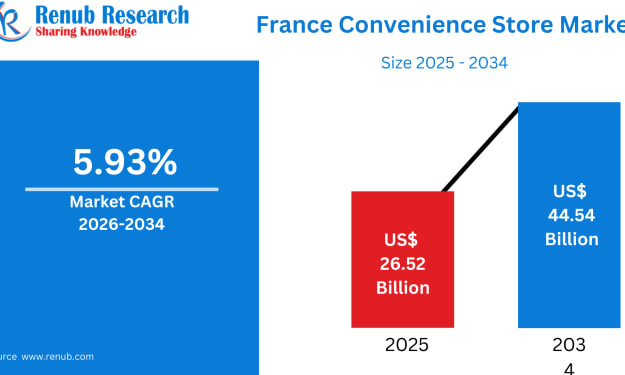
France Convenience Store Market Size and Forecast 2026–2034
Introduction The France Convenience Store Market is poised for strong expansion over the coming decade, reflecting the country’s changing consumer habits, growing urban density, and rising preference for speed, accessibility, and ready-to-consume products. According to Renub Research, the market is expected to grow from US$ 26.52 billion in 2025 to US$ 44.54 billion by 2034, registering a healthy compound annual growth rate (CAGR) of 5.93% from 2026 to 2034.
By jaiklin Fanandish3 days ago in Futurism
About Binding Prometheus
I want to start actively advocating on behalf of my own work, and the most valuable part of my canon is, without a doubt, Binding Prometheus, the play I have been working on since 2019 and only finished in 2023 as part of my MA. The play itself is an amalgamation of a million different inspirations. On one end, it evokes the Ancient Greek myth-play, deriving its own title from the earliest extant work of Western drama we have, Aeschylus’s Prometheus Bound. On the other end, it borrows significantly from the sci-fi bulwarks from over the years, namely Mary Shelley’s Frankenstein and Karel Capek’s Rossum’s Universal Robots. The play could be an episode of Black Mirror, I fear. I don’t know. I’ve only ever seen one episode of Black Mirror.
By Steven Christopher McKnight11 days ago in Futurism
Paints and Coatings Market: Sustainable Solutions, Construction Demand & Growth Path
According to IMARC Group's latest research publication, The global paints and coatings market size was valued at USD 185.6 Billion in 2025. Looking forward, IMARC Group estimates the market to reach USD 274.8 Billion by 2034, exhibiting a CAGR of 4.5% from 2026-2034.
By James Whitman3 days ago in Futurism
Where's the Glory?
In breaking news, rehabilitated Republican Senator Johnnie Johnson (Pronouns: HE, HIM, HIS) called a press conference from the Men’s room of the New Orleans Louis Armstrong International Airport, Concourse B, across from the Ignatius Reilly’s Lucky Dog stand. The Senator had just returned from a sexual reorientation rehabilitation program in Memphis, TN after being publically disgraced at a Buckee’s Truckstop restroom soliciting sex from an undercover cop three months ago. He is a founding member of the Reformed Christians for Christ, a conservative, pro-family and ex-gay advocacy group. In the spirit of being reborn, Senator Johnson invited reporters to marvel at his plans for a major remodeling of airport bathrooms.
By Cathy Schieffelin4 days ago in Humor


Comments
There are no comments for this story
Be the first to respond and start the conversation.