
United States Residential Remodeling Market Size and Forecast 2025–2033
Modernization, Sustainability, and Home Equity Drive a New Era of Renovation Growth


Introduction
The United States residential remodeling market has entered a transformative phase, driven by evolving homeowner lifestyles, rising property values, and an increased emphasis on sustainability and modernization. According to Renub Research, the United States Residential Remodeling Market is expected to reach US$ 804.02 billion by 2033, up from US$ 531.34 billion in 2024, growing at a CAGR of 4.71% between 2025 and 2033. This steady expansion reflects the essential role of remodeling in maintaining and enhancing the nation’s aging housing stock while aligning homes with contemporary living standards.
Unlike new construction, residential remodeling responds directly to changing household needs, technological innovations, and environmental considerations. Homeowners are no longer merely repairing worn structures—they are redesigning spaces to improve comfort, efficiency, and long-term property value. From energy-efficient upgrades and smart home integrations to outdoor living enhancements and disaster-resilient construction, remodeling has become a strategic investment for American households.
As economic conditions stabilize and consumer confidence remains resilient, the U.S. remodeling industry continues to benefit from a diverse demand base spanning first-time homeowners, growing families, retirees, and investors. The market’s adaptability to lifestyle shifts, combined with government incentives and technological advancements, positions it for sustained growth throughout the forecast period.
United States Residential Remodeling Industry Overview
The United States residential remodeling industry represents a critical segment of the country’s construction ecosystem. It encompasses renovation, repair, and improvement projects across interior and exterior residential spaces, including kitchens, bathrooms, basements, roofing, landscaping, and energy systems. Remodeling activities serve not only aesthetic purposes but also functional needs such as safety upgrades, accessibility improvements, and energy conservation.
A key structural driver of the industry is the aging housing stock. A large share of U.S. homes were built decades ago and require continuous maintenance to meet modern standards of efficiency and design. Rather than relocating, many homeowners choose to invest in remodeling projects that extend the lifespan of their properties while increasing market value. This trend has intensified as high mortgage rates and limited housing inventory make moving less attractive.
Technological progress has also reshaped the remodeling landscape. Digital design platforms, 3D modeling tools, and project management software enable contractors to deliver faster, more accurate, and customized renovation solutions. Online marketplaces and virtual consultations have simplified the planning process, improving transparency and customer engagement. These tools allow homeowners to visualize design outcomes, compare materials, and manage budgets with greater precision.
Sustainability is another defining characteristic of the modern remodeling industry. Rising awareness of climate change, coupled with energy efficiency regulations, has accelerated the adoption of green materials and smart systems. Solar installations, high-performance insulation, low-emission building products, and water-saving fixtures are now common features in renovation projects. Beyond environmental benefits, these upgrades offer long-term cost savings, making sustainability both an ethical and financial decision for homeowners.
Despite cyclical economic fluctuations, the residential remodeling sector has demonstrated remarkable resilience. During periods of market uncertainty, homeowners often prioritize improving existing spaces over purchasing new homes. The pandemic further reinforced this trend, as remote work and lifestyle shifts increased demand for home offices, outdoor spaces, and functional living environments. Looking ahead, the U.S. remodeling industry is set to remain a cornerstone of the housing market.
Key Factors Driving Market Growth
1. Aging Housing Stock and Maintenance Requirements
One of the most powerful drivers of the U.S. residential remodeling market is the age of existing homes. A substantial portion of the national housing inventory requires ongoing repairs, structural upgrades, and modernization. Roofing replacements, plumbing updates, electrical rewiring, and HVAC improvements are now routine projects for homeowners seeking safety and efficiency.
In addition to functional repairs, older homes often require layout modifications to match contemporary living preferences. Open-concept designs, modern kitchens, upgraded bathrooms, and smart lighting systems are among the most requested enhancements. Government incentives supporting energy-efficient retrofits further encourage homeowners to remodel rather than replace their properties. As the housing stock continues to age, long-term demand for renovation services is expected to remain robust.
2. Rising Homeowner Equity and Financial Capacity
Increasing property values across the United States have significantly expanded homeowner equity, providing the financial foundation for remodeling investments. Rather than upgrading through relocation, many households view remodeling as a cost-effective strategy to enhance living standards while preserving equity.
Access to home improvement loans, refinancing options, and flexible financing solutions has further broadened market participation. Lifestyle-driven renovations—such as kitchen upgrades, bathroom remodeling, home office construction, and outdoor living enhancements—are increasingly popular among middle- and upper-income households. This growing spending power and preference for personalized spaces continue to fuel market momentum.
3. Focus on Energy Efficiency and Sustainability
Environmental awareness has become a central theme in residential remodeling. Homeowners are prioritizing energy-efficient windows, advanced insulation systems, solar panels, smart thermostats, and sustainable building materials. These upgrades reduce long-term utility costs while contributing to lower carbon footprints.
Federal and state-level incentive programs supporting green construction further accelerate adoption. Younger, environmentally conscious homeowners are particularly inclined toward sustainable remodeling solutions that combine responsibility with long-term value creation. As energy costs rise and climate considerations intensify, sustainability will remain a key growth engine for the U.S. remodeling market.
Challenges Facing the Market
Skilled Labor Shortages
The residential remodeling industry continues to face a shortage of skilled labor. Retiring professionals and limited entry of younger workers into construction trades have created a widening workforce gap. As demand increases, contractors struggle to maintain project timelines, quality standards, and competitive pricing.
Rising wages, while beneficial for workers, contribute to higher project costs for homeowners. In peak seasons, labor constraints limit contractors’ capacity, resulting in extended wait times and reduced service availability. Long-term solutions depend on expanded vocational training, workforce development initiatives, and greater investment in construction education.
Material Cost Volatility and Supply Chain Disruptions
Fluctuating prices for lumber, steel, concrete, and energy-efficient components present ongoing challenges. Global supply chain disruptions, transportation delays, and inflationary pressures have raised material costs and extended project lead times.
For homeowners, this volatility can lead to budget overruns or postponed renovations. Contractors increasingly rely on diversified supplier networks, improved inventory management, and alternative materials to manage uncertainty. While these strategies mitigate short-term impacts, material price instability remains a structural risk for the industry.
State-Level Market Overview
California Residential Remodeling Market
California’s remodeling market is shaped by high property values, sustainability mandates, and an aging housing stock. Homeowners emphasize energy-efficient upgrades, solar installations, and environmentally friendly materials to comply with regulations and reduce costs. Modern layouts, outdoor living spaces, and smart home technologies are increasingly in demand.
Regional safety concerns also influence renovation trends. Earthquake-resistant construction, fire-resistant materials, and structural reinforcements are gaining traction. Despite high labor and material costs, remodeling remains a strategic investment due to strong real estate values. Major urban centers such as Los Angeles, San Diego, and San Francisco continue to lead market activity.
Texas Residential Remodeling Market
Texas benefits from population growth, expanding suburbs, and rising household incomes. Cities such as Dallas, Houston, and Austin are experiencing strong remodeling demand driven by affordability and new homeownership. Interior upgrades, outdoor living spaces, and energy-efficient installations dominate project portfolios.
Climate diversity shapes renovation priorities, with insulation, roofing, and HVAC improvements in high demand. While labor shortages and material costs pose challenges, strong consumer confidence and a dynamic housing market sustain growth across the state.
New York Residential Remodeling Market
New York’s remodeling market reflects urban density, limited housing supply, and aging infrastructure. Homeowners prioritize space optimization, modernization, and energy-efficient retrofits. Smart home integration and home office construction have gained momentum in metropolitan areas.
Historic buildings and high-rise properties require specialized renovation expertise, creating niche service opportunities. Despite high project costs, homeowners continue to invest in value-enhancing improvements. Government incentives supporting green design further strengthen market resilience.
Florida Residential Remodeling Market
Florida’s market is driven by population inflows, tourism, and migration from other states. Homeowners invest heavily in energy efficiency, hurricane-resistant construction, and outdoor living spaces. Roofing, stormproofing, patios, pools, and landscaping projects dominate renovation spending.
Retirees and second-home buyers emphasize luxury, accessibility, and safety features. Although material cost volatility and labor shortages persist, strong housing trends and lifestyle-driven demand support sustained growth across residential and vacation home segments.
Recent Developments in the U.S. Residential Remodeling Market
Strategic acquisitions among major home improvement companies underscore the growing importance of professional remodeling services.
In April 2025, Lowe’s announced the acquisition of Artisan Design Group (ADG), a leading provider of interior finish design, distribution, and installation services for builders and property managers. This move strengthens Lowe’s position in the residential construction and remodeling market, particularly across single-family and multi-family segments, enhancing its ability to serve professional contractors in flooring and interior solutions.
Earlier, in June 2024, The Home Depot completed its acquisition of SRS Distribution, a prominent distributor serving pool, landscaping, and roofing contractors. This acquisition expanded Home Depot’s reach within specialty trade distribution, improving its ability to meet complex project requirements and reinforcing its leadership in the professional contractor market.
These developments signal a broader industry trend toward vertical integration, service expansion, and stronger engagement with professional remodelers.
Market Segmentation
By Application
Flooring
Walls
Ceilings
Porch, Garden, and Garage
System & Equipment
Disaster Repair
Other
By Service Type
Full-Remodeling Service Providers
Specialized Service Providers
By States
California, Texas, New York, Florida, Illinois, Pennsylvania, Ohio, Georgia, New Jersey, Washington, North Carolina, Massachusetts, Virginia, Michigan, Maryland, Colorado, Tennessee, Indiana, Arizona, Minnesota, Wisconsin, Missouri, Connecticut, South Carolina, Oregon, Louisiana, Alabama, Kentucky, and the Rest of the United States.
Competitive Landscape
The U.S. residential remodeling market is characterized by the presence of established manufacturers, material suppliers, and service providers offering comprehensive renovation solutions. Leading companies focus on product innovation, sustainability, distribution expansion, and contractor partnerships to strengthen market positions.
Key Players Covered:
Kohler Co.
Trex Company
Dow Inc.
Pella Corporation
JELD-WEN
Industrie Cotto Possagno S.p.A
Lutron Electronics Co., Inc.
Boise Cascade Company
Andersen Corporation
Seven Group Holdings Limited
Market analysis of these players includes company overviews, key personnel, recent developments, SWOT analysis, revenue performance, and strategic positioning.
Final Thoughts
The United States residential remodeling market is evolving into a dynamic, innovation-driven industry shaped by modernization, sustainability, and shifting homeowner priorities. With market value projected to grow from US$ 531.34 billion in 2024 to US$ 804.02 billion by 2033 at a CAGR of 4.71%, the sector stands as one of the most resilient components of the construction economy.
Aging housing stock, rising home equity, and environmental awareness continue to create strong demand for renovation services. At the same time, challenges such as skilled labor shortages and material cost volatility require strategic adaptation by contractors, suppliers, and policymakers. Technological advancements, workforce development initiatives, and sustainable construction practices will play a decisive role in shaping the industry’s future.
As homeowners increasingly view remodeling not just as maintenance, but as a long-term investment in comfort, efficiency, and value, the U.S. residential remodeling market is poised to remain a cornerstone of the nation’s housing ecosystem throughout the forecast period and beyond.
About the Creator
Renub Research
Renub Research is a Market Research and Consulting Company. We have more than 15 years of experience especially in international Business-to-Business Researches, Surveys and Consulting. Call Us : +1-478-202-3244
Keep reading
More stories from Renub Research and writers in Futurism and other communities.
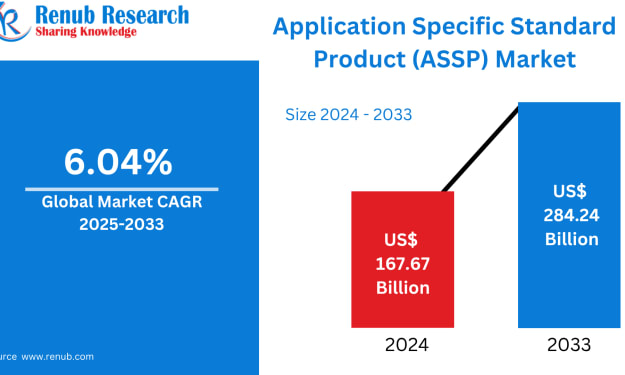
Application Specific Standard Product (ASSP) Market Size and Forecast 2025–2033
Introduction: A Market Built for Precision The global semiconductor industry is undergoing a profound transformation as demand shifts from general-purpose processing toward specialized, application-focused solutions. At the heart of this shift lies the Application Specific Standard Product (ASSP)—a category of integrated circuits that blends the efficiency of custom chips with the scalability of standard semiconductor products. Designed to perform specific functions across multiple applications, ASSPs offer a powerful balance of performance, cost-effectiveness, and time-to-market.
By Renub Research8 days ago in Futurism
About Binding Prometheus
I want to start actively advocating on behalf of my own work, and the most valuable part of my canon is, without a doubt, Binding Prometheus, the play I have been working on since 2019 and only finished in 2023 as part of my MA. The play itself is an amalgamation of a million different inspirations. On one end, it evokes the Ancient Greek myth-play, deriving its own title from the earliest extant work of Western drama we have, Aeschylus’s Prometheus Bound. On the other end, it borrows significantly from the sci-fi bulwarks from over the years, namely Mary Shelley’s Frankenstein and Karel Capek’s Rossum’s Universal Robots. The play could be an episode of Black Mirror, I fear. I don’t know. I’ve only ever seen one episode of Black Mirror.
By Steven Christopher McKnight19 days ago in Futurism
Home Shopping Market: Convenience-Led Retail & Growth Outlook
According to IMARC Group's latest research publication, The global home shopping market size was valued at USD 4,598.70 Billion in 2024. Looking forward, IMARC Group estimates the market to reach USD 12,791.25 Billion by 2033, exhibiting a CAGR of 11.44% during 2025-2033.
By James Whitman5 days ago in Futurism
How, Too
Many people wonder how, too. You are not alone, and I am an expert. I will teach you how, too! First, you need to remit a small application fee and fill out an application describing the nature of your financial situation and how often payments will be made, as this will have great bearing on how well I teach you how, too.
By Harper Lewis3 days ago in Fiction



Comments
There are no comments for this story
Be the first to respond and start the conversation.