
The Solar Corona: The Mysterious Fiery Crown of the Sun
Space

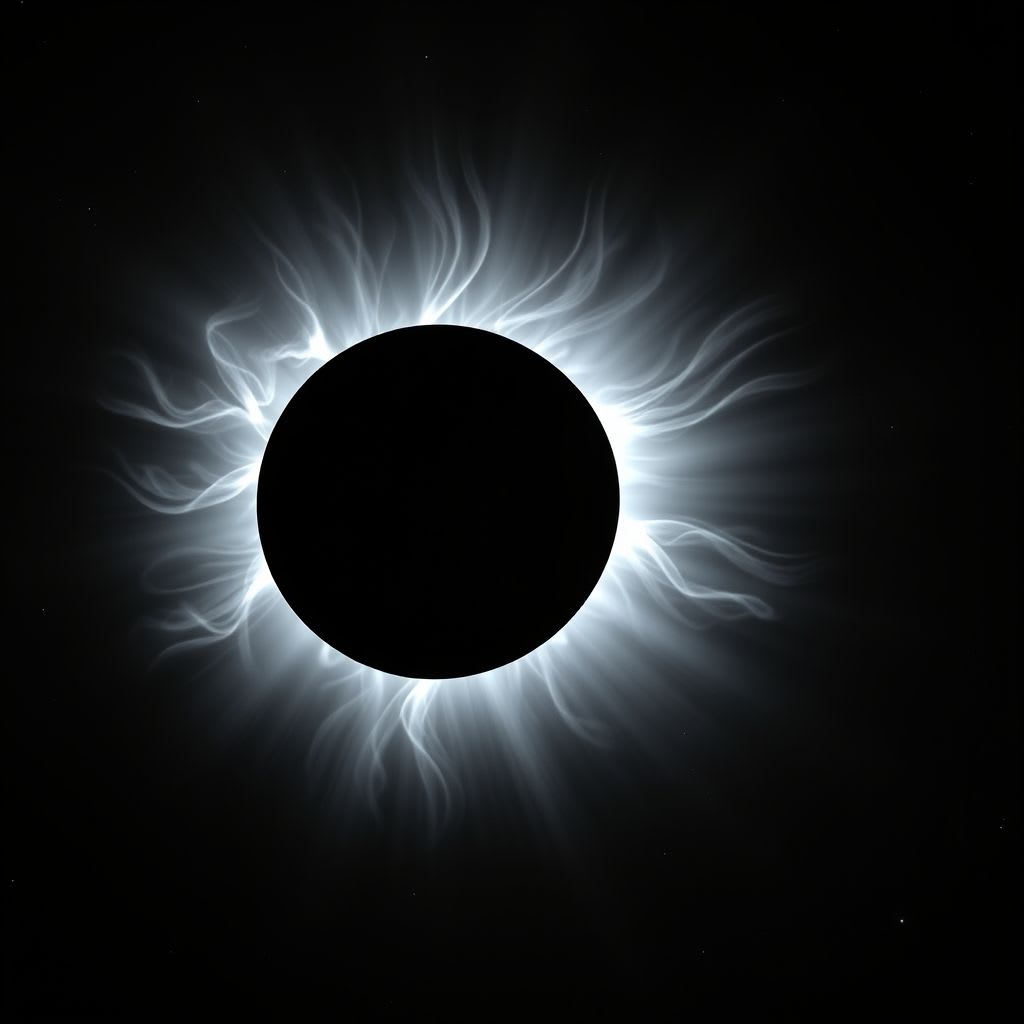
The solar corona is the Sun’s outermost atmospheric layer — its most rarefied and hottest part. Although barely visible from Earth except during a total solar eclipse, the corona holds countless mysteries that scientists have been striving to unravel for decades. What makes it so unique, and why is studying it essential not only to understanding the Sun but also to predicting the space weather that impacts our planet?
What Exactly Is the Solar Corona?
The word “corona” comes from Latin, meaning “crown” or “wreath.” Visually, it resembles a glowing ring surrounding the dark disk of the Moon during a total eclipse. The corona is the Sun’s outer atmospheric shell, starting roughly 2,000 kilometers above the photosphere — the visible surface of the Sun — and stretching millions of kilometers into space.
Despite its tenuous nature, the corona is incredibly hot. Temperatures soar from about 1 million up to 3 million degrees Celsius. This is hundreds of times hotter than the Sun’s surface, which is around 5,500 °C. Such an “anomaly” puzzled astronomers for years and remains a hot topic of scientific debate.
Why Is the Corona So Hot?
This question is one of modern astrophysics’ greatest enigmas. Logic suggests that as you move away from a heat source, temperatures should drop. Yet, with the Sun, the opposite occurs: the corona is vastly hotter than the underlying layers.
Scientists have proposed several theories to explain this paradox:
- Wave Heating: Magnetic waves originating from the Sun’s surface travel upward, depositing their energy into the corona and heating it.
- Magnetic Nanoflares: Tiny, rapid bursts of magnetic energy — occurring millions of times per second — might quietly heat the corona to extreme temperatures.
- Magnetic Field Reconfiguration: Sudden rearrangements of the Sun’s magnetic field release energy that heats the surrounding plasma.
No single theory has been fully confirmed, and the reality might be a combination of these processes working together.
What Is the Corona Made Of?
The corona is primarily composed of ionized gases — plasma — where electrons have been stripped from their atomic nuclei. The main elements are hydrogen and helium, but highly ionized atoms of iron, calcium, and others are also present. These ions cause the corona to emit in ultraviolet and X-ray wavelengths, which is why specialized telescopes and satellites can observe it despite its faintness in visible light.
How Do Scientists Study the Corona?
For centuries, the corona could only be observed during rare total solar eclipses. Today, special instruments called coronagraphs simulate an eclipse by blocking the bright solar disk, allowing continuous study of the corona’s faint glow.
Space missions also play a crucial role:
- SOHO (Solar and Heliospheric Observatory): A joint European-American satellite launched in 1995, providing decades of solar data.
- Parker Solar Probe: NASA’s groundbreaking spacecraft that travels closer to the Sun than any previous mission, directly sampling the corona.
- Solar Orbiter: A European Space Agency mission focusing on the Sun’s poles and magnetic environment.
Why Is Studying the Corona Important?
The corona is the birthplace of the solar wind — a stream of charged particles flowing out into space. These particles interact with Earth’s magnetic field, producing spectacular auroras but also potentially disrupting satellites, communications, and even power grids.
Moreover, the corona is tied to powerful events like solar flares and coronal mass ejections (CMEs), which can pose risks to astronauts and technological infrastructure.
Conclusion
The solar corona is far more than just a fiery halo around the Sun. It is a complex, dynamic, and incredibly hot region filled with mysteries and energy. Understanding it helps us grasp not only how our star behaves but also how it influences the entire Solar System — including Earth. The more we learn about the corona, the better we can predict space weather and safeguard our planet against solar storms.
Exploring the corona is a journey into the heart of stellar physics and a key to unlocking the secrets of our closest star.
About the Creator
Keep reading
More stories from Holianyk Ihor and writers in Futurism and other communities.
What Is the Exosphere and Why Is It Important?
When we look up at the night sky, it often feels as if space begins just beyond the clouds. However, the boundary between Earth’s atmosphere and outer space is far more complex and mysterious than it seems. The exosphere — the outermost layer of Earth’s atmosphere — stretches far into space and plays surprisingly important roles that affect not only our planet but also humanity’s ventures beyond. Let’s explore what the exosphere really is, what it’s made of, and why it matters so much.
By Holianyk Ihor7 months ago in Futurism
About Binding Prometheus
I want to start actively advocating on behalf of my own work, and the most valuable part of my canon is, without a doubt, Binding Prometheus, the play I have been working on since 2019 and only finished in 2023 as part of my MA. The play itself is an amalgamation of a million different inspirations. On one end, it evokes the Ancient Greek myth-play, deriving its own title from the earliest extant work of Western drama we have, Aeschylus’s Prometheus Bound. On the other end, it borrows significantly from the sci-fi bulwarks from over the years, namely Mary Shelley’s Frankenstein and Karel Capek’s Rossum’s Universal Robots. The play could be an episode of Black Mirror, I fear. I don’t know. I’ve only ever seen one episode of Black Mirror.
By Steven Christopher McKnight19 days ago in Futurism
How AI is switching from a skilled tortious to a creative playful in case of video making in 2026
I see that the digital landscape has always been a place. In 2026 the digital landscape faces more stakes than before. People no longer just live in a world. People now live in a world where attention's the most valuable currency. For years the barrier to entry for high‑quality video production was high. The barrier required cameras, complex editing software and hundreds of hours of labor.
By Muhammad Hanzlaa day ago in Futurism




Comments
There are no comments for this story
Be the first to respond and start the conversation.