
The Future of Space Exploration
Are We Ready to Colonize Other Planets?


The idea of humans living beyond Earth has long been a dream, but with rapid advancements in space exploration, it is now closer to reality than ever before. The big question is: Are we truly ready to colonize other planets? Let’s explore the future of space exploration, the challenges ahead, and whether humanity is prepared for this giant leap.
## Why Colonizing Other Planets Is Essential?
Overpopulation and Resource Depletion
With Earth’s population surging past 8 billion, resources are becoming scarce. Space colonization could provide new land, resources, and opportunities for expansion.
Climate Change and Natural Disasters
Rising global temperatures, extreme weather conditions, and increasing natural disasters make space colonization an attractive Plan B for human survival.
Scientific and Technological Advancements
Exploring new worlds can drive innovation in medicine, engineering, and artificial intelligence, benefiting humanity as a whole.
## The Current State of Space Exploration
NASA’s Ambitious Goals
NASA is working on the Artemis program to establish a sustainable presence on the Moon, which serves as a stepping stone for Mars missions.
SpaceX and Private Sector Involvement
Elon Musk’s SpaceX is pushing the boundaries with reusable rockets and plans to send humans to Mars by the 2030s.
International Space Collaboration
Countries like China, Russia, and the European Space Agency are joining forces to advance space travel and colonization.
## The Challenges of Space Colonization
Technological Limitations
Propulsion Systems
Current rocket technology is too slow for deep-space travel. Innovations like nuclear propulsion and ion drives are being explored.
Sustainable Life Support Systems
Ensuring a continuous supply of oxygen, water, and food is crucial for long-term survival in space.
Human Health and Psychological Concerns
Extended exposure to microgravity and cosmic radiation poses serious risks to human health, including muscle loss and radiation sickness.
Ethical and Legal Implications
Who owns space? Who enforces laws? These questions must be addressed before colonization becomes a reality.
## Potential Planets for Colonization
Mars – The Red Planet
Mars is the most viable candidate, with frozen water reserves and a thin atmosphere that could support life with proper technology.
The Moon as a Stepping Stone
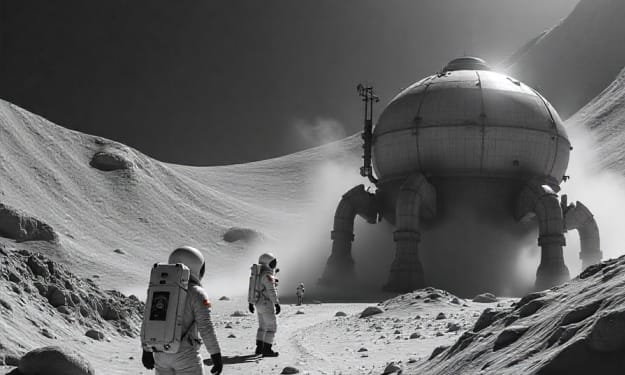
The Moon is closer and could serve as a testing ground for long-term space habitation.
Exoplanets in the Habitable Zone
Scientists are discovering Earth-like planets orbiting distant stars, but reaching them remains a challenge.
## Breakthrough Technologies Shaping the Future
AI and Robotics in Space Exploration
Autonomous robots can build habitats and conduct research, reducing human risk.
3D Printing for Space Habitats
3D printing can construct buildings using local materials on Mars or the Moon.
Nuclear and Solar Energy for Space Colonies
Reliable energy sources like nuclear reactors and solar farms will power future space settlements.
## The Role of Governments and Private Companies
Public vs. Private Space Initiatives
While NASA and other agencies lead space exploration, companies like SpaceX and Blue Origin are revolutionizing the industry.
Funding and Economic Viability
Space colonization is expensive. Will it be government-funded, or will private investors lead the way?
## Are We Truly Ready to Colonize Other Planets?
Despite technological progress, humanity still faces significant challenges. Until we overcome these hurdles, full-scale colonization remains a distant goal.
## Conclusion
While we are on the brink of interplanetary exploration, true colonization is still years away. However, with persistent innovation, collaboration, and investment, humanity may soon call another planet home.
## FAQs
1. Can humans survive on Mars without a spacesuit?No, Mars has a thin atmosphere mostly composed of carbon dioxide, making a spacesuit essential for survival.
2. What is the biggest challenge of space colonization?Sustaining life in harsh environments with limited resources remains the biggest challenge.
3. How soon can we expect to see human colonies on other planets?Experts predict that we might see the first human missions to Mars within the next two decades, but full-scale colonization could take longer.
4. Will space colonization be affordable for ordinary people?Initially, it will be costly, but over time, advancements in technology may make it more accessible to the public.
5. Are there any ethical concerns with colonizing other planets?Yes, questions about planetary ownership, environmental impact, and the treatment of potential extraterrestrial life need careful consideration.
About the Creator
Apleetech
Apleetech is a Professional Technology Platform. Here we will provide you only interesting content, which you will like very much. We're dedicated to providing you with the best of Technology, with a focus on dependability and Tech.
About Binding Prometheus
I want to start actively advocating on behalf of my own work, and the most valuable part of my canon is, without a doubt, Binding Prometheus, the play I have been working on since 2019 and only finished in 2023 as part of my MA. The play itself is an amalgamation of a million different inspirations. On one end, it evokes the Ancient Greek myth-play, deriving its own title from the earliest extant work of Western drama we have, Aeschylus’s Prometheus Bound. On the other end, it borrows significantly from the sci-fi bulwarks from over the years, namely Mary Shelley’s Frankenstein and Karel Capek’s Rossum’s Universal Robots. The play could be an episode of Black Mirror, I fear. I don’t know. I’ve only ever seen one episode of Black Mirror.
By Steven Christopher McKnight14 days ago in Futurism
Window Sensor Market Size and Forecast 2025–2033
Introduction: A Market Opening to New Possibilities The global Window Sensor Market is entering a transformative phase as intelligent security and building automation reshape residential, commercial, and industrial environments. According to Renub Research, the market is expected to grow from US$ 12.98 billion in 2024 to US$ 24.78 billion by 2033, registering a strong CAGR of 7.45% from 2025 to 2033. This robust growth is driven by rising adoption of smart home security systems, rapid improvements in Internet of Things (IoT) connectivity, accelerating urbanization, and the increasing use of wireless technologies that enhance automation, safety, and energy efficiency.
By jaiklin Fanandish2 days ago in Futurism


Comments
There are no comments for this story
Be the first to respond and start the conversation.