
The Final Frontier
How Space Technology is Evolving Faster Than Ever!

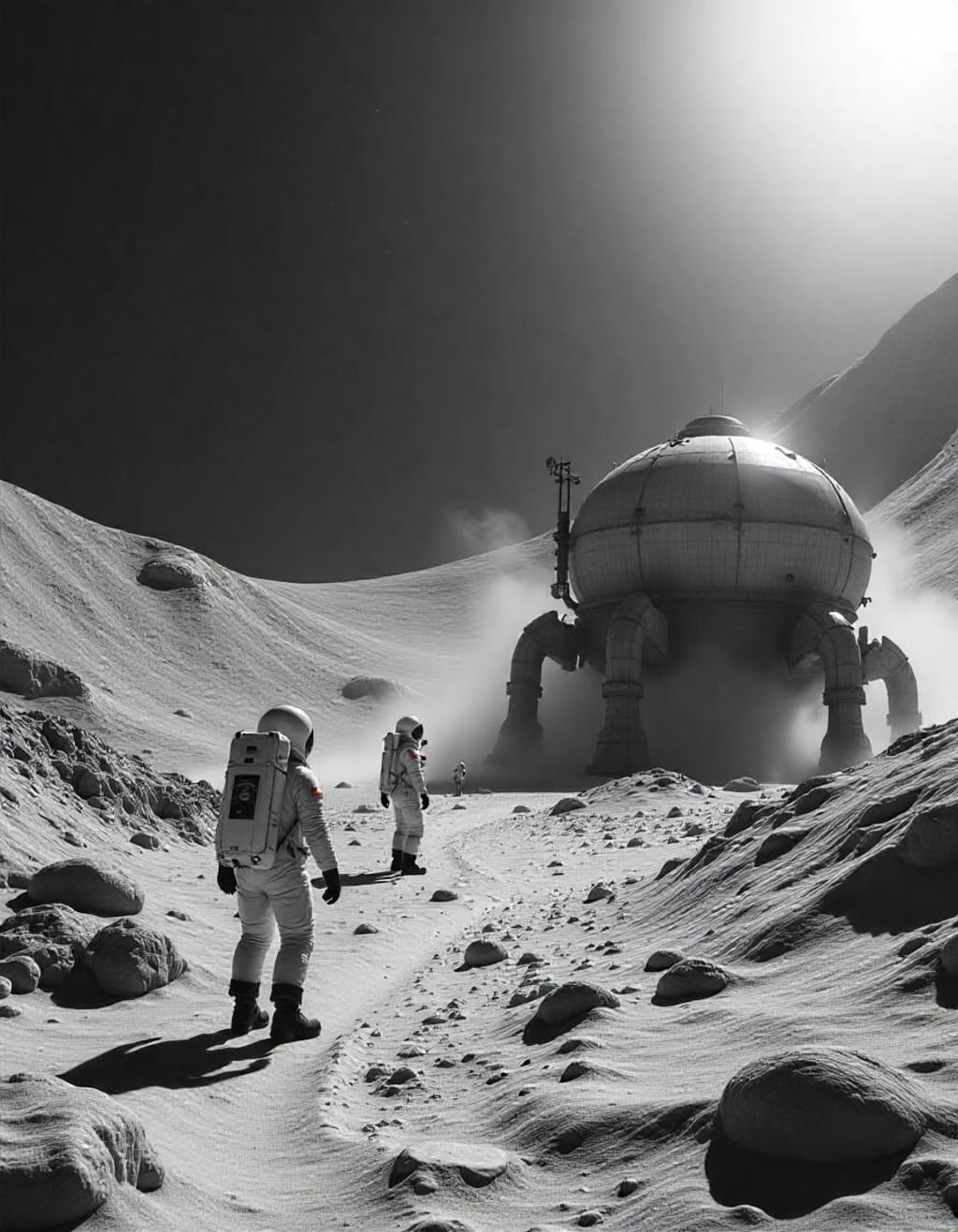
The exploration of space has always fascinated humankind. For centuries, we’ve gazed at the stars, wondering about the mysteries of the universe. But in recent years, the pace of space technology evolution has accelerated at a breakneck speed. With new technologies being developed at an unprecedented rate, the final frontier is no longer as distant as it once seemed. Let’s dive into how space technology is evolving faster than ever before.
What Is Space Technology?
Space technology refers to the scientific and engineering knowledge that enables the exploration, travel, and utilization of space. It includes everything from the rockets that launch spacecraft into orbit to the satellites that help us navigate Earth. It’s the backbone of every mission aimed at understanding the cosmos or reaching new celestial bodies.
A Brief History of Space Technology
Space exploration didn’t happen overnight. It all began in 1957 when the Soviet Union launched Sputnik, the world’s first artificial satellite, into space. This marked the beginning of the space race, a period of intense competition between the U.S. and the Soviet Union. Fast forward to today, and space technology has grown leaps and bounds. We’ve sent humans to the moon, landed robots on Mars, and even begun commercial space tourism.
Key Factors Driving the Evolution of Space Technology
So, what’s fueling this rapid evolution? Let's take a closer look at the driving forces behind the incredible advancements in space technology.
Advances in Rocket Science
Rockets have always been the foundation of space exploration, but advancements in propulsion technology are making space travel more efficient and less costly. New developments like reusable rockets are making space missions more sustainable. Companies like SpaceX have revolutionized space travel by making rockets that can be launched multiple times, significantly reducing costs.
The Role of Artificial Intelligence in Space Exploration
Artificial intelligence (AI) is becoming a game-changer in space exploration. AI can analyze massive amounts of data quickly, making it possible to detect things that might take humans years to notice. For example, AI is used in robotic exploration missions, helping spacecraft navigate and make decisions on their own without human input. AI can also predict potential dangers and assist astronauts in emergency situations.
Innovative Materials for Spacecraft
Spacecraft need to withstand extreme temperatures, radiation, and the vacuum of space. To achieve this, scientists are developing cutting-edge materials like advanced composites and carbon nanotubes that are lighter, stronger, and more heat-resistant. These innovations are helping spacecraft become more durable, which is crucial for long-term missions.
Space Tech Milestones Over the Past Decade
The past decade has seen some incredible advancements in space technology. Let’s explore a few of the key milestones.
Private Companies and Space Travel
Private companies have become central players in the space industry. They’re pushing the envelope on what’s possible and making space travel more accessible than ever before. These companies are not only developing new technologies but are also bringing down the cost of space missions, making it possible for more nations and private entities to participate.
SpaceX: Leading the Charge
When it comes to private space companies, SpaceX is arguably the leader. Founded by Elon Musk in 2002, SpaceX has disrupted the space industry with its groundbreaking Falcon rockets and Dragon spacecraft. They’ve made history by launching astronauts into space and are actively working on plans for Mars colonization.
Breakthroughs in Space Exploration Tools
From Mars rovers to telescopes that peer deeper into space than ever before, space exploration tools have seen extraordinary improvements. The latest rovers on Mars, like Perseverance, are equipped with advanced AI systems that help them navigate the Martian surface and collect data, all while operating autonomously.
How Space Technology is Shaping Future Exploration
The future of space exploration looks incredibly promising, thanks to the advancements in technology. Here’s a peek into what’s coming next.
Mars Missions and Beyond
Mars has become the next frontier for human exploration. NASA, SpaceX, and other space agencies have ambitious plans to send humans to the Red Planet in the coming decades. Advances in space technology will play a pivotal role in ensuring the safety and success of these missions, from life-support systems to radiation protection.
The Search for Life Outside Earth
We’re not just looking to explore space for the sake of exploration. One of the major goals is to find signs of life outside Earth. With missions like the James Webb Space Telescope and upcoming probes to distant moons and planets, the search for extraterrestrial life is becoming more serious and advanced. Space technology will help us understand if we’re truly alone in the universe.
The Economic Impact of Space Technology
Space exploration isn’t just about science and discovery. It’s also an economic powerhouse with massive implications for various industries.
The Commercialization of Space
In the last few years, space has gone from being solely the domain of governments to a thriving commercial industry. Companies like SpaceX, Blue Origin, and Virgin Galactic are working to create space tourism, satellite internet, and even mining opportunities on asteroids. This new space economy could be worth trillions in the coming decades.
How Space Technology Influences Other Industries
Space technology doesn’t just benefit space exploration—it has a ripple effect on other industries. For example, technologies developed for space have led to innovations in GPS, weather forecasting, telecommunications, and medical imaging. The knowledge gained from space exploration is often applied to solve problems right here on Earth.
The Future of Space Exploration: What’s Next?
Looking ahead, the possibilities for space exploration are endless. Let’s take a look at what might be coming down the pipeline.
Quantum Technology and Space
Quantum technology, which harnesses the strange properties of quantum mechanics, could revolutionize space exploration. From quantum computers that could process data at unprecedented speeds to quantum communication systems that could ensure secure transmissions across vast distances, the potential applications in space are vast.
The Potential for Intergalactic Travel
While intergalactic travel may sound like science fiction, advancements in propulsion technology could one day make it a reality. Concepts like the Alcubierre drive (a theoretical faster-than-light propulsion system) might someday allow humans to travel to distant star systems in mere years rather than millennia.
Conclusion
In conclusion, space technology is evolving faster than ever, opening up exciting new possibilities for exploration and discovery. From private companies launching reusable rockets to AI-powered space missions, we’re witnessing a golden age of space innovation. As we push further into the cosmos, we can only imagine the wonders and breakthroughs that lie ahead. One thing is for sure: the final frontier is becoming more accessible, and the future of space exploration is bright.
FAQs
What are some examples of private companies involved in space technology?
Companies like SpaceX, Blue Origin, and Virgin Galactic are major players in the space industry, working on everything from space tourism to Mars colonization.
How is AI used in space exploration?
AI helps in various aspects, from analyzing data to making autonomous decisions during missions. It’s used in spacecraft navigation, detecting anomalies, and aiding astronauts.
Will humans ever colonize Mars?
While there’s still a lot of work to be done, missions to Mars are becoming more feasible thanks to advancements in space technology. Humans may set foot on Mars within the next few decades.
What impact has space technology had on other industries?
Space technology has led to innovations in fields like GPS, telecommunications, medical imaging, and weather forecasting.
What is the future of space exploration?
The future of space exploration includes advances in quantum technology, the search for extraterrestrial life, and even potential intergalactic travel, all made possible by ongoing advancements in space technology.
About the Creator
Apleetech
Apleetech is a Professional Technology Platform. Here we will provide you only interesting content, which you will like very much. We're dedicated to providing you with the best of Technology, with a focus on dependability and Tech.
About Binding Prometheus
I want to start actively advocating on behalf of my own work, and the most valuable part of my canon is, without a doubt, Binding Prometheus, the play I have been working on since 2019 and only finished in 2023 as part of my MA. The play itself is an amalgamation of a million different inspirations. On one end, it evokes the Ancient Greek myth-play, deriving its own title from the earliest extant work of Western drama we have, Aeschylus’s Prometheus Bound. On the other end, it borrows significantly from the sci-fi bulwarks from over the years, namely Mary Shelley’s Frankenstein and Karel Capek’s Rossum’s Universal Robots. The play could be an episode of Black Mirror, I fear. I don’t know. I’ve only ever seen one episode of Black Mirror.
By Steven Christopher McKnight13 days ago in Futurism
OSS & BSS Market: API Ecosystems, Microservices & Market Expansion
According to IMARC Group's latest research publication, global OSS & BSS market size reached USD 65.81 Billion in 2025. Looking forward, IMARC Group expects the market to reach USD 148.26 Billion by 2034, exhibiting a growth rate (CAGR) of 9.4% during 2026-2034.
By Andrew Sullivana day ago in Futurism
📢 Raise Your Voice Thread: 01/08/2026
Our “Raise Your Voice Threads” are hosted most alternating Thursdays at 12PM ET to offer creators more avenues to uncover exceptional stories on Vocal. As we are continuously searching for fresh creators and inspiring stories, this thread provides an opportunity to exchange and discuss the stories that have moved and motivated us on Vocal.
By Raise Your Voice by Vocal6 days ago in Resources




Comments
There are no comments for this story
Be the first to respond and start the conversation.