science
Topics and developments in science and medicine, presented by Futurism.
How AI change our world
Artificial Intelligence: Shaping the Future of Humanity Artificial Intelligence (AI) has become a transformative force in today’s world. It refers to machines and computer systems designed to perform tasks that typically require human intelligence. From understanding language and recognizing images to making decisions and solving problems, AI is revolutionizing how we live, work, and interact with technology.
By Miraj uddin10 months ago in Futurism
TV Is Dead
Is traditional television becoming a relic of the past? Have you turned on the TV recently—and felt… nothing? A flicker of boredom. A vague nostalgia. Maybe even a twinge of guilt. You’re not alone. In an age of infinite content at your fingertips, the once-mighty television is losing its throne. The keyword here is television, and all signs point to its quiet extinction. This isn’t speculation—it’s happening now, and the data is both shocking and undeniable.
By Bubble Chill Media 10 months ago in Futurism
Love in the Age of AI: Can Machines Teach Us to Love Better?
Introduction In recent years, artificial intelligence (AI) and technology have transformed nearly every aspect of modern life. From how we work to how we connect, the digital revolution touches each human experience. One of the most profound changes is taking place in our understanding of love. Long regarded as a purely human emotion defined by chemistry and shared experience, love is now being reframed by algorithms, digital companions, and AI-powered platforms that are challenging traditional notions of intimacy. This article explores the cutting-edge intersection of love and technology, addressing how AI might not only facilitate but also teach us to love better.
By Mysteries with Professor Jahani10 months ago in Futurism
Love in Retrograde: Do Astrological Transits Really Affect Your Relationships?
Introduction Astrology has fascinated humanity for millennia, its symbols and planetary movements woven into the cultural and spiritual fabric of societies across the globe. Among these cosmic phenomena, astrological transits—and retrograde motions in particular—are often viewed as powerful influences on our lives. "Love in Retrograde" invites us to explore whether these celestial shifts might have a tangible impact on our relationships and romantic destinies. Can the observed movements of planets truly cast their influence over human emotions, or is it our own interpretation of these cosmic patterns that shapes our romantic narratives?
By Mysteries with Professor Jahani10 months ago in Futurism
🌀The Hopi Prophecy and the Day of Purification: "When the Blue Star Kachina Appears in the Sky, a New World Will Be Born!🌀
🌀When the Blue Star Kachina Appears in the Sky, a New World Will Be Born!"🌀 The Hopi people, one of the oldest Native American tribes, have long preserved a rich tapestry of prophecies that foretell significant transformations in the world. Central to these is the prophecy of the Blue Star Kachina, signaling the onset of the Day of Purification—a period marking the end of the current world and the emergence of a new one.
By JONATAN DAVID VEGA10 months ago in Futurism
What are Reptilians?
What Are the Reptilians? A Deep Dive Into the Myth, Mystery, and Modern Beliefs The concept of Reptilians, also known as Reptoids, Lizard People, or Draconians, has captured the imagination of conspiracy theorists, science fiction writers, and spiritual thinkers alike for decades. Often described as humanoid beings with reptilian features, these creatures are said to originate from distant star systems or ancient civilizations, and they are frequently accused of manipulating world events from behind the scenes. But what exactly are Reptilians, and where does this idea come from?
By JONATAN DAVID VEGA10 months ago in Futurism
Samsung Begins One UI 7.0 (Based on Android 15) Rollout for Galaxy S24 Series
Everything You Need to Know About Samsung's One UI 7.0, based on Android 15, for the Galaxy S24 Series Samsung has officially begun rolling out its most recent significant software update for the Galaxy S24 series, One UI 7.0, based on Android 15. This is one of the quickest major OS updates to a Samsung flagship device, demonstrating the company's dedication to timely software support. Samsung introduces a slew of new features, optimizations, and refinements in One UI 7.0 that boost customization, security, performance, and AI capabilities. This update brings a more refined and intelligent user experience to Galaxy devices and builds on the foundation of One UI 6.0. What’s New in One UI 7.0?
By Khan Mohammad Nirjhar10 months ago in Futurism
Is a Password Enough? The Future of Personal Data Protection in a Changing World. AI-Generated.
In today's digital world, protecting personal data has become more critical than ever. Every action we take online, from sending emails to making financial transactions, leaves behind a digital footprint. However, with growing cyber threats, one important question arises: Is a password enough to protect our personal data in this ever-evolving digital landscape?
By Salaheddin10 months ago in Futurism
Blockchain and Beyond: The Rise of Decentralized Online Income
Blockchain technology has rapidly evolved from being the backbone of cryptocurrencies to a transformative force disrupting traditional financial systems and digital marketplaces. As decentralized networks gain traction, new pathways for generating income online are emerging. This article explores the revolutionary impact of blockchain on online earnings by diving deep into decentralized finance (DeFi), the innovative role of non-fungible tokens (NFTs) as revenue streams, and the rise of crypto-based marketplaces.
By Mysteries with Professor Jahani10 months ago in Futurism
Elon Musk Brings Satellite Calling to iPhones and Androids Global Coverage Without Mobile Network.
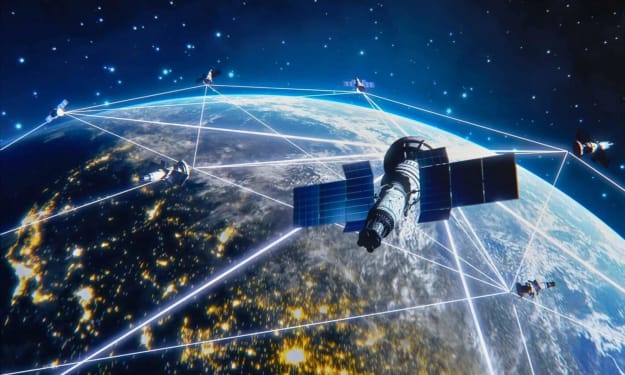
Elon Musk Brings Satellite Calling to iPhones and Androids Global Coverage Without Mobile Network. In a major leap for global communications Elon Musk's SpaceX has officially enabled satellite calling capabilities for iPhone and Android devices through its Starlink satellite network. This development is set to revolutionize how people stay connected especially in areas where traditional cell towers don’t reach. SpaceX’s Starlink has introduced a new feature called "Direct to Cell" which allows smartphones to connect directly to its constellation of low Earth orbit (LEO) satellites. Unlike traditional satellite phones this technology works with existing LTE capable smartphones including popular models from Apple Samsung and Google. That means no need for additional equipment or hardware modifications. This breakthrough allows users to send text messages make voice calls and potentially access data services even in the most remote corners of the world mountains oceans forests or deserts where cellular coverage was previously impossible. In the United States T-Mobile has partnered with SpaceX to integrate Starlink’s satellite capabilities into its mobile network. As part of this partnership T-Mobile customers can now send and receive text messages via satellite. The service is expected to expand to include voice and data by the end of 2025. T-Mobile is offering the service for free to users on its Go5G Next plan. For those on other plans it’s available as a $15/month add on. Non-T-Mobile customers, including those using Verizon or AT&T can still access Starlink’s satellite service for $20/month through independent sign up. Globally other telecom providers are beginning to follow suit. In Australia Telstra is currently testing Starlink powered satellite text services to enhance communication in rural areas. In the UK telecom regulator Ofcom is exploring regulatory changes to allow satellite providers like Starlink to beam 4G and 5G directly to phones in signal blackout zones. The core of this new feature is Starlink’s Direct to Cell system which turns each satellite into a space based cell tower. These satellites use LTE protocols to communicate with unmodified phones on Earth so no new phone model is required. The network operates using licensed spectrum bands, working in collaboration with telecom providers to ensure compliance and avoid interference. This allows Starlink to offer seamless connectivity that integrates with existing phone infrastructure.
By Adnan Rasheed10 months ago in Futurism