future
Exploring the future of science today, while looking back on the achievements from yesterday. Science fiction is science future.
Alternative Energy
Alternative energy is the key to the survival of a human future and the existence of many species on Earth. The question, in my opinion, is not whether to switch to fossil fuels or not. The question of focus in this paper is the effects of alternative energy options on our economy and environment. There are many types of alternative energy out there and methods are being created left and right through technological advancements. Fossil Fuels are the most commonly used form of energy in the U.S today.
By Sasha Boileau6 years ago in Futurism
Jeff Bezos and the great SPACE MISTAKE
As I finished this article I watched as the weather doused the hopes of a much hyped and historic Elon Musk/SpaceX launch to carry NASA astronauts to the ISS. I realized later that the whole event was a metaphor for exactly what I'm writing about here - that despite the best plans laid for projecting our wills into space, unforeseen and chaotic circumstances can render them all for naught, so it's best to have a B plan.
By Marshall Barnes6 years ago in Futurism
Future of the Library: A comprehensive analysis of a Smart Library Technology (SLT)
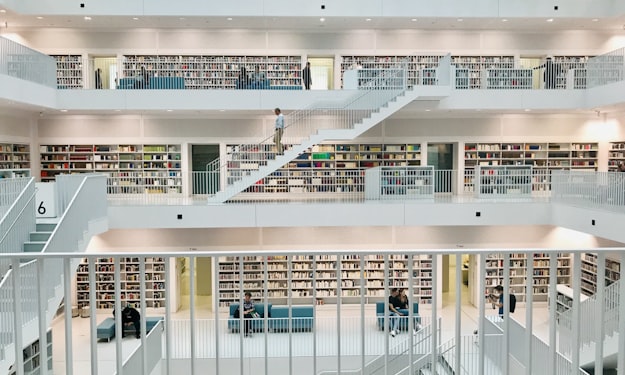
INTRODUCTION The technology of the 21st century has made libraries valuable to deliver services, however remote access of some countries makes it irrelevant for others to enjoy the pleasure from libraries. Knowledge is of great essence in our generation today[1], therefore there is the need for libraries to play a key role in our life. With the advances in technology, people get the unrestricted flow of information to add to their knowledge bank. Libraries play a key role in building informal learning in our societies. It’s a fundamental base which aims to bring coding and digital literacy to everybody in a fun and engaging way. Libraries now are leading the world of new communication skills. It should be the first places where most advanced technologies are implemented. It leads the way to digital citizenship[2]. When population increase there would pressure on the libraries to provide knowledge for people. Therefore, the Library needs to change its way of providing service. The changing natures of the library will not only reflect that of the web but will also feature new attributes based on the uniqueness of libraries[3]. The way contemporary library uses to supply information has been changed over time due to technology from Web 3.0 to web 4.0. The richness of Web 4.0 characteristics has created a dynamic way to user participation. Web 4.0 has an intelligent electronics agent, symbiotic, ubiquitous, and a machine which will be developed up to the level of the human brain with advanced nanotechnology and human interaction interfaces[4]. Due to Web 4.0 development[3] suggested that Library 4.0 would soon be in place. The researcher added that Library 4.0 includes not only software-based approaches but the technological environment. Due to the increase in technology this smartness would be extended to libraries across the globe. With our limited resource and no space to build libraries to serve needed people, libraries need smart technology to help solve the needed demand. Smart appliances and voice-controlled assistants are examples of how technology is evolving to make people’s lives comfortable[5]. Libraries must-see challenges like underutilized space, limited budgets, and shrinking circulations as an opportunity to innovate and transform the definition of this critical community issues[6].
By FRED ABANKWA6 years ago in Futurism
What Will the Car-Free Cities of the Future Look Like?
Dense congestion in cities, dangerously poor air quality, and environmental damage — the excessive use of cars within cities links all of these major concerns. In February this year, the UK announced plans to bring forward the ban on the production of new diesel and petrol cars to 2035. To many, this move may seem radical, but with the mounting pressure on governments around the world to take action against the climate crisis, urgent measures like this one are a necessity.
By Amy Mercer6 years ago in Futurism
What Will life be like Post -COVID 19?
Right now, the world has come to A stop it seems, at least for now. As businesses that are non essential struggle to find ways to earn money while the rest of the world plummet Financially,there’s no shadow of a doubt that things won’t quite be the same as it was even after COVID-19. So how is your life about to change? It won’t be the type of world you were use to after all of this and consider this a glimpse into the future. Although it seem scary, it’s our future and you’ll just have to suck it up and live in it, no matter how dystopian it might get. When your governor refers to the “new Normal, realize it‘s not just reopening of businesses and other institutions, but rather, the beginning of the future promised by The Jetsons or science fiction.
By Kyle Smith6 years ago in Futurism
THE NON-INNOVATIVE "TIME TRAVEL INNOVATION" THAT'S NOT AN INNOVATION, NOR TIME TRAVEL, AT ALL
"Is it really possible to travel back in time? What about traveling into the future, have we finally figured out how to do that? Well, you’ll have to read on to find out…"
By Marshall Barnes6 years ago in Futurism
Cleaning up the Ocean
Many people might not know, but plastic has been important for human evolution, and we use it for multiple things. The problem with plastic is that it doesn’t just disappear; it sticks around for hundreds of years and sometimes it ends up in the natural environment, mostly on the ocean. Plastics can get to the ocean in different ways; for example, the rain and winds can drag plastics to the ocean, but that’s not the only way they can get to the ocean, another common way is through storm drains. When plastics reach the ocean, they never break down completely, instead they turn into really small pieces called microplastics that can be dangerous for marine life. A study run by the Monterey Bay Aquarium shows that small ocean animals are consuming microplastic particles; yes, those are the same ocean creatures that we consume. These microplastic particles mainly come from consumer products like plastic water bottles and product packaging, but not all plastics in the ocean get to break down into microplastics, sometimes plastics end up being eaten by large ocean animals, which is really dangerous for them because their digestive system can get clogged up. Once their digestive system is clogged up, the animal stops receiving the nutrition that they need and end up dying with their stomachs full of plastic (“Plastic pollution”). I believe we should become more aware of the problems that plastics are bringing to the ocean and worry about finding a way to take plastics out of the ocean and planning on what to do with those plastics after they out of the ocean.
By The Home Vlog6 years ago in Futurism
5 Ways to Replace Money In The Apocalypse
Money... a word that coincides with freedom this day in age. In order to prevent yourself from becoming one of the homeless, your going to need some kind of income, in America especially. Without a dollar in your pocket, it can be hard to survive in the real world. Although what would happen if humanity was faced with some massive catastrophic event? One big enough to cripple our society... What if every government across the globe collapsed and paper currency became worthless? Surely we would need some form of method to buy and sell valuable merchandise. That is exactly what we will be discussing in today's article; how can we replace paper currency, so that we might maintain some kind of structure within society after the next world-wide cataclysm.
By Carlos Guerra6 years ago in Futurism