
This Is The Big Change That Covid-19 Is Bringing To Your Life
The pandemic will have a profound impact on every aspect of our lives. Many of the changes that we are introducing now will likely become permanent.

To say this is the end of the world as we know it is not an understatement. The more crucial question is not whether life is going to change, but by how much.
Ismail Amla, Chief Growth Officer at Capita Consulting, argues that the global epidemic is forcing us into the wholesale adopting of technologies and ways of doing business which previously existed only in patches due to different social and cultural barriers. That's changing.
Take, for example, the labour sector. Smart working was what many workers wished for before Covid-19, yet only a handful was allowed-often only once a week or once a month. Now, it seems, nearly everyone does it. Now is the moment we'll find out how important the face-to-face meeting or business trip is. Typically, some businesses have been hesitant to let their workers work remotely, with productivity issues always at the forefront.
If it turns out that employees can actually do their jobs just as effectively from home, we might see companies dropping their objections to smart working in some sectors and introducing entirely new organisational frameworks where physical offices are largely eliminated, or even just retaining a smaller base for key staff.
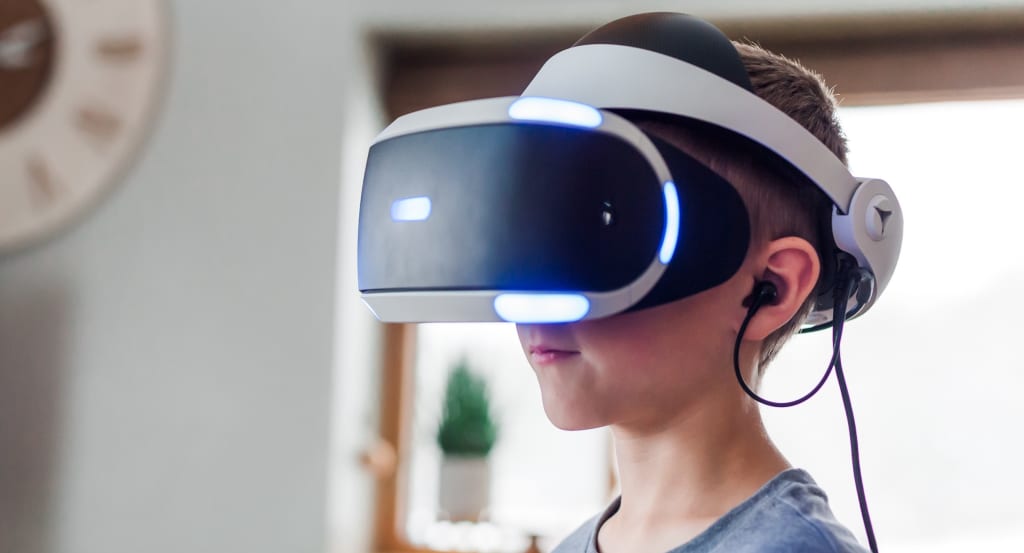
Supporting this would require better technology, and employers will need some serious research to improve their workplace culture. Eventually, do we see expanded use of interactive and virtual reality to recreate the more direct interaction that one gets from face-to-face meetings? And how can companies prevent social isolation and recreate the impromptu "water-cooler" chat that you get from being in the same location as your coworkers? We've also seen administrators organising "virtual tea breaks and breakfasts" during the coronavirus crisis, where everyone meets to talk on social media apps at the same time. Society is easily adaptable.
Another critical barrier to confidence is worth flagging: depending on "presenteeism" and bums on seats as a crucial way to control the workforce. Remote workplace employers should view their workers as adults – so we need to involve our people in a renewed sense of shared corporate intent to succeed.
We are seeing a similar trend of the rapid adoption of technology arising in education, where teachers and lecturers now offer a significant amount of content over videos and other technologies that are still very new to some educators and students. Part of the appeal of going to school or university is in the connexions and networks you are building. Still, the knock-on effect of being forced to use digital educational tools could be much more significant to society.
When you don't have to be in physical attendance at a school, the entry barrier is much smaller, and we might see a revival in "Moocs" allowing content from top universities available, often free of charge, to anyone with an internet connexion. "Everyone will have access to the content, including the three billion people expected to come online by 2022," Amla says.
Instant exposure to the world's top educators could unleash education into entirely new audiences. 5G and its ability to deliver significant processing power and real-time communication and video processing appears as it has arrived at just the best time.
It also aligns the educational activity with a tech-enabled world of work – remote, online, virtual and developing pupils knowledge in this new way of working will make it more natural to continue it through to the workplace.
It could potentially contribute to a full redesign of the education system – and to more flexible and personalised learning for both adults and children. Employees could learn in five or ten-minute bursts over the years, instead of going to a three-day course to get trained for a specific skill. Instead of being in a physical or virtual classroom watching the same lesson as 30 others, children may get tailored, personalised content created by artificial intelligence to both their preferences and their level of skill. "We could see it changing from one-to-many to a real one-to-one climate," says Amla.
Perhaps the longest-lasting transition would be travel, and business trips in particular, which are likely to be significantly reduced in future. We have already seen the cancellation or delay of major industry conferences such as Mobile World Congress, and in future companies may be of the opinion that these activities are not worth the expense or the risk. "We're doing a big A / B check right now on how much difference it makes in being there physically rather than online," Amla says.
"I think the time of the massive global conference where everybody has to be on-site, is gone forever." If combined with the environmental crisis, satellite images show a clear reduction in pollution since the outbreak have spread on social media, it is going to be hard to justify these kind of events.
There may be an equally disruptive impact on market behaviour – not just in the short term, where non-essential shops have been forced to close in many places – but also in the long run. The number of online orders has increased, with Amazon taking on new staff at a time when other small companies are shutting down their doors and cutting jobs.
Amla expects the introduction of digital platforms that will help smaller retailers take advantage of emerging technology such as virtual reality, enabling them to replicate parts of the physical shopping experience virtually. Whether that's Artificial Intelligence customer service chatbots or the rise of digital clothing, purchased to wear virtually, either in the gaming or social media world.
"This is just the beginning of a journey. The virus has been a "jolt to the system" that will force us to adopt technology and systems of working – from video calls to virtual reality – that we were before hesitant to use because we could choose not to.
After this is all over, we will find that these modes of working, learning and living have moved to the new normal.
About the Creator
Anton Black
I write about politics, society and the city where I live: London in the UK.
Keep reading
More stories from Anton Black and writers in Futurism and other communities.
About Binding Prometheus
I want to start actively advocating on behalf of my own work, and the most valuable part of my canon is, without a doubt, Binding Prometheus, the play I have been working on since 2019 and only finished in 2023 as part of my MA. The play itself is an amalgamation of a million different inspirations. On one end, it evokes the Ancient Greek myth-play, deriving its own title from the earliest extant work of Western drama we have, Aeschylus’s Prometheus Bound. On the other end, it borrows significantly from the sci-fi bulwarks from over the years, namely Mary Shelley’s Frankenstein and Karel Capek’s Rossum’s Universal Robots. The play could be an episode of Black Mirror, I fear. I don’t know. I’ve only ever seen one episode of Black Mirror.
By Steven Christopher McKnight17 days ago in Futurism


Comments
There are no comments for this story
Be the first to respond and start the conversation.