
Planets Without Sunlight: The Mystery of the Wandering Worlds
Space

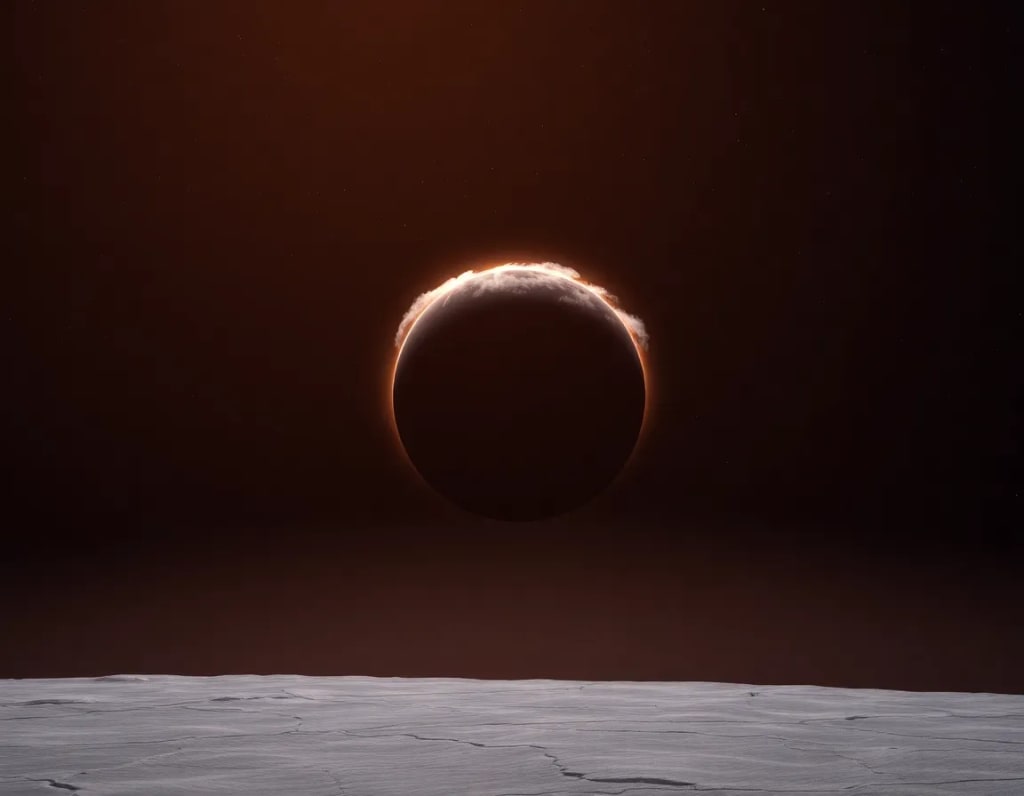
When we imagine planets, we typically picture them orbiting a bright star, basking in the warmth of sunlight just like Earth. The star provides light, energy, and the gravitational anchor that keeps planets in their stable orbits. But what if we told you that not all planets play by these rules? Somewhere out there, drifting alone in the vast cold darkness of space, are planets with no sun at all. These are known as rogue planets mysterious, starless worlds lost in the cosmic night.
What Are Rogue Planets?
Rogue planets, sometimes called orphan planets or free-floating planets, are planetary bodies that don’t orbit any star. They travel freely through interstellar space, untethered and alone. They can be the result of violent gravitational events that kicked them out of their home systems, or they may have formed in isolation, never having a star to orbit in the first place.
These strange worlds are not just science fiction they are real, and scientists are beginning to discover more of them than ever before.
How Do They Form?
There are two main ways rogue planets might form:
- Ejection from a Star System
In the early stages of a planetary system's development, things can get chaotic. Giant planets may interact gravitationally with one another, creating instability. If the tug of war becomes too intense, one of the planets can be flung out into space, never to return. These exiled planets become wanderers of the galaxy.
- Born in Isolation
Some scientists believe that rogue planets can also form like stars from the collapse of massive gas clouds. However, if the collapsing mass is too small to ignite nuclear fusion (the process that powers stars), it becomes a cold, dark planet-like object drifting alone from the very beginning.
How Many Are Out There?
It might surprise you to learn that rogue planets could be more common than stars in our galaxy. A 2021 study using telescopes from the European Southern Observatory in Chile discovered at least 70 free floating planets in just one small region of the Milky Way, in the constellation Sagittarius. That’s just a tiny glimpse astronomers estimate that there could be billions of such planets drifting unseen across the galaxy.
How Can We Detect Them?
Finding a planet that doesn’t emit or reflect light from a star is extremely difficult. But scientists have developed clever techniques:
- Gravitational Microlensing
This rare phenomenon occurs when a rogue planet passes in front of a distant background star. The planet’s gravity bends and magnifies the light of the star behind it. This tiny blip of brightness allows astronomers to detect otherwise invisible objects. Though rare and unpredictable, microlensing is one of the most powerful tools for spotting rogue planets.
- Infrared Observations
Some young rogue planets still retain heat from their formation, glowing faintly in the infrared spectrum. Advanced space telescopes, like the James Webb Space Telescope, are equipped to detect this subtle thermal radiation, allowing us to glimpse these hidden worlds.
Can Life Exist on a Rogue Planet?
At first glance, a planet drifting in darkness, far from any star, seems like the last place life could exist. But researchers are beginning to challenge that assumption.
If a rogue planet has a thick, hydrogen-rich atmosphere, it could trap heat from internal sources such as radioactive decay in its core and maintain a relatively stable temperature. Some models even suggest that under the right conditions, liquid water could exist beneath the surface.
Another possibility is the existence of subsurface oceans. On Earth, life thrives around hydrothermal vents deep in the ocean, completely independent of sunlight. Similar environments could exist on rogue planets, where geothermal heat supports life hidden beneath layers of ice.
It’s a fascinating idea: entire ecosystems thriving in absolute darkness, isolated from the rest of the universe.
Why Are They Important?
Rogue planets are more than cosmic curiosities. They provide valuable insights into how planetary systems form and evolve. The fact that so many of these planets may exist suggests that planet formation is a common and chaotic process and that planetary ejections are not rare.
Moreover, these wandering worlds could become crucial for humanity’s future. In the distant future, if spacefaring civilizations learn to harness energy in new ways, rogue planets could serve as outposts, research hubs, or even homes for life beyond the solar system.
Final Thoughts
Rogue planets are among the most mysterious and awe inspiring objects in our galaxy. They remind us that not all planets need sunlight to exist. Somewhere, drifting silently through interstellar space, these worlds move through eternal night silent, dark, and full of secrets.
Perhaps one day, we’ll visit a rogue planet. And when we do, we’ll find that the absence of a sun doesn’t mean the absence of wonder.
About the Creator
Keep reading
More stories from Holianyk Ihor and writers in Futurism and other communities.
Why Mercury Is So Hot Without an Atmosphere: The Paradox of the Sun’s Closest Planet
When we talk about the hottest planets in the Solar System, Venus often takes center stage with its thick, choking atmosphere and lead melting surface temperatures. But Mercury the closest planet to the Sun deserves its own spotlight. Despite having no real atmosphere, its surface can reach blistering temperatures of 430°C (800°F) during the day. How is this possible? And if it’s so hot, why does the lack of atmosphere matter?
By Holianyk Ihor6 months ago in Futurism
About Binding Prometheus
I want to start actively advocating on behalf of my own work, and the most valuable part of my canon is, without a doubt, Binding Prometheus, the play I have been working on since 2019 and only finished in 2023 as part of my MA. The play itself is an amalgamation of a million different inspirations. On one end, it evokes the Ancient Greek myth-play, deriving its own title from the earliest extant work of Western drama we have, Aeschylus’s Prometheus Bound. On the other end, it borrows significantly from the sci-fi bulwarks from over the years, namely Mary Shelley’s Frankenstein and Karel Capek’s Rossum’s Universal Robots. The play could be an episode of Black Mirror, I fear. I don’t know. I’ve only ever seen one episode of Black Mirror.
By Steven Christopher McKnight17 days ago in Futurism
Health Insurance Market: Preventive Care Focus, Value-Based Models & Industry Trends
According to IMARC Group's latest research publication, global health insurance market size reached USD 1,949.84 Billion in 2024. Looking forward, IMARC Group expects the market to reach USD 3,457.98 Billion by 2033, exhibiting a growth rate (CAGR) of 5.90% during 2025-2033.
By Andrew Sullivan6 days ago in Futurism



Comments
There are no comments for this story
Be the first to respond and start the conversation.