
Why Mercury Is So Hot Without an Atmosphere: The Paradox of the Sun’s Closest Planet
Space

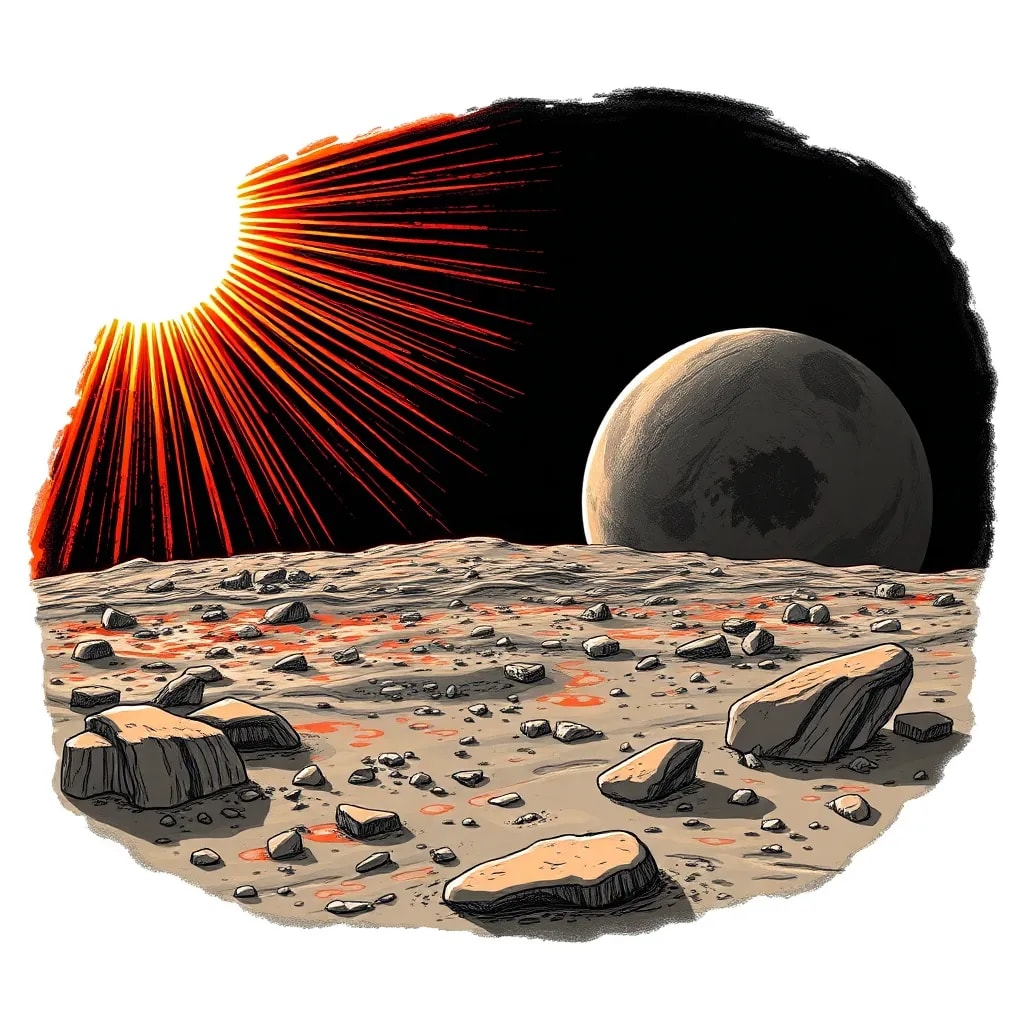
When we talk about the hottest planets in the Solar System, Venus often takes center stage with its thick, choking atmosphere and lead melting surface temperatures. But Mercury the closest planet to the Sun deserves its own spotlight. Despite having no real atmosphere, its surface can reach blistering temperatures of 430°C (800°F) during the day. How is this possible? And if it’s so hot, why does the lack of atmosphere matter?
Let’s dive into the fascinating thermal paradox of Mercury.
So Close, So Hot: The Sun’s Proximity
Mercury orbits the Sun at a distance of just 58 million kilometers (36 million miles) about one third of Earth’s distance. At such close range, it receives more than six times the solar energy per square meter than our planet does. With no clouds or gases to reflect or absorb this energy, sunlight directly bombards the planet’s rocky surface, rapidly heating it to extreme levels.
But being close to the Sun isn’t the full story. Venus, for example, is nearly twice as far away but is actually hotter. Why? The answer lies in the presence or in Mercury’s case, the absence of an atmosphere.
Atmosphere: A Planet’s Thermal Regulator
On Earth, our atmosphere plays a vital role in temperature regulation. It performs two major tasks:
- It spreads heat around the planet, transporting warmth from the sunny side to the dark side via air currents.
- It traps heat using greenhouse gases, preventing it from escaping too quickly into space at night.
Mercury has none of these luxuries. Its atmosphere is so thin and fragile called an exosphere that it can’t block or retain any heat. Made up of scattered atoms ejected from its surface by solar radiation and micrometeorites, the exosphere is more like a haze than a protective blanket.
As a result, Mercury’s surface experiences extreme temperature swings. While the sunlit side can fry at over 400°C, the night side shrouded in darkness plummets to -180°C (-290°F). That’s a difference of over 600°C (1,100°F), the greatest day-night temperature contrast of any planet in the Solar System.
Why Can’t Mercury Keep an Atmosphere?
There are several reasons Mercury has no stable atmosphere:
- Low gravity: Mercury is small—only slightly larger than our Moon—so its gravity is too weak to hold onto light gases like nitrogen or oxygen.
- Intense heat: High daytime temperatures energize gas molecules, helping them escape Mercury’s gravity more easily.
- Solar wind: Blasting out from the Sun at high speeds, this stream of charged particles strips away atmospheric particles that might otherwise linger.
Together, these factors ensure that any gases that do appear around Mercury don’t stick around for long.
What If Mercury Had an Atmosphere?
If Mercury somehow acquired a dense atmosphere perhaps through a massive comet impact or volcanic activity it might become less hot during the day. Clouds or gas layers could reflect some sunlight, and the heat would be distributed more evenly across the planet. However, such an atmosphere would also trap heat overnight, preventing the steep nighttime cool-downs.
Ironically, having no atmosphere makes Mercury both hotter and colder than it might otherwise be.
Venus vs. Mercury: A Fiery Comparison
One of the most surprising facts in planetary science is that Venus is hotter than Mercury, even though it’s farther from the Sun. Why? Venus is cloaked in a dense, carbon dioxide rich atmosphere over 90 times thicker than Earth’s. This atmosphere traps solar energy with a runaway greenhouse effect, raising surface temperatures to around 465°C (870°F) hotter than Mercury on its brightest day.
So while Mercury gets more sunlight, it can’t hold onto the heat. Venus, in contrast, is like a pressure cooker that never cools down.
Conclusion: A World of Extremes
Mercury is a planet of thermal extremes a world where day and night are practically different planets. Its searing heat and bitter cold are a direct consequence of its lack of atmosphere and closeness to the Sun. By studying Mercury, scientists gain insight into how atmospheres or the lack of them shape the climate and evolution of planets across the universe.
In the end, Mercury’s paradox teaches us a powerful lesson: being close to a heat source isn’t enough it’s how you hold onto that heat that really matters.
About the Creator
Keep reading
More stories from Holianyk Ihor and writers in Futurism and other communities.
Precession and Axial Tilt: The Cosmic Dance of Planets
When we look up at the planets in the sky, it’s easy to imagine them simply spinning on their axes and calmly orbiting the Sun. But in reality, each planet is engaged in a complex and elegant “cosmic dance,” with two of the most important moves being axial tilt and precession. These phenomena play a critical role in shaping a planet’s climate, seasons, and even its long term environmental stability. Let’s dive into how they work and why they matter.
By Holianyk Ihor7 months ago in Futurism
About Binding Prometheus
I want to start actively advocating on behalf of my own work, and the most valuable part of my canon is, without a doubt, Binding Prometheus, the play I have been working on since 2019 and only finished in 2023 as part of my MA. The play itself is an amalgamation of a million different inspirations. On one end, it evokes the Ancient Greek myth-play, deriving its own title from the earliest extant work of Western drama we have, Aeschylus’s Prometheus Bound. On the other end, it borrows significantly from the sci-fi bulwarks from over the years, namely Mary Shelley’s Frankenstein and Karel Capek’s Rossum’s Universal Robots. The play could be an episode of Black Mirror, I fear. I don’t know. I’ve only ever seen one episode of Black Mirror.
By Steven Christopher McKnight18 days ago in Futurism
Saudi Arabia Payment Gateways Market: Digital Payments Growth, Security Innovation & Market Expansion
Saudi Arabia's payment gateways market thrives under Vision 2030's digital push, transitioning from cash reliance to e-commerce dominance. Key drivers include SAMA regulations, mada network integration, mobile wallets, and AI-driven fraud prevention, spurring secure, real-time transactions for SMEs and enterprises. According to IMARC Group's latest research publication, the Saudi Arabia payment gateways market size reached USD 234.9 Million in 2024. The market is projected to reach USD 386.3 Million by 2033, exhibiting a growth rate of 5.1% during 2025-2033.
By Jeffrey Wilson3 days ago in Futurism


Comments
There are no comments for this story
Be the first to respond and start the conversation.