
Planet Nine: The Ghost of the Solar System Nobody Can Find
Space

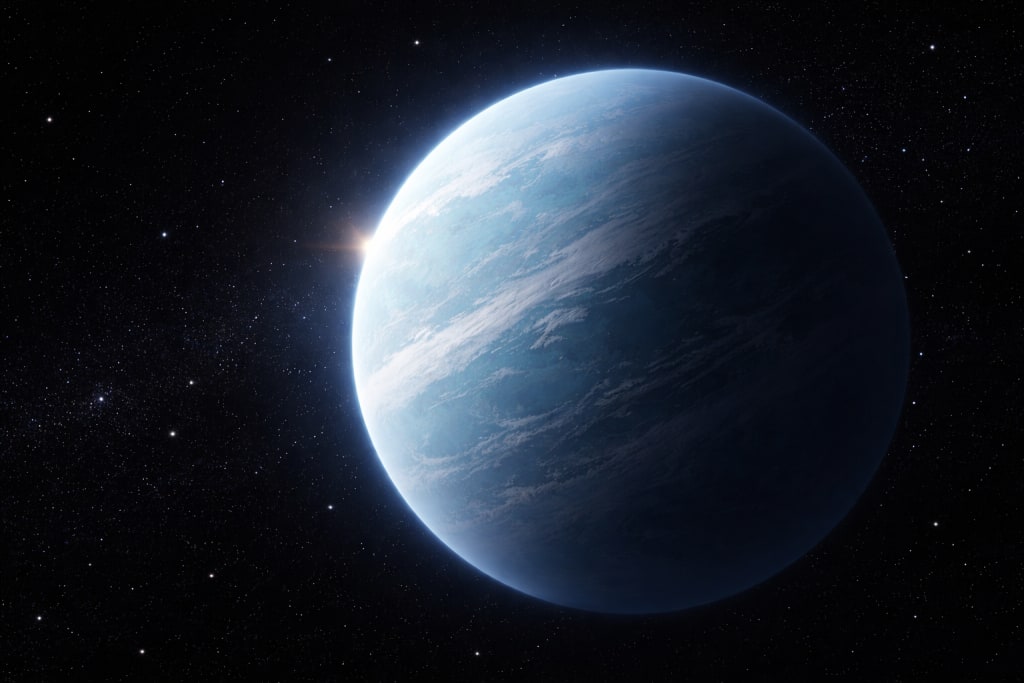
We Lost a Planet. Then We Found a Bigger Mystery.
In 2006, astronomers took something away from us. Pluto — that tiny, beloved frozen world at the edge of the solar system — was officially stripped of its planetary status by the International Astronomical Union. Too small. Too far. Too irregular. Just like that, our solar system shrank from nine planets to eight, and most of us shrugged and moved on.
But ten years later, two scientists at the California Institute of Technology suggested that the solar system might be hiding something far stranger than a demoted dwarf planet. In 2016, astronomers Konstantin Batygin and Mike Brown published a paper that sent shockwaves through the scientific community: somewhere out in the freezing darkness beyond Neptune, beyond even Pluto, a massive, unseen world might be quietly reshaping the solar system from the shadows. They called it Planet Nine.
Nearly a decade has passed since that prediction. Astronomers have poured thousands of hours of telescope time into the search. And still — nothing. No image. No confirmed signal. Just tantalizing whispers from the data that something enormous is out there, just beyond our reach.
So what do we actually know? And why, in an age of space telescopes and billion-dollar observatories, can't we find it?
The Clue That Started Everything: Orbits That Shouldn't Exist
The story of Planet Nine begins not with a discovery, but with an anomaly.
The Kuiper Belt is a vast ring of icy, rocky objects that stretches beyond Neptune's orbit — think of it as the solar system's outer suburbs, populated by frozen remnants left over from the formation of the planets billions of years ago. Pluto lives there. So do thousands of other smaller bodies, most of them never seen by human eyes.
Now, here's what's strange. If you look at the orbits of the most distant objects in the Kuiper Belt — the ones on the most extreme, elongated paths — they don't behave the way physics says they should. Normally, objects that far from the Sun should be scattered randomly, orbiting in all sorts of directions, tilted at all kinds of angles. Chaos, in other words. But that's not what astronomers observe.
Instead, these distant objects are clustered. Their orbits line up. Their closest approaches to the Sun happen in roughly the same region of space. Some of them are even orbiting in retrograde — spinning backwards relative to the rest of the solar system. It's as if something is herding them.
Batygin and Brown ran simulation after simulation trying to explain this clustering with known forces — the gravity of Neptune, the influence of passing stars, even a ring of debris. Nothing worked. The only model that consistently reproduced what astronomers actually observe was a simple one: a large, unseen planet, tugging gently on these distant objects with its gravity, sculpting their paths over millions of years.
The parallel to history is striking. In 1846, astronomers predicted the existence of Neptune before anyone had ever seen it — purely by studying the wobble in Uranus's orbit. They calculated where Neptune should be, pointed a telescope, and there it was. Planet Nine is being predicted the exact same way. The difference? Neptune was found almost immediately. Planet Nine, after nearly ten years of searching, remains invisible.
What Would Planet Nine Actually Look Like?
If Planet Nine exists — and Brown, at least, is convinced it does — here's what scientists think it might be.
The planet is estimated to have somewhere between 4 and 10 times Earth's mass, making it a mid-sized world — bigger than Earth but far smaller than Jupiter. Its radius would be roughly 2 to 4 times that of Earth, putting it in the category astronomers call a "super-Earth" or "mini-Neptune." Think of it as something between our planet and the ice giants Uranus and Neptune.
But it's the orbit that makes Planet Nine truly extraordinary. Scientists estimate it takes this world roughly 10,000 years to complete a single trip around the Sun. For comparison, Earth takes one year and Neptune takes 165. Planet Nine's average distance from the Sun is somewhere in the range of 300 to 500 astronomical units — at least ten times farther out than Neptune. To put that into perspective: if the distance from Earth to the Sun were the length of a football field, Planet Nine would be sitting somewhere off the end of the parking lot.
Some researchers have proposed an even more dramatic origin story. Batygin and Brown have suggested that Planet Nine might be the ejected core of a gas giant — a massive planetary embryo that formed close to the Sun billions of years ago but was flung outward by a gravitational encounter with Jupiter during the chaotic early days of the solar system. If that's true, Planet Nine isn't just a distant planet. It's an orphan — a world that was once part of the inner solar system and lost its home.
So Why Can't We See It?
The frustrating answer is: physics.
To spot a planet using reflected sunlight — the way we see most objects in the solar system — light has to travel from the Sun to the planet and then back to our telescopes. That means the light covers the distance twice. If Planet Nine is roughly 10 times farther from the Sun than Neptune, the amount of reflected light reaching Earth drops off dramatically. In visible wavelengths, Planet Nine would appear roughly 10,000 times fainter than Neptune. For most existing telescopes, that's effectively invisible.
The workaround is infrared detection. Every object in the solar system radiates its own heat, and that heat emits infrared light — light that doesn't need to bounce off the Sun first. In infrared wavelengths, Planet Nine would still be faint, but only about 100 times dimmer than Neptune. That's a signal a specialized infrared telescope could, in theory, detect.
This is exactly what a team of researchers tried in 2025. They went back to the archived data of two infrared space observatories — NASA's IRAS, which surveyed the sky in 1983, and Japan's AKARI, which did the same in 2006 and 2007. The 23-year gap between the two surveys was key: if Planet Nine exists and is moving slowly across the sky (as it should be, given its enormous orbit), the two surveys should have captured it as two faint dots in slightly different positions. The team started with roughly 2 million candidate objects from the combined datasets. After filtering out stars, noise, and known sources, they were left with just 13 pairs. Then they checked each one by eye. Only one survived.
Spring 2025: A Candidate That Turned Out to Be Something Else
The single surviving candidate made headlines worldwide. Found in the constellation Eridanus, the two infrared dots matched in color and brightness — a strong sign they were snapshots of the same object at different times. The team, led by Terry Long Phan, published their findings and the astronomical community buzzed with excitement. After years of dead ends, could this finally be it?
Mike Brown — one of the two scientists who originally predicted Planet Nine — calculated the candidate's orbit himself. And what he found was deflating. The object's orbit appeared to be nearly perpendicular to the plane of the solar system — tilted roughly 90 degrees relative to the other planets. That's a problem. Brown's own models show that to explain the clustering of Kuiper Belt objects, Planet Nine would need an orbit tilted only about 15 to 20 degrees. A planet on a perpendicular orbit simply could not produce the gravitational effects that started this whole debate.
"Whether it is real or not, it is 100 percent NOT Planet Nine," Brown stated bluntly. He suggested the signal could be noise in the data or an astrophysical transient — a short-lived event like a flare from a distant star. Ironically, he added, if the object is real, its existence might actually disprove Planet Nine altogether, since two massive planets on such different orbits in the outer solar system could not coexist without destabilizing each other.
A New Player Enters the Game: Planet Y
While the hunt for Planet Nine stumbled, a completely separate line of research produced an even more unexpected twist.
In October 2025, astrophysicist Amir Siraj from Princeton University published a study revealing that the outer solar system — everything beyond about 80 AU from the Sun — appears to be tilted roughly 15 degrees relative to the plane of the known planets. Objects in the Kuiper Belt, which should theoretically orbit in a relatively flat disk, are instead distributed across a noticeably warped region of space.
Siraj's team ran computer simulations incorporating all the known planets plus one hypothetical unknown. They found that Planet Nine, as traditionally described, couldn't explain this tilt. What they needed was something different: a smaller, closer-in planet. They dubbed it Planet Y.
"Planet Y is most likely a Mercury to Earth-mass body, approximately 100 to 200 times the Earth-Sun distance, tilted at least 10 degrees relative to the other planets," Siraj explained. Crucially, Planet Y and Planet Nine are not mutually exclusive — both could exist simultaneously in different regions of the outer solar system.
The statistical significance of the Planet Y signal, based on roughly 50 observed Kuiper Belt objects, falls in the 96 to 98 percent range. Strong, but not yet definitive. More data is needed — and more data, as it turns out, is exactly what's coming.
The Accidental Discovery: A New Dwarf Planet That Complicates Everything
In May 2025, a team led by Sihao Cheng of New Jersey's Institute for Advanced Study stumbled onto something unexpected while searching for Planet Nine. They found a new object — designated 2017 OF201 — roughly 700 kilometers across, about one-third the size of Pluto. Its orbit is extraordinarily elongated: at its closest approach it swings through the Kuiper Belt, and at its farthest it stretches out to over 1,600 AU from the Sun — more than five times farther than Planet Nine is predicted to be.
But here's the twist. The orbit of 2017 OF201 does not fit the clustered pattern that was the original evidence for Planet Nine. If anything, its existence suggests that the outer solar system may be more chaotic and less organized than the Planet Nine hypothesis requires. As University of Regina astronomer Samantha Lawler noted, the argument for Planet Nine keeps getting weaker with each new discovery. She believes the apparent clustering in the Kuiper Belt could simply be a result of observational bias — we've only seen a small fraction of the objects out there, and what looks like a pattern might just be an artifact of incomplete data.
Cheng himself remains hopeful. "We're in an era when big telescopes can see almost to the edge of the universe," he said. "But what is in our backyard still largely remains unknown."
The Last Best Hope: The Vera Rubin Observatory
There is one instrument that could finally settle this debate — and it's already coming online.
The Vera C. Rubin Observatory, perched at 2,650 meters above sea level in Chile's Atacama Desert, is the most ambitious ground-based astronomy project in history. It took nine years to build and cost $1.9 billion. Its camera — a 3,200-megapixel sensor — is the largest digital camera ever constructed. And its mission is simple: survey the entire visible southern sky, over and over again, for a decade.
That kind of repeated, deep scanning is exactly what's needed to find a slow-moving, extremely faint object like Planet Nine. The observatory is designed to detect up to 10 million astronomical events per night — supernovae, moving asteroids, and, potentially, one very elusive planet. Brown is optimistic. "It is very possible that Planet Nine will be found within the first year of Rubin," he has said. "There's always the chance it is just a little too faint for the observatory, but it is the best bet we have to date."
And if Rubin doesn't find it? That answer would be just as important. A negative result — a thorough survey of the outer solar system that turns up no sign of a massive planet — would effectively put Planet Nine to rest.
One Last Wild Card: What If It's Not a Planet at All?
Before we close, there's one more possibility worth mentioning — and it's the strangest of all.
A few years ago, physicists Jakub Scholtz and James Unwin proposed that the gravitational anomalies in the Kuiper Belt might not be caused by a planet at all, but by a primordial black hole — a microscopic remnant from the very beginning of the universe, just after the Big Bang. Such an object, with a mass of roughly five Earths, would be completely invisible across all wavelengths. No light in, no light out. But its gravity would be indistinguishable from that of a planet.
It sounds like science fiction. But then again, a decade ago the idea of a hidden planet with a 10,000-year orbit would have sounded pretty far-fetched too.
The Bottom Line
We have mapped billions of galaxies. We have photographed the surface of Mars and sent probes beyond the edge of the solar system. We have found over 5,800 planets orbiting distant stars. And yet, as one researcher put it, we don't even fully understand what's in our own backyard.
Planet Nine — if it exists — would be one of the last great secrets of our own solar system. A colossal world, hiding in plain sight for billions of years, reshaping the orbits of distant objects without ever being seen. The Vera Rubin Observatory is poised to answer the question, possibly within the next year or two.
As Mike Brown, the man who started this hunt, put it simply: "The solar system makes no sense without it."
Whether he's right — we may finally find out very soon.
About the Creator
Keep reading
More stories from Holianyk Ihor and writers in Futurism and other communities.
How Much Does It Cost to Launch a Person Into Space — and Why Is It Getting Cheaper?
Picture this: you hand over a check large enough to buy dozens of apartments in a major city. In return, you get a nine-minute ride. That's it. Nine minutes of sheer, stomach-dropping wonder before you're back on the ground. Sounds absurd? It was the reality of space travel not so long ago — and right now, the entire equation is being rewritten.
By Holianyk Ihor2 days ago in Futurism
The "Wow!" Signal: The 72 seconds in 1977 when space finally spoke back.
The red ink bled into the grain of the fan-fold paper like a fresh wound. It was August 1977, but the air inside the control room of the "Big Ear" observatory in Ohio smelled of stale percolated coffee and the sharp, metallic tang of an overheated mainframe. Jerry Ehman didn't shout. He didn't gasp. He simply sat there, his eyes fixed on a vertical column of characters that shouldn't have existed.
By The Chaos Cabinetabout 6 hours ago in Futurism
How AI Is Transforming Modern Lifestyle in 2026
Artificial intelligence is no longer a far-fetched science fiction fantasy. By 2026, it is already a crucial component of daily life, subtly defining the way people work, learn, communicate, and take care of themselves. What used to be experimental is now spiritually ingrained into the contemporary practices. AI is not independent of human life anymore, it is moving with it and adjusting to personal habits, increasing the efficiency level and making the experiences more natural and more than ever before. In the smart home to digital health tools, AI is transforming the nature of living in the connected world.
By Willian James7 days ago in Futurism




Comments
There are no comments for this story
Be the first to respond and start the conversation.