
How Much Does It Cost to Launch a Person Into Space — and Why Is It Getting Cheaper?
Space

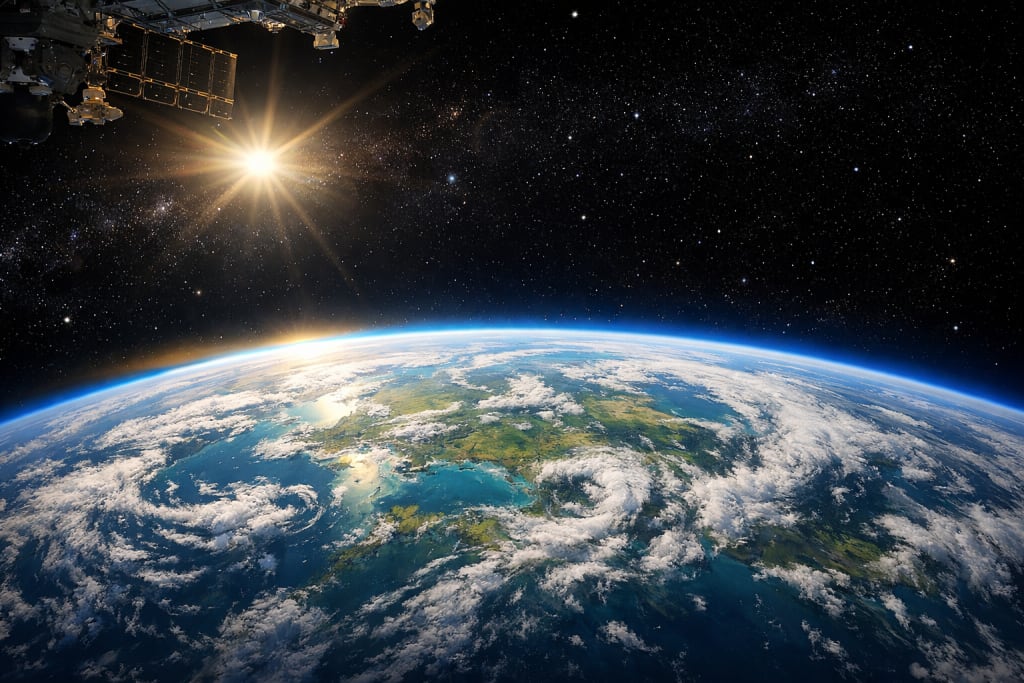
Picture this: you hand over a check large enough to buy dozens of apartments in a major city. In return, you get a nine-minute ride. That's it. Nine minutes of sheer, stomach-dropping wonder before you're back on the ground. Sounds absurd? It was the reality of space travel not so long ago — and right now, the entire equation is being rewritten.
To understand where prices are heading today, you have to start with where they came from. For decades, space was a government-only affair, and governments paid through the nose for it. NASA's Apollo program, which planted the American flag on the Moon, cost the equivalent of nearly $200 billion in today's money. Each of the 135 Space Shuttle launches averaged around $850 million. Rockets were treated like paper cups — used once, then thrown away. Nobody questioned it. Nobody even thought there was another way.
Dennis Tito and the Crack in the Wall
In 2001, a California millionaire named Dennis Tito quietly changed everything. He bought a seat on a Russian Soyuz spacecraft, flew to the International Space Station, and spent six days floating in orbit. He paid roughly $20 million for the privilege — a staggering sum, sure. But what he proved was far more valuable than the price tag: space didn't have to belong exclusively to astronauts in buzz cuts and flight suits. It could belong to anyone willing to write a big enough check.
After Tito, others followed. But the prices kept climbing. By 2018, a seat aboard Russia's Soyuz had ballooned to $80 million. Russia held a near-monopoly on crewed spaceflight at the time — it was the only country regularly ferrying people to the ISS — and it priced accordingly. The market had one seller. There was no reason to offer a discount.
Three Tiers, Three Price Tags: The Space Market Today
The modern space tourism industry has sorted itself into three distinct layers, each with its own price point and its own version of "the experience."
Suborbital flights are the entry-level ticket. The rocket screams upward past 100 kilometers — the internationally recognized boundary of space — hangs there for a few breathless minutes, and falls back to Earth. Passengers experience weightlessness, see the curvature of the planet, and come back with a story nobody will believe at dinner parties. Virgin Galactic charges between $450,000 and $600,000 per seat. Blue Origin operates in a similar range. And China's Blue Aerospace announced a 12-minute suborbital flight for 2027 at $210,000 a ticket — the first two seats sold out in twenty minutes.
Orbital flights are a completely different beast. SpaceX, working alongside Axiom Space, offers trips to the International Space Station for roughly $55 million per person. The mission lasts 8–10 days and includes everything: training, the ride up aboard a Crew Dragon capsule, and your stay on the station itself. Russia previously offered similar trips through Space Adventures for $20–35 million, but quietly stopped taking foreign tourists after 2021.
Deep-space flights — to the Moon and beyond — remain in the territory of "call us for pricing." Dennis Tito himself, now well into his 80s, signed up for a lunar flyby mission. Costs for trips like these are estimated in the tens of millions, but exact figures are rarely made public. These are journeys that even most billionaires haven't attempted.
The Moment Everything Changed: Falcon 9 Lands
The single most important turning point in the economics of space didn't happen in a boardroom or a government lab. It happened on December 21, 2015, on a flat, marshy stretch of Florida coastline. A SpaceX Falcon 9 rocket's first stage — the massive bottom section that does the heavy lifting during launch — descended from the sky, fired its engines in a controlled burn, and touched down vertically on a landing pad. It stood there, upright and intact, like a soldier snapping to attention.
Engineers in the industry say the moment felt electric.
The idea behind it was deceptively simple, and that simplicity was exactly the point. A rocket's first stage is its most expensive component: nine powerful engines, thousands of gallons of fuel, and decades of engineering expertise baked into a single machine worth tens of millions of dollars. In every previous era of rocketry, that stage was destroyed on every flight — either burning up in the atmosphere or splashing into the ocean. SpaceX asked the obvious question that nobody had seriously pursued before: what if we could catch it and fly it again?
Easier said than done. Landing a booster traveling at thousands of miles per hour back onto a precise target is an engineering feat comparable to, as SpaceX engineers have joked, "throwing a dart at a bullseye during a hurricane." The company lost several boosters during testing. But by March 2017, it flew a previously used Falcon 9 first stage for the first time in history. Jeff Bezos, whose own rocket company Blue Origin had demonstrated vertical landing technology slightly earlier, sent SpaceX a massive novelty certificate reading "Welcome to the Club." Elon Musk fired back with characteristic wit: "It would have been pretty strange to throw away a $180 million rocket every time — kind of like saying to the pilot of a Boeing 737, 'fly it to Paris, then jump out with a parachute and let it crash into the ocean.'"
By 2025, the technology had matured into a production line. A single Falcon 9 booster had flown to space 29 times. SpaceX certified stages for up to 40 flights. NASA estimated that reusability brought the real cost of a Falcon 9 launch down to around $28 million — more than half off the listed price of $67 million.
The Numbers Don't Lie
The cost comparisons between eras are staggering. SpaceX developed Falcon 9 for roughly $390 million. When NASA ran its own internal estimate of what building an equivalent rocket would cost through traditional government contracting, the figure came back at $3.6–4 billion. A private company did the same job for one-tenth the price.
And the per-kilogram costs tell an even sharper story. In the early days of space travel, launching one kilogram of cargo to low Earth orbit cost tens of thousands of dollars. Falcon 9 brought that figure down to a few thousand. SpaceX's next-generation rocket, Starship, aims to push it all the way down to $100 per kilogram — a number that would have sounded like science fiction just fifteen years ago.
Starship: The Biggest Bet in Space History
Starship is not just a bigger rocket. It is a fundamentally different kind of machine. Standing 121 meters tall and weighing around 5,300 tons when fully fueled, it is the largest and most powerful rocket ever built. But its real ambition is architectural: Starship is designed to be the first fully reusable orbital rocket in history. Both stages — the giant booster and the crew/cargo capsule on top — are meant to land, be refueled, and fly again.
Musk has stated that each Starship launch could eventually cost around $2 million. For a rocket capable of carrying up to 150 tons of cargo to orbit — or up to 100 passengers — that figure would represent a seismic shift in the economics of space. The company hopes to bring per-flight costs below $10 million and plans to demonstrate full reusability as early as 2026. If they pull it off, Musk claims, the cost of reaching space could drop by a factor of 100.
Progress is real but uneven. Of 11 test launches through late 2025, only six were fully successful. Space does not forgive shortcuts. But the pace of iteration is itself remarkable — each failure feeds directly into the next attempt, and the timeline between tests has compressed dramatically.
What Does This Mean for the Rest of Us?
Experts project that suborbital flights could drop to around $100,000 per ticket by 2030. That's still serious money — but it's becoming comparable to other extreme luxury experiences like superyacht charters or private expeditions to the bottom of the Mariana Trench. By 2040–2050, orbital flights might cost "only" $1–2 million.
Compare that trajectory to where things stood just twenty years ago. In 2001, Tito paid $20 million. By 2018, the price had actually risen to $80 million. Starship promises to reverse that trend entirely.
And the market is getting creative at the edges. French company Zephalto and American startup Space Perspective offer high-altitude balloon flights into the stratosphere — 25–30 kilometers up, six hours of panoramic views of Earth from a pressurized capsule. Tickets run about €120,000. It's not technically space. But for many passengers, the view is close enough to change how they see the world forever.
Three Reasons Prices Keep Falling
Behind the headline numbers, three forces are driving costs down — and they show no signs of stopping.
Reusability is the foundation. When you stop throwing away a $180 million machine after every flight and start flying it 20, 30, or 40 times, the economics transform overnight. It's the same logic that turned aviation from a curiosity into an industry: as long as every airplane was single-use, flying was for the elite. The moment you could reuse the machine, everything changed.
Scale and frequency amplify the effect. SpaceX completed 500 Falcon 9 launches by 2025. More flights mean more experience, fewer failures, faster turnaround, and lower per-launch costs. The gap between a booster landing and its next launch has shrunk to days. It's starting to look less like a heroic one-off mission and more like a bus schedule.
Competition keeps everyone honest. When Russia held a monopoly on crewed spaceflight, there was no pressure on pricing. Now SpaceX, Blue Origin, Virgin Galactic, and dozens of startups are competing head-to-head. China, India, and Europe are building their own launch capabilities. A real market — with real rivals — means prices will keep falling.
We're Standing at the Edge of Something New
Space has always felt impossibly far away. Physically, it's only 100 kilometers above our heads — closer than most people realize. Economically, it has always been millions of dollars beyond reach. The physical distance shrank to minutes of flight over the course of sixty years. The economic distance is shrinking right now, driven by a generation of rockets that have finally learned how to come home.
Nobody is predicting that ordinary people will book space vacations next year. But the direction is unmistakable. Costs are falling. The number of players is rising. And rockets are starting to look less like disposable warheads and more like what Musk has always insisted they should be — machines you fly, land, refuel, and fly again. If he's even halfway right, a generation from now people will look back at us and marvel at how strange it was that seeing your own planet from the outside required being either a billionaire or an astronaut. The era when space was for the few is ending. The question is no longer if it opens up — it's how fast.
About the Creator
Keep reading
More stories from Holianyk Ihor and writers in Futurism and other communities.
Killer Asteroid: How Humanity Is Preparing for the Inevitable Impact
Sixty-six million years ago, a cosmic rock roughly 10 kilometers in diameter ended the age of dinosaurs in a catastrophic instant. Today, humanity stands as the first species on Earth capable not only of predicting such a disaster but also of preventing it. The only question is: will we be ready in time?
By Holianyk Ihor2 days ago in Futurism
About Binding Prometheus
I want to start actively advocating on behalf of my own work, and the most valuable part of my canon is, without a doubt, Binding Prometheus, the play I have been working on since 2019 and only finished in 2023 as part of my MA. The play itself is an amalgamation of a million different inspirations. On one end, it evokes the Ancient Greek myth-play, deriving its own title from the earliest extant work of Western drama we have, Aeschylus’s Prometheus Bound. On the other end, it borrows significantly from the sci-fi bulwarks from over the years, namely Mary Shelley’s Frankenstein and Karel Capek’s Rossum’s Universal Robots. The play could be an episode of Black Mirror, I fear. I don’t know. I’ve only ever seen one episode of Black Mirror.
By Steven Christopher McKnightabout a month ago in Futurism
UAE Building Materials Market Outlook: Industry Trends, Key Players & Forecast
According to IMARC Group's latest research publication, the UAE building materials market size reached USD 6.75 Billion in 2024. The market is projected to reach USD 11.44 Billion by 2033, exhibiting a growth rate of 5% during 2025-2033.
By Abhay Rajput5 days ago in Futurism


Comments
There are no comments for this story
Be the first to respond and start the conversation.