
China’s Bold Plan: Building a Permanent Moon Base by 2030
How the new space race is shifting from Mars dreams to lunar realities.

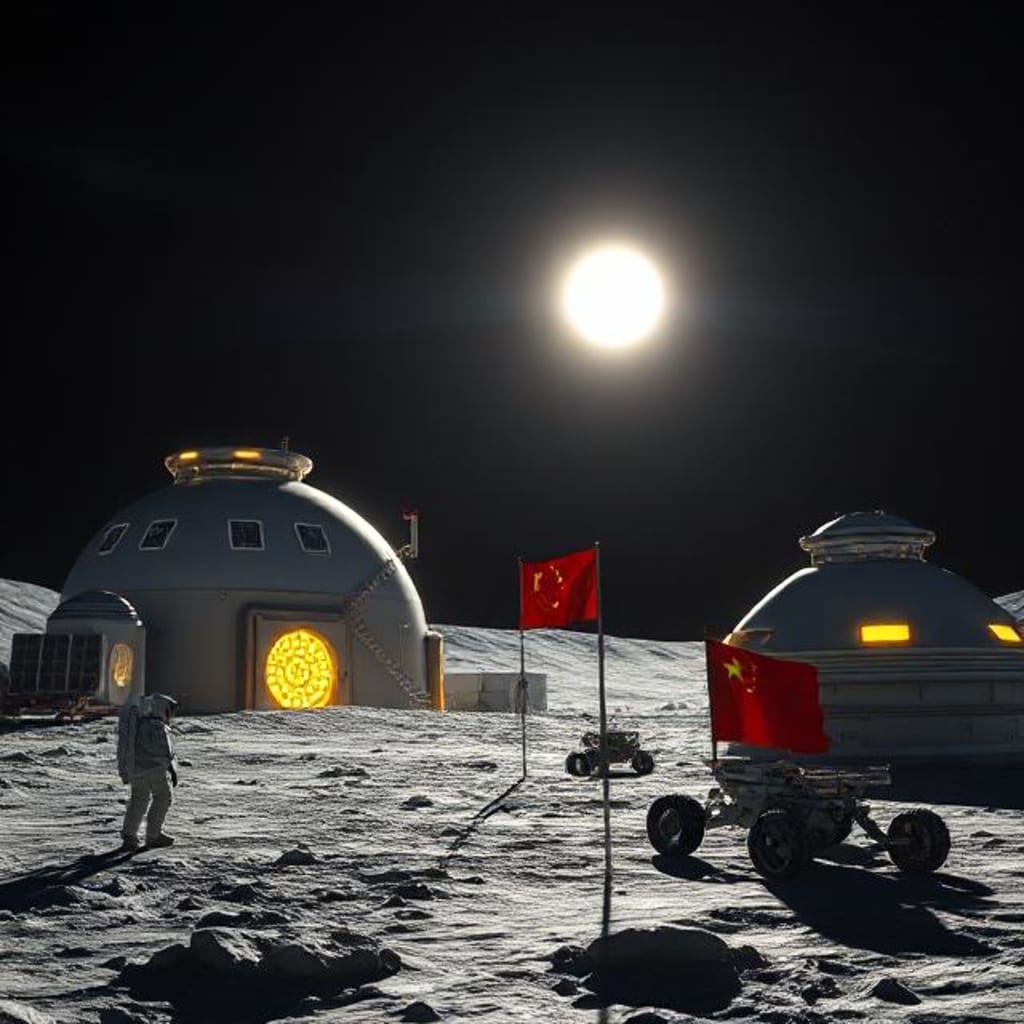
China’s Plan for a Moon Base by 2030
In the 20th century, the United States won the race to land humans on the Moon. Now, in the 21st century, China is preparing to win the race to stay there. The Chinese government, through its rapidly advancing China National Space Administration (CNSA), has revealed ambitious plans to construct a permanent lunar base by 2030. This project is more than just a demonstration of national pride—it could redefine global leadership in space exploration.
Unlike NASA’s Apollo program, which focused on short visits, China’s vision is long-term. The plan includes robotic missions, human landings, and eventually, a self-sustaining outpost on the Moon’s surface. For Beijing, the Moon is not just a scientific playground—it is a strategic frontier rich with resources like helium-3, a rare isotope that could fuel future fusion reactors.
---
Why the Moon, and Why Now?
While Elon Musk and SpaceX talk about Mars colonization, China is betting on the Moon as the first step. There are several reasons for this strategy:
1. Proximity: The Moon is only three days away from Earth, compared to months for Mars. This makes supply lines and communication far easier.
2. Resources: The lunar surface contains valuable materials—helium-3 for clean energy, rare earth metals, and water ice that can be split into hydrogen and oxygen for rocket fuel.
3. Geopolitics: Establishing a base on the Moon would signal China’s dominance in space, potentially giving it control over key regions and resources.
The Moon is no longer just a symbol of exploration—it is fast becoming a strategic prize in the new space economy.
---
The Roadmap to 2030
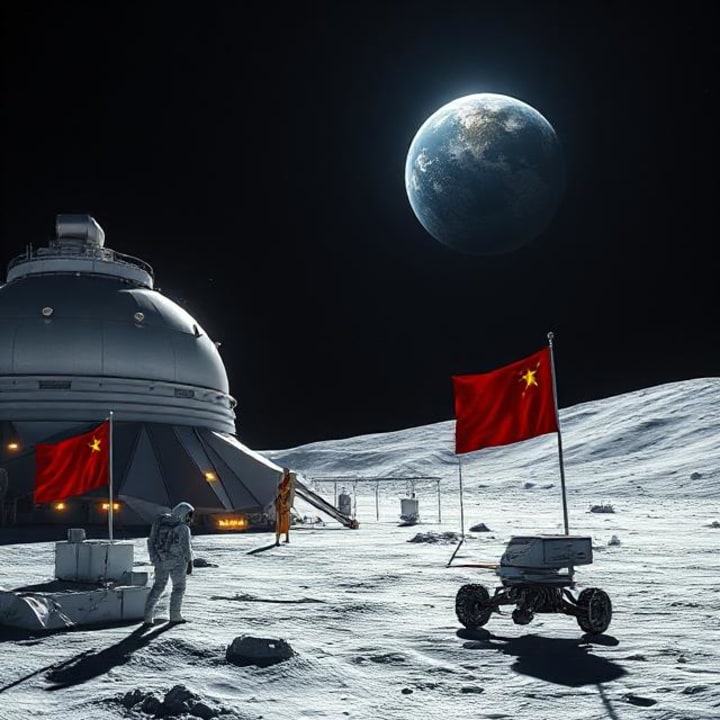
China’s path to the Moon base is systematic and well-funded. The Chang’e lunar program, named after the Chinese Moon goddess, has already achieved several milestones:
Chang’e 4 (2019): First soft landing on the far side of the Moon.
Chang’e 5 (2020): Successfully returned lunar samples to Earth.
Chang’e 6 (2024): Scheduled to bring back more samples, this time from the lunar south pole.
Chang’e 7 & 8 (2026–2028): Planned missions to scout water ice and test construction technologies.
These missions will pave the way for a crewed lunar landing before 2030. By then, China aims to establish the first modules of a permanent base, likely at the lunar south pole, where water ice has been detected in shadowed craters.
---
International Partnerships—or Rivalries?
China is not going alone. It has partnered with Russia to co-develop the International Lunar Research Station (ILRS), envisioned as a multinational base open to other countries. This stands as a rival to NASA’s Artemis Program, which plans to return astronauts to the Moon by 2026 and build the Artemis Base Camp.
Effectively, the world is seeing a bifurcation of space alliances:
The Artemis Alliance: Led by the U.S., with Europe, Japan, and Canada.
The ILRS Alliance: Led by China and Russia, potentially joined by developing nations.
This rivalry mirrors the Cold War space race but with new stakes: not just prestige, but control over lunar resources and influence over the future space economy.
---
What Will the Moon Base Do?
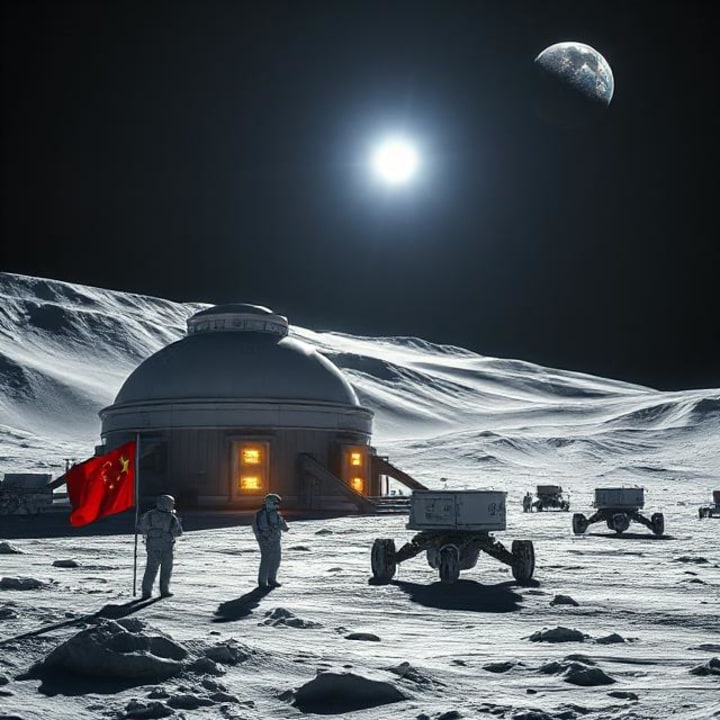
A permanent base is not just symbolic. China envisions multiple functions for its lunar outpost:
Mining Helium-3 and rare minerals for energy and industry.
Harvesting water ice for drinking water and rocket fuel.
Astronomical observatories free from Earth’s atmosphere and light pollution.
Scientific labs to study lunar geology and test life-support systems.
A launchpad for deep space missions, including Mars expeditions.
If successful, China’s Moon base could be the gateway to the solar system, offering fuel, resources, and infrastructure for future missions.
---
The Challenges Ahead
Building on the Moon is no easy task. The environment presents major obstacles:
Extreme Temperatures: Ranging from +127°C in the day to -173°C at night.
Radiation Exposure: Without an atmosphere, astronauts face high cosmic radiation.
Lunar Dust: Sharp, clingy, and harmful to equipment and lungs.
Logistics: Every kilogram of supplies must be launched from Earth, at huge cost.
China is testing solutions such as 3D-printing lunar regolith into bricks, building nuclear reactors for energy, and deploying AI-powered robots for construction. But the risks remain high.
---
Space as the New Geopolitical Arena
The Moon base is not only a scientific dream—it’s a geopolitical statement. Just as control of sea routes shaped the last 500 years of Earth’s history, control of space outposts may shape the next century.
If China establishes the first permanent base, it could dictate who gets access to resources, landing zones, and infrastructure. This raises concerns about a new kind of “space colonization,” where superpowers carve up extraterrestrial territories.
---
Fact or Fiction?
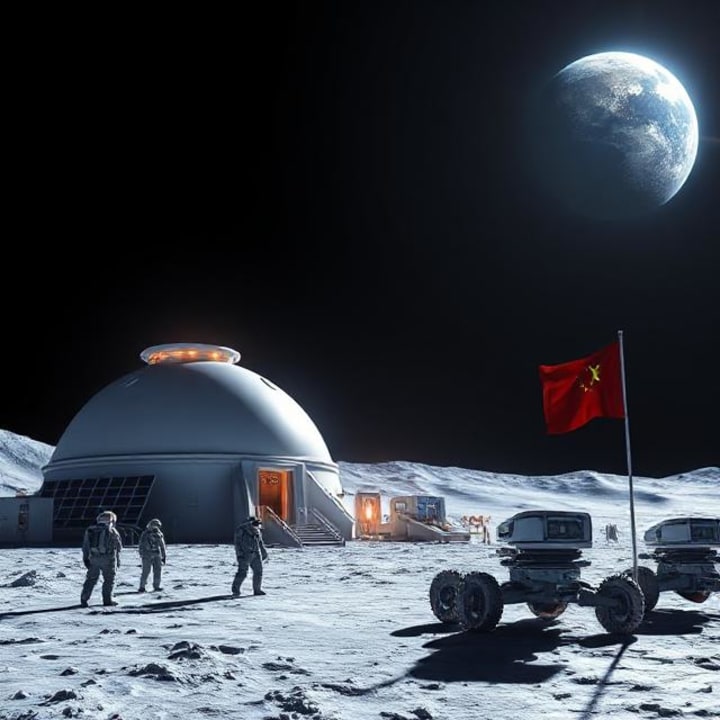
Skeptics argue that the 2030 timeline may be too ambitious. Both China and the U.S. face engineering challenges, budget constraints, and political risks. Delays are almost inevitable.
But history shows that space ambitions often transform into reality faster than critics expect. The Soviet Union shocked the world with Sputnik in 1957. The U.S. responded with the Apollo missions, landing on the Moon just 12 years later. Now, China is leveraging its state-backed funding, rapid engineering cycles, and political will to achieve a similar leap.
---
The Future of Lunar Civilization
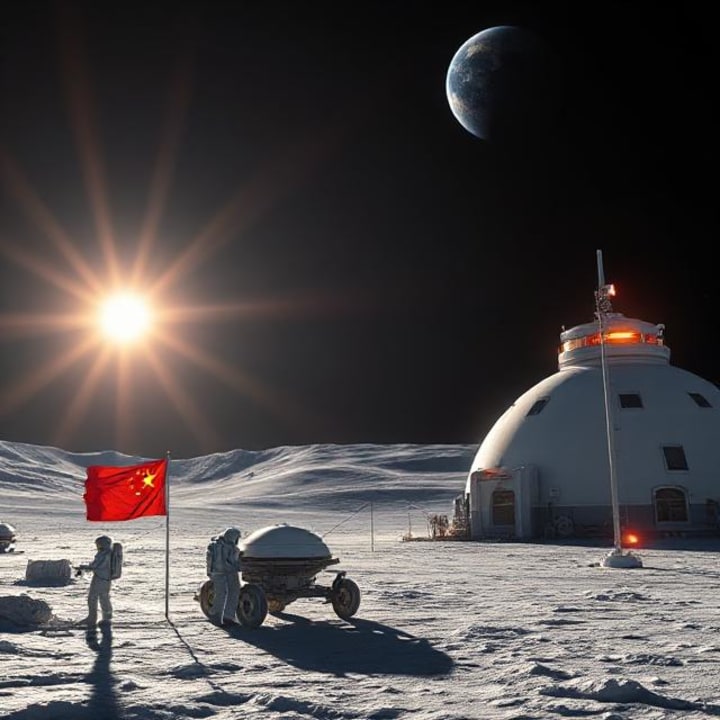
If China succeeds, the 2030s could mark the beginning of a lunar civilization. A permanent human presence on the Moon would represent humanity’s first step toward becoming a multi-world species.
The Moon base could spark a new space economy worth trillions—driven by resource extraction, space tourism, and deep-space missions. It may also force humans to rethink questions of ownership, cooperation, and survival beyond Earth.
One thing is clear: the race to the Moon is no longer about flags and footprints. It is about the future of civilization itself.
---
Conclusion
China’s Moon base plan is bold, risky, and transformative. By 2030, the world may witness the dawn of permanent human settlement beyond Earth. Whether this future is one of competition or cooperation remains to be seen—but the stakes could not be higher.
The new space race is here, and this time, it is not about who touches the Moon first. It is about who stays there.
---
SEO Keywords: China Moon base 2030, lunar colonization, helium-3 mining, lunar south pole resources, China vs USA space race, International Lunar Research Station, Artemis program competition, future of Moon exploration, China Russia lunar alliance, Moon base construction challenges.
---
About the Creator
Muhammad Riaz
- Writer. Thinker. Storyteller. I’m Muhammad Riaz, sharing honest stories that inspire, reflect, and connect. Writing about life, society, and ideas that matter. Let’s grow through words.
Keep reading
More stories from Muhammad Riaz and writers in Futurism and other communities.
Neuralink’s Bold Vision: How Brain-Computer Interfaces Could Redefine Human Evolution by 2030
Neuralink and the Future of Human-Machine Symbiosis Elon Musk, the billionaire entrepreneur behind Tesla and SpaceX, is also at the helm of one of the most futuristic and controversial companies in the world: Neuralink. Founded in 2016, Neuralink aims to create brain-computer interfaces (BCIs) that allow direct communication between the human brain and machines. What started as a medical project to help patients with paralysis may one day redefine human learning, memory, and even evolution itself.
By Muhammad Riaz5 months ago in Futurism
About Binding Prometheus
I want to start actively advocating on behalf of my own work, and the most valuable part of my canon is, without a doubt, Binding Prometheus, the play I have been working on since 2019 and only finished in 2023 as part of my MA. The play itself is an amalgamation of a million different inspirations. On one end, it evokes the Ancient Greek myth-play, deriving its own title from the earliest extant work of Western drama we have, Aeschylus’s Prometheus Bound. On the other end, it borrows significantly from the sci-fi bulwarks from over the years, namely Mary Shelley’s Frankenstein and Karel Capek’s Rossum’s Universal Robots. The play could be an episode of Black Mirror, I fear. I don’t know. I’ve only ever seen one episode of Black Mirror.
By Steven Christopher McKnight15 days ago in Futurism
AI's Approach to Medical Device Software Design
The healthcare industry is undergoing a rapid digital transformation, driven by the increasing adoption of connected medical devices, smart diagnostics, and software-powered patient care systems. At the heart of this evolution lies medical device software design, a specialized discipline that blends healthcare expertise, regulatory compliance, and advanced engineering to create reliable, life-critical digital solutions.
By Steve Waughabout 13 hours ago in Futurism




Comments
There are no comments for this story
Be the first to respond and start the conversation.