
Neuralink’s Bold Vision: How Brain-Computer Interfaces Could Redefine Human Evolution by 2030
Elon Musk’s Neuralink pushes the boundaries of science and technology, aiming to merge the human mind with artificial intelligence.

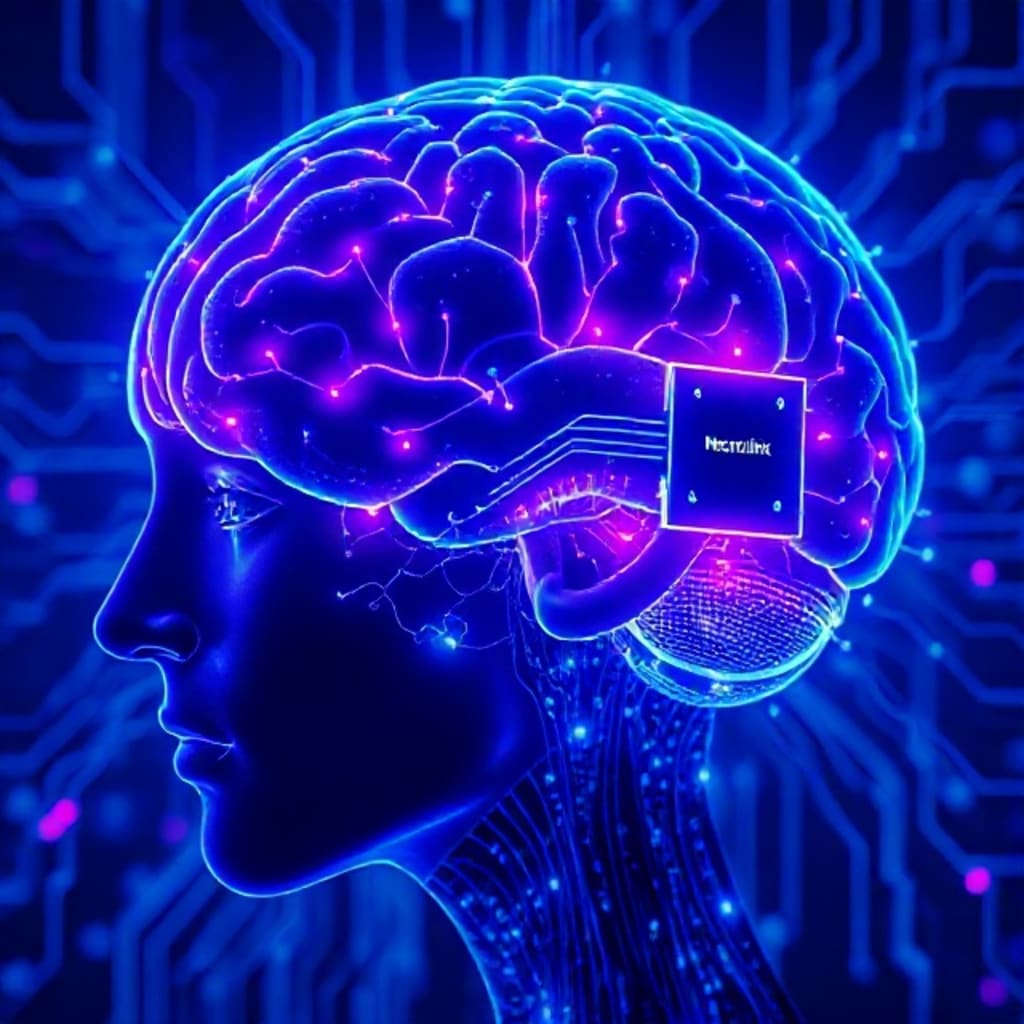
Neuralink and the Future of Human-Machine Symbiosis
Elon Musk, the billionaire entrepreneur behind Tesla and SpaceX, is also at the helm of one of the most futuristic and controversial companies in the world: Neuralink. Founded in 2016, Neuralink aims to create brain-computer interfaces (BCIs) that allow direct communication between the human brain and machines. What started as a medical project to help patients with paralysis may one day redefine human learning, memory, and even evolution itself.
In 2025, Neuralink announced significant progress in clinical trials. The first human patients fitted with the chip were able to control a computer cursor with their thoughts alone. While this achievement may seem small compared to Musk’s dreams of “telepathic communication” or “downloading knowledge,” it marks a historic moment in the story of humanity’s relationship with technology.
---
Why Neuralink?
The motivation behind Neuralink is both practical and visionary. Millions of people worldwide suffer from neurological conditions such as spinal cord injuries, ALS, or Parkinson’s disease. For them, brain implants could restore mobility, communication, and independence.
But Musk’s vision goes much further. He believes humanity must merge with artificial intelligence to survive the rapid rise of machine intelligence. “If you can’t beat AI, you might as well join it,” Musk famously said. Neuralink represents his solution: a way for humans to interface with AI instead of being left behind.
---
How Does It Work?
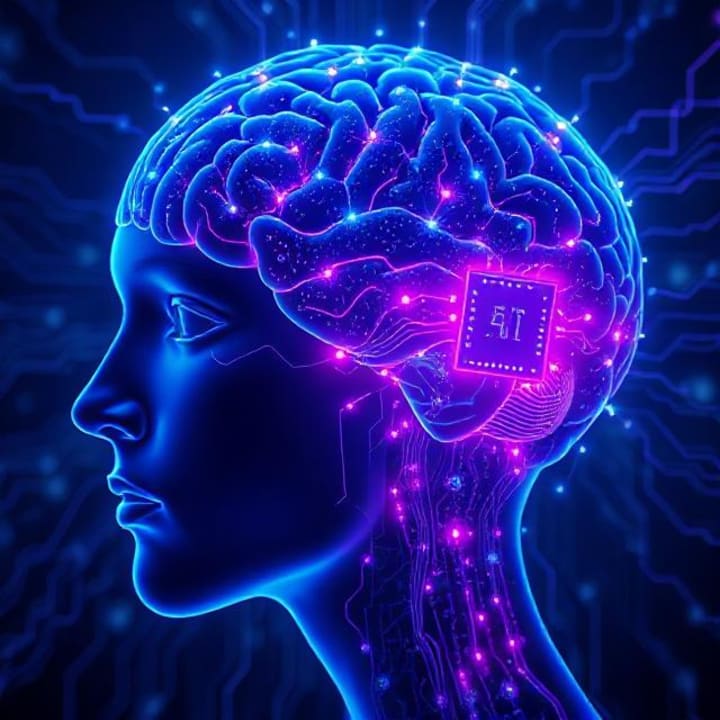
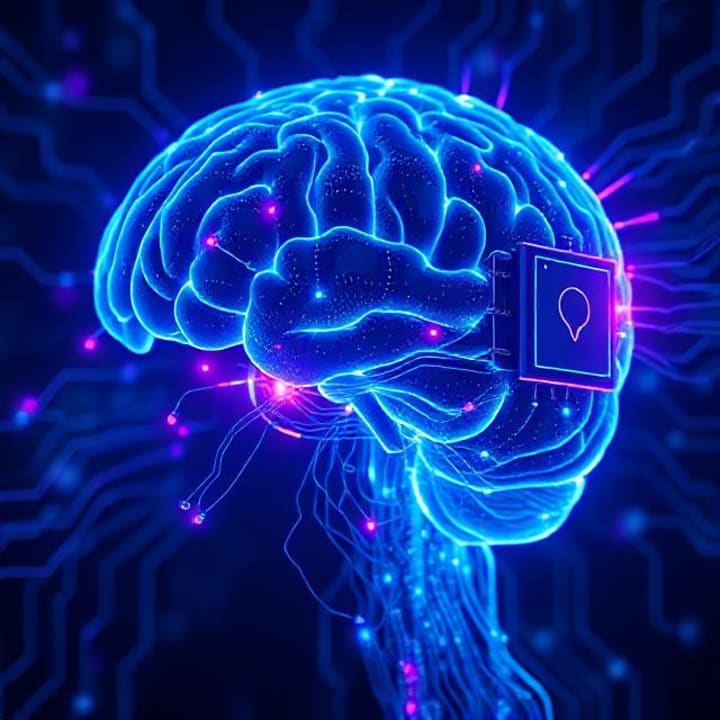
The Neuralink device, often referred to as the “Link,” is a tiny chip implanted into the skull with ultra-thin threads that connect to neurons. These threads record and stimulate brain activity, translating thoughts into digital signals.
The implant is designed to be wireless and updatable. Patients could, in theory, connect to smartphones, computers, and eventually, entire networks using only their minds. Neuralink has also introduced a surgical robot capable of implanting the device with extreme precision, minimizing human error.
In 2023, Neuralink showcased monkeys playing video games like Pong purely through thought. By 2024, the company had achieved U.S. FDA approval for limited human trials—a milestone that Musk celebrated as proof the technology was moving from science fiction to science fact.
---
Beyond Medicine: A New Era of Human Abilities
While Neuralink’s first priority is medical treatment, the long-term implications are far more radical. Imagine being able to:
Learn a new language instantly by downloading vocabulary directly to your brain.
Share thoughts telepathically with friends, family, or colleagues.
Back up your memories to cloud storage, ensuring nothing is ever forgotten.
Control machines and devices without keyboards, touchscreens, or voice commands.
These ideas may sound like scenes from The Matrix, but Neuralink’s progress suggests they may one day be real. Musk often describes a future where humans with brain-computer interfaces could compete intellectually with advanced AI or even expand consciousness in ways never before possible.
---
The Challenges Ahead
Of course, there are enormous challenges standing in Neuralink’s path. The human brain is the most complex structure in the known universe, and even small errors in brain surgery can have devastating consequences.
Some of the key hurdles include:
Biological rejection: The brain might reject or scar around the implant.
Longevity: Devices need to last for decades without degrading.
Security: If thoughts can be digitized, they could, in theory, be hacked.
Ethics: Who owns the data from a person’s mind? Should there be limits on enhancement?
Critics also worry about inequality. If only the wealthy can afford brain upgrades, Neuralink could widen the gap between rich and poor—creating a class of “enhanced” humans and those left behind.
---
The Race for the Brain
Neuralink is not alone in pursuing this vision. Competitors like Synchron, Paradromics, and Kernel are also developing brain interfaces, though with different approaches. Synchron, for instance, implants its device via blood vessels, avoiding open-brain surgery.
Meanwhile, governments are paying attention. China, the U.S., and the EU are investing heavily in neurotechnology, seeing it as a key frontier in the race for technological dominance. Whoever masters BCIs could revolutionize not just medicine, but also communication, defense, and even warfare.
---
Fact or Science Fiction?
Skeptics argue that Musk is once again overpromising, much as he has been accused of doing with Tesla’s self-driving cars or timelines for Mars colonization. They point out that despite flashy demos, Neuralink has yet to prove its technology works safely and reliably in humans over the long term.
And yet, even partial success could change lives. A paralyzed patient controlling a prosthetic arm, a blind person regaining some vision, or a mute individual communicating again—all of these would be transformative breakthroughs in medicine.
The futuristic aspects—mind uploading, memory backups, telepathy—may take decades, but history has shown that technologies once thought impossible (flight, space travel, the internet) can become reality with enough persistence.
---
Elon Musk’s Bigger Vision
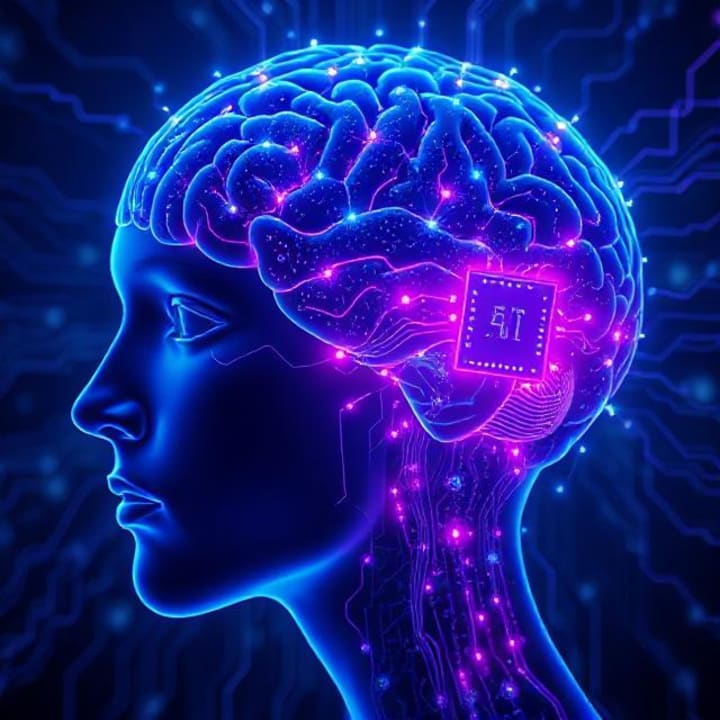
For Musk, Neuralink is part of his broader mission: ensuring humanity survives and thrives in the age of artificial intelligence. Where SpaceX seeks to make life multi-planetary, and Tesla accelerates sustainable energy, Neuralink aims to secure the mind itself.
By fusing human brains with AI, Musk hopes to avoid a scenario where artificial intelligence surpasses humans entirely. Instead, he envisions a world where humans and machines evolve together—a true symbiosis of biology and technology.
---
Conclusion: The Dawn of Neuro-Futurism
Neuralink represents one of the boldest and most controversial bets on the future. Whether it succeeds or fails, it is already forcing society to confront profound questions about identity, consciousness, and what it means to be human.
If Musk’s vision comes true, the 2030s could see a world where the boundaries between thought and technology blur forever. A world where learning, communication, and memory are no longer limited by biology but expanded by silicon.
It is a future that excites some, terrifies others, and reminds us that the line between science fiction and reality is growing thinner every year.
---
SEO Keywords: Neuralink brain chip, Elon Musk Neuralink, brain-computer interface 2025, Neuralink human trials, future of AI and humans, mind uploading, digital immortality, Neuralink medical applications, Elon Musk brain implant 2030, future of human evolution with AI.
---
About the Creator
Muhammad Riaz
- Writer. Thinker. Storyteller. I’m Muhammad Riaz, sharing honest stories that inspire, reflect, and connect. Writing about life, society, and ideas that matter. Let’s grow through words.
Keep reading
More stories from Muhammad Riaz and writers in Futurism and other communities.
When We Sold Time
It was the day Arman had dreamed of his entire life—his wedding day. The sky was clear, the sun warm but gentle, and the city of Neo Karachi shimmered with celebration. Streets were lined with neon banners flashing countdown timers — not for the ceremony itself, but for the Time Market's opening bell.
By Muhammad Riaz6 months ago in Futurism
About Binding Prometheus
I want to start actively advocating on behalf of my own work, and the most valuable part of my canon is, without a doubt, Binding Prometheus, the play I have been working on since 2019 and only finished in 2023 as part of my MA. The play itself is an amalgamation of a million different inspirations. On one end, it evokes the Ancient Greek myth-play, deriving its own title from the earliest extant work of Western drama we have, Aeschylus’s Prometheus Bound. On the other end, it borrows significantly from the sci-fi bulwarks from over the years, namely Mary Shelley’s Frankenstein and Karel Capek’s Rossum’s Universal Robots. The play could be an episode of Black Mirror, I fear. I don’t know. I’ve only ever seen one episode of Black Mirror.
By Steven Christopher McKnight15 days ago in Futurism
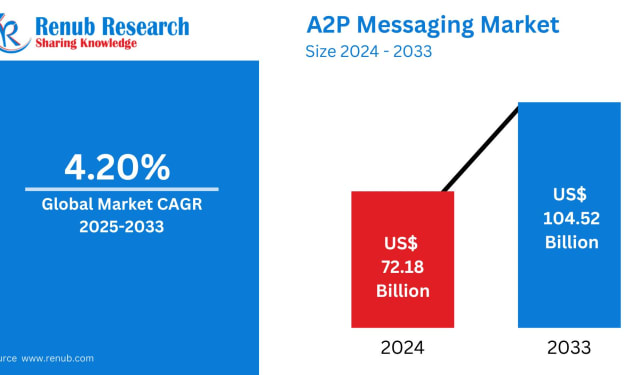
A2P Messaging Market Outlook 2025–2033
Introduction In an era where instant, reliable, and secure communication defines business success, Application-to-Person (A2P) messaging has become one of the most indispensable tools in the global digital economy. From one-time passwords (OTPs) and transaction alerts to delivery updates, customer notifications, and marketing campaigns, A2P messaging has reshaped how enterprises interact with consumers in real time.
By Marthan Sir5 days ago in Futurism


Comments
There are no comments for this story
Be the first to respond and start the conversation.