Microfiction
Pearl. Top Story - February 2026.
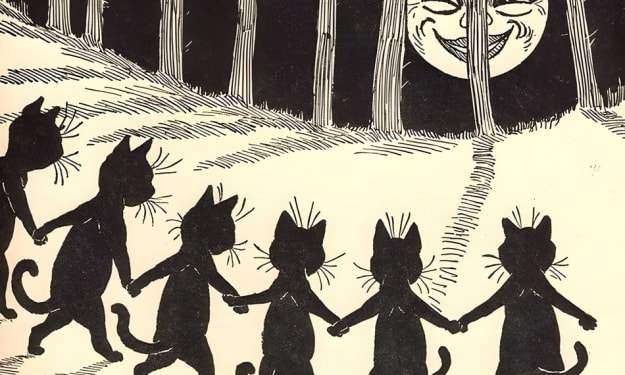
1980 something. we all hung out at Pearl and you and i were nothing special, or so i thought. i mean we all danced, drenched in our own sweat, our own saline solution of fear, too many beers, shots, laughter, tears, fucks in the bathroom and i don't know when we began to be afraid. do you?
By ROCK aka Andrea Polla (Simmons)2 days ago in Fiction
A Single Mother & A Stranger Boy – An Unexpected Love Story
It was raining that evening—the kind of rain that makes everything feel heavier than usual. Ayaan stood under a small café shed, watching the droplets hit the ground like broken memories. He wasn’t waiting for anyone. He never was. Life had taught him to keep moving without expectations. That’s when he saw her. She rushed in, holding her child close to her chest, her hair slightly messy, her face tired—but still… beautiful in a way that didn’t try to impress anyone. “Can we sit here?” she asked softly, pointing to the empty chair beside him. Ayaan nodded. Her son, maybe five years old, clung to her arm. She smiled at him gently, brushing his hair back. “You’re safe, sweetheart.” There was something about her voice… warm, protective, yet hiding a quiet sadness. Minutes passed in silence. Rain poured harder. “You come here often?” Ayaan finally asked. She let out a small laugh. “No… life doesn’t really give me that luxury.” He smiled. “Yeah… I get that.” She looked at him for a moment, studying his face like she was trying to understand something deeper. “I’m Sara,” she said. “Ayaan.” And just like that, something shifted. The next few days, Ayaan kept coming back to that café. Not because he liked the coffee… but because somewhere deep inside, he hoped she would be there again. And she was. Same corner. Same quiet strength. But this time, she smiled first. “You again?” “Maybe I like the rain,” he said. “Or maybe you like coincidences.” “Or maybe… I like conversations that haven’t finished yet.” She looked away, hiding a small smile. Days turned into weeks. Their conversations grew longer. Deeper. He learned she was a single mother. Her husband had left years ago. No explanations. No support. Just silence. “I stopped waiting for him,” she said one evening. “But I think a part of me stopped waiting for everything else too.” Ayaan didn’t say anything. He just listened. Because sometimes, being heard is more powerful than being fixed. One night, the café was closing early. Rain had started again. “Let me drop you home,” Ayaan offered. She hesitated. “I don’t usually trust people easily.” “I’m not ‘people’ anymore, remember?” he smiled. She looked at him… and for the first time, she didn’t say no. Her house was simple. Quiet. Her son had already fallen asleep in the car, and Ayaan carried him inside carefully. “Thank you,” she whispered. Their eyes met. And for a moment… the world outside disappeared. There was something in the air. Something unspoken. She stepped back. “I should… go inside.” “Yeah… you should.” But neither of them moved. Weeks passed. The distance between them slowly faded. Late-night calls turned into long walks. Casual smiles turned into lingering glances. One evening, sitting on a bench under dim streetlights, she finally said it: “You know this isn’t simple, right?” “I never wanted simple.” “I have responsibilities. A child. A past…” “And I’m not scared of any of that.” She looked at him, almost searching for doubt. But there was none. “Why?” she asked softly. Ayaan took a deep breath. “Because when I’m with you… everything feels real. Not perfect. Not easy. But real.” Her eyes filled with emotion. “No one has said that to me in a long time.” That night, something changed. Not suddenly. Not dramatically. But deeply. They didn’t rush into anything. Their connection wasn’t built on just attraction—it was built on understanding. But yes… there was attraction. The kind that makes your heartbeat louder when they’re close. The kind that makes silence feel heavy. One evening, as they stood in her living room, just talking… she stepped closer. “You’re dangerous,” she whispered. “Why?” “Because you make me feel things I promised myself I’d never feel again.” Ayaan didn’t respond. He just looked at her. And that was enough. She didn’t step away this time. Their relationship wasn’t perfect. There were doubts. Fears. Moments when she pulled away, afraid of losing everything again. “People like me don’t get happy endings,” she said once. Ayaan smiled gently. “Then let’s not call it an ending. Let’s just call it… now.” Her son started calling him “Ayaan bhai” at first… then slowly, just “Ayaan.” And somehow, without forcing anything, they became something like a family. Not by name. But by feeling. One rainy evening, just like the first day they met, they sat together at the café. “You know,” she said, “I used to hate the rain.” “Why?” “Because it reminded me of everything I lost.” “And now?” She looked at him… smiling softly. “Now it reminds me of everything I found.” Ayaan leaned back, watching the rain fall. Life hadn’t become easier. But it had become meaningful. And sometimes… that’s more than enough.
By Umar Farooq2 days ago in Fiction
The Selfish Giant
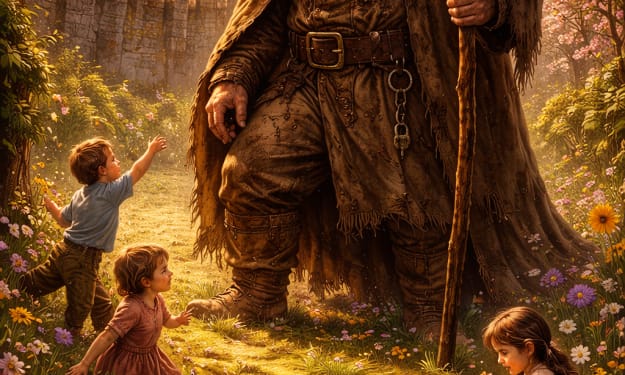
Every afternoon, after school ended, a group of children loved to play in a beautiful garden. It belonged to a giant who had been away visiting a friend for many years. The garden was full of soft green grass, bright flowers, and peach trees that blossomed in spring and bore fruit in autumn. Birds sang sweetly in the branches, and the children laughed happily while playing there. To them it felt like the most wonderful place in the world.
By Malak Faisal5 days ago in Fiction