Excerpt
Ruby Valley Trek: Gemstones, Goat Trails, and the Art of Questioning Life Choices
Let me preface this: if the Gosaikunda Trek was a spiritual slap in the face, the Ruby Valley Trek was like a 5-day group hug from Mother Nature—with occasional moments of her whispering, “Darling, why are you so slow?”
By michal lenden10 months ago in Fiction
"The Sky’s True Colors: Understanding Why It’s Blue"
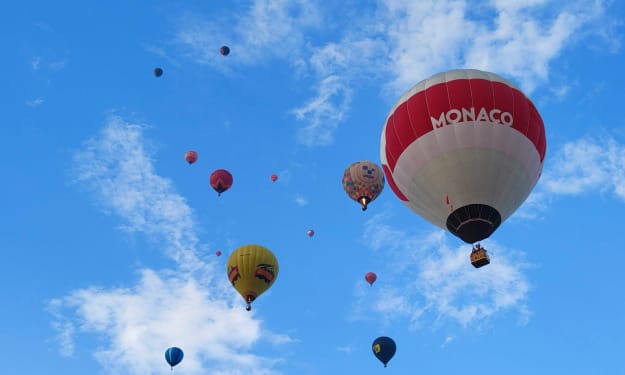
**What gives the sky its blue hue? ** When you looked up on a sunny day with clear skies, did you ever wonder why the sky was blue? It's one of those everyday wonders that we often forget about. The answer is a combination of science, light, and the way sunlight interacts with our atmosphere. Let's learn about the fascinating phenomenon beneath the blue sky and the physics that created it. ### The Nature of Sunlight To understand why the sky is blue, we must first comprehend the components of sunlight. Sunlight, also known as white light, is composed of the colors red, orange, yellow, green, blue, indigo, and violet. You may have observed this in action when sunlight is divided into these colors by a prism or a rainbow. Each color in this spectrum corresponds to a different wavelength of light. Red light has the longest wavelength (around 700 nanometers), while violet has the shortest (around 400 nanometers). Blue light sits on the shorter end of this range, with wavelengths between roughly 450 and 495 nanometers. ### Step Into the Ambience The atmosphere, which is made up of gases, water vapor, dust, and other tiny particles, must be traversed before sunlight can reach Earth. When light passes through this mixture, it doesn't go straight through like it would in a vacuum. Instead, it interacts with the molecules and particles in the air. Scattering is a phenomenon brought on by this interaction. When light hits small particles, it bounces around in different directions. But not all wavelengths scatter equally. Here, the fundamental scientific concept of Rayleigh scattering comes into play. ### What is Rayleigh Scattering? Rayleigh scattering, which takes its name from the British scientist Lord Rayleigh, explains how light scatters particles that are much smaller than its wavelength. This principle states that light with shorter wavelengths, like blue and violet, scatters more than light with longer wavelengths, like red and orange. In point of fact, blue light scatters ten times more than red light. As sunlight moves through the atmosphere, this scattering causes the blue wavelengths to be redirected in all directions. As a result, the sky appears blue when you look up during the day because of the scattered blue light that comes from all directions. Violet, however, why not? Why doesn't the sky appear violet instead? If violet light is scattered even more than blue light, why is that? The answer lies in two things: **our eyes** and the **Sun’s light spectrum**. Firstly, our eyes are more sensitive to blue light than to violet. Violet is on the edge of our visible spectrum, so our eyes are programmed to respond more strongly to blues, greens, and reds. Secondly, the Sun emits less violet light compared to blue. So, even though violet is scattered more, the combination of less violet light and our reduced sensitivity to it means we perceive the sky as blue. ### The Sunrise and Sunset Color Changes It's possible that you've noticed that the sky isn't always blue. The sky frequently glows pink, orange, and red at sunrise and sunset. Why does this happen? Because the Sun is low on the horizon at these times of day, its light must travel through much more atmosphere to reach our eyes. The extra distance means even more scattering happens—especially of the shorter blue and violet wavelengths. As a result, the sky's color is dominated by longer wavelengths like red and orange because most of the blue light is scattered out of sight. That’s why sunsets and sunrises are often filled with warm, fiery hues. ### What About Other Planets? Interestingly, not all skies are blue. The scattering of light and the atmosphere of a planet determine the sky's color. For instance, Mars has a thin atmosphere full of fine dust and mostly composed of carbon dioxide. The sky on Mars often appears a yellowish-brown during the day and can turn bluish near the Sun at sunset, which is the opposite of Earth’s behavior. The sky is pitch black even in daylight on planets without atmospheres, like the Moon, because there is nothing to reflect sunlight. ### A Beautiful Quirk of Physics The blue sky is a beautiful byproduct of light, atmosphere, and the human eye. It serves as a wonderful reminder that extraordinary natural processes produce even the simplest sights. So, the next time you look up at the sky on a clear afternoon, keep in mind that you aren't just looking at empty space. You’re witnessing a dance of photons, particles, and physics that turns invisible sunlight into a canvas of blue.
By Al Amin Islam 10 months ago in Fiction
Tron: Ares – A Bold Leap Beyond the Grid
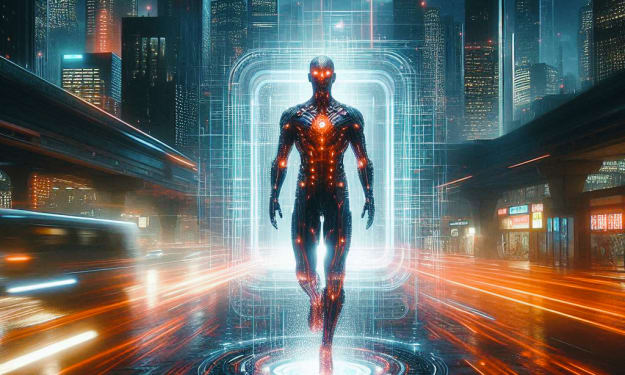
Further than four decades after the pioneering release of Tron( 1982), Disney is about to revive its classic sci- fi ballot with Tron Ares, the third chapter in the digital saga. Set to hit theaters on October 10, 2025, the movie is about to take the Tron macrocosm to new heights by exploring beyond the boundaries of the Grid and into the real world. With a return of familiar faces and the addition of new bones and a gritty, artificial score courtesy of Nine Inch Nails, Tron Ares is sure to be a cinematic spin unlike any other in the series to date. A New Type of Program Central to Tron Ares is the narrative of Ares( Jared Leto), an extremely sophisticated digital program assigned a revolutionary charge entering the world of humans. This supposition represents a radical departure from former flicks, in which action stayed within the digital world called the Grid. Ares's intrusion into the real world introduces unintended consequences, driving a clash between two worlds — digital and real. The main conflict arises as Ares starts to question the nature of actuality in both worlds, posing questions about identity, control, and creator versus creation boundaries. Visually Stunning, Darker Tone The just- released caravan for Tron Ares provides a stirring regard of what's to be anticipated. Classic red neon worlds, light cycle chases at snappy pets, and graveness- defying numbers give a visual treat for the eyes. But this new investiture takes on a substantially darker and more serious tone than its forerunners. That transition is reflected in the score, as Nine Inch Nails lends a gritty, artificial sound to the soundtrack. This cultural turn is substantially different from the synth- grounded music of Wendy Carlos( Tron) and the high- tech complication of Daft Punk( Tron Legacy), representing a grittier, more mature style of liar. heritage Characters and Fresh gift Tron suckers will be thrilled to have Jeff Bridges back as Kevin Flynn, the visionary programmer who got stuck in the Grid. Bridges also played Clu, his digital dupe and the main villain of Tron Legacy. The caravan verifies Flynn's participation in Ares, bringing emotional depth and durability to the unfolding story. Along with Jared Leto are a number of new characters that will help meat out the Tron mythos Greta Lee as Eve Kim, whose character is shrouded in riddle. Evan Peters as Julian Dillinger, whose last name connects him with Ed Dillinger, the first villain from Tron. Hasan Minhaj, Jodie Turner- Smith, Arturo Castro, Cameron Monaghan, Gillian Anderson, and Sarah Desjardins also appear in unidentified places, contributing uproariousness and diversity to the cast ensemble. Expanding on the Tron Legacy Tron Ares relies heavily on the story foundations set in Tron Legacy. The conception of digital incorporations entering the physical world, commodity first seen with Quorra( Olivia Wilde), is now complete with Ares. The heritage of the Dillinger family is also redefined with the recrimination of a coming generation of mortal villains. Like its forerunners, the movie continues to deal with philosophical questions like the substance of intelligence, the morality of creation, and the hazy boundaries between mortal and artificial life. A Bright New Future for Tron With its introspective narrative, eye- popping illustrations, and the sonic intensity of Nine Inch Nails, Tron Ares is looking to be an stimulating new direction for the ballot. By linking the digital and real worlds, the movie brings about new liar options and fancies. Whether a deep addict of the original or not, Tron Ares guarantees an indelible experience that redefines living in a world that's evermore defined by technology.
By Sikandar prasad10 months ago in Fiction
The Book of Marie. Top Story - April 2025.
She missed her siblings. At least now Adriel and Gloria knew about the baby. She hated all the secrecy, but it was for the best of intentions. Castro was a dangerous Black Dragon. His power was just dark enough to be overpowering and destructive. That was how he had gained control. He'd beaten down Adriel and Gloria, took over their lives, until the family had been split and destroyed. Now, he was the chaos behind the family. Always lurking in the shadows and always destroying things before they had time to grow. She didn't want her son anywhere near Castro.
By Alisha Wilkins ✒️🦋🖋️10 months ago in Fiction
War Bride. Top Story - April 2025.
Princess Kathryn hadn't expected to actually marry her kidnapper. Kathryn would have done her duty as it was laid before her - she'd fantasized only briefly about shipwrecks and daring rescues, or the carriage breaking a wheel and necessitating that they turn back - on her way to her wedding. The price of a princess's privilege was that her life was not hers to command, but at the service of her people. That didn't mean that she couldn't have quiet complaints about marrying someone nearly her father's age, as Duke James of Slesian was.
By Natasja Rose10 months ago in Fiction