
Xi'an, Shaanxi – A Renowned City of Chinese Cuisine
The mouthwatering treats of this ancient capital are sure to win over your taste buds

Today’s special is dedicated to vegetarian cuisine.
Xi’an, the ancient capital of Shaanxi Province, is a city with over two thousand years of cultural heritage and is also a paradise for vegetarians. Today, let’s explore some famous vegetarian dishes from this historic city.
Xi’an’s cuisine is often described as simple and unpretentious, but within that simplicity, it brings an explosion of flavors that will surprise your taste buds.
The vegetarian food in Xi’an can be categorized into two types: savory and sweet. The savory vegetarian dishes include Qin Zhen Rice Noodles, Biang Biang Noodles (vegetarian version), Oil-Splashed Noodles (vegetarian version), and Vegetarian Roast Goose. On the sweet side, you have Huang Gui Persimmon Cakes, Osmanthus Cakes, and Rose Mirror Cakes.
Sweet Dishes
Let’s talk about the sweet treats first, which will definitely make your taste buds dance with joy. These delicacies not only satisfy your hunger but also boost your dopamine levels, making you feel even happier. Xi’an's Osmanthus Cake is a must-try dessert you’ll remember long after your trip.
Xi'an's Osmanthus Cake has a history of over 200 years, and it has been passed down for over 300 years because of the local’s love for it. The traditional Osmanthus Cake is made with glutinous rice and osmanthus flowers, topped with dates and steamed to perfection. Today, it is often made with refined white sugar, syrup, flour, glutinous rice flour, vegetable oil, and honeyed osmanthus flowers. The ingredients are mixed in perfect proportions and then steamed, stir-fried, kneaded, pressed, and cut into pieces to create a golden cake. The texture is soft and smooth, with a fragrant, sweet, sticky, chewy, and refreshing taste. The cake is usually cut into small pieces and served with honeyed osmanthus syrup. Locals describe this cake as: “The osmanthus syrup on top is the soul of the cake—sweet, yet not overpowering. Paired with the bottom layer of cake, it’s not greasy at all. I love the taste of this old classic!” The best part is that it's incredibly affordable—just $1 for two pieces! If you love sweet treats, make sure to try the Osmanthus Cake when in Xi'an.
Rose Mirror Cake
In many countries, the rose symbolizes romance. Especially for lovers, roses are exchanged as a token of affection. In China, roses are not only given to loved ones but are also incorporated into food. The Rose Mirror Cake has an even longer history, dating back to the Song Dynasty over a thousand years ago, where it was commonly eaten for breakfast.
Made from glutinous rice flour, sugar, black sesame seeds, walnuts, rose jam, and sometimes dried fruit like raisins or candied fruit, the Rose Mirror Cake is steamed in a small, intricately carved wooden mold. Each mold is only large enough to hold one round cake, and multiple cakes are steamed at once. The cake is steamed for about a minute and then served by piercing it with a bamboo skewer and rolling it in prepared condiments. The result is a soft, sticky, sweet cake with a strong rose fragrance. Locals say, “I love the freshly steamed Rose Mirror Cake—it’s so soft and sticky, with the fragrance of glutinous rice mixed with the sweetness of rose. The sesame seeds add a nice crunch, and the flavor is just perfect.” If you’re traveling to Xi’an, don’t buy this in tourist spots. Instead, find the elderly vendors pushing carts on the streets—they sell the most authentic and delicious Rose Mirror Cakes.
Huang Gui Persimmon Cake
Xi’an is known for producing persimmons, and Huang Gui Persimmon Cake is one of the city’s signature seasonal desserts, typically available in the fall and winter. The main ingredient is Huojing persimmons from Lintong, which are thin-skinned, full of flesh, seedless, and juicy, with a natural sweetness that doesn’t require much added sugar. The cake also includes glutinous rice flour, huang gui (a type of osmanthus flower) jam, and traditional fillings such as walnuts, peanuts, or raisins.
The process is simple but rewarding: the persimmons are peeled and mashed into a paste, which is then mixed with glutinous rice flour to form a dough. This dough is filled with the traditional fillings, shaped into small round cakes, and fried in a pan with a little oil until golden and crispy. Once fried, the cakes are dusted with powdered sugar or coated with dry osmanthus powder for added flavor. The result is a thin, crispy exterior with a soft, chewy interior that pulls apart with each bite. Locals say, “The persimmon cake has a crispy outer shell with a soft, stringy inside. The walnut and peanut filling adds a crunch, and the osmanthus flavor is the soul of the dish.”
Qin Zhen Rice Noodles
For a savory vegetarian option, Qin Zhen Rice Noodles are a must-try. Made from locally grown rice, the rice noodles are thin, chewy, and full of rice flavor. The noodles are steamed to achieve a translucent appearance, then served cold with a variety of toppings and dressings. The key to the flavor lies in the sauces: a mixture of aged vinegar, sugar, and spices, along with chili oil and garlic water, creates the perfect balance of sour, spicy, and savory flavors. Some vendors also add bean sprouts, cucumber, or cilantro for extra freshness.
Local people love to eat Qin Zhen Rice Noodles, often saying, “This is the most authentic version of rice noodles, made with water from the Fen River and local rice. A big portion costs just 5 RMB, and the portion size is huge! You can add as much vinegar and chili oil as you like, making it incredibly satisfying!”
Biang Biang Noodles
Biang Biang Noodles is one of Xi'an's most iconic dishes, and there’s both a vegetarian and a non-vegetarian version. When you order, make sure to specify that you want the vegetarian version. The magic of Biang Biang noodles lies in the hand-pulled dough. Made from high-gluten wheat flour, water, and a pinch of salt (no eggs or additives), the dough is kneaded and stretched by hand, then boiled in hot water for a few minutes. The noodles are then served in a bowl, topped with vegetables like bean sprouts, green vegetables, potatoes, and carrots, and seasoned with garlic, onions, chili powder, soy sauce, and vinegar. The final touch is hot vegetable oil splashed over the noodles, releasing an aromatic fragrance. Locals describe it as: “In the summer, we eat Biang Biang noodles cold, and in winter, we enjoy them in a hot soup. With a piece of bread, they’re deliciously satisfying, and one bowl is enough to fill us up.”
Xi’an’s Cuisine: Simple and Sincere
Xi’an’s food is all about “simplicity and sincerity.” By using fresh local ingredients such as wheat, rice, persimmons, and osmanthus flowers, and relying on time-honored techniques passed down through generations (like hand-pulled noodles and fresh frying), the city creates delicious dishes that aren’t flashy but are full of flavor. When you visit Xi’an, make sure to eat like a local: slurp up a bowl of noodles, then bite into a sweet persimmon cake—your taste buds will be conquered by the delicious flavors of this ancient city!
About the Creator
My Tous les Jours Trip
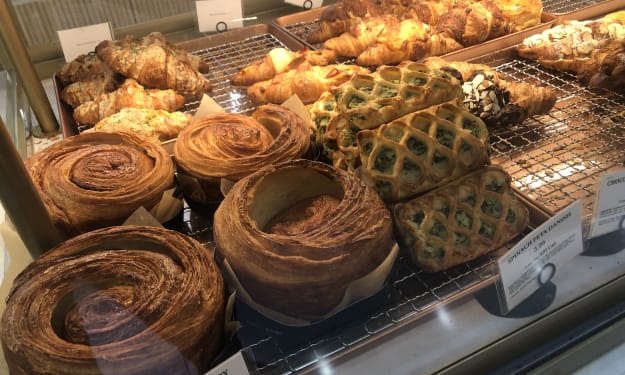
As someone who lives in a rural area, I don't get the chance to visit fancy restaurants or bakeries that often. So, when a friend told me about a French-Asian bakery that's less than an hour away, I knew I had to check it out and grab some pictures for social media. Tous les Jours ended up providing an immersive experience that went above and beyond my expectations--although I did leave with a few reservations.
By Kaitlin Shanks24 days ago in Feast
Fish Farming Market Size and Forecast 2025–2033
Introduction: A Market Anchored in the Future of Food The global food system is undergoing a profound transformation, and fish farming—also known as aquaculture—is emerging as one of its most critical pillars. With wild fish stocks under pressure from overfishing, climate change, and habitat degradation, the world is increasingly turning to controlled, farm-based fish production to meet its growing appetite for seafood.
By Marthan Sir6 days ago in Feast
Wild Card Weekend Recap: What Happens Now?
I think I figured out why I love Wild Card Weekend so much. It's because it's the first playoff anything of the calendar year. The NFL season starts in the fall, and once upon a time, the champion was crowned either on or slightly before New Year's. The evolution of the NFL schedule has resulted in the playoffs starting just into the New Year, and currently, the final week of the season falls on the first weekend of the New Year, with Wild Card Weekend coming a week after that. So yes, chronologically, the NFL's Wild Card Weekend serves as the first playoff anything of the calendar year.
By Clyde E. Dawkins6 days ago in Unbalanced


Comments
There are no comments for this story
Be the first to respond and start the conversation.