
When the Moon Hits Your Eye Like a Pizza Pie
Different styles of pizza in the USA

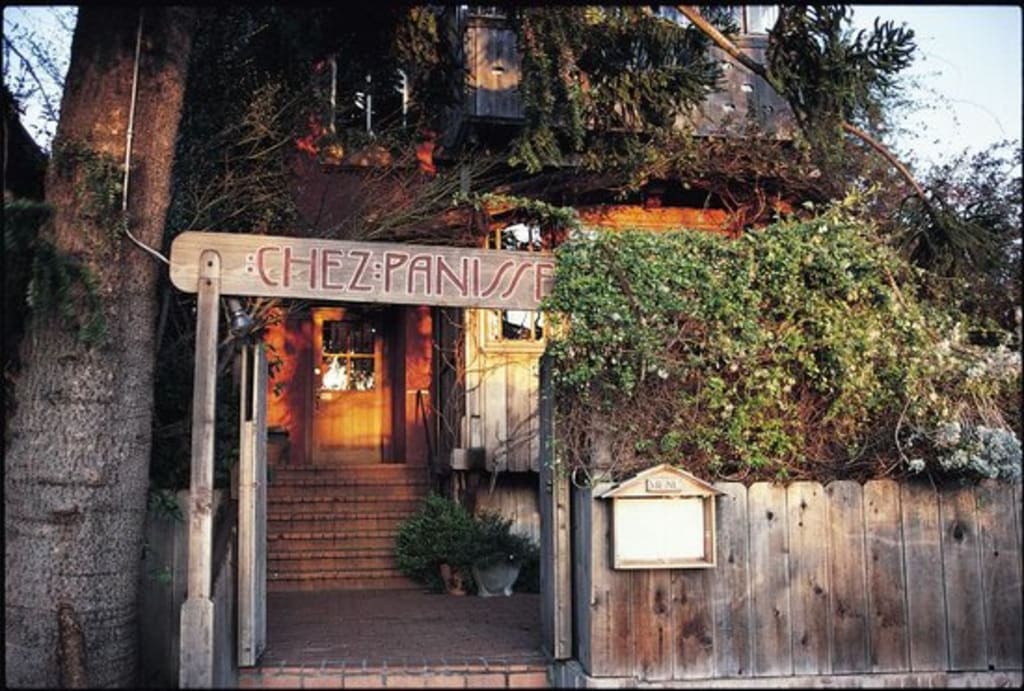
California-style pizza is a combination of New York and Italian thin crust with toppings from California cuisine. Wolfgang Puck popularized this style of pizza. California-style pizza was invented more or less simultaneously in 1980 by Ed LaDou (the “Prince of Pizza”) and by pizza chefs working for Alice Waters at the Chez Panisse Café in Berkeley, California.
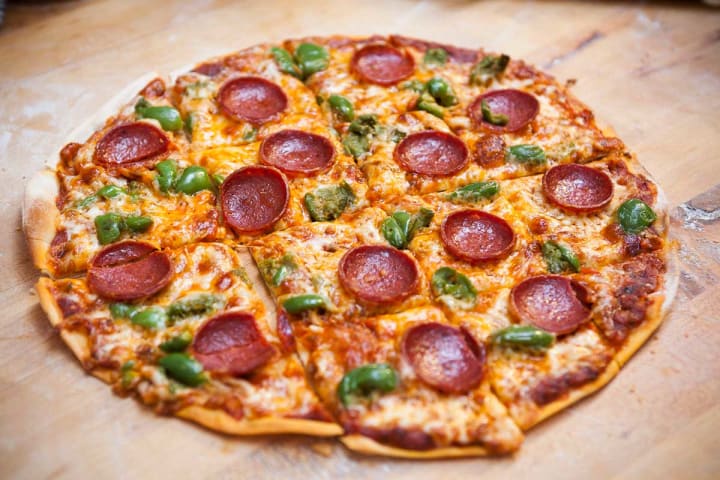
LaDou started out learning about pizza making as a teenager working at Frankie, Johnnie & Luigi Too, who made traditional New York-style pizza in Mountain View, California. When he started at Prego’s they specialized in classic, Italian-style thin crust pizza but the chefs encouraged LaDou to experiment with prosciutto, goat cheese and truffles in their wood-burning ovens and have the guests decide how they like it. He served a pizza with a combination of mustard, ricotta, pate, and red pepper to two guests who happened to be Chef Wolfgang Puck and his then-girlfriend designer Barbara Lazaroff.
By 1980 Alice Waters’ Chez Panisse and its head chef, Jeremiah Tower had already invented California cuisine which was a combination of French and Italian techniques. Waters was a long time fan of Tommasso’s Italian Restaurant in San Francisco’s North Beach which had installed West Coast’s first wood-fired pizza oven when it opened in 1935. Chefs at the restaurant started adding unusual ingredients to their pizzas like goat cheese and duck sausage.
In 1980 and 1981 Wolfgang Puck was preparing to open the restaurant that would make him famous, Spago in West Hollywood. Spago’s was modeled after the upstairs café at Chez Panisse. Having been impressed by the pizza he was served by LaDou at Prego Puck hired him, as head pizza chef. Under Puck’s guidance, LaDou developed more than 250 pizza concepts using ingredients such as scallops, roe and baby zucchini flowers.
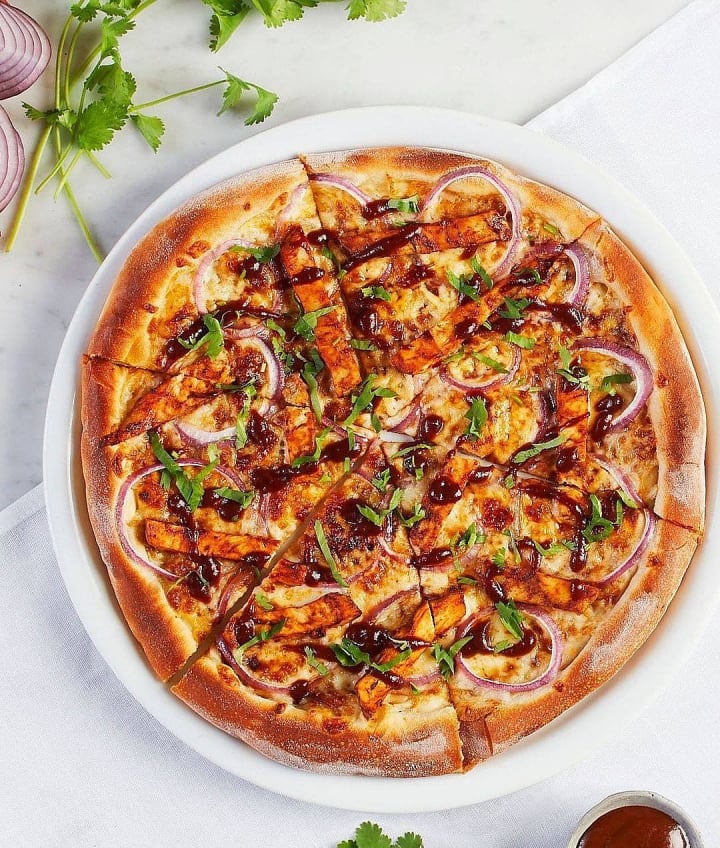
In 1985 LaDou helped two inexperienced lawyer-restaurateurs Richard L. Rosenfield and Larry S. Flax start a new restaurant concept, California Pizza Kitchen (also known as CPK). He brought them many of Spago’s recipes. Their restaurant used innovative but simpler comfort food toppings. One such pizza was barbeque chicken pizza. Soon California-style pizza changed from a gourmet food trend to a mass consumer food product. Both introduced frozen pizzas.
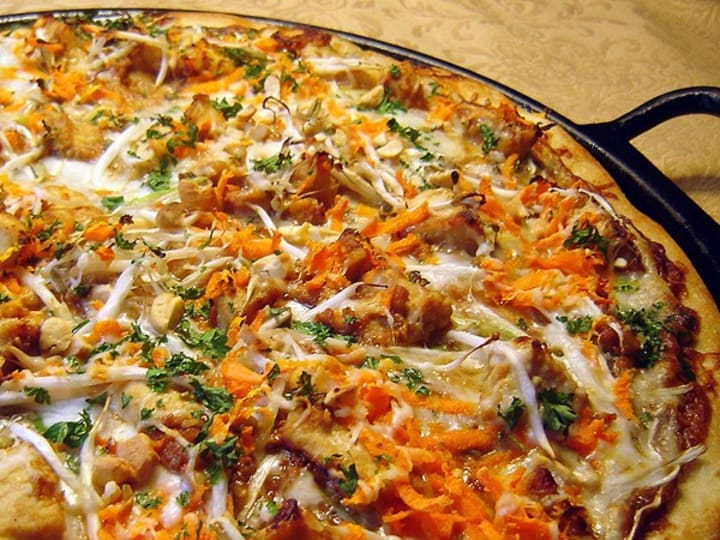
California-style pizza might include Thai pizza topped with bean sprouts and peanut sauce.
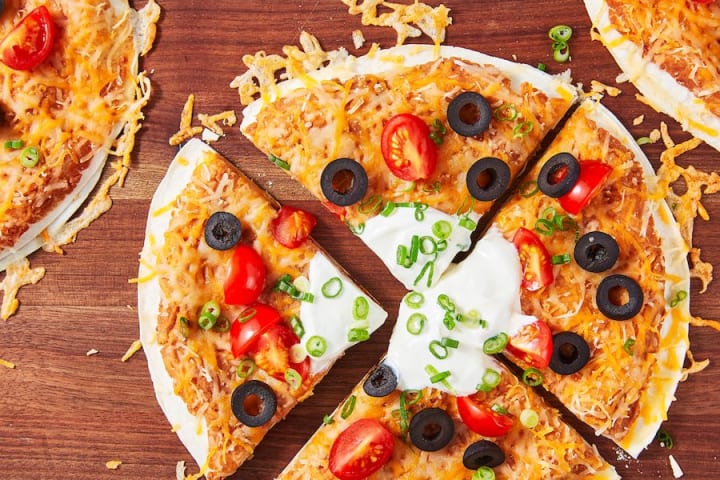
Mexican pizza topped with carne asada, guacamole, and sour cream.
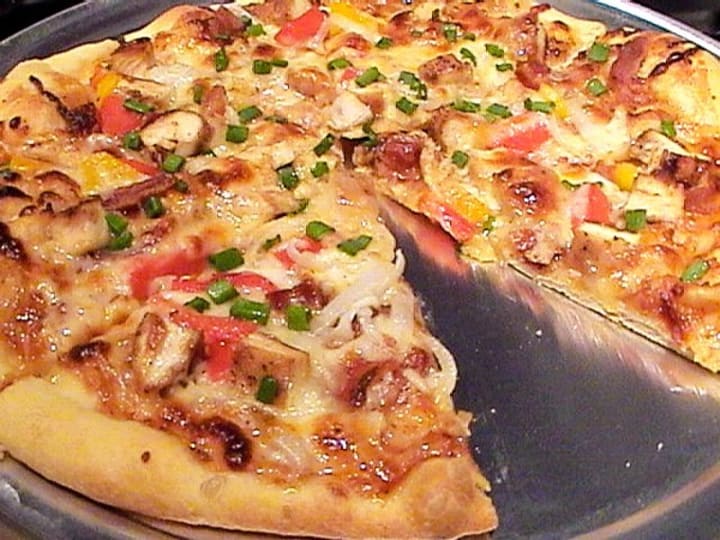
Caribbean pizza topped with Jamaican jerk chicken; or chicken pizza with a white creamy garlic sauce.
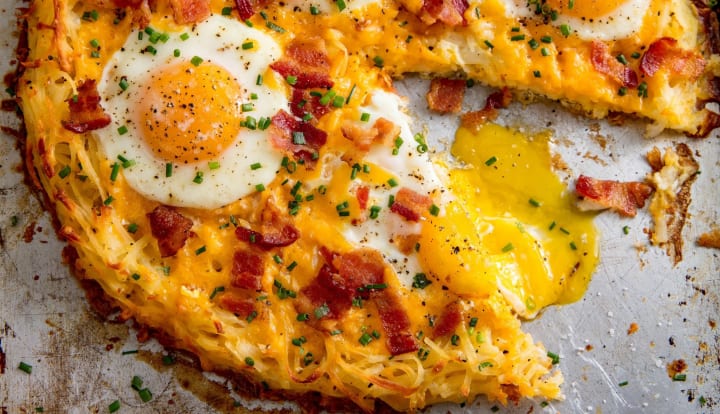
A breakfast pizza is in the same genre, with toppings such as scrambled eggs. California pizzas are generally smaller than the standard eight-slice Neapolitan; most are single-serving dishes.
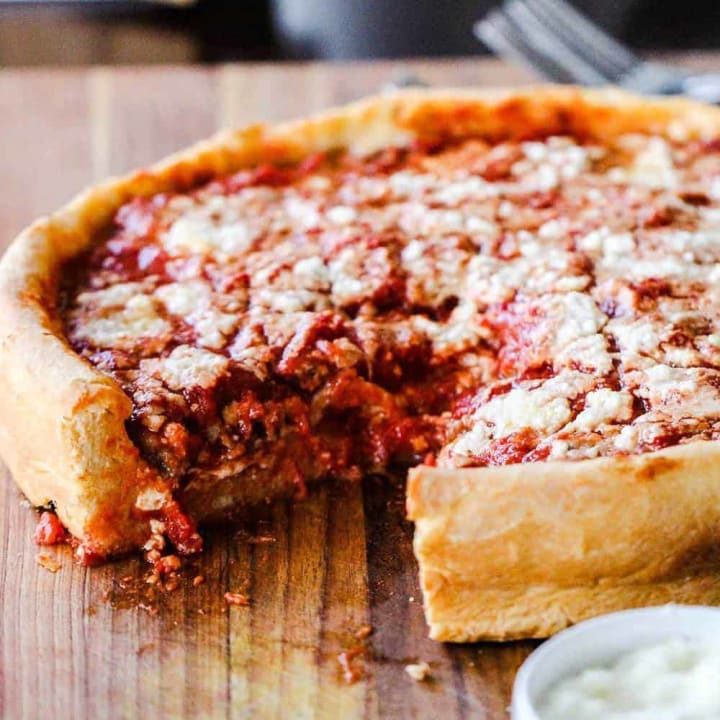
Chicago-style pizza is a deep-dish pizza created in Chicago. Another Chicago style pizza is “stuffed pizza”. True Chicago style pizza has a buttery crust, lots of cheese and chunky tomato sauce. This type of pizza was invented at Pizzeria Uno in Chicago in 1943. The pizza begins with a simple, thick layer of dough (made with olive oil and cornmeal) then laid into a deep round pan, the sides are pulled up and it is pre-baked before toppings are added.
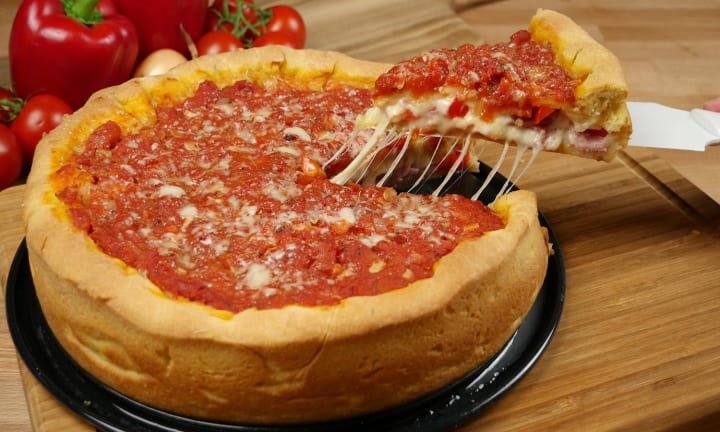
Afterwards, the crust is covered with cheese (generally sliced mozzarella), meats, usually in a solid layer just above the crust, Italian sausage (a Chicago staple) as well as vegetables such as onions, mushrooms and bell peppers. A sauce, uncooked, of crushed or pureed tomatoes is added. Then it is finished with a grated cheese blend. On the usual pizza about a pound of cheese is used.
Deep-dish pizza is eaten with a knife and fork. There are other restaurants in Chicago which also make deep-dish pizza. Chicago deep-dish pizza is famous throughout the world and many Chicago deep-dish restaurants will ship their pizzas, partially baked within the continental U.S.
Two Chicago chains, Nancy’s Pizza, founded by Rocco Palese and Giordano’s Pizza began experimenting with deep-dish pizza in the mid-1970s and came up with stuffed pizza. Stuffed pizzas are often taller than deep-dish pizzas and have a higher topping density than any other type of pizza. For a stuffed pizza dough is pressed into a high-sided pan and toppings and cheese are added then an additional layer of dough is put on top and the sides are pressed to the bottom crust. Pizza makers often tear a small hole in the top to allow air and steam to escape while cooking and to allow the sauce to permeate the pie as pizza sauce is ladled over the top crust and then baked.
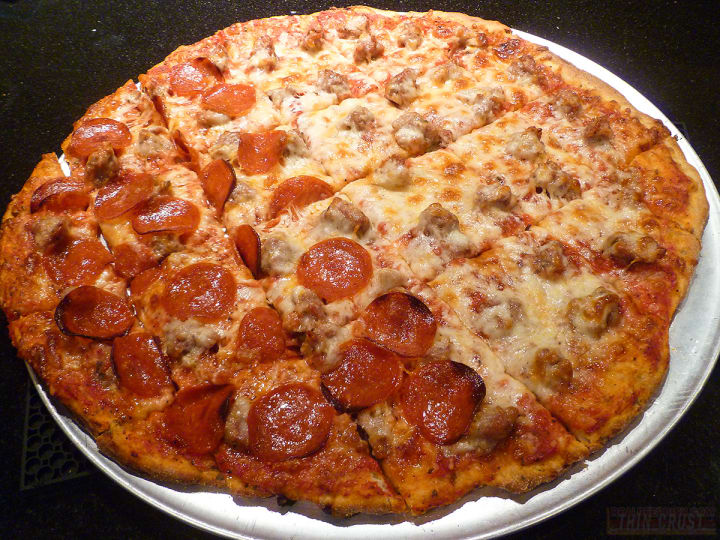
Chicago also offers a thin-crust pizza which is sometimes referred to as “flat” pizza. The crust is thin and has a notable crunch yet thick enough to be soft and doughy on the top. The crust is topped with a liberal quantity of Italian style tomato sauce, which is usually quite herbal or highly spiced. Then a layer of toppings is added and finally a layer of mozzarella cheese. This type of pizza is cut into squares instead of wedges.
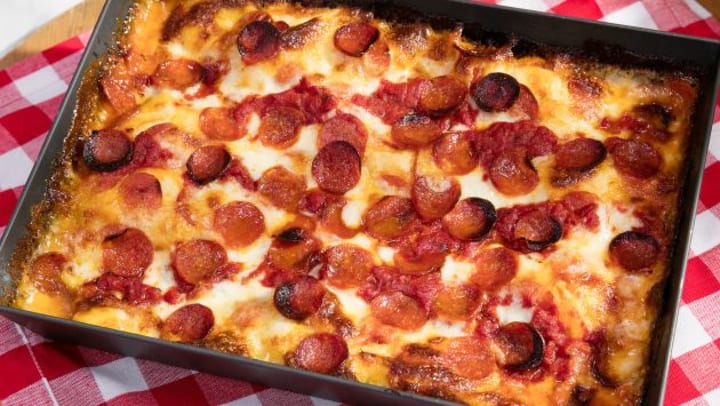
Detroit-style pizza was developed in Detroit, Michigan. It is a square pizza similar to Sicilian style pizza that has a thick deep-dish crust and cooked toppings such as pepperoni and olives. It is served with the marinara pizza sauce on the top of the pizza. It is known within Detroit as Square pizza. The crust is noteworthy because in addition to occasionally being twice-baked it is usually baked to a chewy medium well-done state and many parlors will apply melted butter with a soft brush prior to baking. Some places have flavored crusts. Popular crust flavors include sesame, butter, garlic and onion.
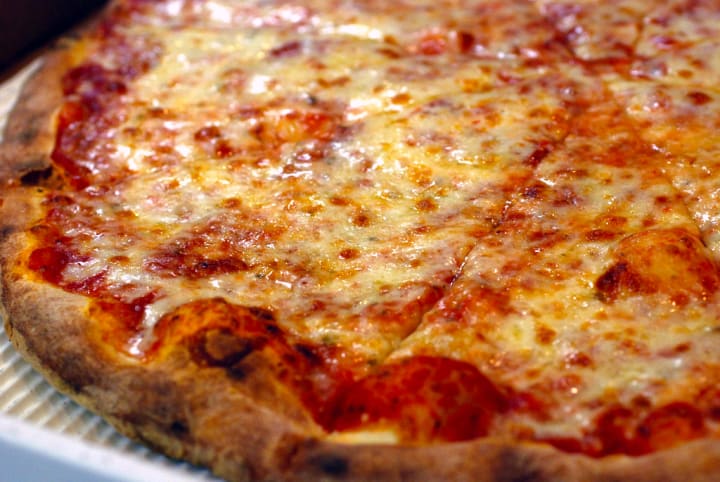
New York-style pizza was born in New York City in the early 1900s. It’s wide, thin and foldable. The usual toppings are tomato sauce and mozzarella cheese with any additional toppings placed on the cheese. Traditionally it is hand-tossed and isn’t heavy on the sauce. One of the differences between New York-style and other pizzas is its thin hand-tossed crust is made from high-gluten bread flour. The flavor of the crust has sometimes been attributed to the minerals present in New York City water which is used to make the dough.
A large pie is typically cut into 8 slices. It is usually sold by the slice and as whole pies. New York pizzerias generally have condiments that can be added to the pizza after serving. They include oregano, grated Parmesan cheese, dried red chilli pepper flakes and garlic powder. Also served are square-shaped slices with a much thicker dough called Sicilian slices.
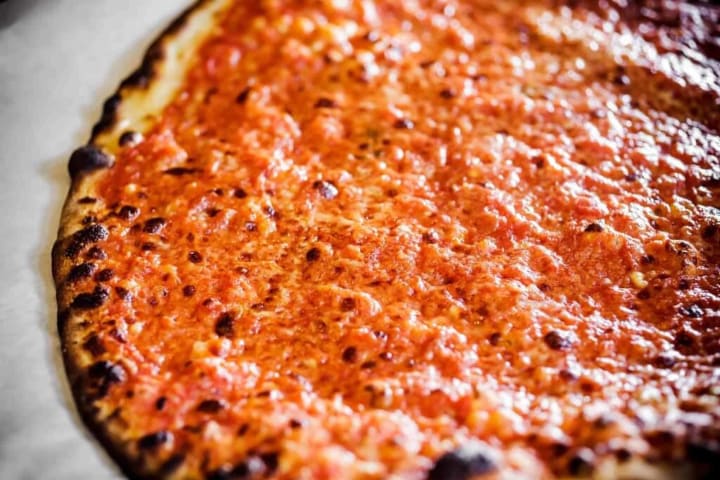
New Haven-style pizza is a kind of Neapolitan pizza common in and around New Haven, Connecticut. It originated at the Frank Pepe Pizzeria Napoletana and is known in many other pizza restaurants in the area. This pizza has a plain pizza crust, oregano and tomato sauce with a little bit of grated pecorino cheese sprinkled on.
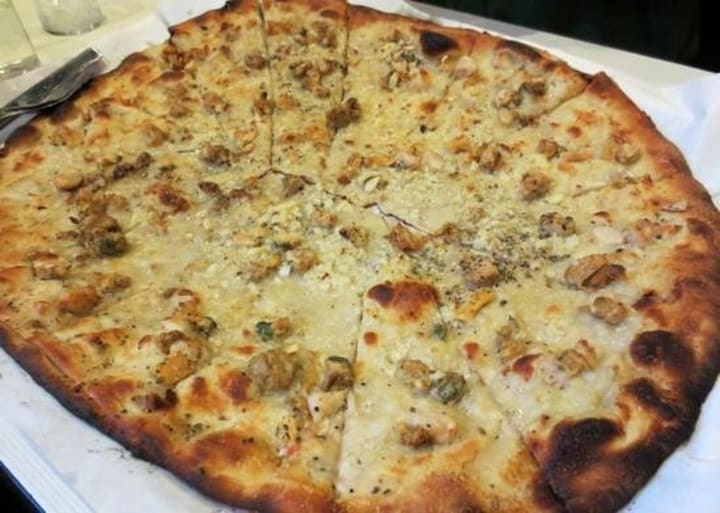
Mozzarella (called “mootz” in the New Haven Italian dialect) is considered to be a topping. When Frank Pepe began making his pies on Wooster Street in the early 1920s the only varieties were plain or marinara (tomato sauce, grated cheese and anchovies). Later on, Pepe invented the white clam pie with crust, olive oil, oregano, grated cheese, chopped garlic and fresh littleneck clams. New Haven-style pizza is sold whole rather than by the slice.
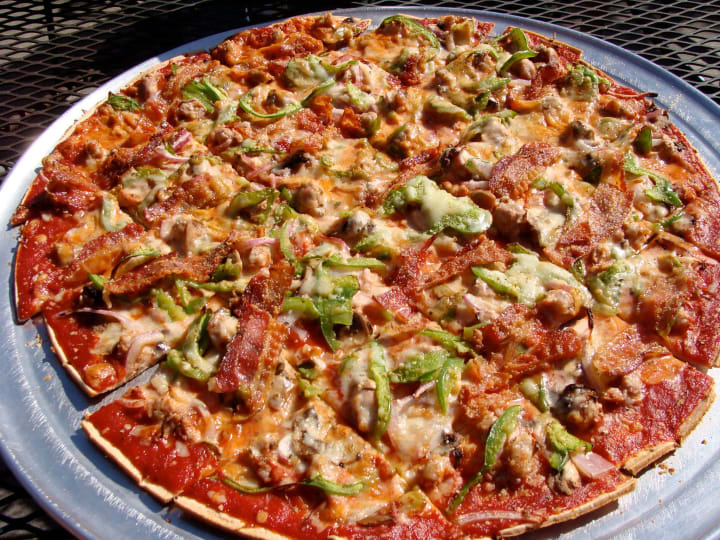
St. Louis-style pizza is a style of pizza popular in St. Louis, Missouri and surrounding areas. This pizza has a super-thin yeast-less crust and uses Provel processed cheese. The pizza is cut into squares or rectangles. Provel is a trademark for three kinds of cheese fused to form one (provolone, Swiss and white Cheddar). It is not widely available outside the St. Louis area. The crust of the St. Louis-style pizza is somewhat crisp and cannot be folded easily. The pizza is often salty and seasoned with more oregano than other pizza types.
It can be layered deeply with many different toppings. Some of the sauces used have a sweetness to them which is likely the influence of the Sicilian immigrants who came to the city in the first half of the 2oth century. Sometimes the pizza sauce is kept simmering to develop the sweet and savory tomato flavors. The Provel cheese gives the pizza a sharp, tangy flavor.
About the Creator
Rasma Raisters
My passions are writing and creating poetry. I write for several sites online and have four themed blogs on Wordpress. Please follow me on Twitter.
Keep reading
More stories from Rasma Raisters and writers in Feast and other communities.
American Pasta Dishes
New York Chicken Riggies is an Italian-American pasta dish that comes from the Utica area in New York State. The dish is a delectable combination of rigatoni pasta, hot or sweet peppers, chicken, and a spicy, flavorable cream and tomato sauce. If you are travelling here you'll find almost every restaurant in Utica serves this dish.
By Rasma Raisters5 years ago in Feast
My Tous les Jours Trip
As someone who lives in a rural area, I don't get the chance to visit fancy restaurants or bakeries that often. So, when a friend told me about a French-Asian bakery that's less than an hour away, I knew I had to check it out and grab some pictures for social media. Tous les Jours ended up providing an immersive experience that went above and beyond my expectations--although I did leave with a few reservations.
By Kaitlin Shanks20 days ago in Feast
Vegan Food Market Trends & Summary (2025–2033)
Introduction The global shift toward healthier, more ethical, and environmentally responsible consumption has transformed vegan food from a niche lifestyle choice into a fast-growing mainstream market. According to Renub Research, the Vegan Food Market was valued at USD 20.06 billion in 2024 and is projected to reach USD 46.09 billion by 2033, expanding at a robust CAGR of 9.68% during 2025–2033. This impressive trajectory reflects not only changing consumer values but also rapid innovation across food technology, retail, and distribution.
By jaiklin Fanandisha day ago in Feast




Comments
There are no comments for this story
Be the first to respond and start the conversation.