
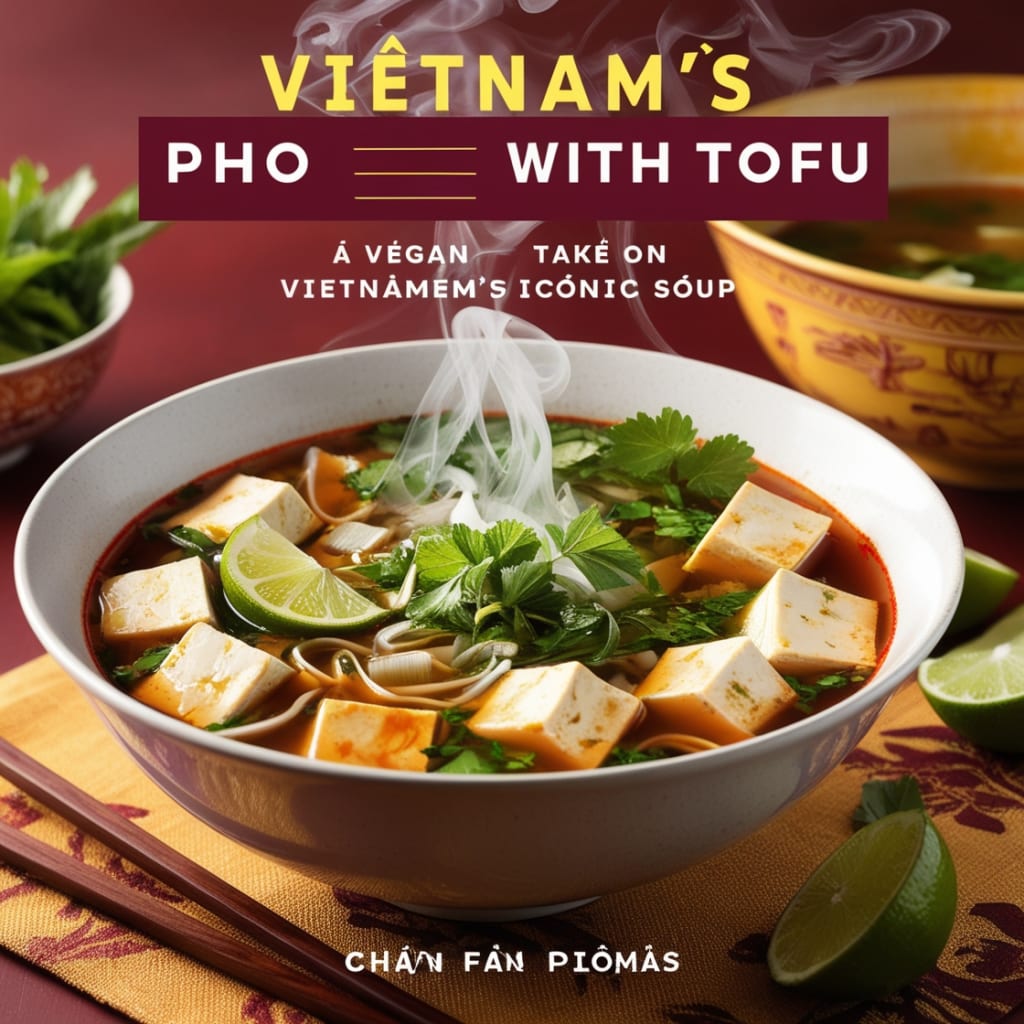
Vietnam’s Pho with Tofu - A Vegan Take on Vietnam’s Iconic Soup.
Discover the rich history, irresistible flavors, and health benefits of a plant-based version of Vietnam’s beloved Pho, featuring tofu as a delicious and nutritious alternative to traditional meats.

Vietnam’s Pho with Tofu - A Vegan Take on Vietnam’s Iconic Soup.
Discover the rich history, irresistible flavors, and health benefits of a plant-based version of Vietnam’s beloved Pho, featuring tofu as a delicious and nutritious alternative to traditional meats.
Introduction: The Global Rise of Pho and the Shift Toward Veganism
Vietnamese cuisine is synonymous with fresh herbs, bold flavors, and aromatic broths, and few dishes exemplify this more than Pho. Pronounced "fuh," this noodle soup has captured the hearts and taste buds of people worldwide, transcending its origins as a humble street food to become a globally adored comfort dish. Traditionally made with beef or chicken, Pho combines a rich, slow-cooked broth with rice noodles, aromatic herbs, and a variety of meats.
As more people embrace plant-based diets for ethical, environmental, and health reasons, classic meat-based dishes like Pho are being reimagined to meet the demands of a vegan or vegetarian lifestyle. Pho with Tofu is one such adaptation that retains the integrity and depth of traditional Pho while eliminating animal products. The result is a dish that is both satisfying and nourishing, perfect for anyone looking to enjoy the vibrant flavors of Vietnamese cuisine without meat.
In this article, we’ll explore the history of Pho, break down the components of a delicious Pho with Tofu, and guide you through a step-by-step recipe. Whether you’re vegan, vegetarian, or simply looking to try something new, Vegan Pho with Tofu offers a delightful and healthy take on this classic Vietnamese dish.
1. The History of Pho: A Dish Born from War and Innovation
Pho’s origins are tied closely to Vietnam’s complex history, particularly its periods of colonialism and war. While the exact timeline of Pho’s creation is debated, it is generally believed that the dish emerged in Northern Vietnam in the early 20th century, during French colonial rule.
The French introduced beef, a meat that was not traditionally consumed in large quantities by the Vietnamese. Local cooks, ever-resourceful, found ways to incorporate beef into their cuisine, and thus Pho was born. The broth, flavored with star anise, cinnamon, and other spices, was reminiscent of French pot-au-feu (beef stew), while the use of rice noodles, fresh herbs, and fish sauce was distinctly Vietnamese.
As Pho grew in popularity, regional variations emerged. Northern Pho, known as Pho Bac, is simpler and more focused on the broth, while Pho Nam in the south tends to be sweeter and more heavily garnished. Following the Vietnam War, Pho spread to other parts of the world, especially through Vietnamese refugee communities, and it soon became a beloved dish globally.
Today, Pho is enjoyed in countless forms, and plant-based versions like Pho with Tofu have emerged as popular alternatives for those seeking a healthier or more ethical option.
2. Why Tofu is the Perfect Vegan Protein for Pho
In traditional Pho, the broth is typically infused with beef or chicken, and the dish is often served with slices of rare meat or poached chicken. In a vegan version, however, tofu takes the spotlight as the primary protein.
Tofu is made from soybeans and is an excellent source of plant-based protein. It has a firm, yet tender texture that works well in soups, as it absorbs the flavors of the broth while adding a satisfying bite. Not only is tofu an excellent meat substitute in Pho, but it also offers a range of health benefits:
- High in Protein: Tofu is a complete protein, meaning it contains all nine essential amino acids. This makes it a fantastic choice for those following a plant-based diet.
- Low in Calories and Fat: Compared to meat, tofu is lower in calories and fat, making it a healthier option without sacrificing satiety.
- Rich in Nutrients: Tofu provides essential minerals like calcium, magnesium, and iron, which are important for bone health and energy production.
- Environmentally Friendly: Opting for tofu instead of animal protein significantly reduces the environmental impact of your meal, as tofu production requires fewer resources than livestock farming.
For Pho with Tofu, you can use different varieties of tofu depending on your preference. Firm tofu works well for pan-frying, adding a crispy exterior, while silken tofu can be used for a softer texture that melts into the broth.
3. Key Components of a Perfect Pho with Tofu
Making a delicious Pho with Tofu requires understanding the dish’s essential elements. These components work together to create the complex, layered flavors that make Pho so irresistible:
a. The Broth
The broth is the heart of any Pho dish. In traditional versions, beef or chicken bones are simmered for hours to extract their deep flavors. For a vegan version, we rely on vegetables, mushrooms, and spices to create a broth that’s just as rich and flavorful.
- Vegetables: Onions, garlic, and ginger are roasted to bring out their natural sweetness and provide a robust base for the broth.
- Spices: Star anise, cinnamon sticks, cloves, and cardamom are essential for creating Pho’s signature flavor profile. These spices are toasted to release their oils, infusing the broth with warmth and complexity.
- Mushrooms: Shiitake or cremini mushrooms can add an umami depth to the broth, mimicking the richness of meat-based broths.
- Soy Sauce or Tamari: A splash of soy sauce adds umami and saltiness, balancing the sweetness of the roasted vegetables and spices.
- Vegan Fish Sauce: If you want to mimic the traditional fish sauce used in Pho, vegan fish sauce (made from seaweed or mushrooms) can be added for a savory, salty kick.
b. The Noodles
Pho is traditionally served with banh pho, flat rice noodles that are soft and slightly chewy. These noodles absorb the flavors of the broth and provide a hearty base for the dish. For a gluten-free version, rice noodles are ideal, and they also stay true to the traditional recipe.
c. The Tofu
Tofu serves as the primary protein in this vegan Pho. It can be prepared in several ways:
- Pan-fried Tofu: Marinating and pan-frying tofu gives it a crispy exterior that adds texture and flavor to the soup.
- Soft Tofu: If you prefer a more delicate texture, you can use soft tofu, which will absorb the flavors of the broth and provide a silky contrast to the chewy noodles.
d. Fresh Herbs and Garnishes
Pho is known for its use of fresh herbs and garnishes, which are added just before serving to brighten and enhance the flavors of the broth. These include:
- Thai Basil: Adds a sweet, slightly spicy flavor.
- Cilantro: Provides freshness and a citrusy note.
- Mint: A cooling contrast to the warm broth.
- Bean Sprouts: Add crunch and texture.
- Lime Wedges: A squeeze of lime juice adds acidity, balancing the rich broth.
- Sliced Chilies: For those who like heat, fresh chilies add a spicy kick.
4. Step-by-Step Recipe for Pho with Tofu
Now that we’ve covered the essential elements, let’s dive into the recipe for Pho with Tofu. This version is easy to make at home and offers all the flavor and satisfaction of traditional Pho, minus the meat.
Ingredients:
- 1 block (14 oz) firm tofu, pressed and cubed
- 1 medium onion, halved
- 1 large piece of ginger (about 2 inches), sliced
- 4-5 shiitake mushrooms (dried or fresh)
- 1 large carrot, chopped
- 1 stick of cinnamon
- 4 star anise
- 3 cloves
- 1 tablespoon coriander seeds
- 4 cups vegetable broth
- 2 tablespoons soy sauce or tamari
- 1 tablespoon vegan fish sauce (optional)
- 8 oz banh pho (rice noodles)
- Fresh herbs: Thai basil, cilantro, mint
- Garnishes: bean sprouts, lime wedges, sliced chilies
- Oil for frying
Instructions:
1. Prepare the Broth:
- Start by charring the onion and ginger: Place them on a baking sheet and broil for 5-7 minutes until they are slightly blackened. This step adds a smoky depth to the broth.
- In a large pot, toast the cinnamon stick, star anise, cloves, and coriander seeds over medium heat for about 2 minutes until fragrant.
- Add the charred onion, ginger, shiitake mushrooms, carrot, and vegetable broth to the pot. Bring to a boil, then reduce the heat and simmer for 30-40 minutes to let the flavors meld.
- Strain the broth to remove the vegetables and spices, leaving a clear, flavorful liquid.
- Stir in the soy sauce and vegan fish sauce (if using). Taste and adjust seasoning if needed.
2. Cook the Tofu:
- While the broth simmers, cut the tofu into cubes and press out excess moisture. Marinate the tofu with a little soy sauce for added flavor.
- Heat oil in a non-stick skillet over medium heat and pan-fry the tofu until it is golden and
crispy on all sides. Set aside.
3. Cook the Noodles:
- Cook the banh pho according to package instructions. Drain and rinse with cold water to prevent sticking.
4. Assemble the Pho:
- Divide the noodles among serving bowls. Top each bowl with a few cubes of crispy tofu.
- Ladle the hot broth over the noodles and tofu.
- Serve with a generous handful of fresh herbs (basil, cilantro, mint), bean sprouts, lime wedges, and sliced chilies on the side, so each person can garnish their Pho as they like.
5. Health Benefits of Pho with Tofu
Vegan Pho with Tofu isn’t just delicious—it’s also a nutritious and wholesome meal that offers numerous health benefits. Here’s why it stands out as a healthy option:
a. Rich in Plant-Based Protein
Tofu is a powerhouse of plant-based protein, making this dish a great choice for vegans and vegetarians who want to ensure they’re meeting their protein needs. One block of tofu contains about 10 grams of protein, which helps keep you full and supports muscle repair and growth.
b. High in Fiber and Antioxidants
Thanks to the abundance of vegetables, fresh herbs, and spices, Pho with Tofu is packed with dietary fiber and antioxidants. Fiber supports digestive health, while antioxidants help combat inflammation and oxidative stress.
c. Low in Saturated Fat
Traditional Pho, especially the beef version, can be high in saturated fat. The vegan version, however, is naturally low in saturated fats, making it a heart-healthy option.
d. Hydrating and Nourishing
Pho’s broth, especially when made with nutrient-rich vegetables and mushrooms, is hydrating and packed with vitamins and minerals. The broth provides essential nutrients like potassium, magnesium, and vitamin C, all of which support overall health.
e. Supports Weight Management
The combination of protein from tofu, fiber from vegetables, and the light, broth-based nature of Pho makes this dish satisfying and filling without being heavy or calorie-dense. It’s an ideal option for those looking to maintain a healthy weight.
6. Tips for Customizing Your Pho with Tofu
Pho is a versatile dish, and there are many ways to tailor it to your personal taste or dietary needs. Here are some tips for customizing your Pho with Tofu:
- Gluten-Free Version: Make sure to use gluten-free tamari instead of soy sauce, and check that your rice noodles are certified gluten-free.
- Spice Level: If you prefer a spicier Pho, add more sliced chilies to your broth, or serve it with a side of sriracha or chili paste.
- Different Tofu Preparations: Instead of pan-frying, you can try baking or grilling your tofu for a different texture.
- Broth Variations: Feel free to experiment with different vegetables in your broth, such as bok choy, daikon radish, or zucchini, to add more variety and nutrition.
7. Conclusion: A Delicious and Nutritious Twist on Vietnamese Comfort Food
Pho with Tofu is a beautiful example of how traditional dishes can be adapted to suit modern tastes and dietary preferences without losing their essence. By swapping meat for tofu and using a vegetable-based broth, this vegan version of Pho retains all the warmth, complexity, and soul of the original while offering a lighter, more sustainable alternative.
Whether you’re a long-time vegan, exploring plant-based meals, or simply looking to try something new, Pho with Tofu is a delicious and nourishing dish that’s sure to become a staple in your recipe rotation. From the aromatic broth to the fresh herbs and crispy tofu, every bite offers a taste of Vietnam’s rich culinary heritage—reimagined for today’s plant-based eaters.
About the Creator
Md Obydur Rahman
Md Obydur Rahman is a passionate Story and Content Writer, known for crafting engaging narratives that resonate with readers. He skillfully weaves emotion and realism, bringing characters and stories to life.
Keep reading
More stories from Md Obydur Rahman and writers in Feast and other communities.
Japanese Vegan Sushi - A Flavourful Dive into Japan's Plant-Based Culinary Tradition
Japanese Vegan Sushi - A Flavourful Dive into Japan's Plant-Based Culinary Tradition Discover the Art of Vegan Sushi – A Delicious and Sustainable Twist on Japan’s Iconic Dish
By Md Obydur Rahmanabout a year ago in Feast
My Tous les Jours Trip
As someone who lives in a rural area, I don't get the chance to visit fancy restaurants or bakeries that often. So, when a friend told me about a French-Asian bakery that's less than an hour away, I knew I had to check it out and grab some pictures for social media. Tous les Jours ended up providing an immersive experience that went above and beyond my expectations--although I did leave with a few reservations.
By Kaitlin Shanks24 days ago in Feast
Miss Persephone's Manual to a Seemingly Ordinary Life
Miss Persephone was found at the dining table, her blue eyes swollen, her tears arriving and retreating like the tides of the ocean. Earlier that day, her family had visited her in the retirement home where she had lived for eight years. It was her eightieth birthday.
By Imola Tóth5 days ago in Fiction


Comments
There are no comments for this story
Be the first to respond and start the conversation.