
United States Fast Food & Quick Service Restaurant Market Size and Forecast 2025
How Digital Dining, Convenience Culture, and Menu Innovation Are Reshaping America’s QSR Industry


United States Fast Food & Quick Service Restaurant Market Overview
The United States Fast Food & Quick Service Restaurant (QSR) Market continues to be one of the most dynamic and resilient segments of the nation’s foodservice industry. According to Renub Research, the market was valued at US$ 248.8 billion in 2024 and is expected to grow steadily at a CAGR of 3.74% from 2025 to 2033, reaching an estimated US$ 345.6 billion by 2033.
Fast food and QSR establishments are defined by their ability to serve meals quickly, efficiently, and at affordable prices, often with minimal table service. From burgers and fries to pizza, sandwiches, and Mexican-inspired offerings, QSRs have become deeply embedded in American food culture. Drive-thru services, mobile ordering, self-service kiosks, and third-party delivery platforms have transformed how consumers interact with these brands.
In an era marked by time-pressed lifestyles, urban expansion, and rising dual-income households, QSRs have evolved beyond simple convenience. Today, they represent a sophisticated blend of technology, menu innovation, affordability, and customer personalization, making them a daily dining choice for millions of Americans.
Key Growth Drivers in the United States Fast Food & QSR Market
Growing Demand for Convenience and On-the-Go Dining
One of the strongest drivers of growth in the U.S. fast food and QSR market is the increasing demand for convenience. Busy work schedules, longer commuting hours, and changing family structures have significantly reduced the time available for home cooking. Fast food restaurants provide a practical solution by offering quick, reliable, and affordable meals.
The widespread adoption of drive-thru services, mobile apps, and third-party delivery platforms such as DoorDash, Uber Eats, and Grubhub has further enhanced accessibility. Contactless payments, digital menus, and real-time order tracking have improved customer satisfaction while streamlining operations for restaurants.
In 2024, Perkins American Food Co. introduced “Perkins Griddle Go,” a fast-casual, grab-and-go concept designed specifically for on-the-move consumers, underscoring how brands are rethinking traditional formats to meet evolving lifestyles.
Expansion of Healthier and Better-for-You Menu Options
As American consumers become more health-conscious, QSRs are adapting by expanding healthier menu options. While traditional fast food was once criticized for being calorie-dense and nutritionally poor, today’s menus increasingly feature grilled items, salads, low-calorie meals, plant-based proteins, and customizable portions.
Major chains such as McDonald’s, Burger King, Subway, and Chipotle have responded by introducing meat alternatives, whole-grain options, and transparent nutritional labeling. This shift has helped QSRs appeal to health-focused consumers, flexitarians, and younger demographics seeking balance rather than indulgence alone.
In June 2024, the U.S. Department of Agriculture announced new funding under the Healthy Food Financing Initiative (HFFI), aimed at improving access to nutritious food in underserved areas. Programs such as the Food Access and Retail Expansion Fund (FARE Fund) are expected to further encourage healthier offerings across foodservice channels, including QSRs.
Technological Innovation and Digital Transformation
Technology has become a cornerstone of growth in the U.S. fast food and QSR industry. Mobile apps, self-service kiosks, AI-powered order recommendations, and loyalty programs have reshaped customer engagement. Brands such as Starbucks and Chick-fil-A have successfully leveraged digital ecosystems to increase repeat visits and average order value.
Behind the scenes, AI-driven inventory management, automated kitchens, and data analytics are improving efficiency, reducing food waste, and optimizing staffing. The rise of ghost kitchens and virtual restaurant brands has also enabled operators to expand reach without significant real estate investment.
In February 2024, My Place Hotels of America partnered with Grubhub, allowing guests to order food seamlessly via QR codes. Such collaborations highlight how digital integration is expanding beyond traditional restaurant walls into hospitality and retail ecosystems.
Challenges Facing the U.S. Fast Food & QSR Market
Rising Food and Labor Costs
Despite strong demand, the industry faces mounting pressure from higher food, labor, and operational costs. Inflation, supply chain disruptions, and increased minimum wage requirements have driven up expenses across the sector. Many QSRs have responded by raising menu prices, which can impact price-sensitive consumers.
Labor shortages remain a persistent challenge in a high-turnover industry. To attract and retain staff, operators must offer competitive wages, benefits, and flexible schedules, further increasing operating costs. Additionally, investments in sustainable packaging and compliance with environmental regulations add to financial strain.
Intense Competition and Market Saturation
The U.S. QSR market is highly competitive and increasingly saturated. Established giants such as McDonald’s, Wendy’s, and KFC face growing competition from fast-casual brands like Shake Shack, Chipotle, and Five Guys, which emphasize premium ingredients and customizable dining experiences.
Independent operators and international chains entering the U.S. market further intensify competition. To remain relevant, QSRs must continuously innovate in menu development, pricing strategies, branding, and customer experience, while maintaining operational efficiency.
Market Segmentation Insights
Hamburgers Segment
Hamburgers remain the backbone of the U.S. fast food market, led by iconic brands such as McDonald’s, Burger King, and Wendy’s. At the same time, premium burger chains like Five Guys and Shake Shack have gained traction by offering higher-quality ingredients and customization.
The introduction of plant-based patties such as Impossible Burger and Beyond Meat has expanded the segment’s appeal among vegetarians and health-aware consumers. Despite increasing competition, hamburgers continue to be a cultural and commercial staple in American fast food.
Pizza Segment
The pizza segment remains robust, dominated by Domino’s, Pizza Hut, and Papa John’s. Speedy delivery, carryout options, and strong digital platforms have helped pizza chains maintain relevance. Customization trends, including gluten-free and cauliflower crusts, have further supported growth.
Additionally, take-and-bake and frozen pizza formats have enabled QSR brands to extend their presence into at-home dining occasions.
Mexican Fast Food Segment
Mexican fast food is one of the fastest-growing segments in the U.S. QSR market. Brands such as Taco Bell, Chipotle, and Qdoba benefit from strong demand for bold flavors, fresh ingredients, and customizable meals.
The popularity of protein-rich and plant-based options, combined with increasing Hispanic cultural influence, continues to fuel expansion across urban and suburban markets.
Regional Market Analysis
East United States
The Eastern U.S., home to major metropolitan areas like New York, Boston, and Washington, D.C., represents a high-density QSR market. Digital ordering, food delivery, and demand for healthier menu options are particularly strong in this region.
West United States
The West Coast, especially California, is known for innovation in fast food. Health-focused, organic, and plant-based QSR concepts thrive here, alongside rapid adoption of mobile payments and automation technologies.
North United States
In the Northern U.S., colder climates and multicultural demographics influence menu preferences. Comfort foods, coffee-based QSRs, and delivery-focused models perform well, supported by strong urban demand.
South United States
The Southern U.S. has a rich fast food heritage centered around fried chicken, barbecue, and comfort foods. Chains like Chick-fil-A, Popeyes, and Bojangles dominate, while population growth in states like Texas and Florida continues to attract new investments.
Key Market Segments
By Product:
Hamburgers
Sandwich
Pizza
Mexican
Others
By States:
California, Texas, New York, Florida, Illinois, Pennsylvania, Ohio, Georgia, New Jersey, Washington, North Carolina, Massachusetts, Virginia, Michigan, Maryland, Colorado, Tennessee, Indiana, Arizona, Minnesota, Wisconsin, Missouri, Connecticut, South Carolina, Oregon, Louisiana, Alabama, Kentucky, Rest of the United States.
Competitive Landscape and Company Analysis
Leading players in the U.S. Fast Food & QSR market include:
McDonald’s
Pizza Hut, LLC
KFC Corporation
Domino’s Pizza, Inc.
Taco Bell IP Holder, LLC
Chick-fil-A, Inc.
Starbucks
Chipotle Mexican Grill
Each company is evaluated across overview, key leadership, recent developments, and revenue performance, highlighting their strategic positioning in a highly competitive environment.
Final Thoughts
The United States Fast Food & Quick Service Restaurant Market is entering a new phase of evolution driven by digital transformation, changing consumer expectations, and continued demand for convenience. While rising costs and competition present challenges, brands that invest in technology, healthier offerings, and customer-centric experiences are well-positioned for long-term success.
With the market projected to reach US$ 345.6 billion by 2033, the U.S. QSR industry remains a powerful force within the broader foodservice landscape—one that continues to adapt, innovate, and thrive in an ever-changing dining culture.
About the Creator
jaiklin Fanandish
Jaiklin Fanandish, a passionate storyteller with 10 years of experience, crafts engaging narratives that blend creativity, emotion, and imagination to inspire and connect with readers worldwide.
Keep reading
More stories from jaiklin Fanandish and writers in Feast and other communities.
Europe Protein Market Trends & Summary: A New Era of Sustainable, Functional, and Diverse Protein Sources
The Europe Protein Market is entering a transformative decade—one defined by fast-evolving consumer expectations, major advances in food technology, and a rising consciousness around sustainability. According to Renub Research, the market is expected to grow from US$ 5.68 billion in 2024 to US$ 9.26 billion by 2033, expanding at a CAGR of 5.60% between 2025 and 2033.
By jaiklin Fanandishabout a month ago in Feast
My Tous les Jours Trip
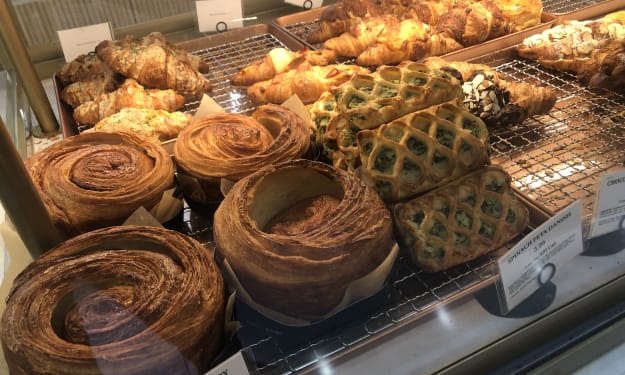
As someone who lives in a rural area, I don't get the chance to visit fancy restaurants or bakeries that often. So, when a friend told me about a French-Asian bakery that's less than an hour away, I knew I had to check it out and grab some pictures for social media. Tous les Jours ended up providing an immersive experience that went above and beyond my expectations--although I did leave with a few reservations.
By Kaitlin Shanks24 days ago in Feast
Mexico Palm Oil Market Size & Forecast 2025–2033
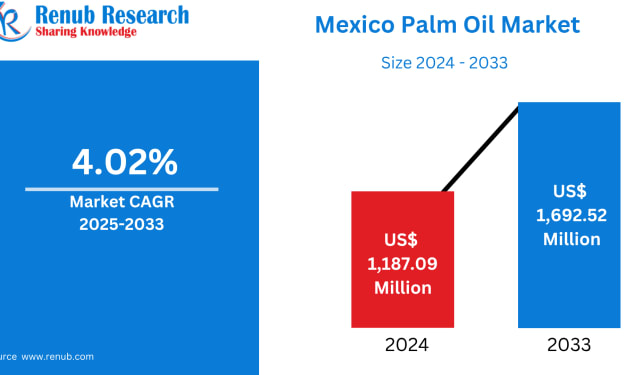
Mexico Palm Oil Market Outlook The Mexico Palm Oil Market is entering a phase of steady expansion, supported by rising consumption across food processing, personal care, animal feed, and renewable energy sectors. According to Renub Research, the market is anticipated to reach US$ 1,692.52 million by 2033, expanding from US$ 1,187.09 million in 2024, at a CAGR of 4.02% during 2025–2033.
By Aaina Oberoiabout 15 hours ago in Feast
Center Stage with Paul Stewart
*** I'm keen to republish the interviews I did for my series with Vocal creators. It's been a few years and I thought it might be nice to revisit these wonderful conversations. I'll be releasing them one at a time for a few weeks/months.
By Heather Hubler4 days ago in Interview


Comments
There are no comments for this story
Be the first to respond and start the conversation.