
Turkey is making fake honey on an alarming scale.
Fake Honey

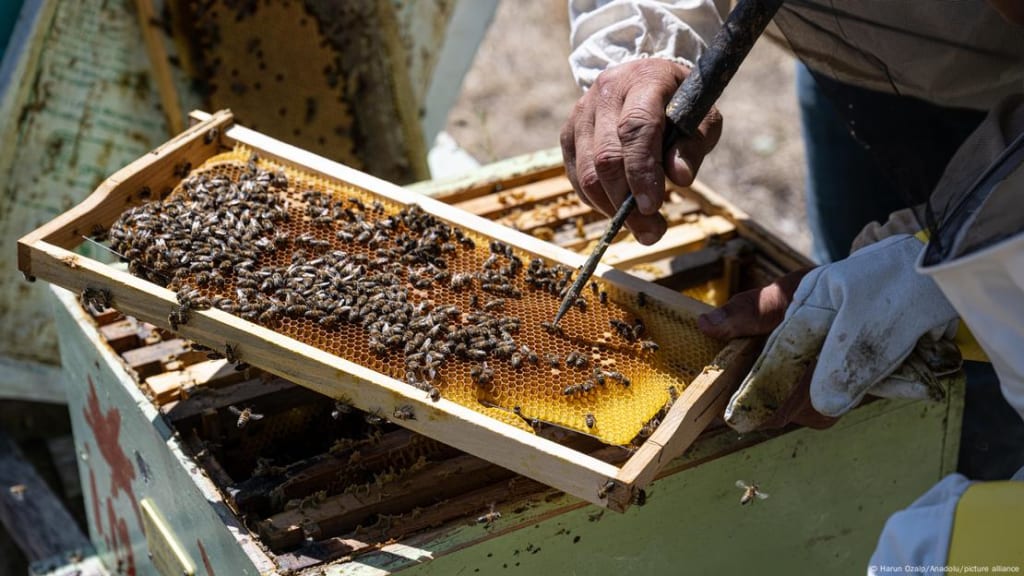
Turkey is making fake honey on an alarming scale.
Turkey one of the world's largest honey producers is facing a crisis as counterfeit honey floods the market. With an annual production of around 115,000 tons Turkey ranks second globally after China in honey production. The country's honey industry is valued at approximately €270 million $283.4 million with Germany and the United States being the largest importers. However the rise of adulterated honey containing sugar syrups artificial sweeteners and other additives has cast a shadow over the sector. This fraudulent practice not only threatens the integrity of Turkish honey but also poses risks to international markets where counterfeit honey could be unknowingly sold to consumers. The production of fake honey has been an ongoing issue but recent reports indicate that the problem has escalated. Turkish authorities have confiscated tons of adulterated honey with a total estimated value of around €25 million. In September 2024 police raided a facility in Ankara uncovering 8,150 tons of glucose fructose and sugar used in honey adulteration. Additionally they found 100,000 labels for different brands suggesting a large scale operation to distribute counterfeit products under legitimate brand names. The Turkish Ministry of Agriculture has identified 43 honey producers involved in adulteration and two of these manufacturers supply their products to major supermarket chains.

Counterfeit honey is often created by mixing real honey with cheap sugar syrups derived from corn rice or beets. In some cases artificial flavors colors and preservatives are added to mimic the taste and appearance of natural honey. This practice not only deceives consumers but also undercuts genuine beekeepers who rely on fair market prices for their products. Real honey particularly high quality varieties such as pine honey and floral honey from Anatolia can cost up to €8 per kilogram, while counterfeit versions sell for as little as €1.60. Given Turkey’s ongoing economic struggles and high inflation many consumers opt for the cheaper alternative without realizing its compromised quality. The rise of fake honey has serious implications for Turkey’s reputation in global markets. Industry leaders worry that international buyers may start questioning the authenticity of Turkish honey leading to declining demand and economic losses for honest producers. Ziya Sahin president of the Turkish Beekeepers' Association has voiced concerns about the lack of stringent regulations and enforcement. He emphasizes that without proper government intervention the problem will persist. Sahin has called for stricter inspections harsher penalties and greater transparency to protect both consumers and legitimate beekeepers. However he also acknowledges that fake honey is not an issue exclusive to Turkey China and some European countries have been found to have similar problems.

One major challenge in combating counterfeit honey is the ability of fraudsters to evade detection. Many producers closely monitor government inspection schedules and temporarily reduce their operations when authorities conduct raids. Additionally existing customs checks are not always equipped to detect adulterated honey meaning that counterfeit Turkish honey could already be circulating in foreign markets. Experts suggest that fake honey is often smuggled into Arab countries before being redistributed to Europe and beyond. In early 2024 French authorities seized 13 tons of erectile honey laced with Viagra which had reportedly entered the market through illegal supply chains from Turkey Tunisia and Thailand.
The European Anti Fraud Office OLAF has been actively investigating honey adulteration. In 2023 the agency tested honey imports into the European Union and found that nearly 46% of the samples were counterfeit. Shockingly 14 out of 15 Turkish honey samples failed the test indicating that the issue is widespread. These findings have raised alarms among European regulators who are now pushing for stricter measures to prevent fraudulent honey from reaching consumers. One of the main reasons honey fraud is difficult to control is the lack of reliable testing methods at border checkpoints. Conventional tests for honey purity, such as the C4 sugar test can sometimes fail to detect sophisticated adulteration techniques. Newer methods like Nuclear Magnetic Resonance NMR spectroscopy offer better accuracy but they are expensive and not widely used. This allows dishonest producers to continue exporting counterfeit honey without significant risk of getting caught.
The Turkish honey industry is at a crossroads. Without decisive action from the government and industry stakeholders the country risks losing its standing as a trusted honey supplier. Some companies such as Anavarza Bal one of Turkey's leading honey producers are advocating for better consumer education. Managing Director Can Sezen believes that raising awareness about fake honey is crucial. He argues that authorities should continue publishing lists of fraudulent manufacturers and consumers should learn how to distinguish real honey from fake. There are several ways for consumers to test honey authenticity at home. One common method is the water test where a drop of honey is placed in a glass of water. Pure honey typically sinks to the bottom while adulterated honey dissolves quickly. The flame test involves dipping a cotton swab in honey and trying to light it with a match real honey will ignite while fake honey due to added moisture will not. While these tests are not foolproof they offer a basic way for consumers to check for obvious signs of adulteration.
As Turkey prepares to host a major meeting of the International Federation of Beekeepers' Associations the spotlight will be on how the country handles its honey fraud crisis. Industry leaders hope this event will serve as an opportunity to address the problem on a global scale and encourage international cooperation against honey adulteration. For now Turkish beekeepers continue to demand greater protections against fraudulent competition. If swift action is not taken the long term consequences could be devastating not just for Turkey’s honey industry but for consumers worldwide who unknowingly purchase and consume adulterated honey.
About the Creator
Adnan Rasheed
Author & Creator | Writing News , Science Fiction, and Worldwide Update| Digital Product Designer | Sharing life-changing strategies for success.
Keep reading
More stories from Adnan Rasheed and writers in Feast and other communities.
Sparkling Cherry Limeade – A Refreshing and Flavorful Drink.
Sparkling Cherry Limeade A Refreshing and Flavorful Drink When the sun is blazing and the heat is at its peak a cold sweet and slightly tangy drink is the perfect way to quench your thirst and refresh your mood. Most people enjoy lemonade but have you ever tried limeade?
By Adnan Rasheedabout a year ago in Feast
Widow invests $800,000 to start hawker culture experience centre in honour of late husband
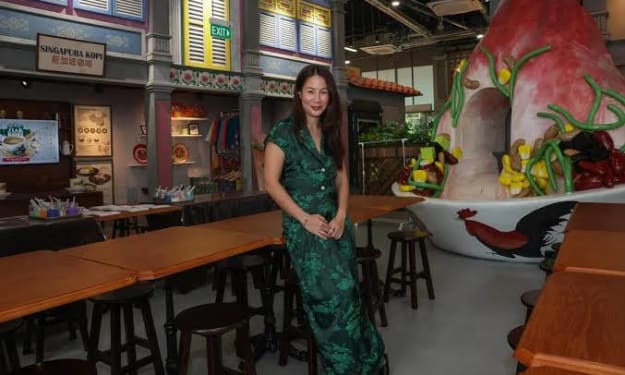
In a touching tribute to love, memory, and cultural heritage, a Singaporean widow has invested nearly $800,000 to establish a hawker culture experience centre dedicated to preserving and celebrating the vibrant food traditions that her late husband cherished throughout his life. The centre, which opened recently in Singapore, aims to provide visitors with an immersive journey into the country’s beloved hawker culture while honouring the legacy of a man who spent decades supporting local food vendors. The project was initiated by Lim Mei Hua, whose husband, Tan Wei Chong, passed away three years ago after a long illness. Tan was widely known among friends and family as a passionate supporter of traditional hawker stalls and frequently spent his weekends exploring different food centres across Singapore. According to Lim, the idea of creating a space dedicated to hawker heritage had long been one of her husband’s dreams. “He always believed that hawker culture was the heart of Singapore,” Lim said during the centre’s opening ceremony. “After he passed away, I wanted to do something meaningful that would keep his passion alive and allow future generations to understand why these traditions matter.” Singapore’s hawker culture is a cornerstone of the nation’s identity. The bustling open-air food centres, filled with vendors serving affordable and diverse dishes, reflect the multicultural roots of the country. In recognition of its cultural importance, UNESCO added Singapore’s hawker culture to its Representative List of the Intangible Cultural Heritage of Humanity in 2020. Lim’s experience centre is designed to showcase this heritage through interactive exhibits, live cooking demonstrations, and storytelling sessions led by veteran hawkers. Visitors can learn about the origins of iconic dishes such as Hainanese chicken rice, Laksa, and Char kway teow, while also exploring the personal journeys of the hawkers who prepare them. The centre includes a small exhibition gallery featuring photographs, kitchen tools, and handwritten recipes collected from hawker families across the city. Many of these items date back decades, offering a glimpse into how culinary traditions have been passed down through generations. One section of the centre recreates a traditional hawker stall environment, allowing visitors to experience what it feels like to work behind the counter during a busy lunch rush. Young participants can try their hand at simple cooking techniques while learning about the discipline and dedication required to master hawker cuisine. Local hawkers have warmly welcomed the initiative. Many worry that younger generations may be less interested in taking over family stalls, which often involve long hours and physically demanding work. By highlighting the cultural significance of these businesses, Lim hopes the centre will inspire renewed appreciation among the public. “Hawker food is not just about eating,” said veteran vendor Ong Kee, who participated in one of the centre’s demonstration sessions. “It’s about history, family, and community. Places like this help remind people why our traditions should continue.” Beyond cultural preservation, the experience centre also aims to support hawkers economically. A portion of ticket sales will be directed toward training programs for aspiring food vendors, helping them learn both traditional recipes and modern business skills. Lim believes this approach can help sustain the industry while adapting to changing times. Tourism officials in Singapore have also expressed optimism about the centre’s potential to attract international visitors interested in culinary experiences. Food tourism has become an increasingly important part of the country’s travel industry, with visitors eager to explore authentic local cuisine. For Lim, however, the centre’s true purpose goes far beyond tourism or business success. Every corner of the space reflects memories of her husband—his favorite dishes, the stalls he frequently visited, and the stories he loved to share. “Whenever I see people enjoying the exhibits or learning about hawker culture, I feel like his spirit is still here,” she said quietly. “This place is not just about the past. It’s about keeping something precious alive.” Through her remarkable gesture, Lim has transformed personal grief into a lasting tribute that celebrates love, heritage, and the enduring power of food to bring communities together. Her $800,000 investment ensures that the spirit of Singapore’s hawker culture—and the memory of the man who cherished it—will continue inspiring generations to come.
By Fiaz Ahmed 2 days ago in Feast



Comments
There are no comments for this story
Be the first to respond and start the conversation.