
Travel Cuisine From Europe's End to the Heart of the Atlantic
Discover some of my favorite traditional recipes from across the Atlantic ocean down to the Mediterranean sea

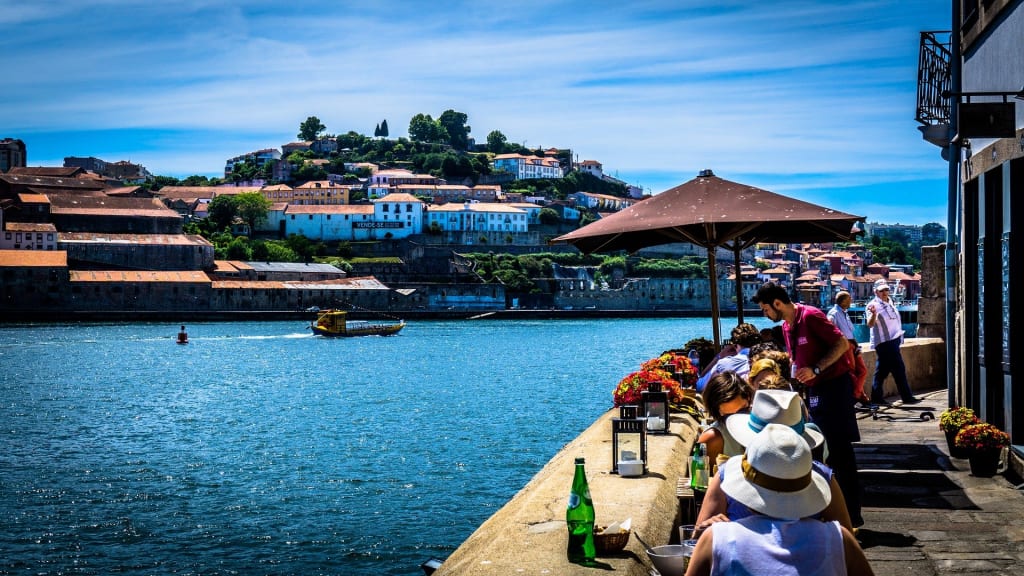
I've always considered myself a world citizen, but then came the 2020 COVID pandemic outbreak and lockdowns followed close by, forcing me to retreat and regroup back home in Portugal.
For a year and a half, I've been reconnecting with my ancestral roots and following the health authorities guidelines: "travel outside while staying inside."
I could tell you about eating mussels next to the Manneken piss in Brussels, having a snack with friends outside a typical Catalan tasca in La Pubilla, Barcelona, with a glass of cava and a botifarra sandwich, or how I loved chasing food trucks across Amsterdam.
However, those stories now seem like something out of a different era when the world was more spacious and boundless. Hence, let me tell you how my taste buds rediscovered ancient traditional flavors while traveling from continental Europe to the heart of the Atlantic ocean and how that changed my relationship with food.
Portugal is famous for its rich Mediterranean cuisine packed with creative recipes, trendy beach destinations, and a rich cultural background spread across all continents.
Hence, I invite you to join me on a gastronomical road trip that starts up in the North, where the Portuguese territory meets the Spanish, Galicia and goes down south to the tip of the European continent.
13 Traditional Recipes From All Portuguese Regions
Minho
This region is located in the Northwest of Portugal, between the Minho River and the Douro Litoral and between the Atlantic Ocean and Trás-os-Montes and Alto Douro. It occupies an area of about 4,838 km2 and covers the districts of Viana do Castelo and Braga. Minho is one of the rainiest regions in Europe. Winters are harsh with relatively cold days.
The harsh climate, the rocky mountains the scarce land to cultivate help explain why "Minhotos" are sturdy and unyielding people. I live at the frontier between Minho and Douro Litoral. Hence my lineage comes from both sides of the border as my mother is "minhota" and my father a "duriense."
Hence, this is our first stop, and the recipe hereunder is one of my mother's delicacies. Every time I try this icon of northern traditional food, my taste buds digress back to my childhood years.
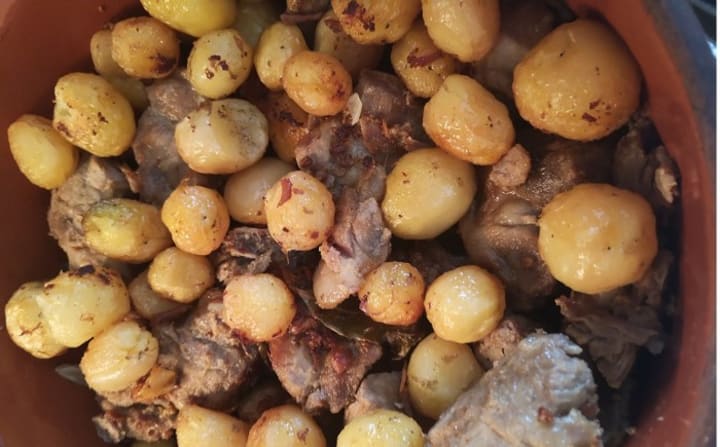
Rojões à Moda do Minho
Ingredients: pork, olive oil, garlic, paprika, Portuguese wine (vinho verde), pork sausage, cooking oil, potatoes, black olives, pork lard.
Preparation:
Cut the meat into small cubes, season, and let it marinate overnight with a mix of bay leaf, garlic, and pepper. In a large pot, put enough olive oil to cover the bottom. Pour the marinade and add the pork meat. Let it cook slowly, stirring from time to time and adding white wine when necessary.
Cover over high heat until the wine has evaporated. Add the lard and, over low heat, cook the "rojões" until they are brownish. Add the paprika dissolved with a bit of wine to the sauce. Serve the "rojões" with the fried potatoes and garnish with lemon slices, parsley, and olives.
Trás-os-Montes e Alto Douro
This region is located in the Northeast of continental Portugal, corresponding to the Vila Real and Bragança districts. Spain is just to the north and east, and it borders the provinces of Beira Alta to the south and Douro Litoral and Minho to the west.
I've traveled across this set of high undulating platforms cut by valleys and very deep basins. Its climate has a strong continental influence, making it harsh and cold in the plateau areas. I've been to Bragança in December, and believe me when I say that's a different type of cold. Therefore, you'll notice how the traditional recipes are as sturdy as the people.
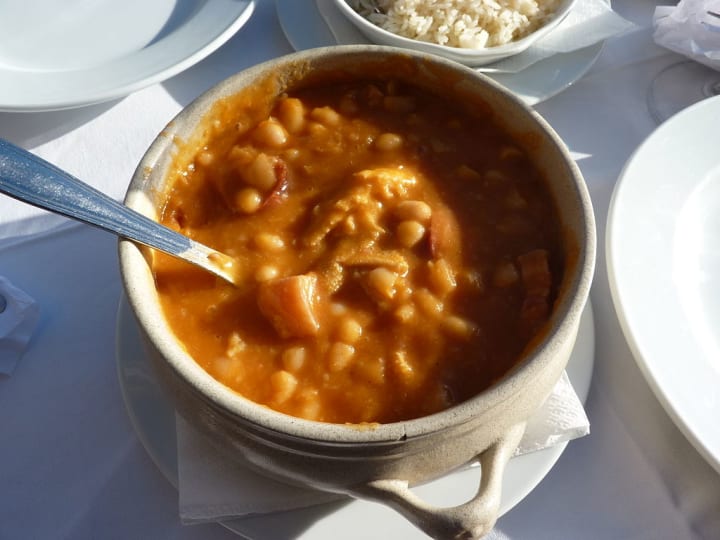
Feijoada à Transmontana
Ingredients: dry red beans, pork ribs, pork sausages, bacon, onions, garlic, bay leaf, olive oil, white wine, peeled tomatoes, carrots. Portuguese cabbage, salt, and pepper.
Preparation:
Let the red beans soak in water overnight. Afterward, cook them in water seasoned with salt. Separately, boil all the meat in a pan with water, and one of the onions peeled and cut into pieces.
Remove the meat when done. Peel the remaining onion and garlic, mince them, put them in a pan, add the bay leaf and olive oil, let it cool down. Add the white wine, the chopped tomatoes, the peeled and sliced carrots, the sliced chorizo, and the sliced cabbage.
Let it cook for not more than ten minutes. Then add the beans with a little of the cooking broth and all the meat cut into pieces. Check the salt, season, let it cook, and serve when ready.
Douro Litoral
I'm a "duriense"; hence I've been all over the region and tasted most of its delicious recipes. Located in northern Portugal and one of the eleven traditional provinces, it arises from the lower part of the Douro River basin; it comprises the Porto district and some municipalities of the districts of Aveiro and Viseu.
I'm not a die-hard fan of "Tripas" main ingredient, but this is by far Porto's most famous recipe.
Tripas-à-Moda do Porto
Ingredients: veal, pork tripe, pork meat, chicken, beans, carrots, chorizo, bay leaf, onions, olive oil, coriander, salp, pepper.
Preparation:
First, we need to wash and prepare the meat. Place the veal, tripe, and pork eat in the pressure cooker, cover with water, and season with salt; then cook for half an hour. Slice the chorizo, cut the chicken into pieces, and boil them in salted water for twenty minutes. Remove the meat and reserve the broth.
Chop the onions and saute them in olive oil. Add the sliced carrot, the bay leaf, and let them saute. Add the meat, the chorizo, the reserved broth, and the beans. Season with salt, pepper, and cumin and let it simmer. Adjust the seasoning and, finally, add the coriander and serve the tripe.
Beira Alta
This region borders Spain to the east. It covers about 8500 km2 and includes 33 counties: 18 in the district of Viseu, 13 in the district of Guarda, and two in the district of Coimbra. Here we find medium-altitude plateaus, cut by river valleys and surrounded by mountains (Estrela, Caramulo), explaining the considerably low temperatures in winter.
I've decided to bring forward a recipe with bacalhau (cod), as this fish found in the cold seas of the northern hemisphere has become the common ingredient in traditional Portuguese cuisine from North to South.
Bacalhau à Beira Alta
Ingredients: Codfish, meat sausage, corn bread crumbs, onions, garlic, olive oil, parsley, salt and pepper, flour.
Preparation:
Dry the cod fillets and flour them. Heat a frying pan with olive oil, add the cod fillets and fry them slightly on both sides. Set aside.
Peel the onions and the garlic cloves, cut the onions into thin half-moons or slices and chop the garlic. Add everything to the pan with the olive oil from frying the codfish and cook until the onion is soft. Then add the sliced sausage without the skin, mix it, adjust the salt, season with pepper, and add it to the pan between the codfish fillets.
Pour the corn bread crumbs into a bowl, add the olive oil, mix well, and spread it on top of the codfish - Bake in a preheated oven at 180°C. Remove and serve garnished with chopped parsley with boiled potatoes or boiled sautéed cabbage.
Beira Litoral
This region is located across a wide coastal strip in central Portugal and includes Aveiro, Coimbra, Leiria, and Santarém. The Atlantic Ocean bathes it to the west. It covers an area of approximately 7 600 km2.
The good geographical situation of the region, combined with easy access to Lisbon and Porto, makes it a good reference for tourists. This is the place for eating fish; however, I'm more the meat-lover kind hence; let me tell you the recipe behind a yummy encounter with my first Chanfana.
Chanfana
Ingredients: Goat meat, lard1, onion, garlic, bacon, olive oil, pepper, salt, and red wine.
Preparation:
Cut the meat into pieces and place it in a black clay pot. Add the coarsely crushed garlic, pepper, salt, olive oil, peppercorns, small slices of bacon, and crushed onion. Cover it well with red wine and place it in the oven, roasting slowly until it is cooked.
If required, tenderize the meat by drizzling a little wine over it from time to time. But make sure you don't add too much wine to the sauce.
Beira Baixa
Beira Baixa borders Spain to the east, and it holds continental Portugal's highest mountain known as Serra da Estrela ("Estrela" for short). The climate presents strong contrasts between the winter, rainy and cold, and the summer, dry and quite hot. In Serra da Estrela, snowfall is frequent during wintertime. Beira Baixa is the land of sheep and goat flocks, and that's why I've chosen a traditional example of shepherds-food.
Afogado da Boda
Ingredients: Goat meat, onion, garlic, tomato pulp, white wine, beer, mint, bay leaf, rosemary, parsley, olive oil, pepper, nutmeg, salt.
Preparation:
Sauté the meat using the chopped onion and garlic, add olive oil, tomato pulp, spices, and herbs. When the onion is slightly fried, add the meat, beer to tenderize it, wine to cook it, and let it simmer for two hours.
Check and add wine or beer if necessary. Serve with vegetables.
Ribatejo
Ribatejo is located in the center of continental Portugal. This region offers, in its gastronomy, typical dishes like the famous stone soup (sopa da pedra), the "caldeirada," and the delicious desserts known as "tigeladas."
Sopa da Pedra
Ingredients: Dried beans, pork sausage, blood sausage, "farinheiras," pork, cured bacon, potatoes, onion, coriander, garlic, bay leaf, pepper, paprika, olive oil, water, salt.
Preparation:
Salt the meat and let it rest overnight. Afterward, rinse the meat to remove excess salt. The dried beans also need to be hydrated. Finely slice the onions and the garlic. Cut the potatoes into small cubes.
Start by putting water in the pot, and then add the beans, onion, garlic, paprika, pepper, bay leaf (or any other seasoning of your liking) olive oil.
Next, add pork meat, bacon, as well as sausages. When the beans are almost cooked, you can add the "farinheiras."
After everything is cooked, remove the meat and sausages. They are to be set aside and cut into small pieces and slices, respectively. Add the potatoes to the broth in the pot and let it simmer.
At this point, if necessary, adjust the seasoning. Once the potatoes are cooked, turn off the heat. Let the broth thicken. This ensures that all the ingredients are well mixed, making the soup smooth and velvety.
Estremadura
The Portuguese capital, Lisbon, is located in the Estremadura region, hence, this is one of the most touristic areas in Portugal. Nonetheless, most travelers never get to taste the actual Portuguese traditional dishes like the Meia-desfeita, because you don't find it in the menus that show up on tourist guides. I often travel to Estremadura and this is one of those dishes I can't go without.
Meia-desfeita da Estremadura
Ingredients: cod fillets, chickpeas, hard-boiled eggs, onion, garlic, olive oil, vinegar, paprika, parsley, black olives, Salt, and black pepper.
Preparation:
Soak the chickpeas in cold water overnight. Afterward, cook them in a pressure cooker, covered with water, for forty minutes. In a separate pan, boil the codfish, drain the water and set it aside to cool down.
Remove the cod's skin and bones; then peel and slice the onion and the garlic, as well as the parsley. Mix these ingredients and set them aside. Arrange the drained chickpeas on a deep platter and cover them with the cod shreds, the sliced eggs, and olives.
Alto Alentejo
This region comprises the districts of Portalegre and Évora. The main typical dishes besides this "bacalhau albardado", includes "açorda", "migas alentejanas," and gazpacho.
Bacalhau Albardado
"Albardado" comes from the Portuguese verb "albardar": to wrap something in flour and then deep fry it.
Ingredients: Codfish fillets, eggs, onions, a clove of garlic, olive oil, water, egg yolks, a teaspoon of mustard, parsley, oil for frying, flour, salt, and pepper.
Preparation:
After leaving the typical Portuguese salted cod in cold water for 3–4 days, you remove the bones and skin and break them into thick fillets. Sauté the onion and the chopped garlic in olive oil. Add the cod fillets. Then season with the white pepper and the chopped parsley.
Place the flour, milk, eggs, butter, and salt in a mixing bowl and blend until smooth. Grease a crepe pan and pour a portion of the batter into it. Place a piece of fried cod and sausage on top. Roll the fish in the batter using a wooden spatula, and remove. Drain on absorbent paper and set aside. Serve as a snack or with rice and/or a salad.
Baixo Alentejo
One of the regions in the south of Portugal, belonging to the district of Setúbal. The typical dishes of this region are similar to those mentioned above and display the creativity of Alentejos's cuisine.
Purslane Soup
Ingredients: Purslane, eggs, potatoes, fresh cheese, head of garlic, onion, olive oil, bread, and salt.
Preparation:
Prepare the purslane, using only the leaves. Slice the onions, and make a sauté with olive oil. Add the washed purslane leaves while sauteing; keep stirring the mix. Sprinkle with water and let it boil. Remove the white skin from the garlic and put it whole in the boiling broth. Add the potatoes cut into thick slices. Season the soup with salt and let it cook.
Before serving, add the eggs, one by one, and let them cook. Finally, put in the pot the cheese cut into quarters. The sliced bread is placed in a tureen and sprinkled with the broth.
Algarve
The Algarve region stretches from the mountains (Monchique-Caldeirão) to the sea. The climate is Mediterranean and is characterized by mild temperatures throughout the year and a longer dry period than most mainland Portugal. Therefore, on the southern coast of the Algarve, rainfall is relatively scarce and the temperature mild, which contributes to attracting tourists throughout the year.
Algarve's cuisine represents the connection of its people to the Atlantic Ocean and the Mediterranean sea, with fish and seafood as the main ingredients.
Cataplana Algarvia
Ingredients: monkfish, shrimp, blue jack mackerel, chorizo, smoked ham, chorizo, diced tomatoes, green bell pepper, onion, garlic, white wine, parsley, bay leaf, olive oil, salt, and pepper.
Preparation:
You start by peeling and slicing the onion, the garlic, and the parsley; cut the ham into wide strips and the chorizo into rounds; clean and dice the bell pepper; then season the fish with salt.
Afterward, you put a little olive oil in the frying pan and then layer the onion. Add the bell pepper and the tomato, form a layer with the ham and the chorizo, and proceed by placing the fish on top.
Drizzle everything with the white wine and add the garlic and bay leaf. Finally, add the shrimp, season with salt and pepper, and cover the frying pan. Place over low heat for about 20 minutes. Sprinkle with chopped parsley and serve with boiled potatoes or white rice.
Madeira
Madeira is an island and archipelago of Portugal. I've visited the pearl of the Atlantic in April and I'm still dazzled by the stunning landscapes. If you travel to Madeira make sure to visit the typical "casinhas de Santana," a touristic ex-libris, and indulge yourself with a mouth-melting Picadinho Madeirense.
"Picadinho" Madeirense
Ingredients: beef cut into cubes, bay leaves, garlic cloves, butter, white wine, olive oil.
Preparation:
Begin by seasoning the meat with bay leaf and chopped garlic. Stir the meat with all the ingredients. Take a large frying pan and pour in some butter and olive oil.
Spread it well so that the cubes of meat don't get on top of each other. Turn them over as they fry. Season with salt to taste, pour in the oxtail soup and the white wine. After everything is done, turn down the heat and leave it in the pan. Served with fries and salad. You can add olives, tomatoes, and peppers.
Azores
The Azores archipelago is formed by nine islands and some uninhabited islets (the Formigas). The archipelago is located in the North Atlantic, 1500 km west of Lisbon and 3400 km east of New York.
All the islands are of volcanic origin; hence volcanism remains active in several islands, being used as a source of geothermal energy and even for cooking, namely in the island of São Miguel in a volcanic site known as "Caldeira das Furnas."
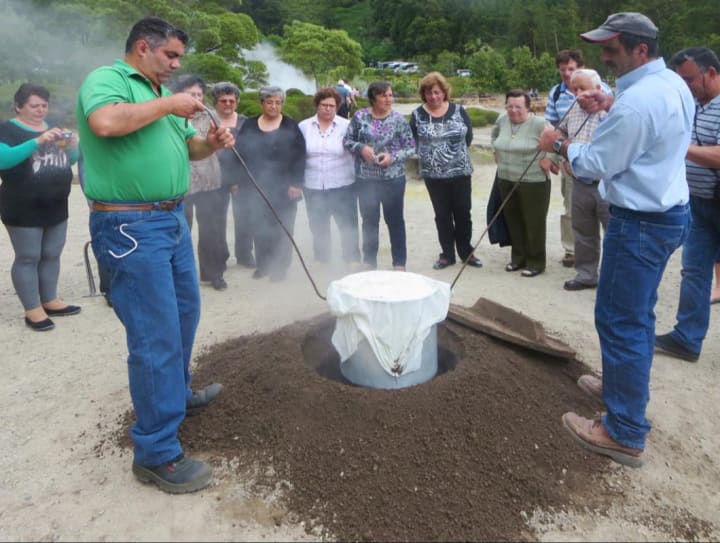
Last year, I traveled to the heart of the Atlantic, and believe me, there's nothing like tasting a stew cooked inside a volcano. If you haven't tried it yet, you need to fly to the Azores and taste the Caldeirada das Furnas, it's a mouth-watering experience.
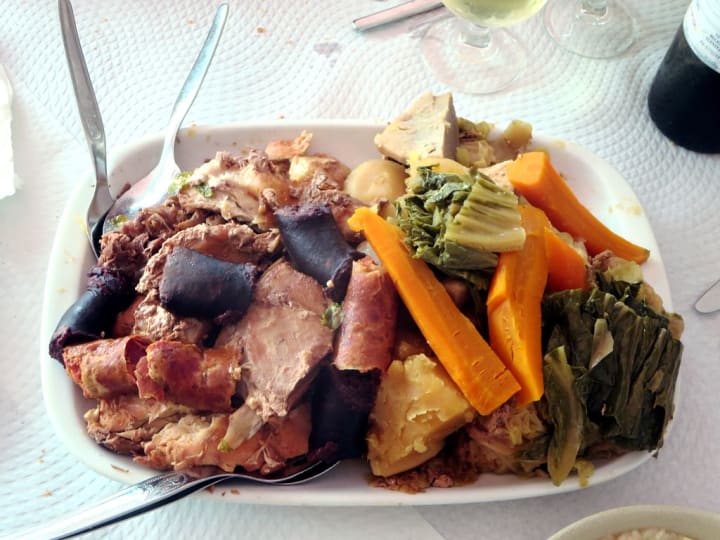
However, as you probably don't have a volcano back home, I will write down the recipe for another typical Azorean dish:
Regional Steak (à São Miguel)
Ingredients: steak (loin, sirloin, or filet mignon), sliced pickled peppers, sliced garlic, bay leaf, white wine, beer, whiskey, oil.
Preparation:
Heat the oil in a frying pan. Fry the steak on both sides to your liking - season with salt and pepper. Add the crushed garlic and the bay leaf. Sprinkle with the white wine and let the alcohol evaporate.
Add the strips of pickled peppers. Add the butter; keep stirring with a spoon until the sauce is creamy without letting it boil. Drizzle the sauce over the steak. Serve with sliced fried potatoes. You can also add a fried egg on top.
Final Thoughts
This is the end of our gastronomical journey around Portugal's traditional cuisine. I hope you've enjoyed these recipes. I invite you to come and visit our beautiful landscapes and have a taste of some of these mouthwatering traditional specialties.
About the Creator
Rui Alves
Hi, I'm Rui Alves, a teacher, army veteran & digital pathfinder. Author, alchemist of sound & Gen-AI artist.
My Tous les Jours Trip
As someone who lives in a rural area, I don't get the chance to visit fancy restaurants or bakeries that often. So, when a friend told me about a French-Asian bakery that's less than an hour away, I knew I had to check it out and grab some pictures for social media. Tous les Jours ended up providing an immersive experience that went above and beyond my expectations--although I did leave with a few reservations.
By Kaitlin Shanks24 days ago in Feast
White Mushroom Market Size and Forecast 2025–2033
Introduction White mushrooms—scientifically known as Agaricus bisporus—are no longer confined to salads, pizzas, and soups. Once considered a humble kitchen staple, they are now emerging as a strategic crop in the global agrifood ecosystem. Driven by sustainability trends, plant-based eating, and rising health consciousness, white mushrooms have carved out a powerful position in both consumer markets and foodservice industries.
By jaiklin Fanandish4 days ago in Feast
Center Stage with Paul Stewart
*** I'm keen to republish the interviews I did for my series with Vocal creators. It's been a few years and I thought it might be nice to revisit these wonderful conversations. I'll be releasing them one at a time for a few weeks/months.
By Heather Hubler4 days ago in Interview




Comments
There are no comments for this story
Be the first to respond and start the conversation.