
Topics To Avoid During Christmas Dinner Conversations
Here are four topics to avoid during holiday dinner conversation.

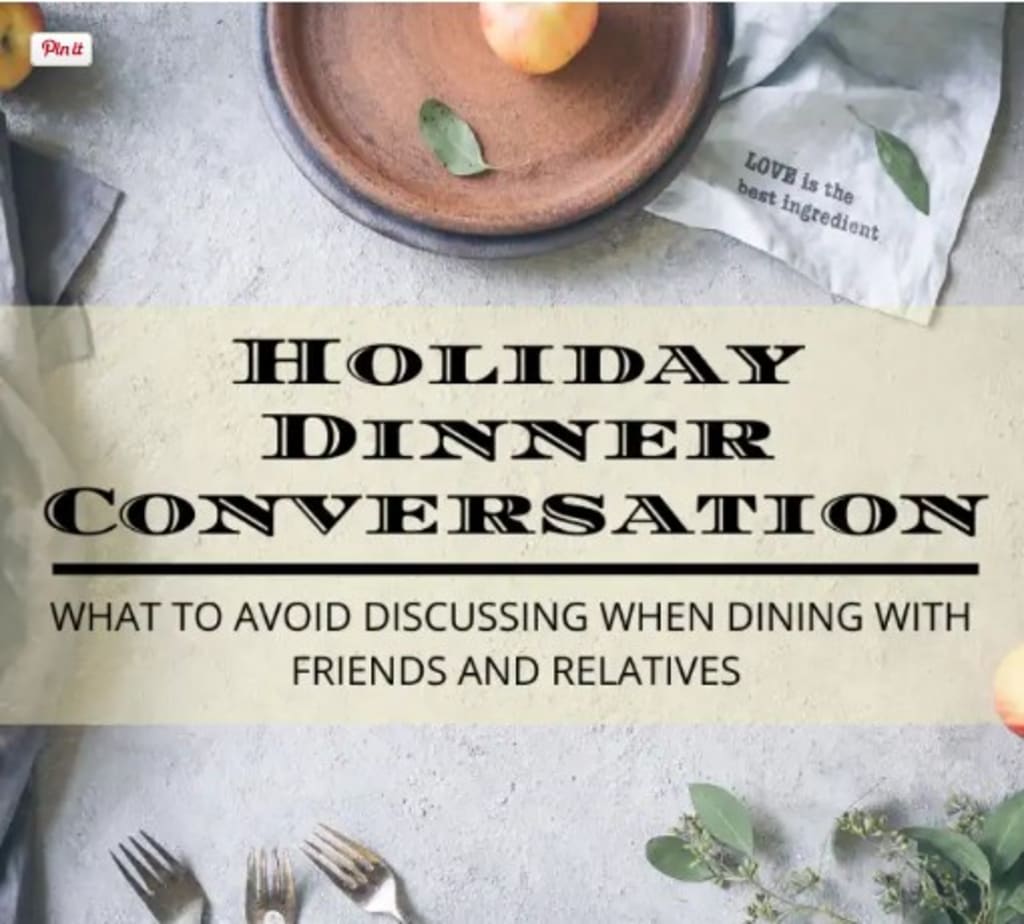
Dinner table conversation with friends and relatives is one of the most rewarding elements of any holiday gathering, but it's important to keep certain guidelines in mind to avoid making other guests feel uncomfortable.
It is a tradition for families and friends to get together to celebrate major holidays, even if they do not visit much at other times of the year. The purpose of this article is to advise those who are dining with others about how to be thoughtful, appropriate, and careful with their talk at the holiday dinner table.
Why Examine What You Say at the Table?
It is not unusual for people who have not seen each other in over a year or since the last major holiday to get together for Thanksgiving or Christmas. Once everyone has gathered, it is common for family members and friends to ask questions and talk about what has transpired since they last saw one another. Since there is bound to be a lot of talking around the dinner table, it's important that everyone thinks carefully about what they say so they do not offend anyone.
Keep in mind that some people might be tired from traveling a long distance and won't be ready for chit-chat until they get situated. Once attendees are comfortable and dinner table conversation begins, try to ensure no one feels uncomfortable because of something someone says.
1. Don't Get Too Personal
Some people do not appreciate having to answer questions about themselves while sitting in mixed company around the dinner table. Perhaps personal conversations can be conducted one-on-one at a more appropriate time.
It is rude to ask a couple that has been dating for a long time why they haven't tied the knot yet. It can be equally off-putting to ask them when they plan to do so. A couple who has been unsuccessful in trying to start a family doesn't want to talk about fertility issues in front of the whole family while dining. No one deserves to be put on the spot by being asked personal questions in a public setting.
2. Don't Argue (Especially About Politics And Religion)
These days, our news feeds are filled with heated arguments about politics and ideology. Keep in mind that the dinner table is not a campaign stop for anybody's favorite politician, nor is it a soapbox for anyone's spiritual or ideological agenda. People who belong to different political parties and religious organizations shouldn't use family dinner gatherings to try to persuade others to share their beliefs.
If political issues can't be resolved in the White House or Congress, they surely will not be resolved around your family's Christmas dinner table. Therefore, arguments should be entirely off-limits. Even disagreements about topics less polarizing than politics can easily snowball into raised voices and resentment. To ensure an enjoyable and successful dinner for the whole group, it's best to avoid them altogether.
3. Don't Brag
Most people get a bit turned off when listening to others brag about their accomplishments. Boasting may boost the speaker's ego, but it often deflates the self-esteem of listeners. The best thing to do in a holiday dinner setting is to refrain from bragging.
Constantly talking about one's high-paying job may come off as insensitive to someone who is out of work or displeased with their current occupation. Bragging about a new car won't impress a person who had to take the bus to the gathering because their car was in the shop. Be mindful that everyone's situation is different. Accomplishments, possessions, and career success should be left out of group gatherings.
4. Don't Be a Food Critic (Or the Food Police)
Holiday dinners are not a venue for food criticism. Comments about others' eating habits or physical health should also be avoided.

As tempting as it may be, try to refrain from asking who prepared certain dishes or voicing your opinions about the food. If you do not like your cousin's macaroni and cheese or your sister's corn pudding, just don't eat them. There's no reason to be a food critic at the table. Spare the cooks' feelings by not talking negatively about any of the dishes.
While on the subject of food, it is also important to refrain from commenting on the amount of food on someone's plate. People can manage their own diets and decide for themselves whether they are overeating. You have no right to comment about the amount of gravy on someone's mashed potatoes or their second helping of stuffing.

Those with diabetes should not be called out because you see them eating a slice of pie. It's best to allow individuals to manage their own dining habits without comments or criticism—especially at family holiday gatherings.
How to Promote Kind Conversation
Now that we've gone over several topics that should be off-limits, here are a few things you can do without hurting anyone's feelings:
- Follow the “golden rule” by doing unto others as you would have them do unto you.
- Engage in conversation that demonstrates love, joy, peace, forbearance, kindness, goodness, faithfulness, and gentleness.
- If you feel tempted to discuss something that could make the dinner less pleasant for anyone in attendance, practice self-control and keep your thoughts to yourself.
If you heed these warnings and abide by these suggestions, your holiday dinner will be a success, and you will not deter people from returning the following year. In fact, your family and friends will look forward to being in your company.
About the Creator
Margaret Minnicks
Margaret Minnicks has a bachelor's degree in English. She is an ordained minister with two master's degrees in theology and Christian education. She has been an online writer for over 15 years. Thanks for reading and sending TIPS her way.
Keep reading
More stories from Margaret Minnicks and writers in Feast and other communities.
Eat During Chinese New Year
The Chinese New Year feast is traditionally abundant with meat dishes, but these 15 vegetarian recipes prove that plant-based eating can be just as festive, flavorful, and meaningful. Each dish carries auspicious symbolism while delivering incredible taste that will have everyone reaching for seconds—even the meat lovers at your table. From crisp greens to creative vegetable transformations, these recipes are designed to impress.
By yue . shui3 days ago in Feast
Astragalus: An Ornamental, Supportive, and Culinary Herb
Astragalus Root/Milkvetch Astragalus is a popular remedy for various ailments today. Commonly found in health food stores and herbal shops in the form of tinctures, grounded encapsulated powders, or as part of an herbal infusion, or sometimes added to teas, astragalus usually makes the list for its purported immune-system and energy-supporting benefits.
By J. Chauncey2 days ago in Feast


Comments
There are no comments for this story
Be the first to respond and start the conversation.