
Top 5 Women's Health Issues
Women's Health Issues
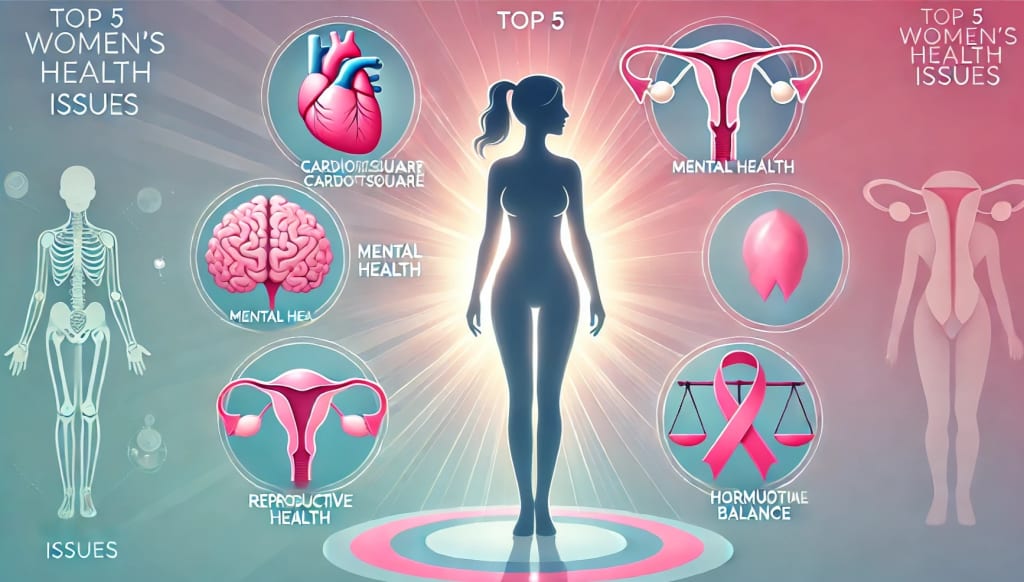
Woman's health includes a full spectrum of physical, mental and reproductive concerns that need to be earnestly addressed. Although improvements in healthcare have made it easier to know about and treat various conditions, women still face unique problems because of various biological, social, and cultural factors. There is a need to tackle the challenges in order to improve the overall lifestyle and well-being of women. This article looks at the five major health issues that hit women and underscores the need for preventive measures.
1. Reproductive Health Problems
Reproductive health is a foundation of women's health, but millions of women suffer from problems in connection with menstruation, pregnancy, childbirth, and menopause.
Polycystic Ovary Syndrome (PCOS)
PCOS affects nearly 10% of women of reproductive age and can lead to irregular periods, infertility, and metabolic issues. It's also associated with an increased risk of type 2 diabetes and cardiovascular diseases.
Endometriosis
This painful condition, where tissue similar to the uterine lining grows outside the uterus, affects one in ten women worldwide. It often goes undiagnosed for years, leading to chronic pain and infertility.
Menopause-Related Challenges
Hot flashes, mood swings, and osteoporosis are just a few issues women face during menopause. Hormonal changes during this phase can also increase the risk of cardiovascular diseases.
2. Breast and Cervical Cancer
These two forms of cancers rank among the most common killers in women. It has been realized that many lives are saved through early detection through screenings.
Breast Cancer
Breast cancer is one of the commonest cancers diagnosed among women. The risk for this disease stands at one in eight women being diagnosed with it sometime during her life. Therefore, self-examinations, mammograms, and even genetic testing are essential among people at higher risks.
Cervical Cancer
It is caused by the human papillomavirus (HPV) and is therefore highly preventable through HPV vaccination and regular Pap smears. However, the majority of these preventive measures remain inaccessible to many women in low-resource settings.
3. Cardiovascular Diseases
Cardiovascular diseases (CVDs) are not exclusively a "man's disease," as most people believe. On the contrary, CVDs account for nearly one-third of all female deaths, making them the leading cause of death among women worldwide.
Risk Factors: Hypertension, high cholesterol, obesity, diabetes, and smoking significantly increase the risk. Women often experience different symptoms of heart attacks compared to men, such as shortness of breath, nausea, and fatigue, leading to delayed diagnosis and treatment.
Prevention: Lifestyle modification with regular exercise, balanced diet, stress management, and routine health check-ups can drastically reduce the risk of CVDs.
4. Mental Health Challenges
Mental health is the critical but ignored aspect of women's health. Some mental health issues in women have a higher propensity due to fluctuations in hormones, pressure from society, and changes in life.
Some of the significant conditions include:
Depression and Anxiety
Depression and anxiety occur more frequently among women than among men. More so, women suffer from depression after childbirth and it affects between 10 and 20% of new mothers
Eating Disorders
Illnesses, such as anorexia nervosa and bulimia nervosa, commonly affect young females and are thought to be associated with societal expectations regarding beauty.
Work-Life Stress and Burnout
Managing both work and personal/family-related responsibilities puts most women at higher risk for stress and burnout, which have a tendency to worsen these conditions.
5. Osteoporosis and Bone Health
Osteoporosis, a condition that weakens bones and increases the risk of fractures, is significantly more common in women than men. This is largely due to hormonal changes during menopause, which lead to a rapid decline in bone density.
Risk Factors: Inadequate calcium and vitamin D intake, a sedentary lifestyle, smoking, and a family history of osteoporosis all contribute to the condition.
Prevention and Management
Weight-bearing exercises, a nutrient-rich diet, and medications prescribed by healthcare providers can help maintain bone health and prevent fractures.
Tackling Women's Health Issues: The Way Forward
Addressing these health concerns requires a multi-faceted approach:
1. Education and Awareness
Empowering women with knowledge about their health is the first step toward prevention and early intervention. Public health campaigns, workshops, and community outreach programs can play a significant role.
2. Access to Health Care
Adequate and affordable health care provision, such as regular screenings and vaccinations, are also a prerequisite. Funding to support women's health programs has to be prioritized.
3. End Stigmas
Stigma in culture and society prevents the woman from visiting a doctor about her reproductive health and mental state. An encouraging environment would mean open discussion and prompt intervention.
4. Research and Advocacy
More research into women-specific health issues can lead to improved treatments and outcomes. Advocacy efforts should focus on addressing healthcare disparities and ensuring equal access for all women.
Conclusion
Women's health is a very important component of global health. Addressing reproductive health, prioritizing cancer screenings, cardiovascular health, mental well-being, and bone health can all greatly improve the quality of life for women. Proactive measures, combined with societal support and healthcare advancements, can ensure that women everywhere have the opportunity to lead healthy, fulfilling lives.
About the Creator
Keep reading
More stories from Mohd Imran and writers in Feast and other communities.
Harmful Habits That Can Cause Constipation During Winter
Harmful Habits That Can Cause Constipation During Winter Winter can bring a host of lifestyle changes, ranging from dietary shifts to reduced physical activity. While the cold weather has a certain charm, it also throws unique challenges to our digestive health. One common issue that many people face during winter is constipation. Various harmful habits during the colder months can disrupt digestion, leading to discomfort and reduced quality of life. Here are some comprehensive habits that cause constipation in winter and how to avoid them.
By Mohd Imranabout a year ago in Feast
Widow invests $800,000 to start hawker culture experience centre in honour of late husband
In a touching tribute to love, memory, and cultural heritage, a Singaporean widow has invested nearly $800,000 to establish a hawker culture experience centre dedicated to preserving and celebrating the vibrant food traditions that her late husband cherished throughout his life. The centre, which opened recently in Singapore, aims to provide visitors with an immersive journey into the country’s beloved hawker culture while honouring the legacy of a man who spent decades supporting local food vendors. The project was initiated by Lim Mei Hua, whose husband, Tan Wei Chong, passed away three years ago after a long illness. Tan was widely known among friends and family as a passionate supporter of traditional hawker stalls and frequently spent his weekends exploring different food centres across Singapore. According to Lim, the idea of creating a space dedicated to hawker heritage had long been one of her husband’s dreams. “He always believed that hawker culture was the heart of Singapore,” Lim said during the centre’s opening ceremony. “After he passed away, I wanted to do something meaningful that would keep his passion alive and allow future generations to understand why these traditions matter.” Singapore’s hawker culture is a cornerstone of the nation’s identity. The bustling open-air food centres, filled with vendors serving affordable and diverse dishes, reflect the multicultural roots of the country. In recognition of its cultural importance, UNESCO added Singapore’s hawker culture to its Representative List of the Intangible Cultural Heritage of Humanity in 2020. Lim’s experience centre is designed to showcase this heritage through interactive exhibits, live cooking demonstrations, and storytelling sessions led by veteran hawkers. Visitors can learn about the origins of iconic dishes such as Hainanese chicken rice, Laksa, and Char kway teow, while also exploring the personal journeys of the hawkers who prepare them. The centre includes a small exhibition gallery featuring photographs, kitchen tools, and handwritten recipes collected from hawker families across the city. Many of these items date back decades, offering a glimpse into how culinary traditions have been passed down through generations. One section of the centre recreates a traditional hawker stall environment, allowing visitors to experience what it feels like to work behind the counter during a busy lunch rush. Young participants can try their hand at simple cooking techniques while learning about the discipline and dedication required to master hawker cuisine. Local hawkers have warmly welcomed the initiative. Many worry that younger generations may be less interested in taking over family stalls, which often involve long hours and physically demanding work. By highlighting the cultural significance of these businesses, Lim hopes the centre will inspire renewed appreciation among the public. “Hawker food is not just about eating,” said veteran vendor Ong Kee, who participated in one of the centre’s demonstration sessions. “It’s about history, family, and community. Places like this help remind people why our traditions should continue.” Beyond cultural preservation, the experience centre also aims to support hawkers economically. A portion of ticket sales will be directed toward training programs for aspiring food vendors, helping them learn both traditional recipes and modern business skills. Lim believes this approach can help sustain the industry while adapting to changing times. Tourism officials in Singapore have also expressed optimism about the centre’s potential to attract international visitors interested in culinary experiences. Food tourism has become an increasingly important part of the country’s travel industry, with visitors eager to explore authentic local cuisine. For Lim, however, the centre’s true purpose goes far beyond tourism or business success. Every corner of the space reflects memories of her husband—his favorite dishes, the stalls he frequently visited, and the stories he loved to share. “Whenever I see people enjoying the exhibits or learning about hawker culture, I feel like his spirit is still here,” she said quietly. “This place is not just about the past. It’s about keeping something precious alive.” Through her remarkable gesture, Lim has transformed personal grief into a lasting tribute that celebrates love, heritage, and the enduring power of food to bring communities together. Her $800,000 investment ensures that the spirit of Singapore’s hawker culture—and the memory of the man who cherished it—will continue inspiring generations to come.
By Fiaz Ahmed 3 days ago in Feast




Comments
There are no comments for this story
Be the first to respond and start the conversation.